

Here's something most subscription app teams don't want to hear: the moment a user converts is also the moment many of them start drifting toward cancellation.
According to the State of Subscription Apps 2026, 84% of 3-day trial cancellations and 64% of 7-day trial cancellations occur between Day 0 and Day 1. What’s more, nearly half of monthly subscribers, and the majority of yearly subscribers, do not renew even once.
By the end of this article, you'll have a clear picture of why that early churn happens — and a practical framework for preventing it. We'll cover the onboarding gap that quietly costs apps revenue every month, why new subscribers need to be treated like new users, and how to design a simple lifecycle journey that gets paying customers to their first 'premium win' — before buyer's remorse has a chance to set in.
Stop treating conversion as the finish line
Most subscription apps treat conversion as the finish line. But really it's the start of the retention journey. For many new subscribers, it's also where things start to go wrong.
Think about how much effort goes into getting a user to subscribe. Teams spend weeks, sometimes months, designing onboarding flows, refining paywall timing, testing trial journeys, tweaking upgrade messaging. Then the user finally converts… and the silence is deafening.
For new users, the app suddenly going quiet is a drastic 180. They were being nurtured towards the subscription they just paid for — and suddenly nothing. For app teams, that silence feels logical: the user paid, they're clearly engaged. Why interrupt them?
But subscribing doesn't mean the user actually understands what they've just unlocked. They might have converted based on a single feature they glimpsed during a trial, a discount that felt too good to pass up, or just a vague sense that this app might be useful. What they haven't done (yet) is experience the product as a paying customer. And without a little guidance, many of them will cancel before they ever do.
Why do users cancel early?
Early cancellations are rarely about product quality. They're almost always about the gap between what a user expected when they signed up, and what they actually experienced in those first few days. That gap is where buyer's remorse lives. And silence from the product team is what lets it take root.
There's another force making this worse: subscription fatigue. People are drowning in recurring charges — music, fitness, productivity, entertainment — and many have started turning off auto-renew the moment they subscribe to something new, just to feel in control.
It's a defensive habit born from too many forgotten subscriptions quietly draining bank accounts. Which means your new subscriber may have already mentally scheduled their exit before they've even opened the app a second time. The window to prove your product is worth keeping isn't weeks — it's days.
Re-onboard existing subscribers like they're new users
This is what's sometimes called the post-subscription gap: the window between a user converting and a user genuinely getting value from what they paid for.
It tends to show up in three connected ways:
1. Upgraders don’t find the premium features
This sounds almost too simple to be a real problem, but it is. And if you’re working with a freemium model, it’s quite possible the silence after conversion is what’s quietly pushing subscribers away.
Users who have already gone through free onboarding learn how to use the free version of your app. When they upgrade, nobody shows them what's changed. So they keep using the product the same way they always did — as if they're still on the free tier. The premium features exist, but the subscriber never finds them, and eventually cancels feeling like they never got much value when they started paying.
2. Most apps stop communicating once a user converts
After all that effort to nurture a potential subscriber, silence isn't a neutral choice — it's a missed opportunity. When lifecycle messaging disappears, users lack the product enablement to benefit from their upgrade, and often forget they even subscribed. They may question whether it was worth it, and cancel when renewal rolls around because they can't quite remember why they signed up.
3. “They’ve already been onboarded” is the wrong mental model
The mental model many teams use ("they've already been through onboarding, they don't need more") is a big mistake. It also misses the nuance between different types of subscriber: an experienced free user who upgrades doesn’t need the same input as instant or zero-touch buyers. But that doesn’t mean they don’t need any attention — they’ve just entered into a completely different relationship with your product. They deserve to be welcomed and shown around, just like new subscribers; simply in a different way.
What premium re-onboarding actually looks like
Re-onboarding for new subscribers isn't about repeating everything from free onboarding. It's about specifically welcoming people into the premium experience — making it immediately obvious what they've unlocked and how to start using it.
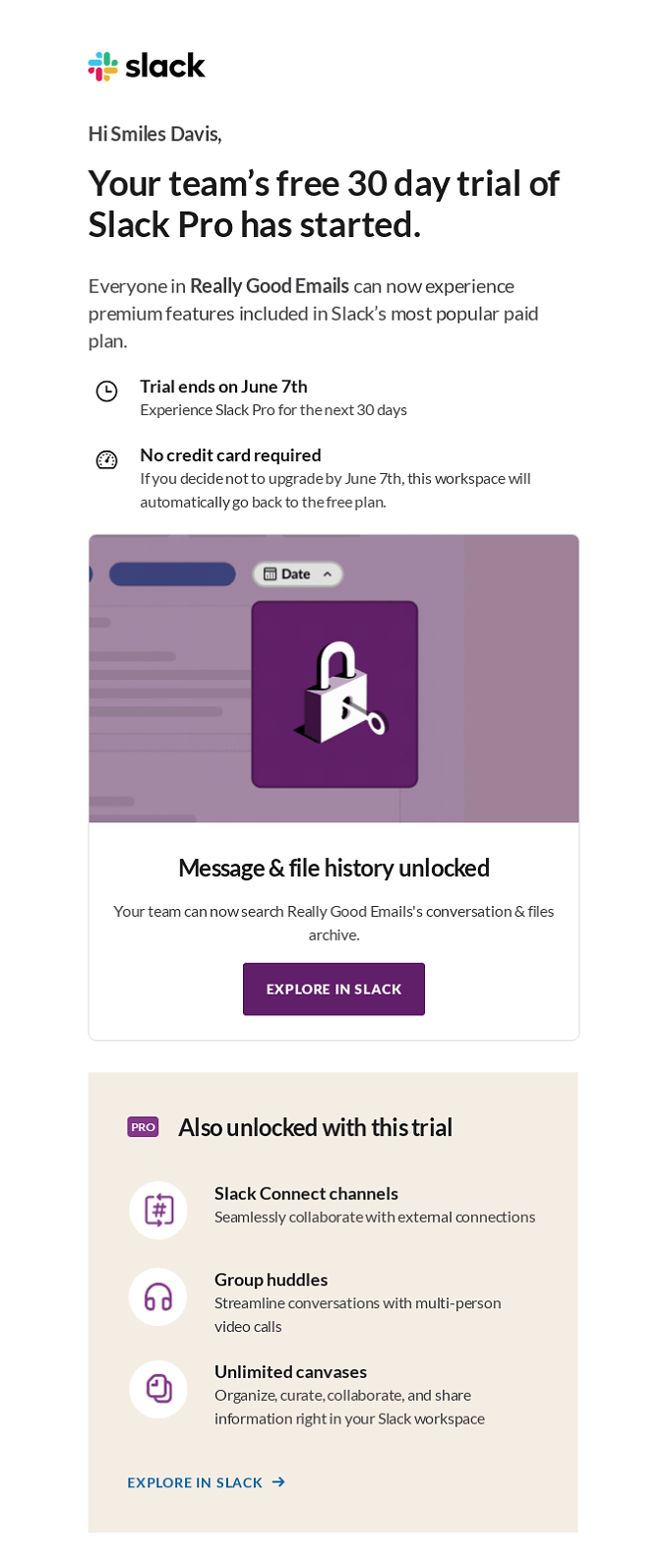
Slack does this well. When a user starts a Pro trial, they immediately receive an email that doesn't just say 'your trial has started' — it tells them exactly what's changed. The headline feature gets its own moment ('Message & file history unlocked'), followed by a clear list of everything else now available: Slack Connect channels, group huddles, unlimited canvases. There's no ambiguity about what the upgrade means. And crucially, the call to action isn't 'explore your account' — it's 'Explore in Slack', pointing users straight back into the product.
That's the whole job:
- Confirm the decision
- Show what's unlocked
- Direct to first action
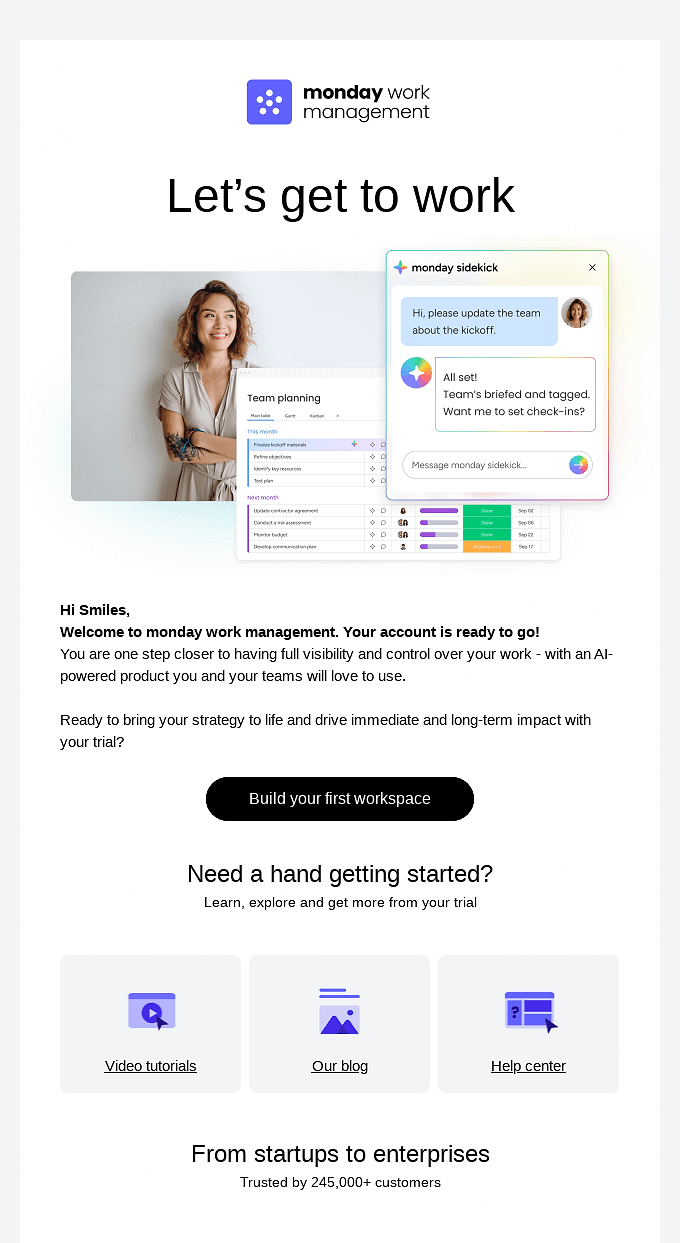
Monday.com does something similar. When a user starts a trial, they immediately receive a message encouraging them to dive back in and create their first workspace. They also point to next steps for further guidance, like tutorial videos, blog content and access to support.
The job of post-subscription messaging is to answer three questions for your new subscriber:
- Where are the premium features? Show them, don't assume they'll find them.
- How do I actually use them? A list of features is not the same as a guide to a first action.
- Did I make the right call? This is the question every new subscriber is quietly asking. Your job is to reassure them the answer is yes (and quickly).
The goal is to move someone from "I paid for this" to "I just did something I couldn't do before" as fast as possible. That first premium success — sometimes called a ‘premium win’ — is the moment a subscription stops feeling like an expense, and starts feeling like a habit.
Define your premium win and build toward it
Every product has its own version of a premium win, and figuring out what yours is should be one of the first things your retention team works on.
- Strava’s premium win is seeing your performance data and training insights — the kind of analysis that makes a serious runner feel like they have a coach in their pocket
- Calm’s premium win is completing a sleep story or unlocking a full meditation course after a few free sessions have already built the habit
- Quizlet’s premium win is the moment a student gets access to Test Mode after experiencing the study tools for free
What all of these have in common is that they're concrete, experiential moments — not a feature list, not a marketing promise, but an actual thing the user did that they couldn't do before. They’re proof of the meaningful value your app promised.
A simple way to think about your post-subscription messaging is to design it like a seven-day journey, but for people who just converted:
- Day zero is a warm welcome that tells them exactly what to do first
- Day one or two is a nudge toward that specific premium win
- Day three is a check-in where you celebrate what they've done and point them to what's next
- By day five or six, you're spotlighting a feature based on what they've actually engaged with, not a generic list
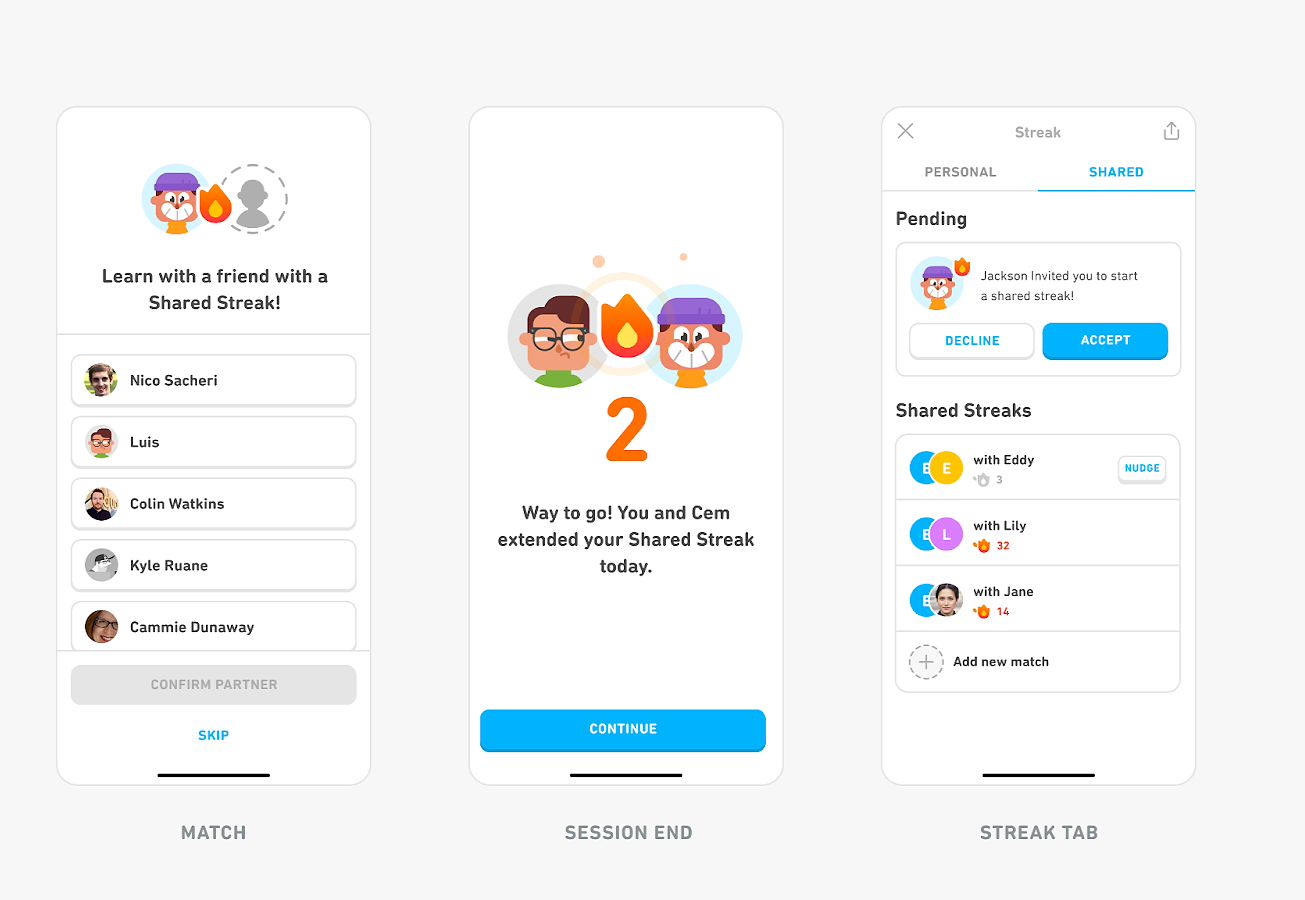
Duolingo does a version of this brilliantly with their weekly progress reports, which don't just remind users to practice — they show users what they've already accomplished, making the subscription feel like proof of progress rather than just a recurring charge.
Four examples of lifecycle messaging to keep value visible long-term
The post-subscription gap is most dangerous in the first week or two. But the underlying problem — subscribers gradually forgetting why they're paying — doesn't go away after that. It just becomes more hidden.
This is where longer-term lifecycle messaging earns its keep.
Think of it as resurfacing value:
- Helping users connect to real outcomes rather than abstract features
- Reflecting their progress back to them
- Reminding them why they started
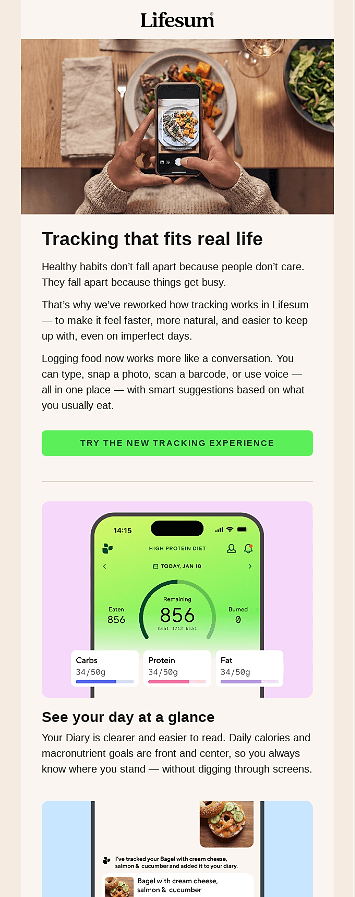
Lifesum: sharing feature updates
Lifesum sends messages to users when they improve a core feature — not just to announce the update, but to give subscribers a reason to re-engage with something they might have been using on autopilot.
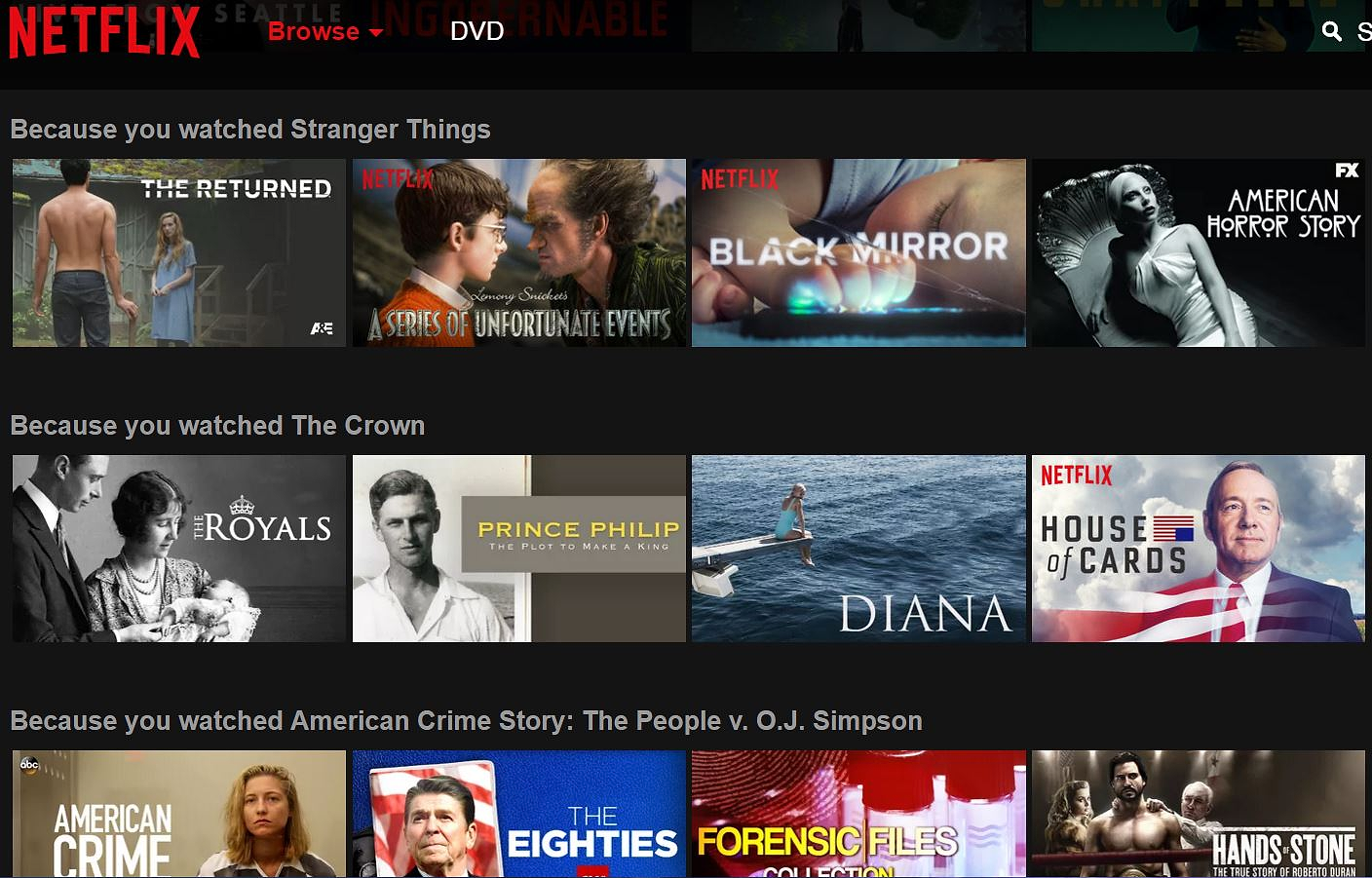
Netflix: personalization and recommendation
Streaming apps like Netflix and HBO Max take a personalized approach, sending recommendations for what to watch next based on subscribers’ viewing history. It's a simple idea, but it solves the friction point of decision fatigue. When the next step is obvious and feels relevant, users take it. When they have to think about what to do, they often don't bother — and habit breaks are exactly where churn starts.
Dropbox: feature spotlight
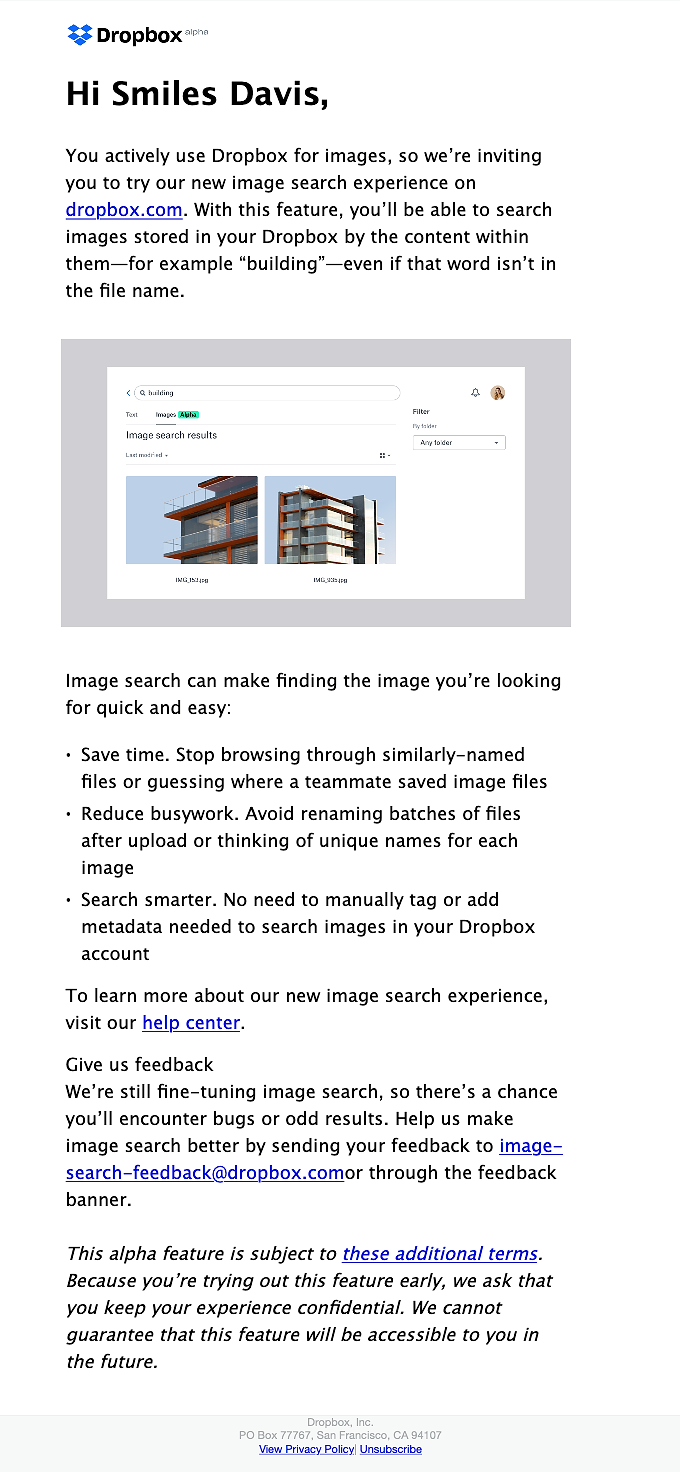
Feature spotlights work particularly well for subscribers who haven't explored everything they've paid for. A targeted message that says "hey, you've never tried X, and based on how you use the app, it might be your new favorite thing" is infinitely more useful than a generic "here's everything we offer". It's also a retention intervention — that untouched feature might just be what would have justified the subscription when they hit renewal.
One example is Dropbox, who reach out to people using Dropbox to save and share images, inviting them to try their new image search feature. The email quickly conveys why it’s relevant for the user, what the benefits of the undiscovered feature are, and where to go next.
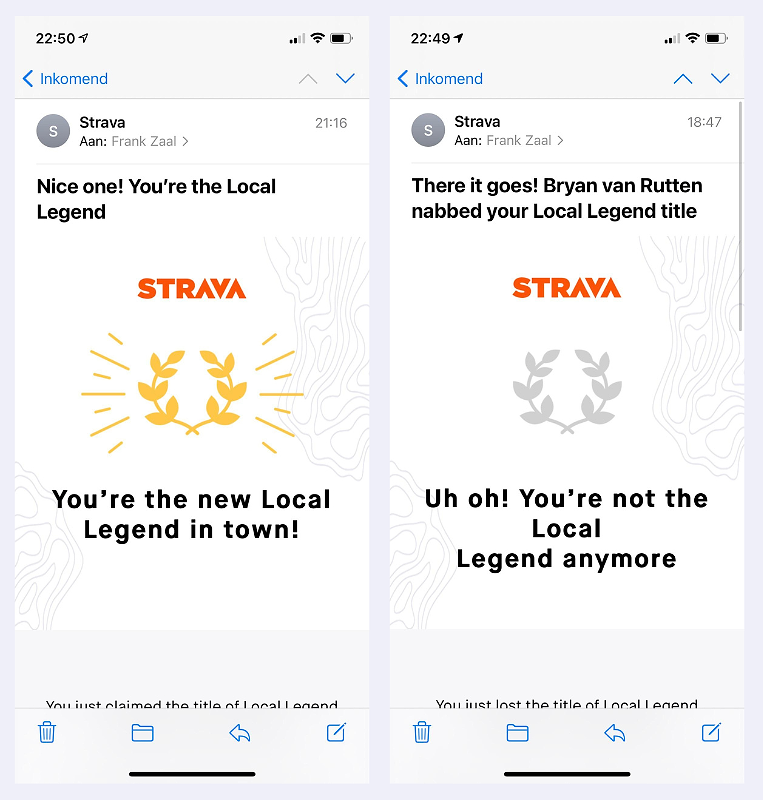
Strava: user identity reinforcement
Finally, don't underestimate the power of identity reinforcement. Strava tells users when they earn a ‘Local Legend’ badge by becoming the most frequent or fast rider/runner on a specific route. It highlights an achievement linked to the community, and gives them a reason to keep checking the app and building that habit. Strava even notifies users when they’re knocked off the top spot, creating an engagement loop between the entire user base competing with one another.
People stick with products that reflect who they want to be. Subscription products that make users feel like they belong to something tend to retain far better than those that treat subscribers purely as revenue lines.
If they’re engaged, just focus on the moments that matter
It would be wrong to end without saying this: more messaging isn’t the answer. While filling the silence is effective, it only works if there is still breathing space. The goal isn't to fill every day with a notification — it's to show up at the right moments with the right thing.
If your subscribers are actively engaged with your product, the best thing lifecycle messaging can do is get out of the way:
- Suppress messages when users are already in a healthy habit
- Avoid interruptions during focused sessions
- Step back when the product is working
These are all signs of a mature retention program, not a passive one.
The target is the moments when value is at risk of being forgotten: right after someone converts, when engagement starts to slip, when renewal is approaching. Those are the windows where a well-timed message can genuinely change the outcome.
Silence at the right time is fine. Silence right after someone hands over their credit card details is where early churn gets built.
Start speaking to users at the right moment
Alice’s StartApp School course reveals what to say (and when) across onboarding, trials, subscribers, drifting users, and win-backs — using segmentation, timing, and metrics to drive revenue.
Treat conversion as the beginning of the relationship
The shift in thinking here isn't complicated, even if building it out takes time. Treat conversion as the beginning of a new relationship, not the end of a funnel. Ask yourself: what does a new subscriber need to experience in their first week to feel confident they made the right call?
Start small. A warm premium welcome, a prompt toward the first premium win, and a week-one check-in is already meaningfully better than the silence most apps currently offer. Measure early cancellation rates in the first 30 days. Track whether new subscribers are actually reaching premium features in their first week. See what moves, and take it from there.