
Wrapping a Swift Package in a Gradle Module: How RevenueCat's KMP SDK Builds purchases-ios Without CocoaPods
- Engineering
In this article, you'll dive deep into how the SDK wraps a Swift package in a Gradle module.
In this article, you'll dive deep into how the SDK wraps a Swift package in a Gradle module.
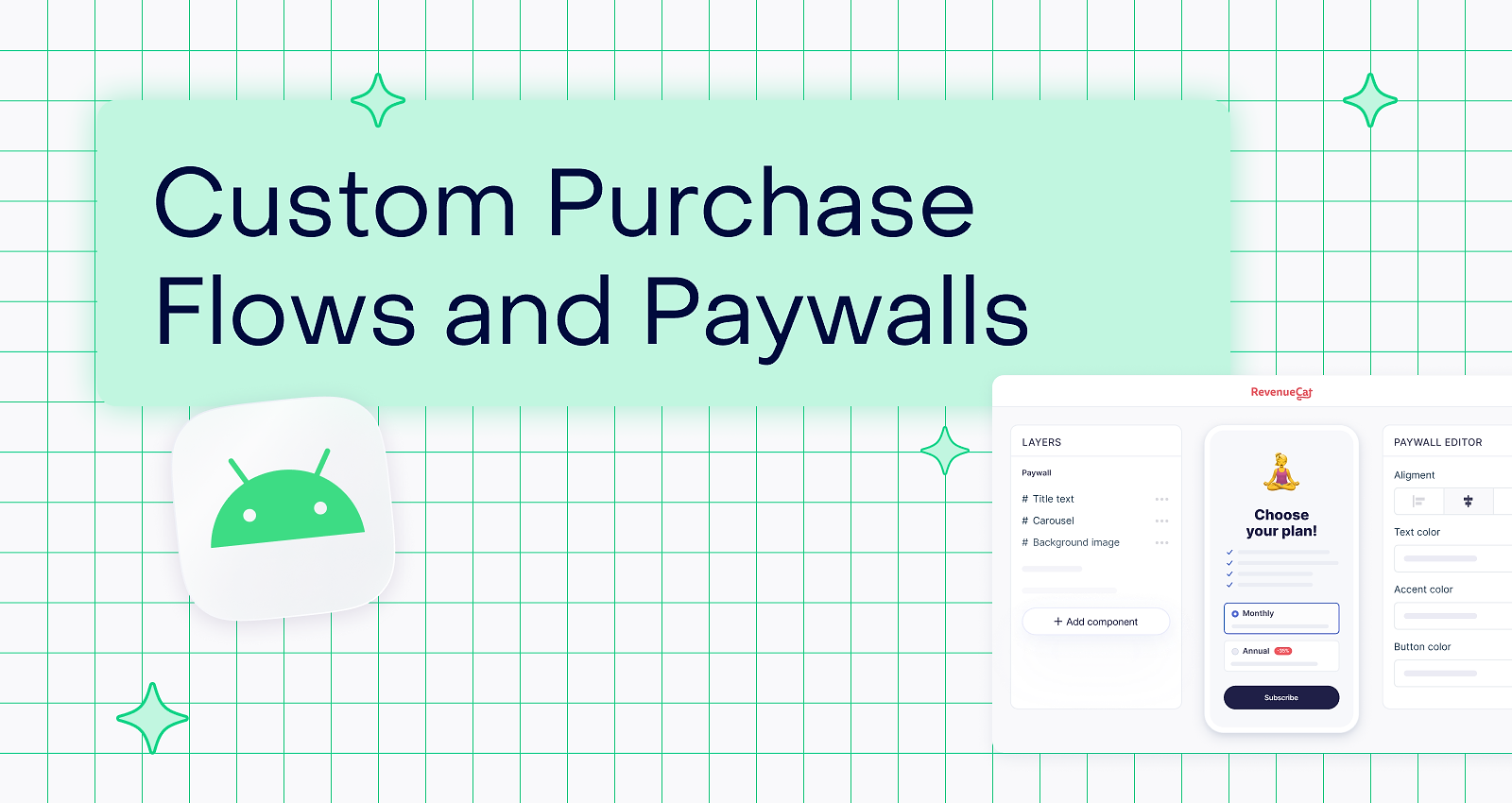
In this article, you'll explore building a custom paywall against the Purchases SDK.
This article covers how Rive and Lottie bundles work, what changes in your Android code, and the key constraints to know before choosing one.
In this article, you'll dive deep into how the RevenueCat Android SDK renders server driven paywalls as native Compose UI, comparing to the WebView screen and what it defers.
Billing Choice comes down to two decisions — who renders the choice screen and where payment happens — over one shared setup and one mandatory sale report.
In this article, you'll explore RevenueCat's Codegen Gradle plugin, which generates product data code automatically.
In this article, you'll add the RevenueCat SDK to an existing project, replace two platform initializers with one commonMain IAP configuration.

This article covers Google Play’s latest AI, billing, Play Console, analytics, and protection updates, including Play Billing Library 9.0.0 changes.
In this article, you'll explore what changed in 3.0.0 and why, the new iOS architecture, and step-by-step migration guides.
In this article, you'll work through a complete subscription testing setup for a Compose Multiplatform app.
This article covers the Google Play Billing Library v7 to v8 migration timeline, removed APIs and replacements, updated connection/query/purchase flows, new v8–v8.3 behaviors, and how to prepare for v9.
This article walks through building a Kotlin Multiplatform app with the RevenueCat KMP SDK, covering setup, purchases, entitlement gating, and server-driven paywalls using the official cat-paywalls-kmp demo structure.