
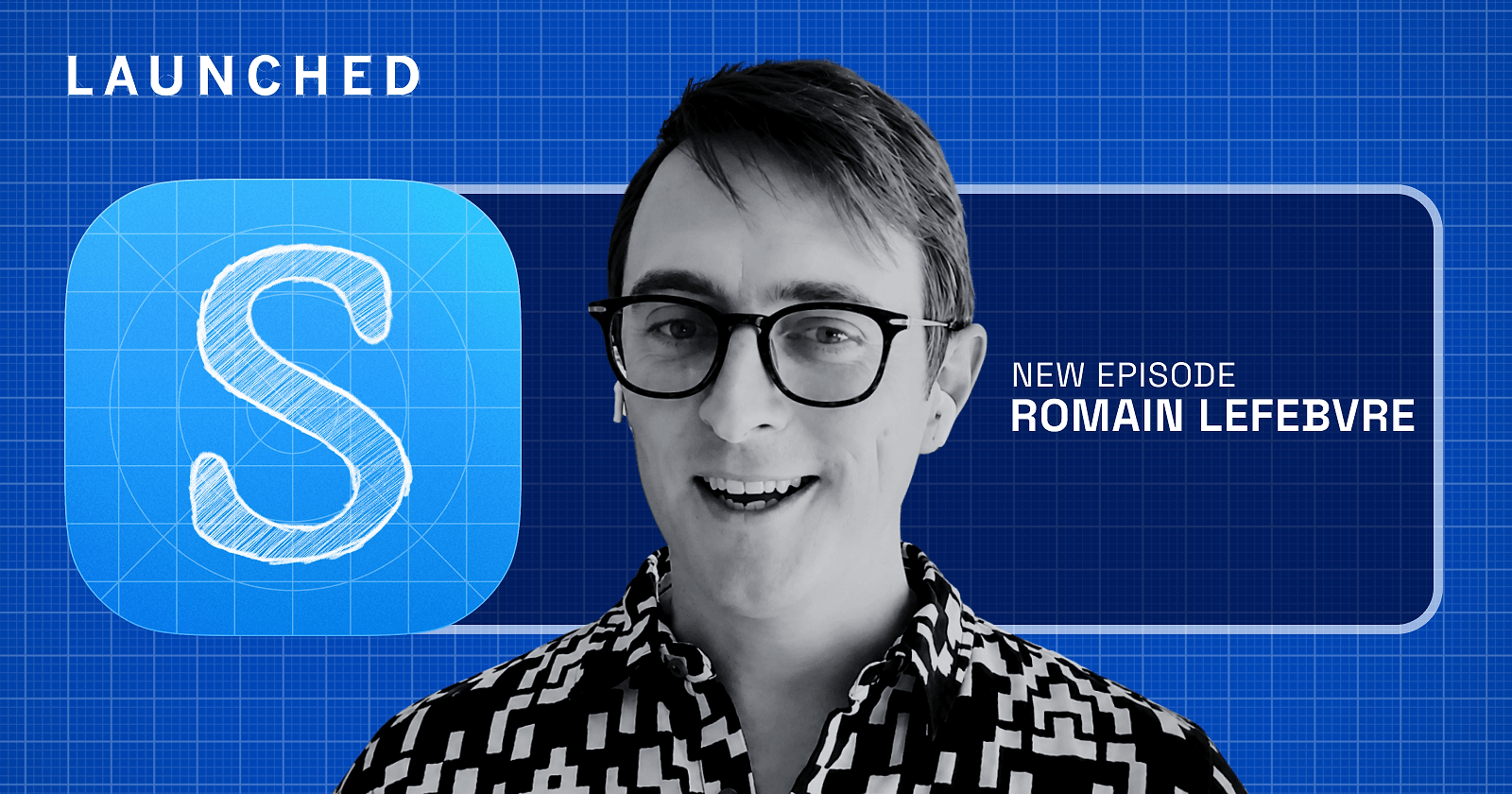
Word of mouth is usually treated as a happy accident. For Romain Lefebvre, it was a core design requirement.
When he started building Sequel — an app to track movies, TV shows, games, and books in one place — he knew he didn't want to spend his days hustling on social media or managing ad campaigns. In fact, he spent a total of $100 on Apple Search Ads before deciding it wasn't for him. Instead, he engineered the app to market itself.
The media detail screen in Sequel isn't just optimized for the person using the app. It's optimized for the moment that person pulls out their phone to recommend a movie to a friend. By prioritizing large, beautiful artwork over dense text, the screen acts as a billboard. "If it looks sleek and polished, I wanted the other person to go like, 'Wow, what is this?'" Romain says.
That single design decision turned his existing users into his most effective acquisition channel.
The $1,000 reality check
The indie developer journey is rarely an overnight success, and Romain's path was no exception. After volunteering for redundancy at his startup job to go full-time on Sequel, the initial financial reality was grim. In the first eight months after launch, the app made just $1,000.
Instead of endlessly grinding without a safety net, he set a hard deadline. He decided that if the upcoming version 2.0 update didn't generate £1,000 in its first month, he would stop and look for a job. Setting that milestone removed the emotional weight of slow growth. It turned a vague period of uncertainty into a clear, binary decision point.
The MacStories effect
The turning point for Sequel didn't come from an App Store feature. It came from the Apple enthusiast community.
Romain had quietly reached out to a few Mac and app-focused websites, resulting in a small newsletter mention that brought in his first wave of real user feedback. But it was the launch of version 2.0 that changed everything. The team at MacStories wrote a full, deep-dive review of the update.
"They wrote about my product better than I could have ever done myself," Romain recalls. They highlighted the exact design details and interactions he was most proud of. That review put Sequel in front of the tastemakers. Shortly after, YouTuber Quinn Nelson (Snazzy Labs) and The Verge's David Pierce both independently noted that Sequel was the most recommended app in their audience replies. The word-of-mouth engine Romain had designed was finally running at scale.
Why a capped free tier is really a trial
One of the hardest decisions in building a freemium app is figuring out what goes behind the paywall. Romain's initial strategy for Sequel was to limit free users to tracking 25 items total. He quickly realized this was a mistake.
As host Charlie Chapman points out in the episode, an app enthusiast who knows they will eventually hit a hard limit stops treating the app as free software. They mentally convert it into a trial. From the first open, they are hunting for the paywall to decide if the eventual cost is worth their time.
Romain eventually pivoted to an unlimited free tier, moving specific features like release notifications behind the paywall instead. The lesson? It's much easier to turn a paid feature into a free one than to take a free feature away from your users.
In the full episode, Romain also talks about how he accidentally became a designer after being hired as an engineer, the existential risk of relying on free third-party APIs, and why writing down your design principles makes it much easier to say no to feature bloat.