
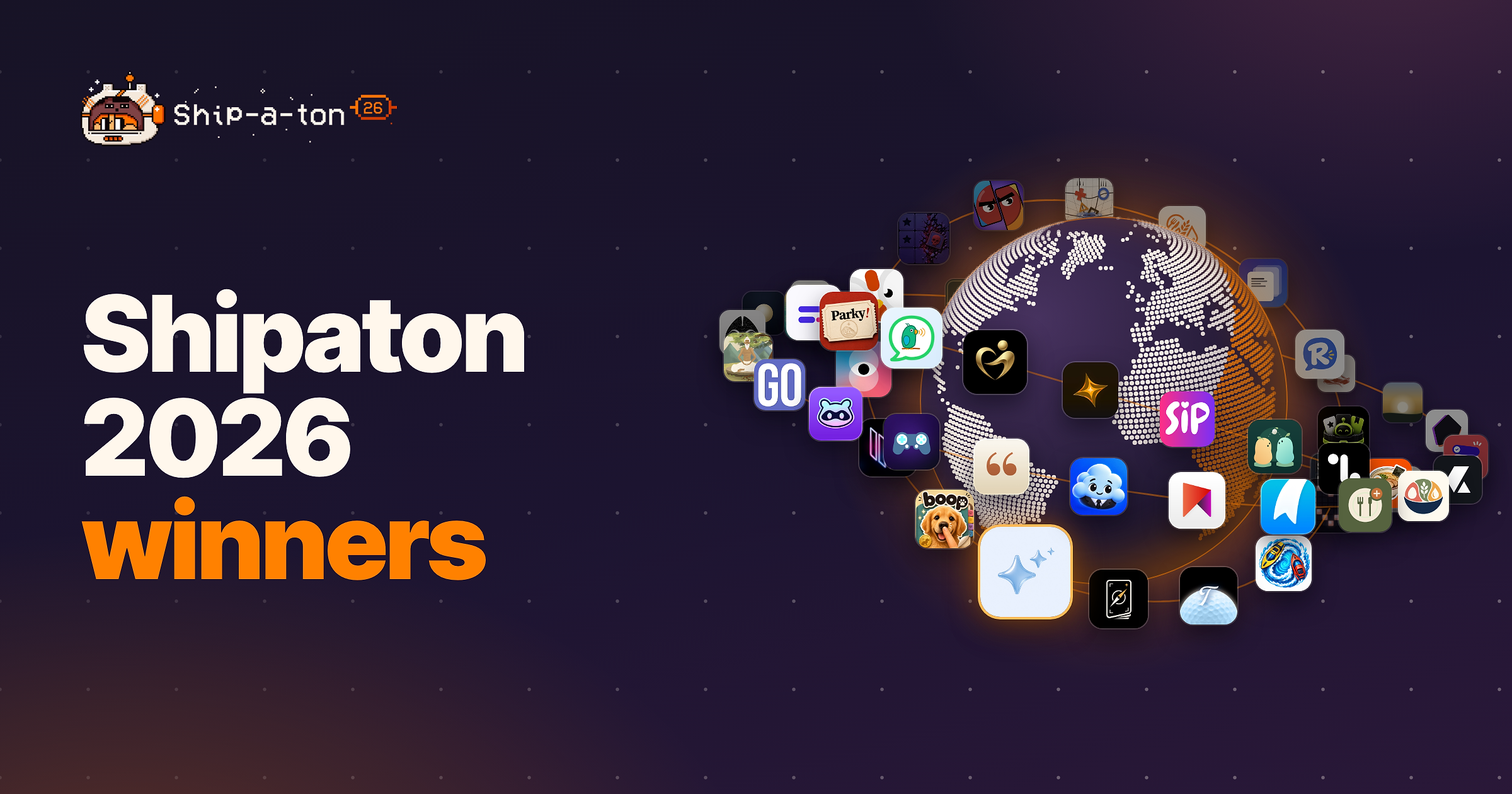

This year’s Shipaton saw tens of thousands of people taking part, submitting a total of 3985 projects. The growth is of course not surprising, as AI tooling has improved significantly in the last year, and we are glad to see that this year we got great apps from both new builders as well as existing app builders. And even though at times it seemed like Apple was not going to have time to review all the apps you submitted, we ended up seeing almost 3000 apps submitted to the App Store, Play Store, and Galaxy Store.
From all those submissions, our judges ended up choosing 58 winning apps that showcase the best apps in their categories. These decisions were not easy, and were made harder by the sheer amount of apps that made it to the final judging stage.
And now it's time to reveal the winners of Shipaton 2026:
Grand Prize Winner
The Grand Prize was about what happened after an app shipped. We looked for developers who kept improving the product, found their first users, and gave people a reason to stay. Downloads, retention, and revenue helped tell that story, alongside the decisions that moved the app forward during Shipaton.
1st Place: Mio
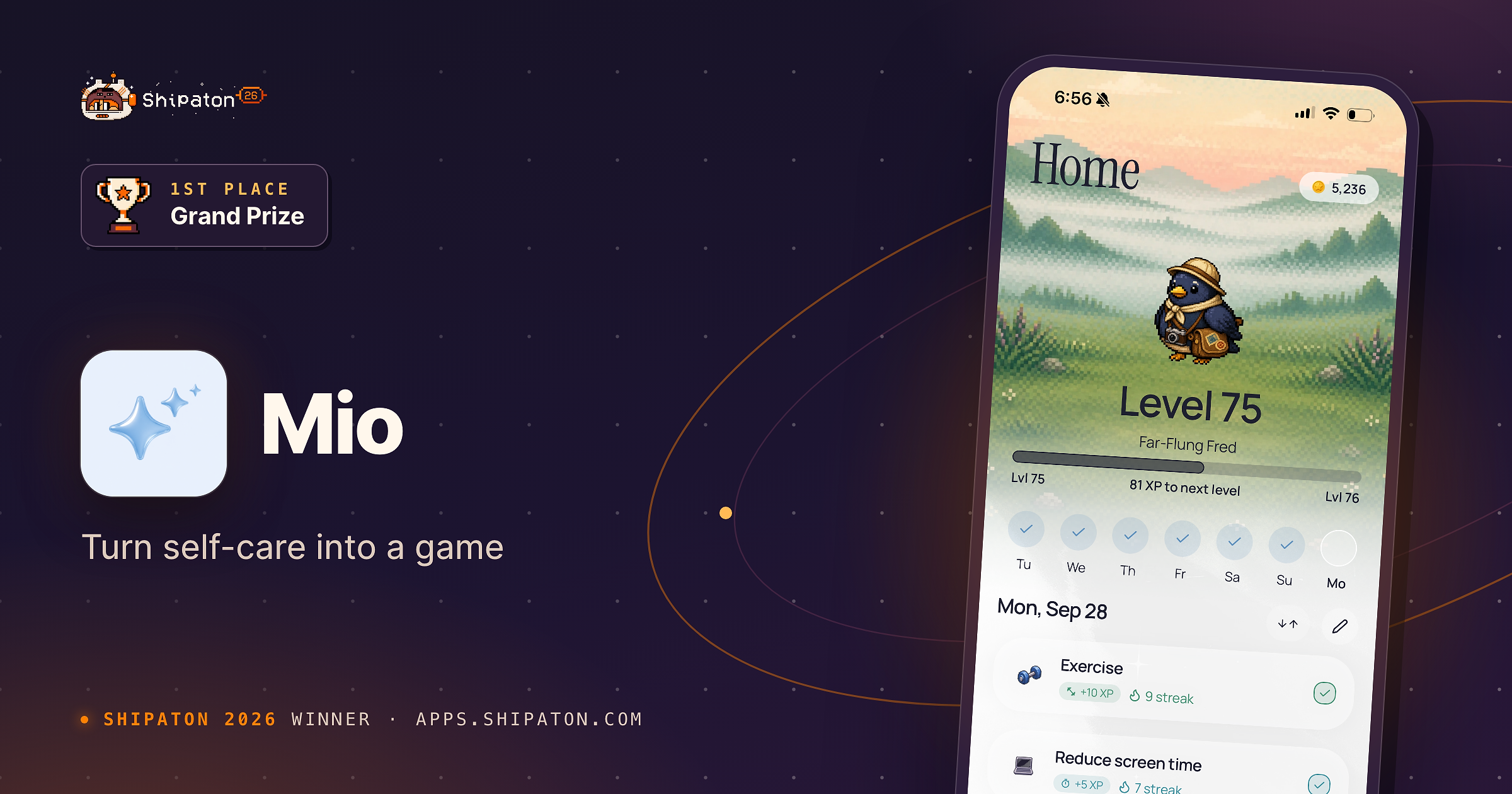
When we looked at the revenue and growth across all the apps submitted to Shipaton, Mio was a clear winner. Mio’s traction is even more impressive, when you take into account that it competes in a very tough category of habit trackers.
Mio is a cozy, self-care and habit tracker, where building habits earns you coins, levels, new companions and collectibles. Gamification is a big part of the app, with the user leveling up a pixel companion as they build their own habits. On top of the gamification, Mio also has social features, allowing you to add friends and create groups.
Through gamification, social features, and UGC marketing, the team behind Mio managed to grow the app to over 6000 downloads, with 802 active subscriptions and almost 30k dollars in revenue.
#BuildInPublic
Building in public means inviting people into the process while there's still time for their feedback to change things. For this award, we looked at how developers shared their progress, what they learned from the conversations, and how those lessons made their way into the app.
1st Place: Boop
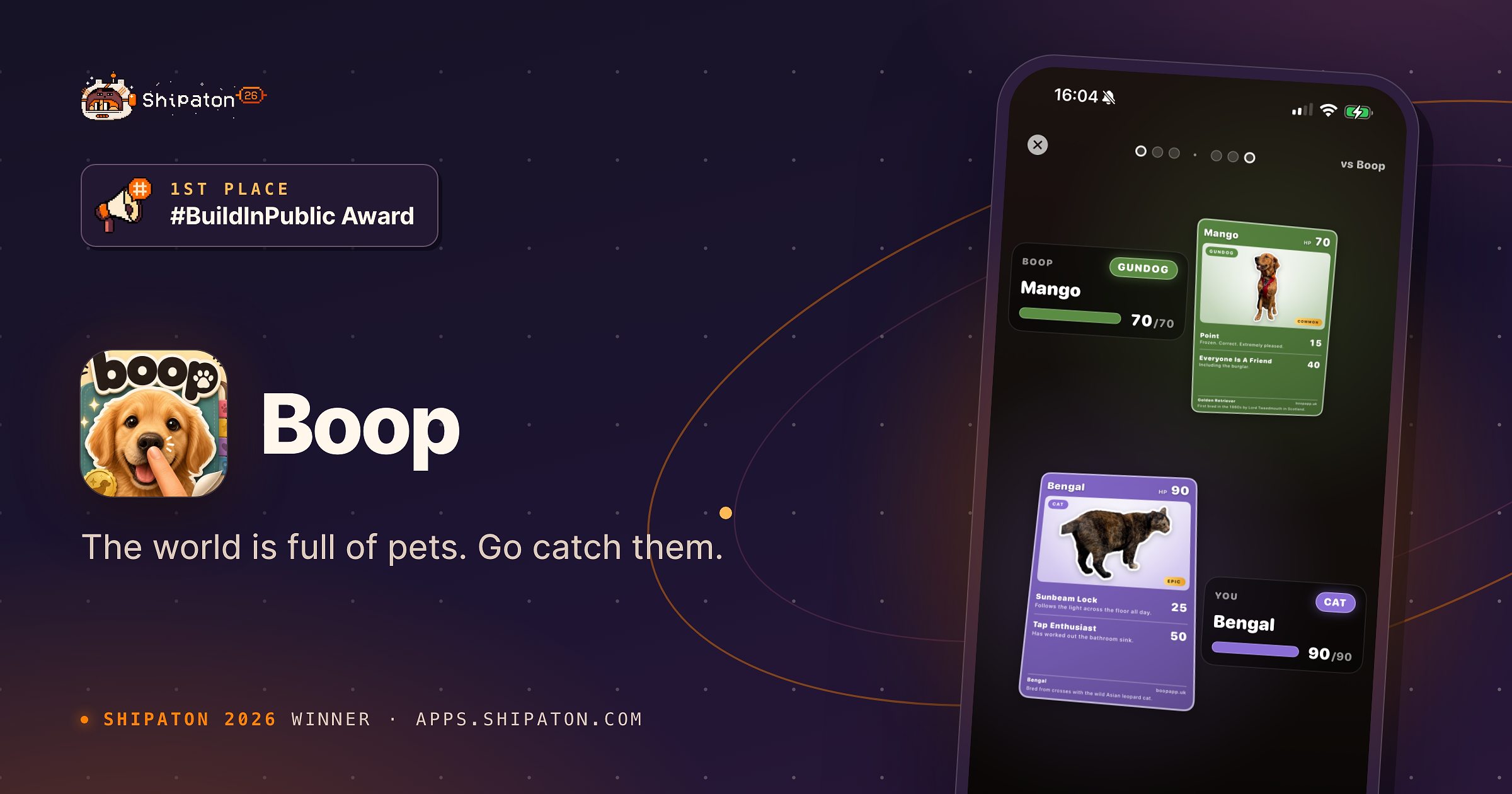
Boop turns the cats and dogs you meet on walk into a collection: point your phone at a pet, identify its breed, and save it as a sticker in your book. Taiwo took the idea out into the world through his 100 Boops challenge, handing owners printed portraits and letting their feedback shape the app. A very different take on building in public, but one that worked.
The judges particularly liked the effort Taiwo put into building in public, describing it as unmatched.
2nd Place: Scroll Survival
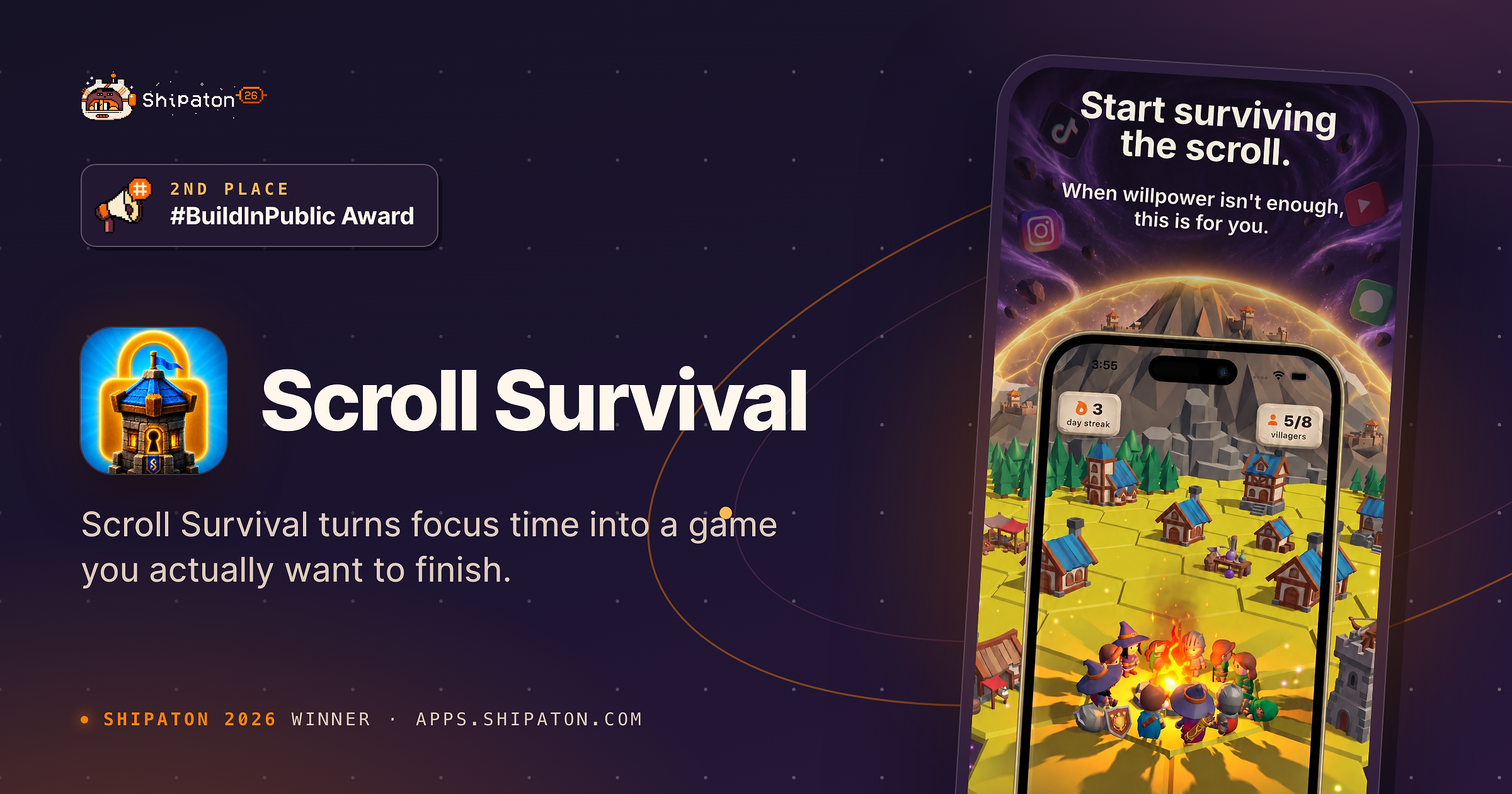
Putting your phone down feels a little more rewarding when there's a village growing while you're away. Scroll Survival turns focus sessions into buildings, villagers, and unfolding stories. Eric Vargas shared the build through daily updates and a public roadmap, with community feedback becoming dark mode, widgets, and even a story-based consequence for ending a session early.
The judges highlighted how thoroughly Eric documented the public build, with a clear record of the journey and its key moments.
3rd Place: FeedbackThread
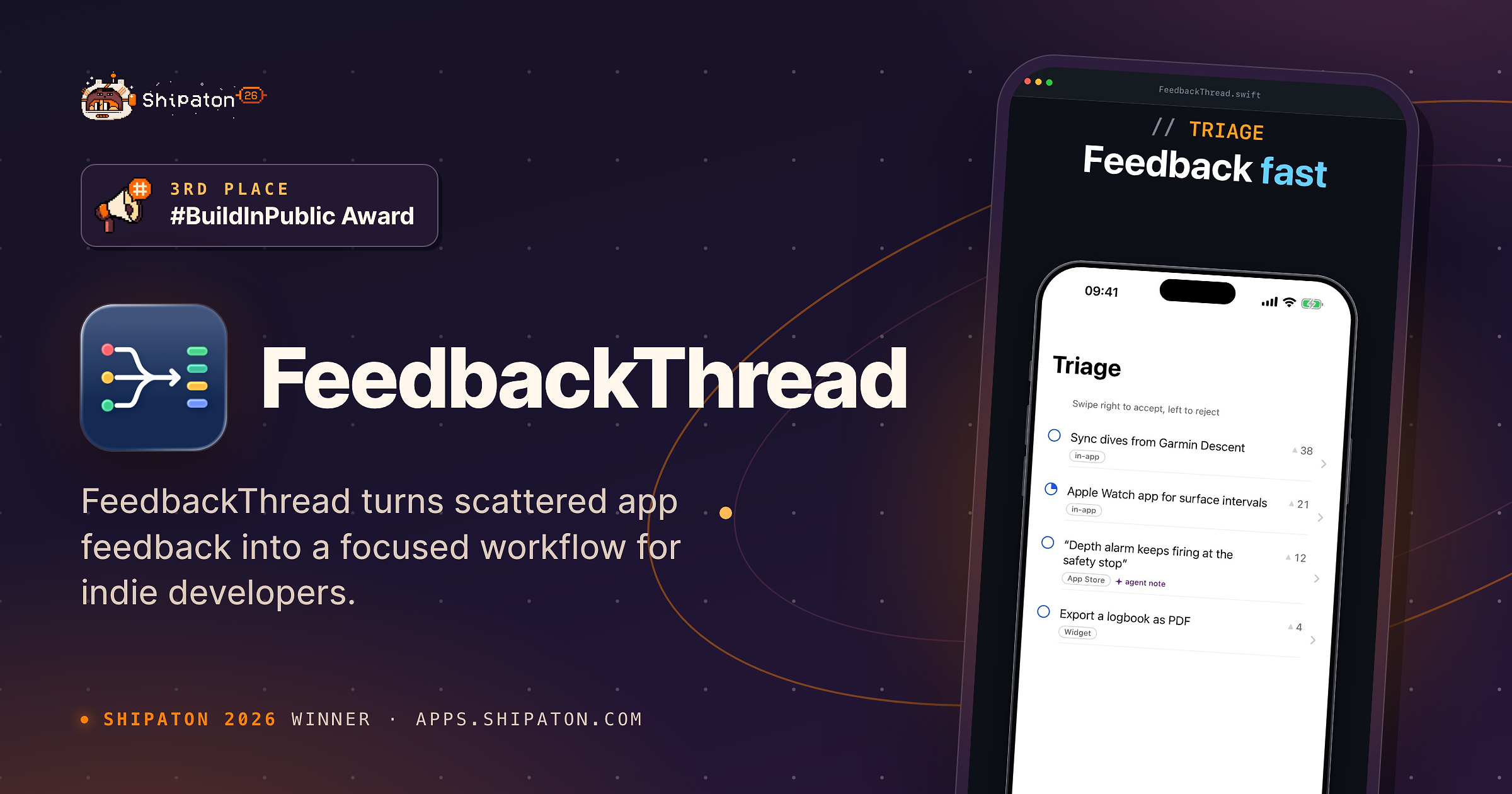
Anyone juggling several apps knows that customer feedback rarely arrives in one tidy place. Aivars Meijers built FeedbackThread to bring reviews, bug reports, and feature requests into a single queue, with public boards showing what's happening next. He also opened up the build through livestreams, sharing the decisions and detours between an early prototype and an App Store release.
The judges appreciated how the livestreams and social posts made the whole development journey easy to follow.
Best Game Award
For the Best Game Award, we looked for games that made us want to play another round. That meant engaging mechanics, a distinctive world, and care in the details, from controls to sound and animation. We also considered how paid features fit into the experience of playing.
1st Place: Nitelore
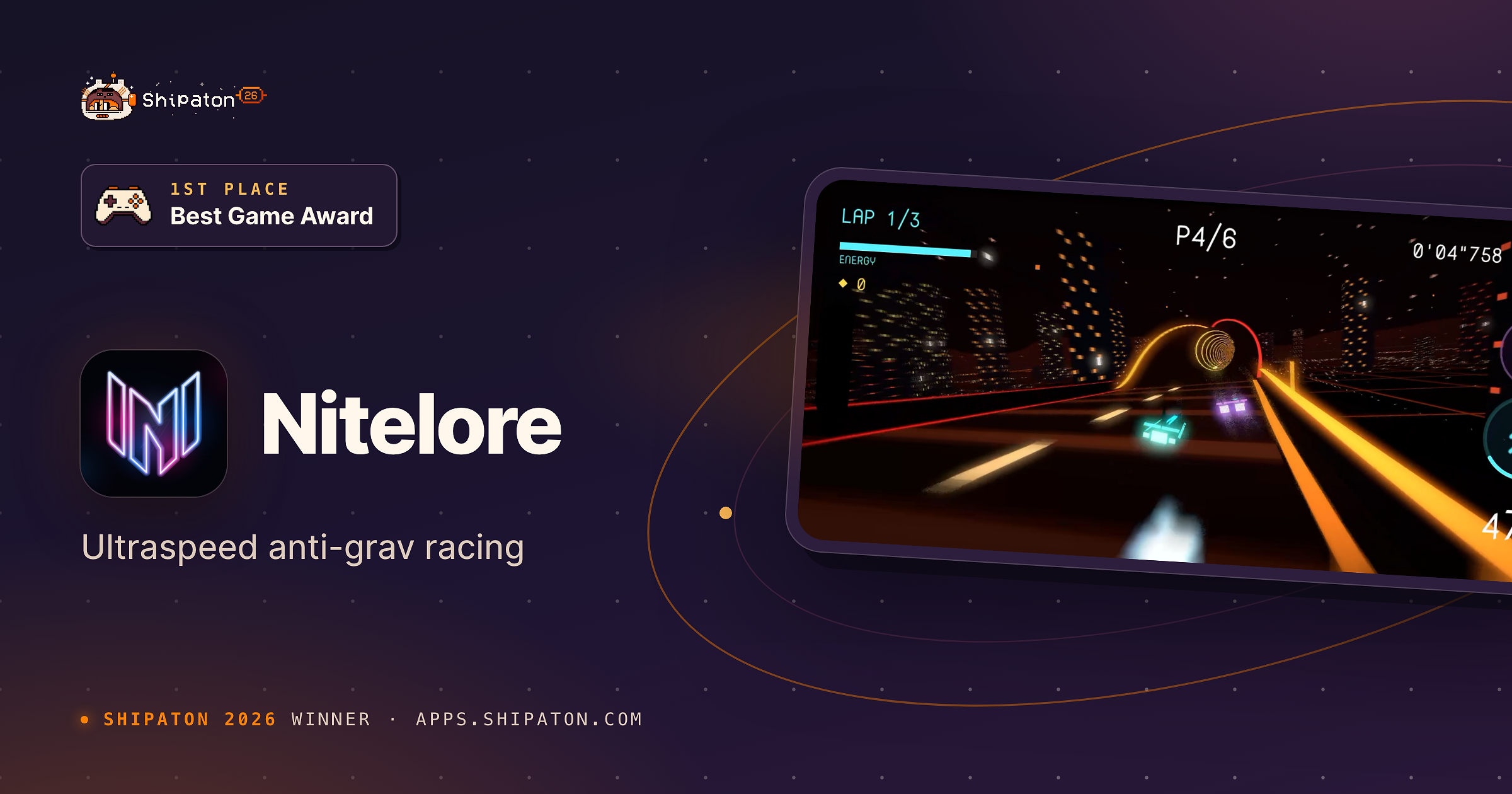
Nitelore brings the neon tracks and hovering vehicles of classic anti-gravity racers to the phone.
There are ghost time trials for chasing your own best run, combat races for causing trouble, and online multiplayer when you want company. Its tracks, vehicles, and sounds are generated in code, giving the game a distinctive retro-futurist world to race through.
Free tracks give players a way into the game before paid content unlocks, with daily and weekly challenges adding reasons to return for another race.
The judges singled out the game's art style, effects, and haptics.
2nd Place: Keepsweeper
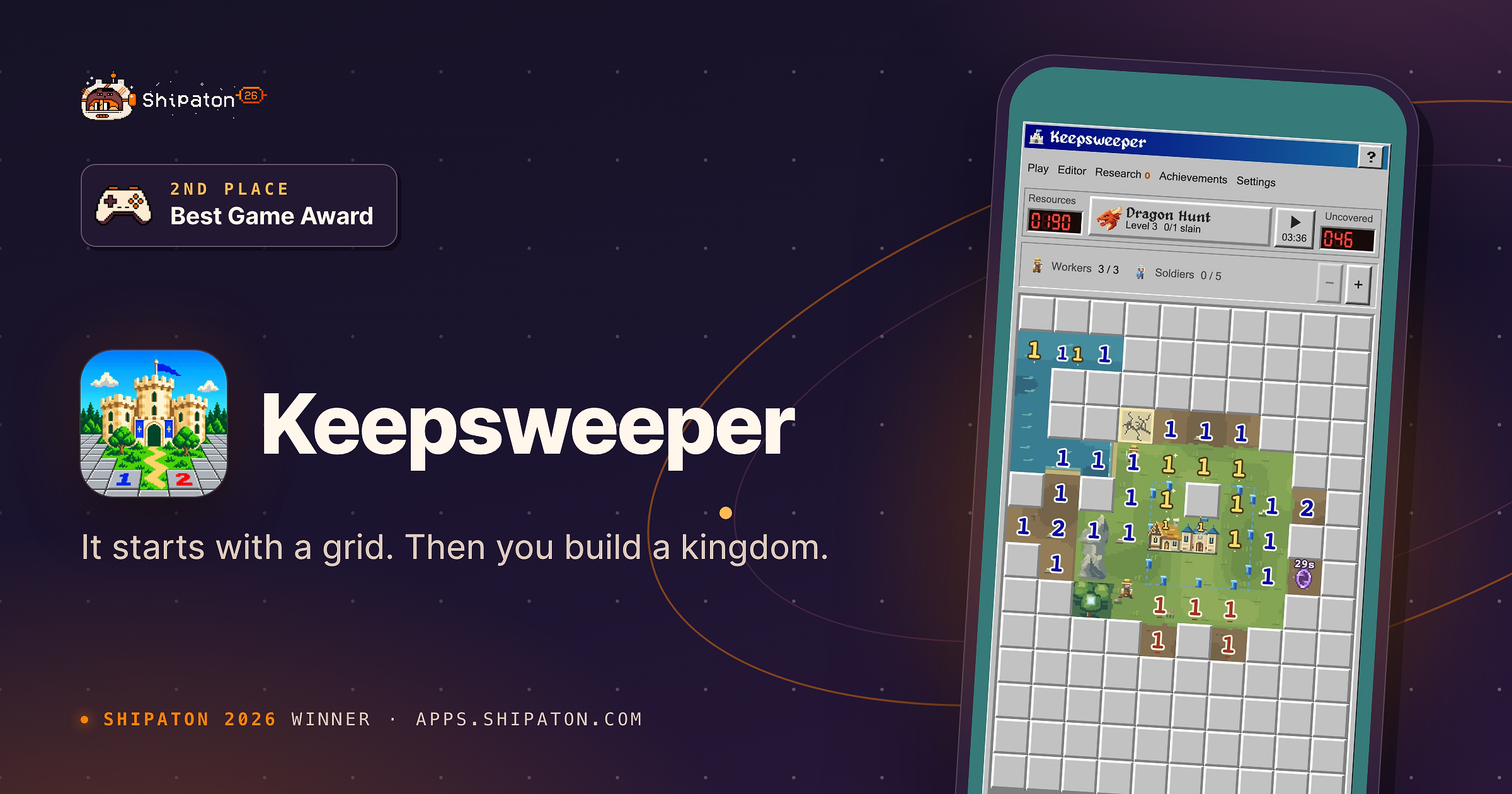
Michael Flarup took the familiar logic of Minesweeper and hid a small fantasy kingdom underneath it. In Keepsweeper, uncovering a tile might reveal resources, a threat, or another chance to grow your economy. Farms benefit from windmills, recruits need blacksmiths, and the whole thing lives inside a Windows 95-style window. It's a lovely setting for a surprisingly involved strategy game.
3rd Place: Hearsay
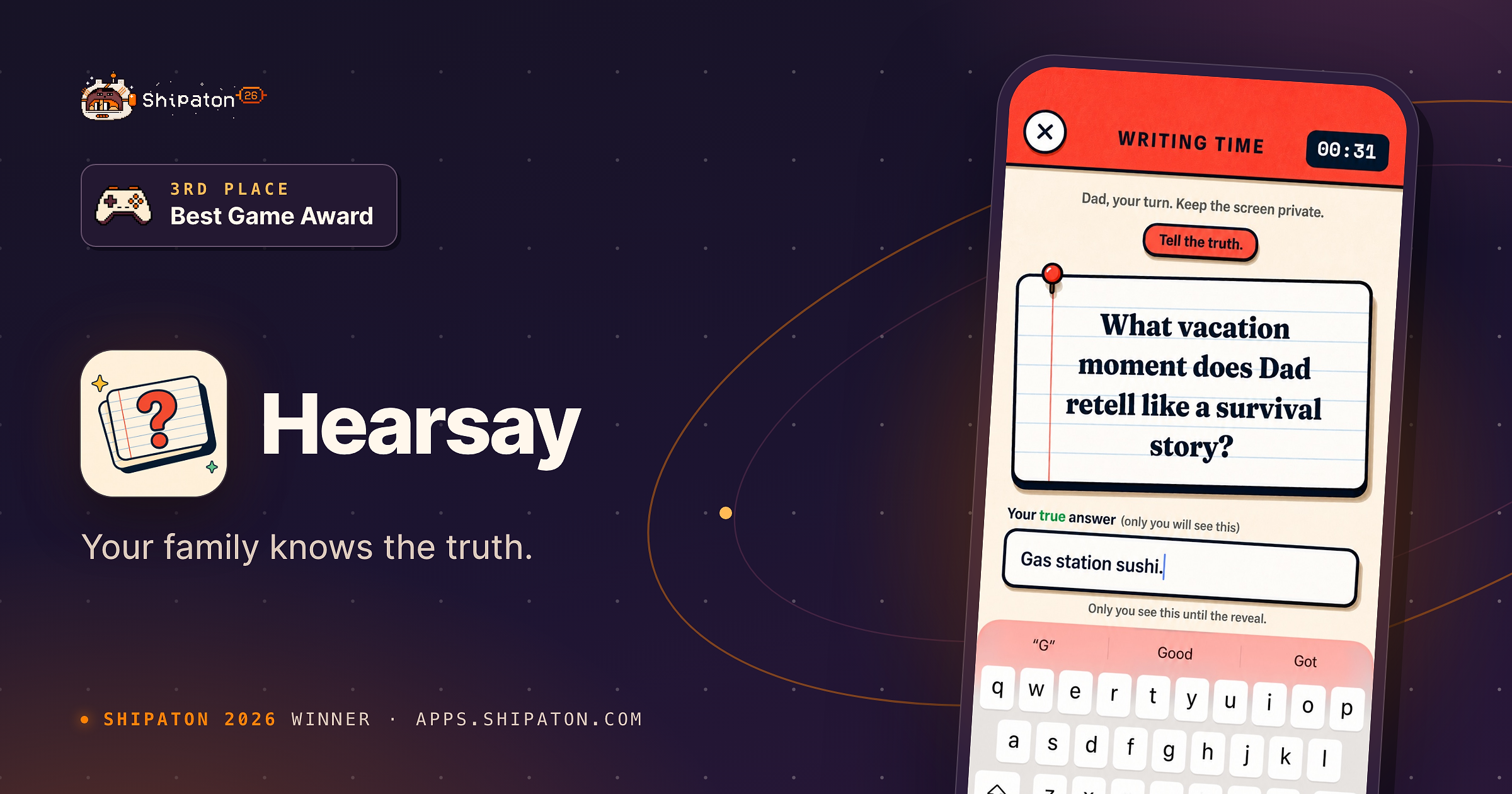
Every family has a story that nobody remembers quite the same way. Hearsay puts that to good use: one person answers a personal question truthfully, everyone else invents a lie, and the group tries to spot the real answer. There's a separate vote for the funniest response, too, so a wildly implausible story can still earn its place at the table.
RevenueCat Peace Prize
The RevenueCat Peace Prize celebrates apps built to make life a little better for someone. That might mean helping people understand an invisible difference, make sense of their health, or feel closer to one another. We looked for a clear understanding of the people behind the problem and a thoughtful way to help them.
1st Place: See as Me: Colorblind
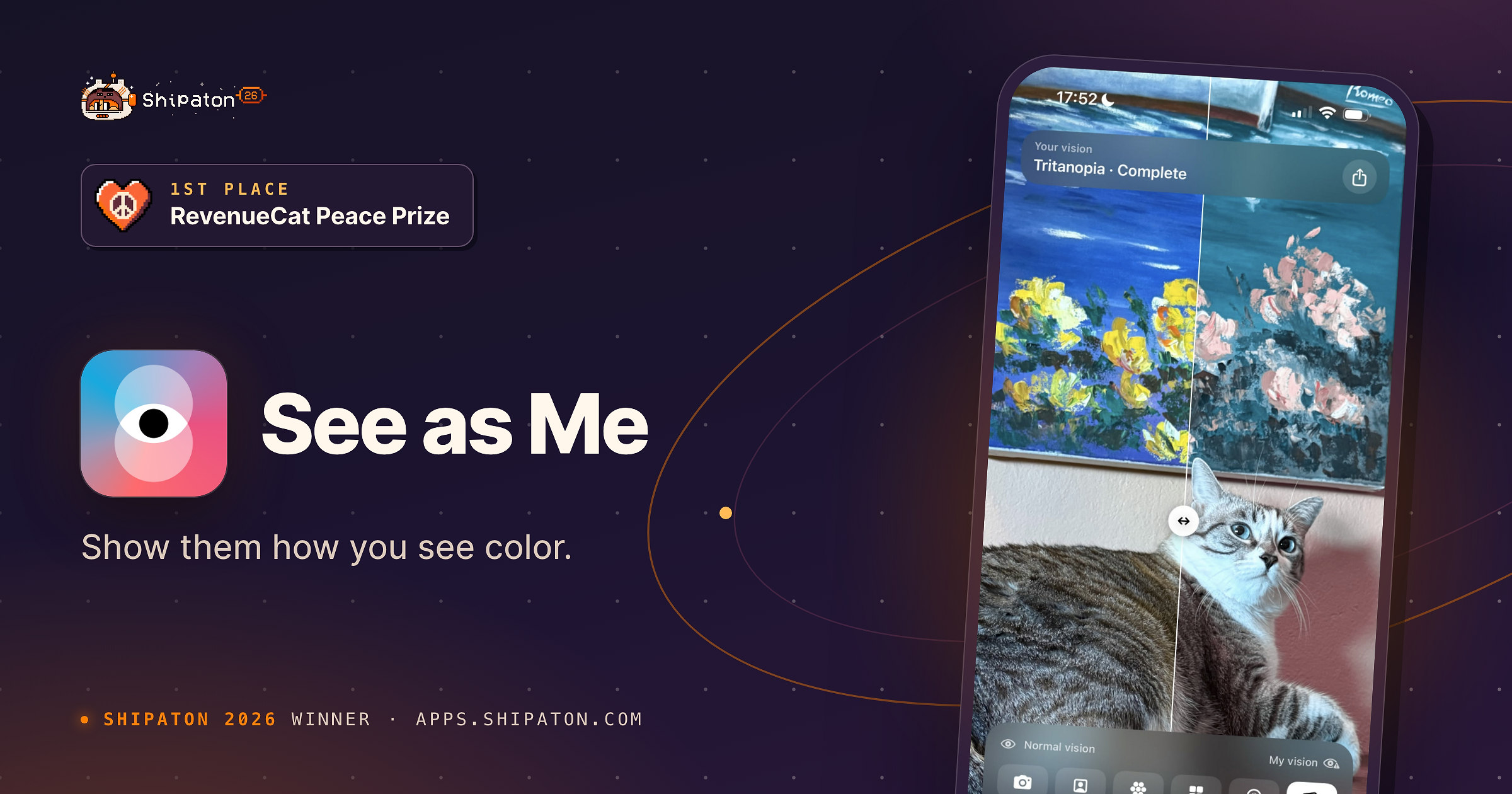
Javier Jiménez discovered he had protanopia after painting a figure green as a child.
See as Me gives him a way to answer the question that followed: what does the world look like to you? Its split-screen camera shows different forms and degrees of color blindness side by side, while a shareable link lets someone else see the comparison without installing the app.
Javier describes the app as free, with no ads or accounts. That keeps the focus on helping classmates, colleagues, and friends understand a difference they might otherwise never see.
The judges highlighted the personal story behind the app: its creator lives with the very problem he's helping others understand.
2nd Place: Josie
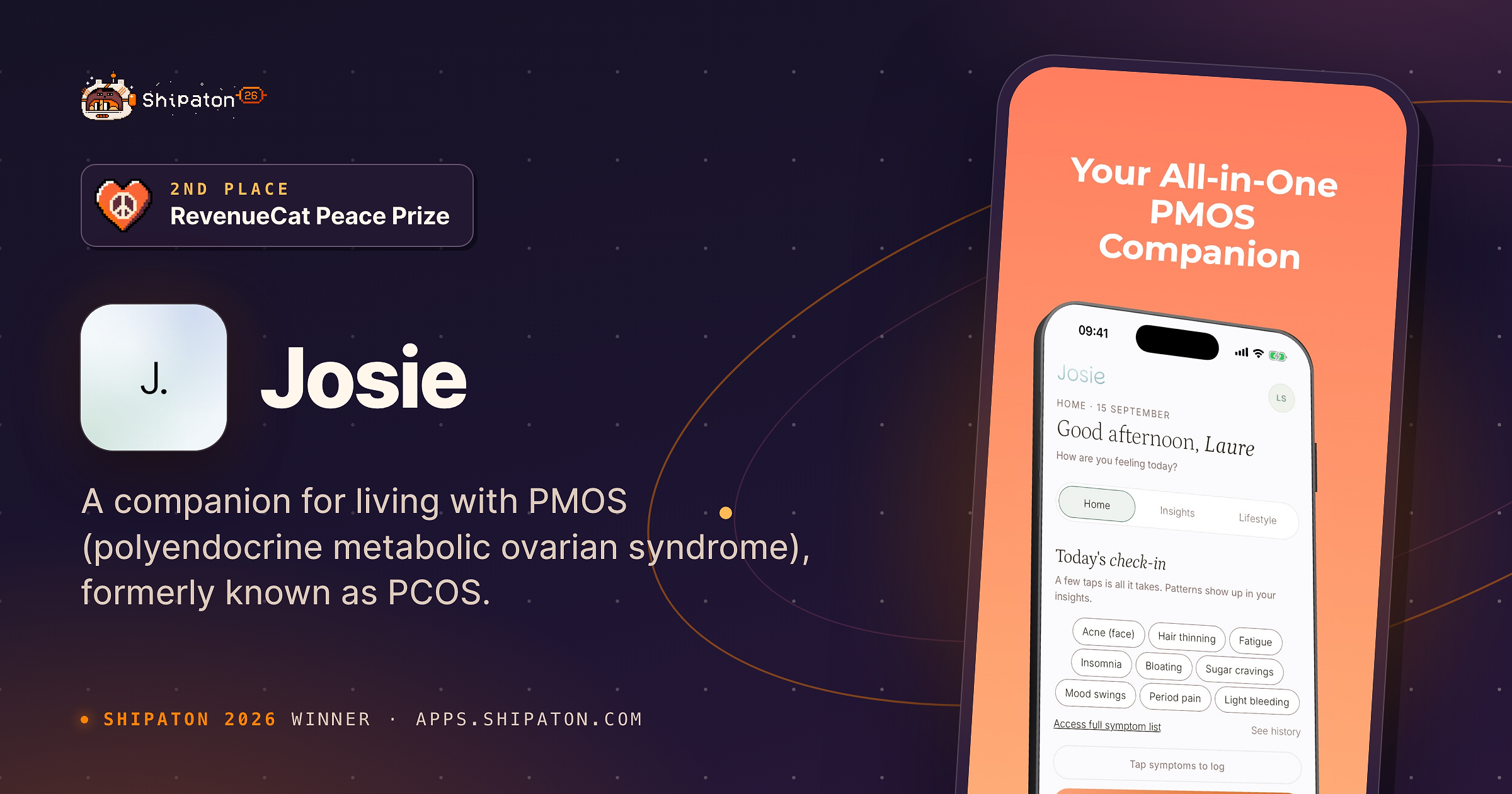
Josie's founders have PCOS themselves and built the app they wished they'd had while trying to understand it. Lab markers, cycle information, and daily habits sit together, making changes easier to follow over time. The care extends to the language: Josie avoids judgmental normal-or-abnormal alerts, helping people build a clearer record to discuss with their clinicians.
The judges appreciated that Josie addresses a real problem and that the founder's involvement with it extends beyond the hackathon.
3rd Place: Loomi
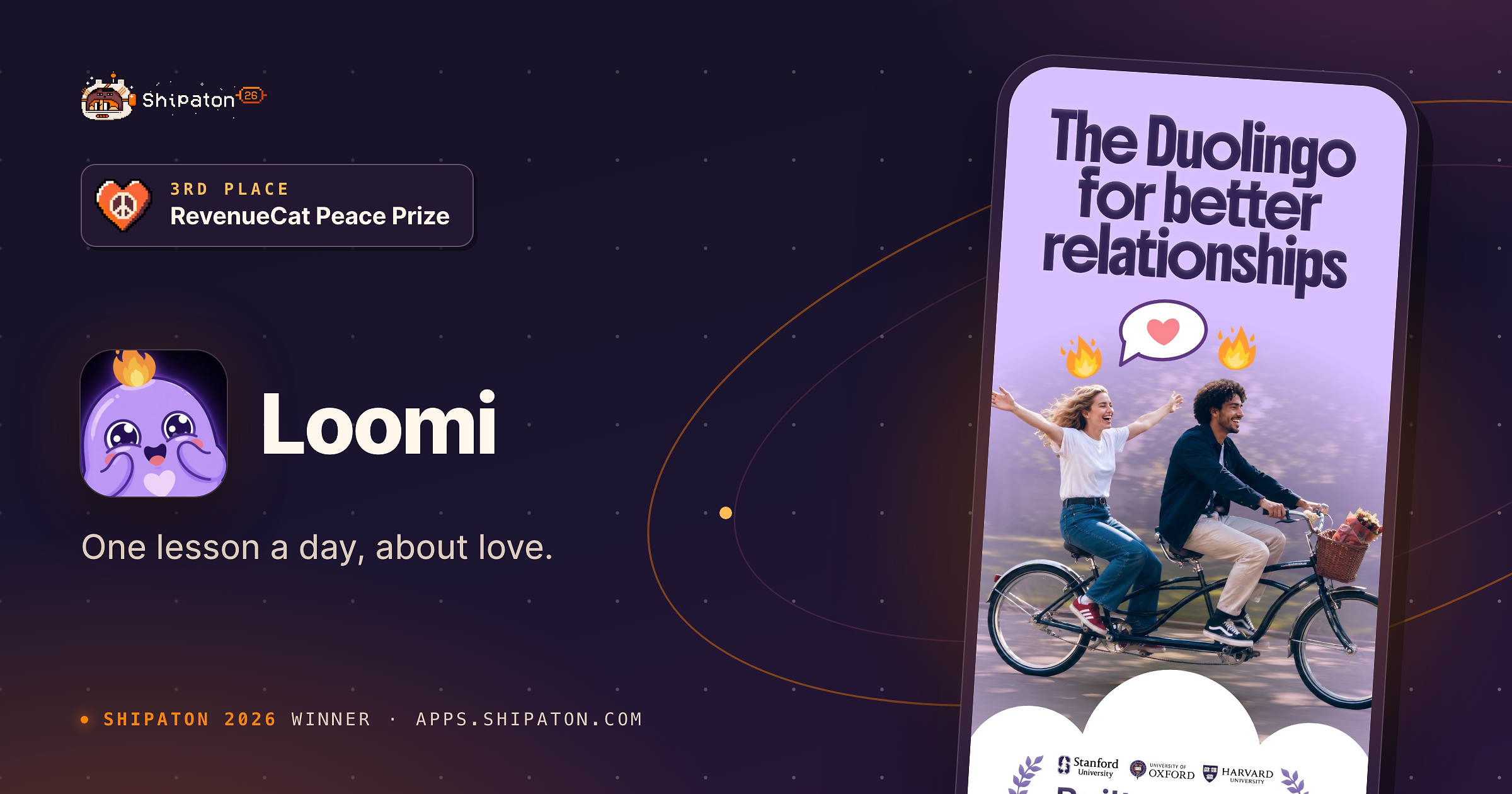
Loomi makes room for the relationship skills that are easy to put off until something goes wrong. Couples get short lessons, daily questions, shared memories, and date ideas, with each lesson ending in something to try together. Nik Shevchenko connects the idea to his parents' divorce and a wish to help people start those conversations earlier.
The judges particularly liked the interface and the interactive features that give couples more ways to use what they're learning.
RevenueCat Design Award
The RevenueCat Design Award was about the care you can feel when using an app. We looked at how the interface, interactions, and animation worked together, with room for original ideas and a little personality. The best entries made everyday tasks feel clear, considered, and enjoyable.
1st Place: Clucky
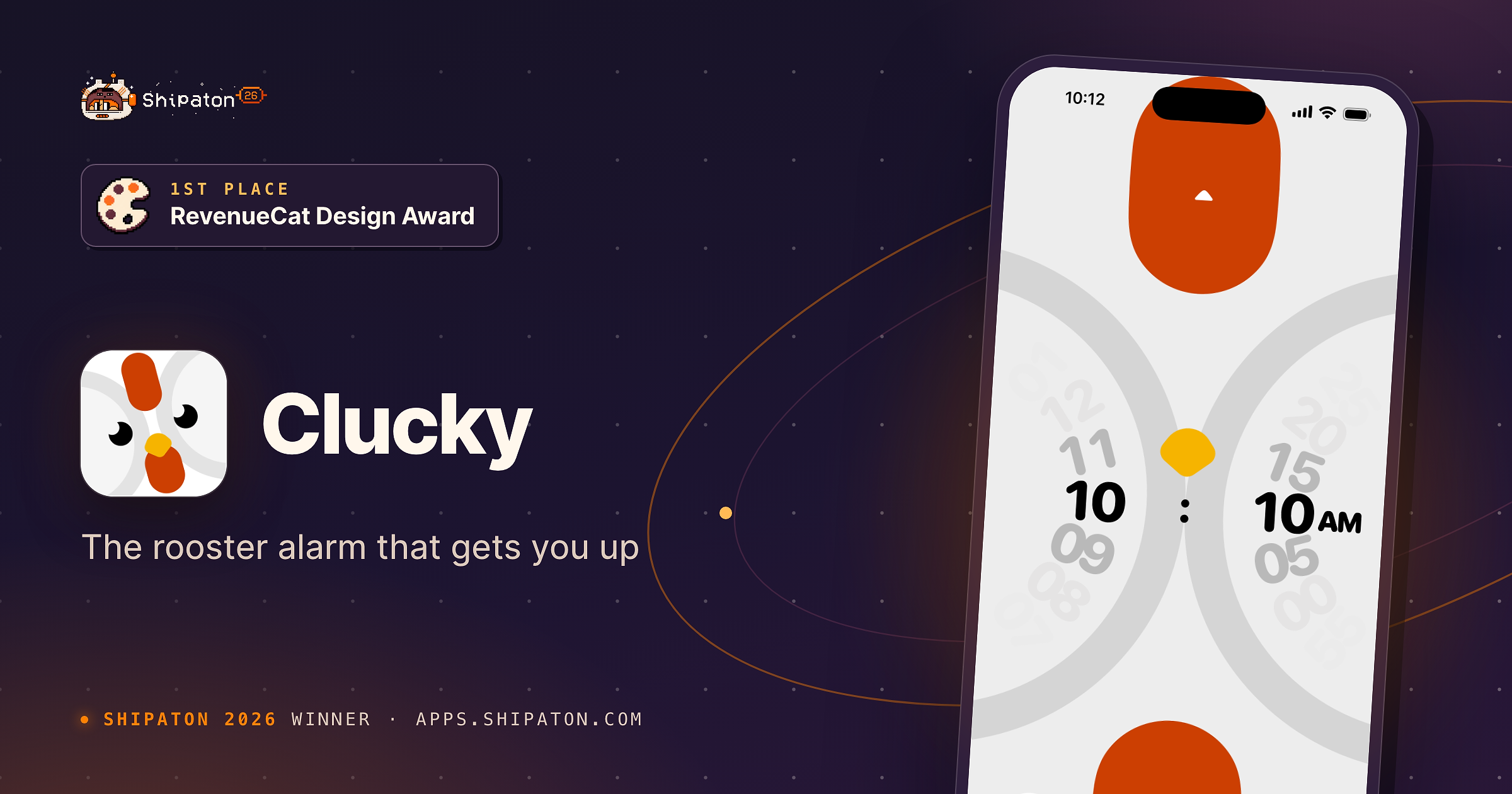
Clucky is an alarm clock with a rooster's determination to get you out of bed.
Dismissing it can mean solving a problem, moving around, or finding an object, and the character follows you from setup through your morning missions. Even choosing the alarm time becomes part of the design: scroll the rooster's eyes and use its yellow beak as the pointer.
The same character appears throughout onboarding, missions, and paywalls, while animation and haptics carry its personality into the details. It's the consistency of that little world that makes Clucky memorable.
The judges singled out the rooster's eyes as a time picker, a small detail that shows how much creativity went into the design.
2nd Place: Aweigh
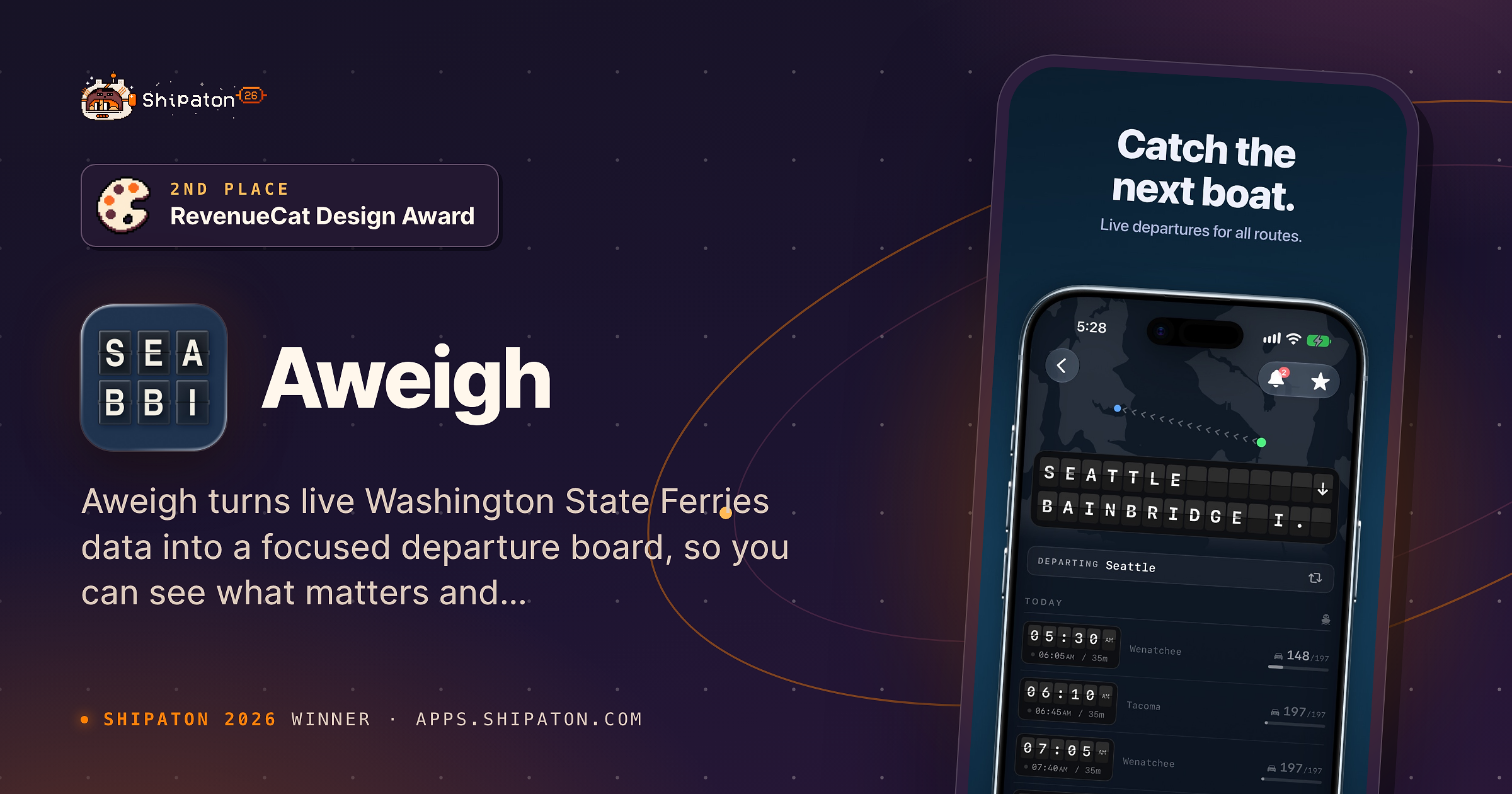
Catching a ferry is a pretty good reason to want clear, reliable information on your phone. Aweigh brings Washington State sailing times, vessel locations, cameras, and service alerts to iPhone and Apple Watch. Zach Coleman gives that changing information a familiar shape: a departure board that flips and reshuffles like the signs at a terminal, complete with haptic feedback.
3rd Place: Buck
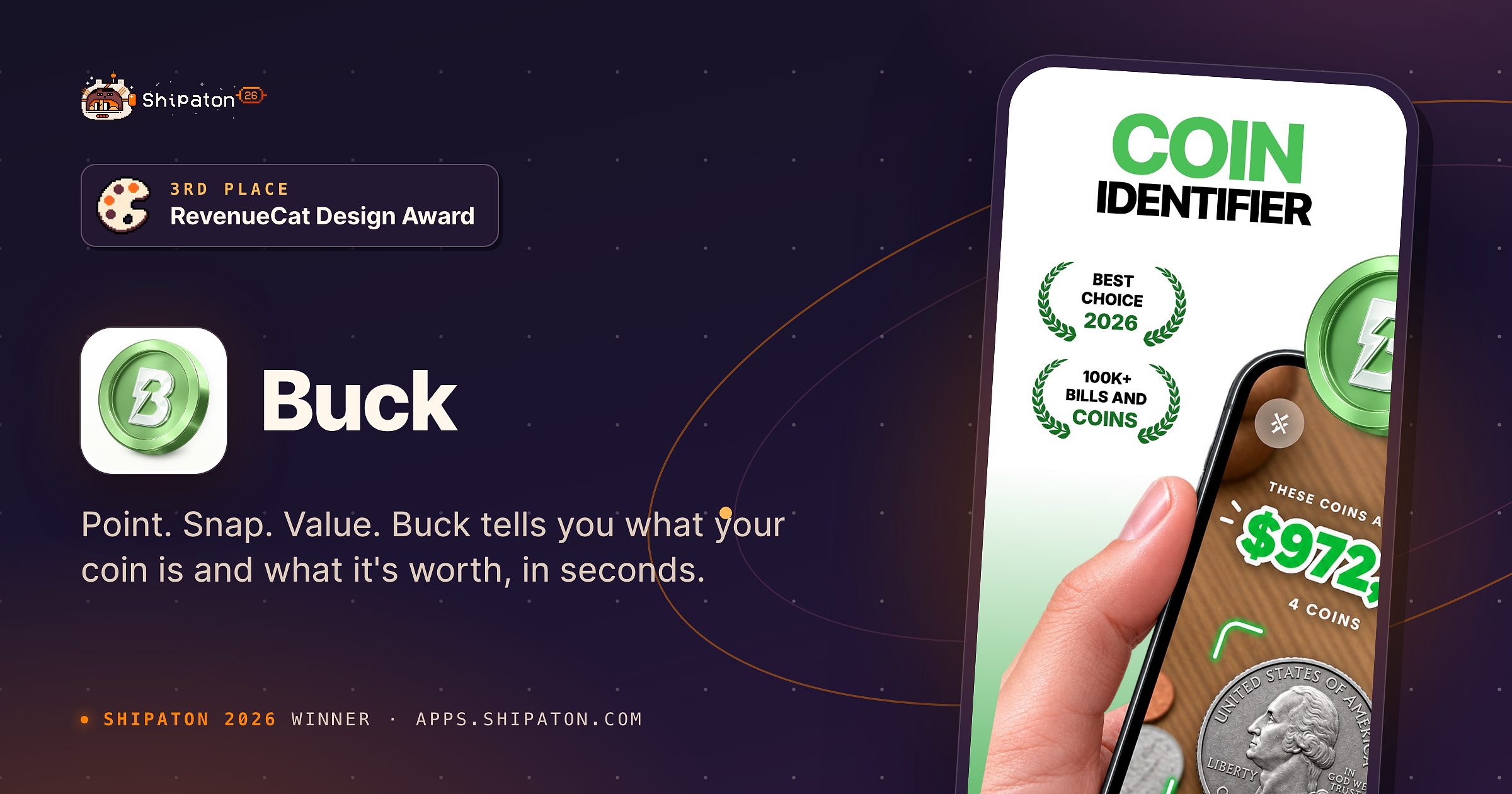
A box of coins inherited from his grandfather gave Buck's creator a collecting project and plenty of research to do. Buck makes that first step easier, identifying coins and banknotes and helping users explore their history and estimated value. The scan reveal gets its own little celebration, with animation, sound, and haptics before the find joins a digital collection.
Reviewing its monetization, the judges particularly liked the personalized paywall, which shows the user's own scanned coin at a clear moment of value.
Catvertising Award
For the Catvertising Award, the challenge was to find a creative place for RevenueCat Ads within the app experience. We wanted to see how an ad could connect to something a user already wanted to do, and how that choice worked alongside the app's other ways of earning revenue.
1st Place: Adversary
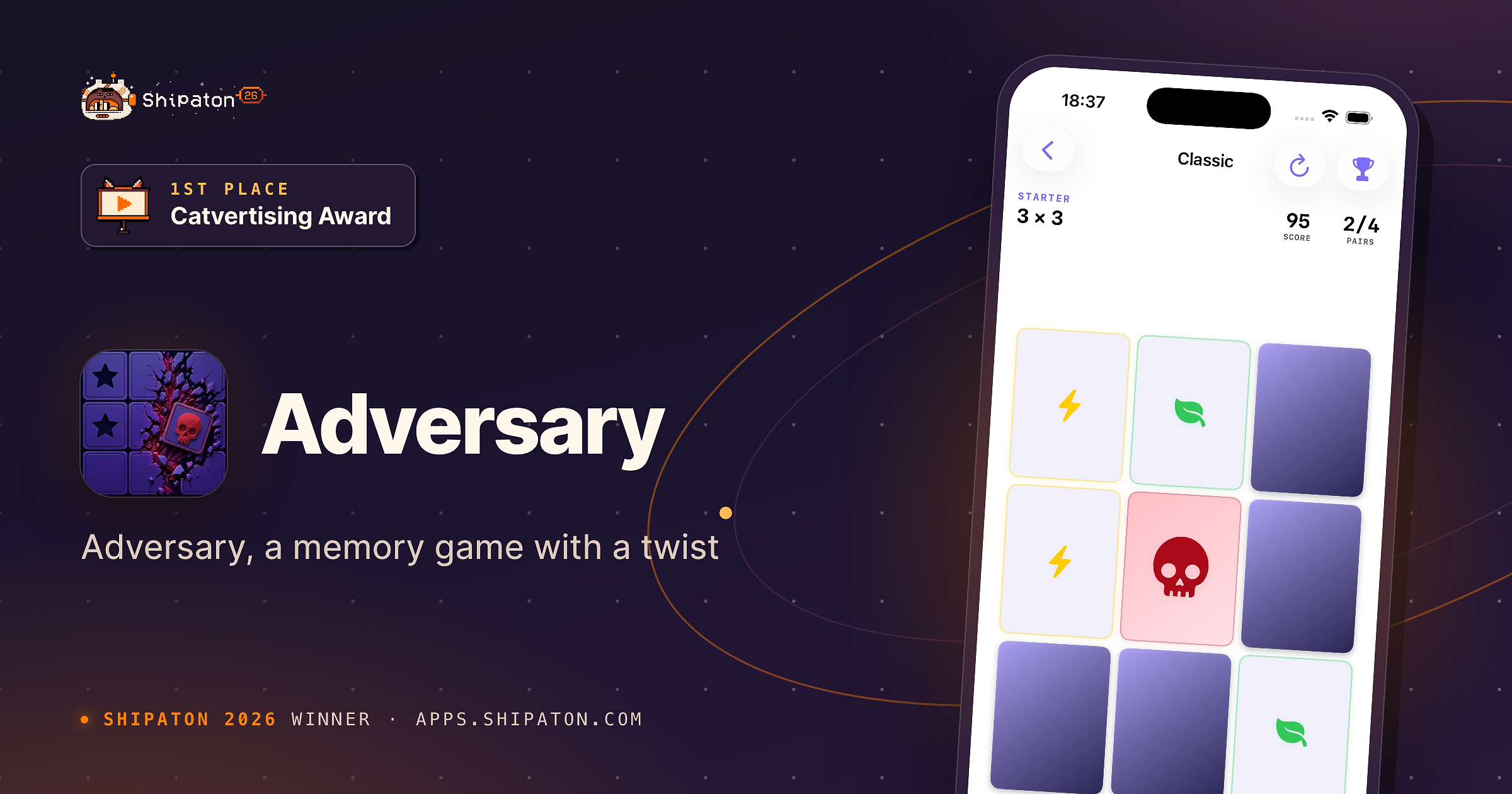
Niv Ben-porath wondered whether trying to avoid an ad could become the game itself.
Adversary hides an unpaired Danger card among a board of matching pairs; reveal it, and the advertising becomes part of the board you're trying to remember. It's a small twist on a familiar memory game that gives the ad a role in the action.
Players get an initial ad-free period, then choose whether to keep playing with ads or buy a permanent unlock that removes them and adds more difficulty options.
The judges particularly liked how the ad became part of the gameplay itself, calling it the most creative integration they'd seen while judging.
2nd Place: WALLO
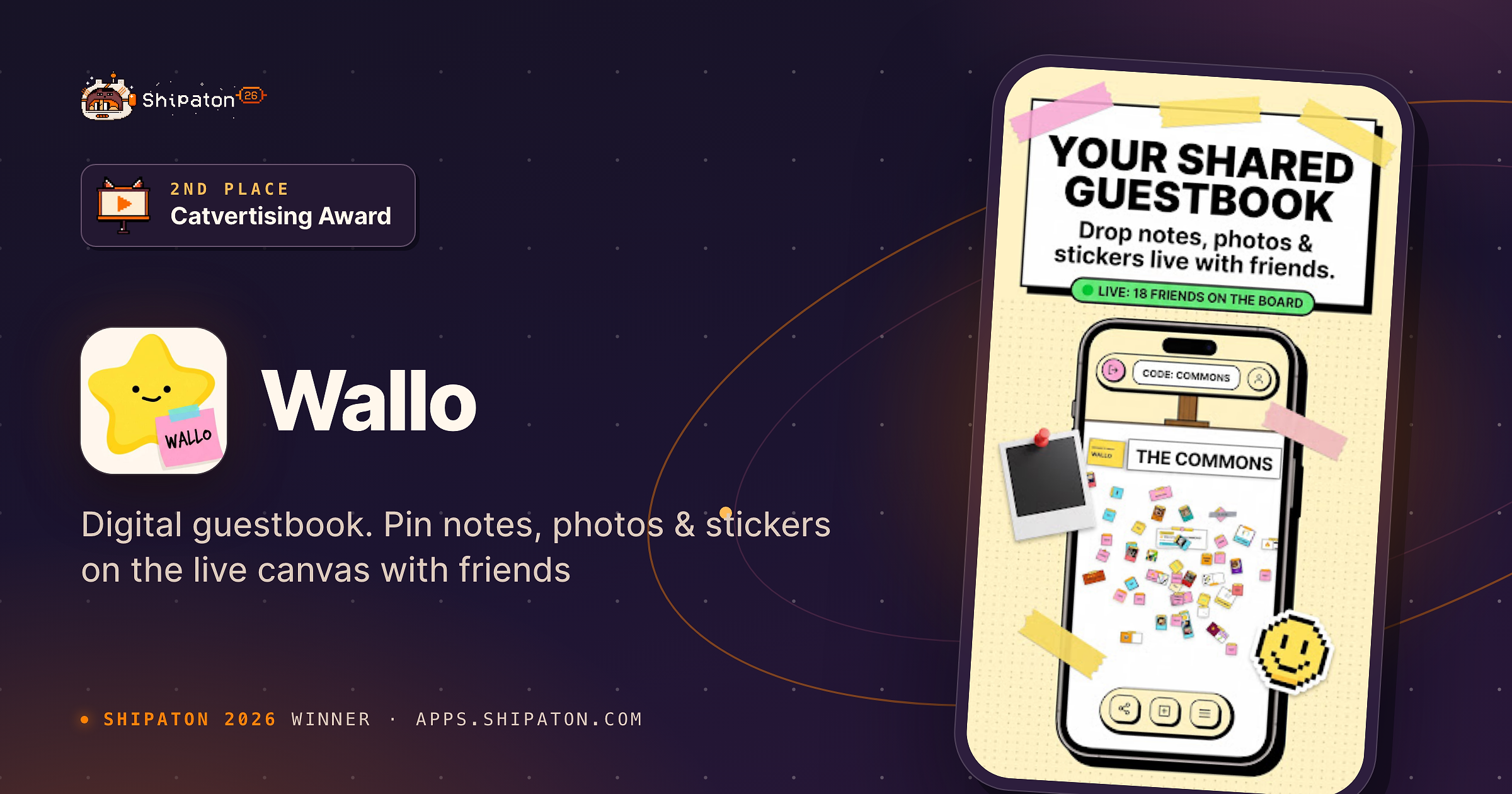
WALLO turns the guestbook at a gathering into something everyone can contribute to at once. Scan a code, add a photo or sticker, and watch the shared canvas fill up. Its rewarded-ad idea is particularly fun: one guest becomes the Room Hero, shortening the posting cooldown for everyone. That's an ad whose reward the whole room gets to enjoy.
The judges highlighted the shared reward: one person watching an ad unlocks more for everyone in the room.
3rd Place: ate
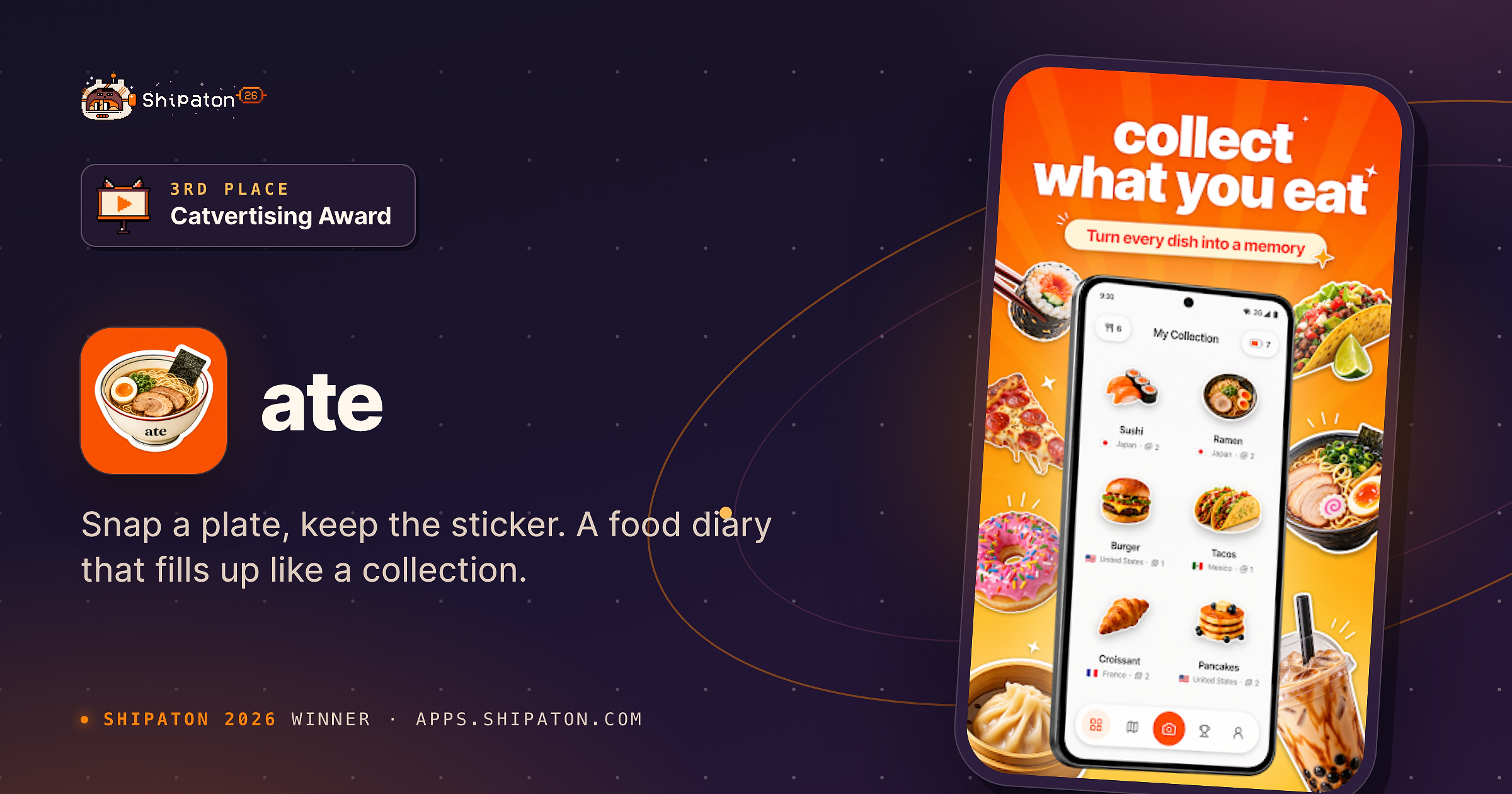
Egor Kabantsov wanted a place for food memories without another set of numbers to track. ate turns a meal photo into a cut-out sticker, building a collection of dishes and cuisines over time. When the free scans run out, an optional rewarded video unlocks another one, giving someone a way to save the meal already in front of them.
The judges liked how naturally the rewarded ad fits into the experience, giving users a choice about whether to keep the sticker they've just created.
Next Gen Award
The Next Gen Award gave student developers a place to show what they could build. Entrants shared demos and public source code, letting us see both the idea and the work behind it. The category made room for promising projects that hadn't yet reached an app store.
1st Place: Bubble Games
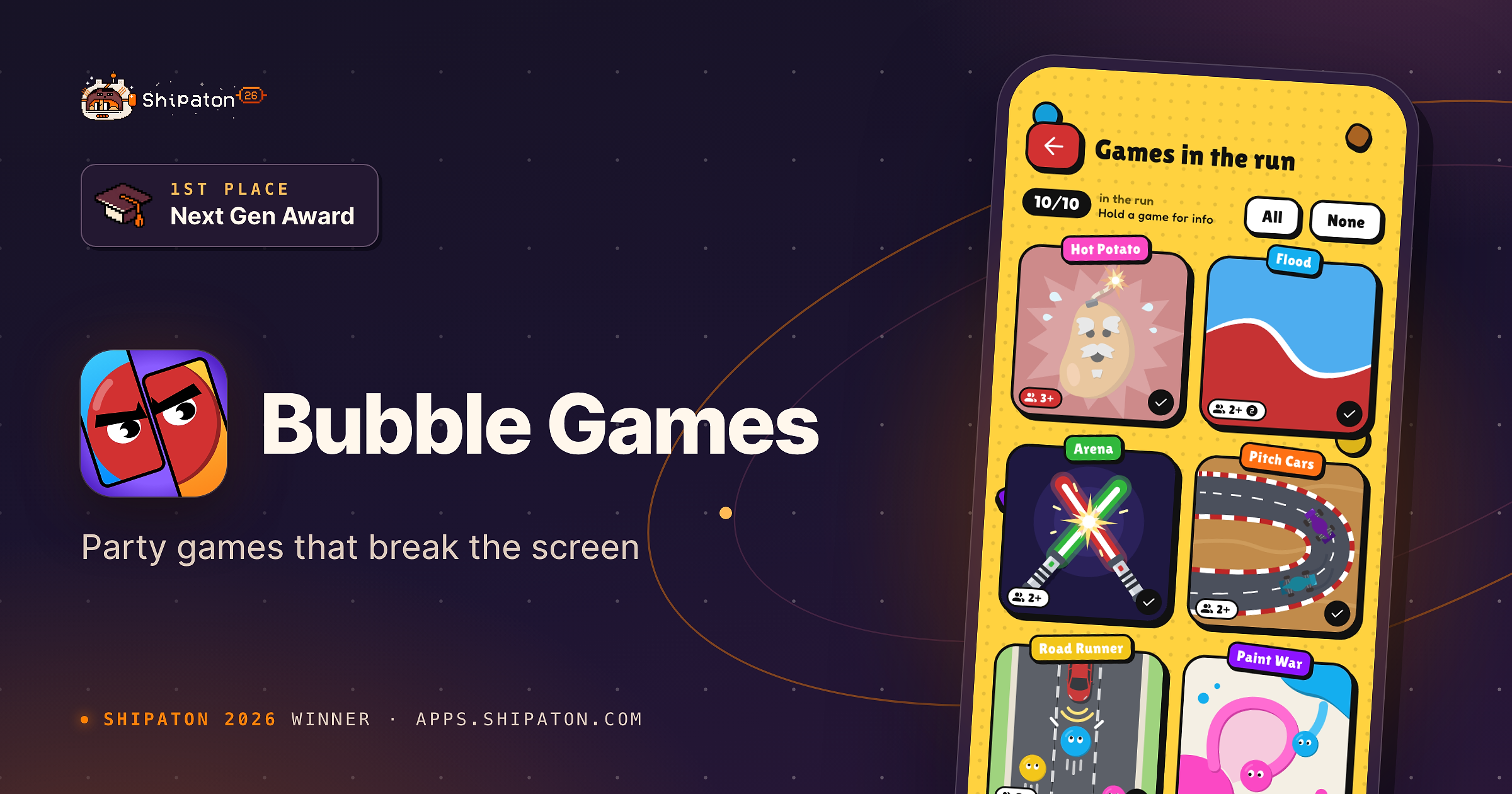
Bubble Games asks everyone to put their phones on the table, then turns those screens into one shared game board.
Objects travel between devices as friends race, compete, and pass a virtual hot potato. Built by four software engineering students at Université Laval, it's a playful answer to the problem of everyone sitting together while looking at separate screens.
The submission includes ten minigames and public source code, showing how the students made several separate devices behave like one playful surface.
2nd Place: 1% Lock
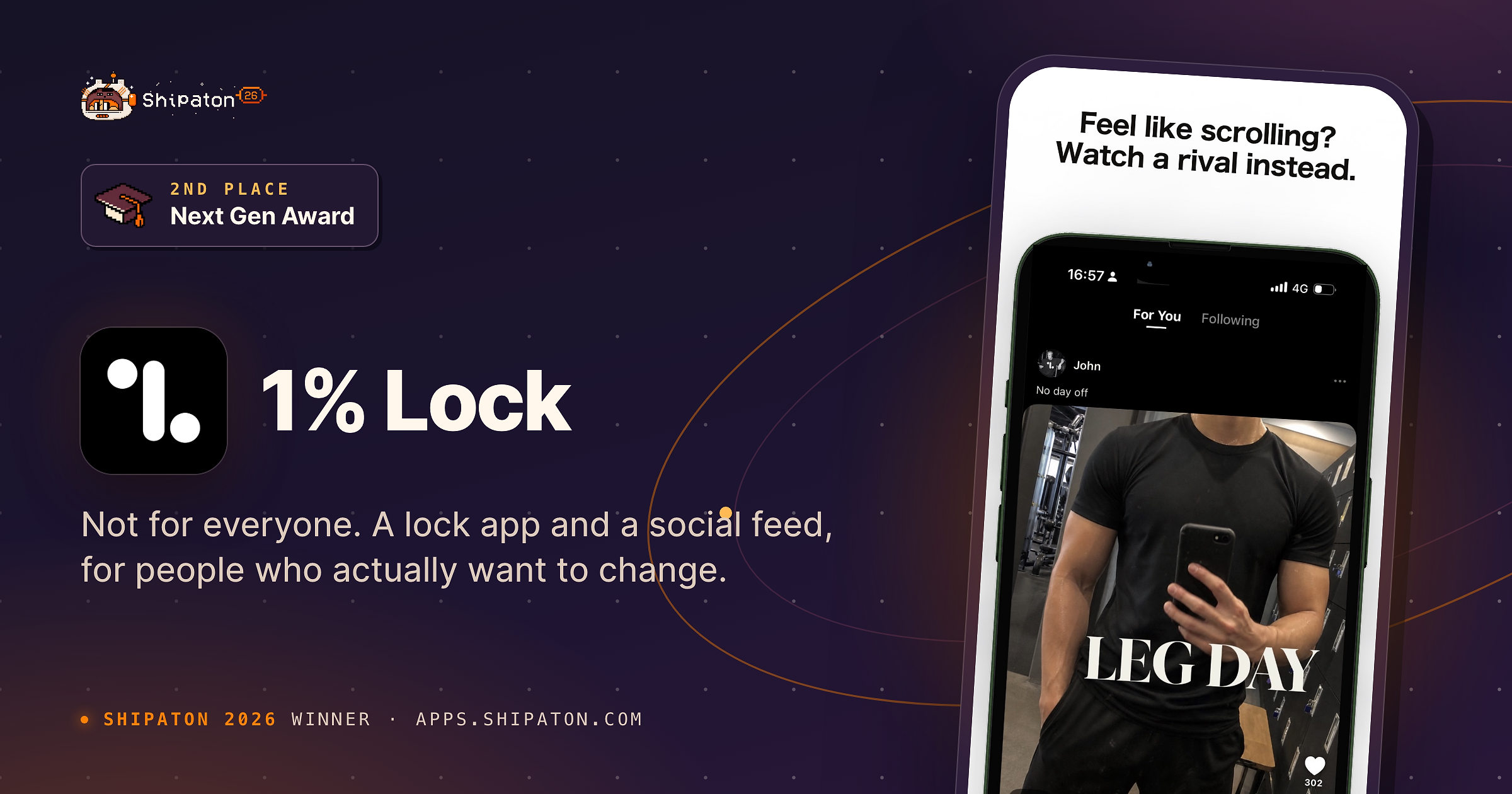
Ryunosuke Ishigami built 1% Lock after seeing how much time on his phone had affected his studies. The app pairs blocking with a motivational feed focused on studying and work, giving the familiar urge to scroll somewhere else to go. Built solo in SwiftUI and shared as open source, it's a student's very personal take on finding focus.
3rd Place: After You
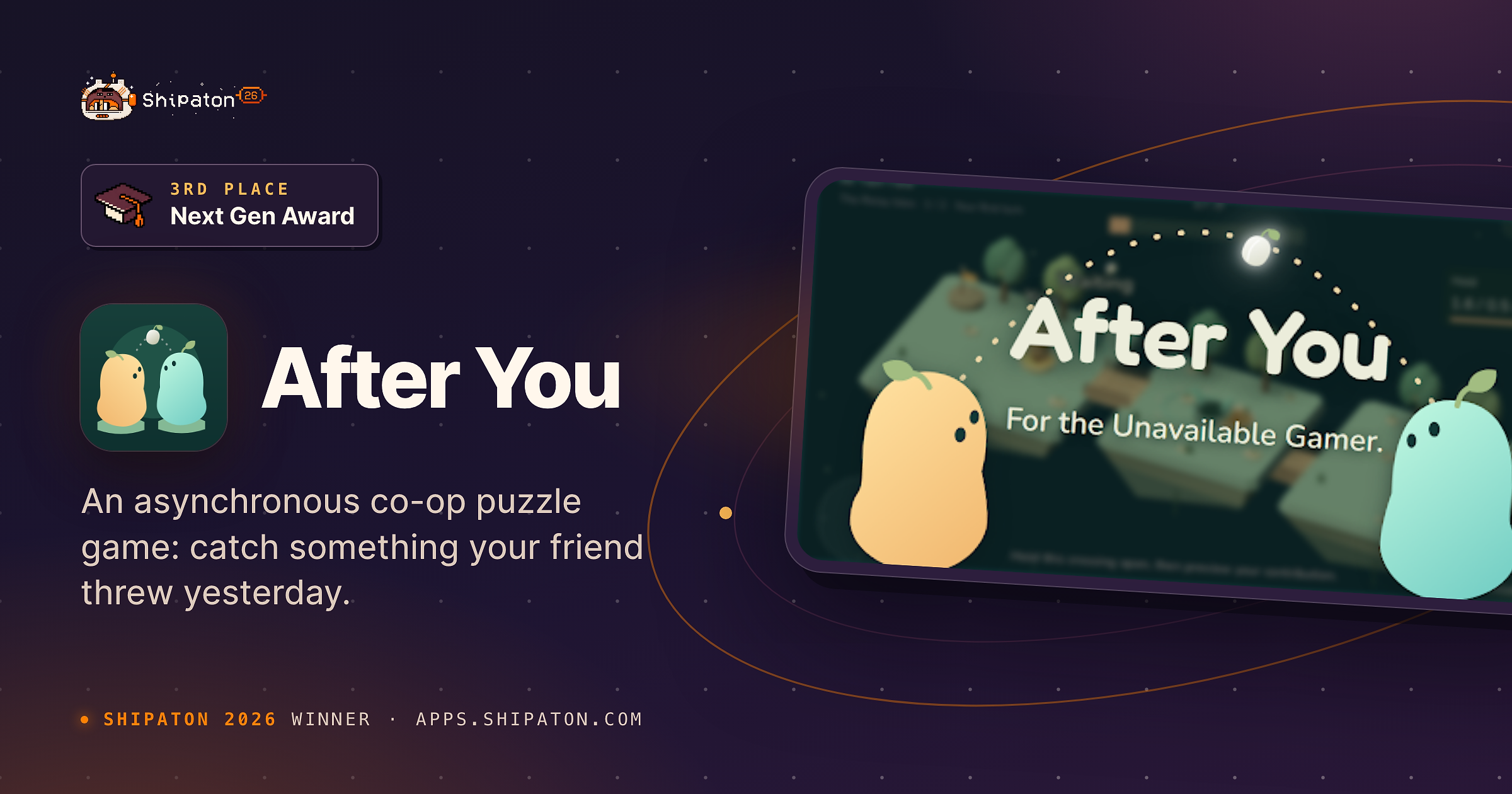
Finding time to play together gets harder when your friends live in different time zones. Aamir Abdul Azeez built After You around that reality: each person plays when they can, then watches a replay where both runs appear together. The phone recreates the players' actions inside the game, making a shared moment possible without coordinating another evening online.
HAMM Award (Help Apps Make Money)
Our mission is to help apps make more money, and the HAMM Award asked developers to put that into practice. We looked at how pricing, paywalls, packaging, and purchases fit the product and its audience. A thoughtful RevenueCat integration should make it easy to understand what's worth paying for.
1st Place: GRIDLOCK
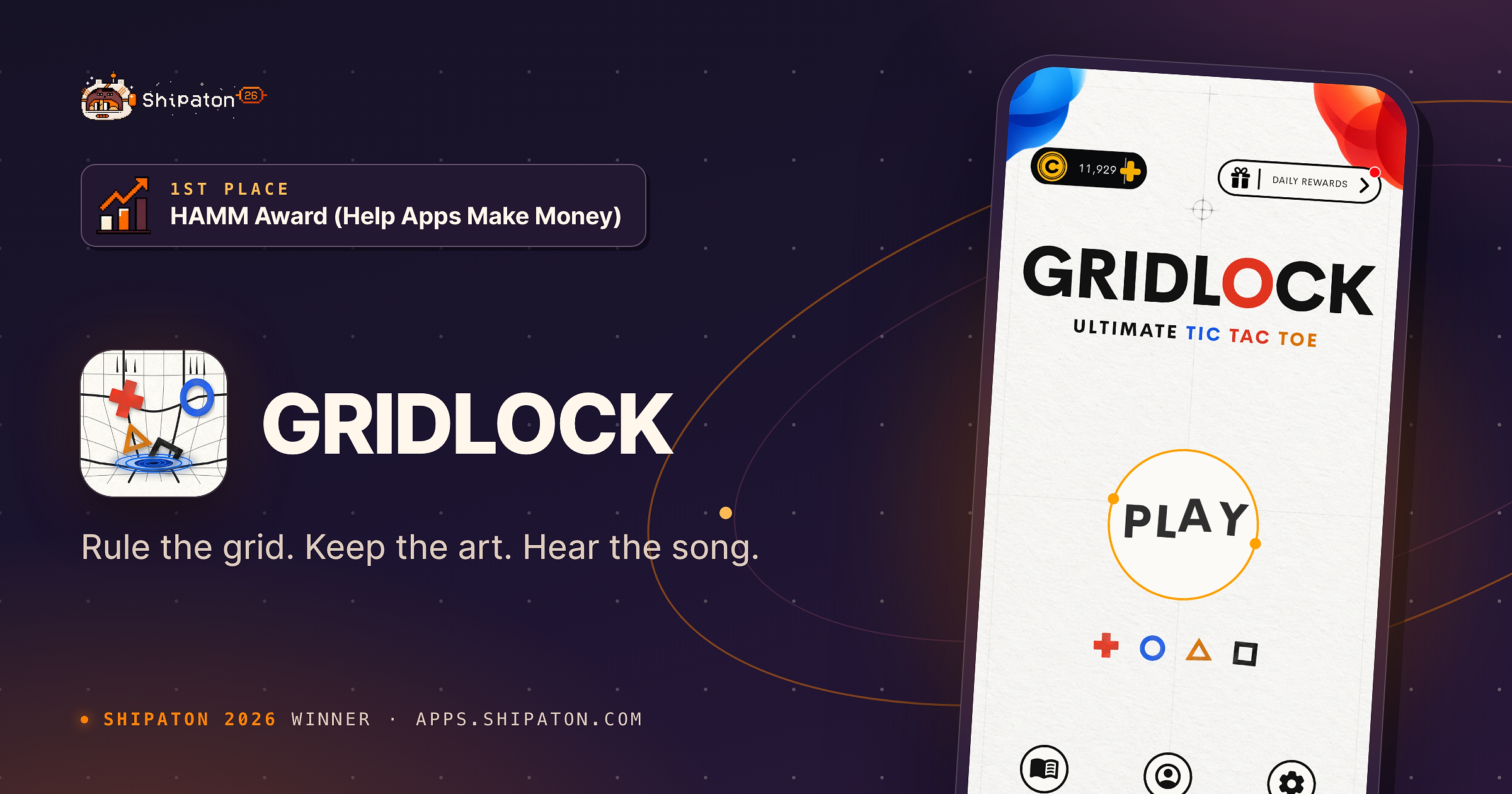
Ayush Chaurasia's question was how far tic-tac-toe could grow while still feeling recognizable.
GRIDLOCK answers with matches for up to four players, online rooms, and eleven special moves. Its monetization is built around a shared Credits currency: players can earn through rewarded ads, buy packs, or subscribe, while the core modes remain available for free.
The subscription combines ad removal, recurring credits, and other extras. That gives regular players a different option from someone who only wants an occasional credit pack.
The judges highlighted the thoughtful mix of subscriptions, consumable packs, and ads.
2nd Place: DramaSip
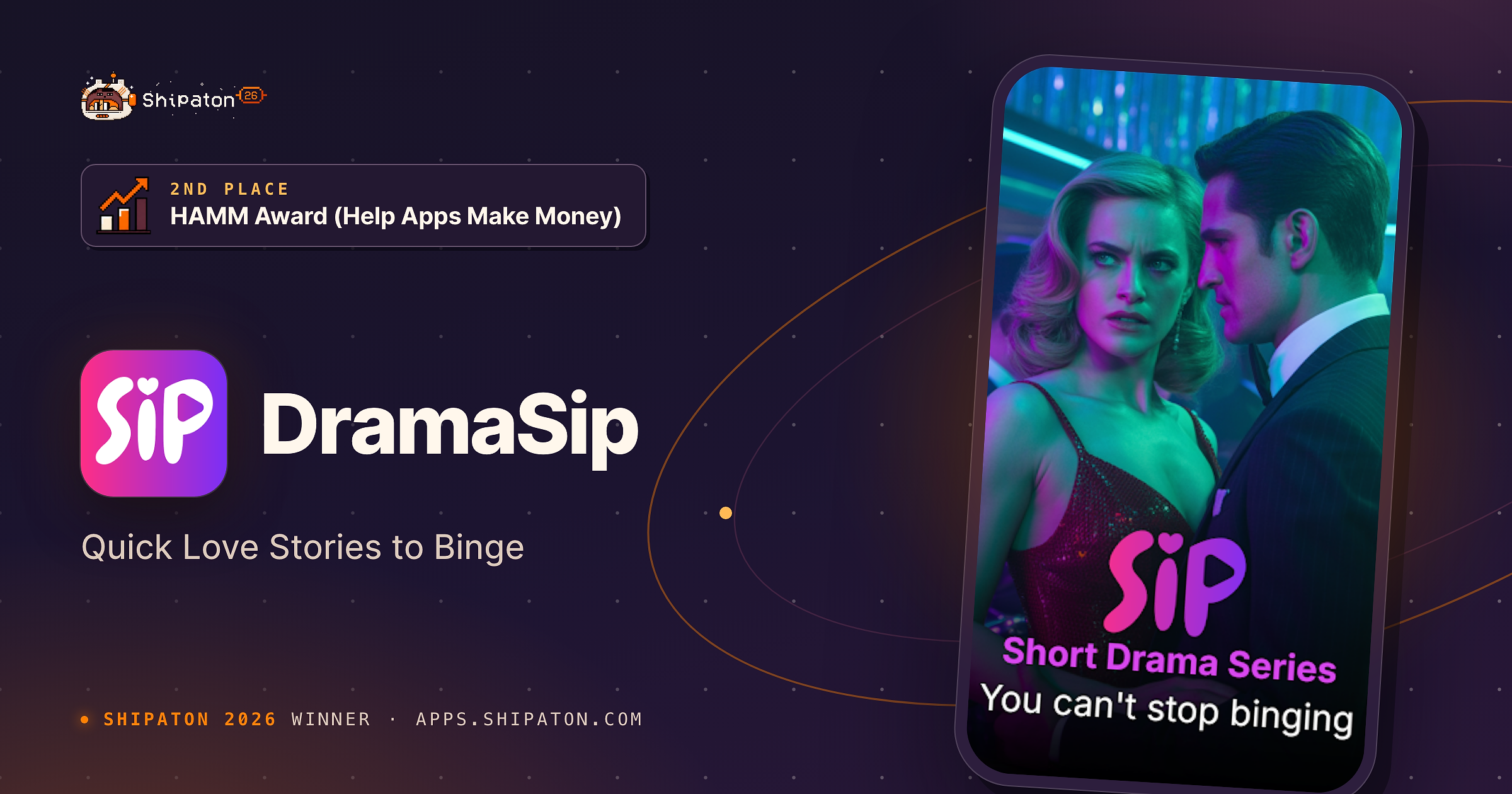
DramaSip serves up short dramas in a vertical feed, with the next episode a swipe away. Vadim Savin gave viewers several ways to keep watching: free episodes, Premium subscriptions, permanent episode unlocks with coins, and rewarded ads. RevenueCat connects those choices to the same customer identity, carrying purchases along as someone moves from guest viewing to an account.
The judges particularly liked the range of revenue streams, with subscriptions, coin purchases, and ads working within the same app.
3rd Place: Ritmo – Dating & Sport
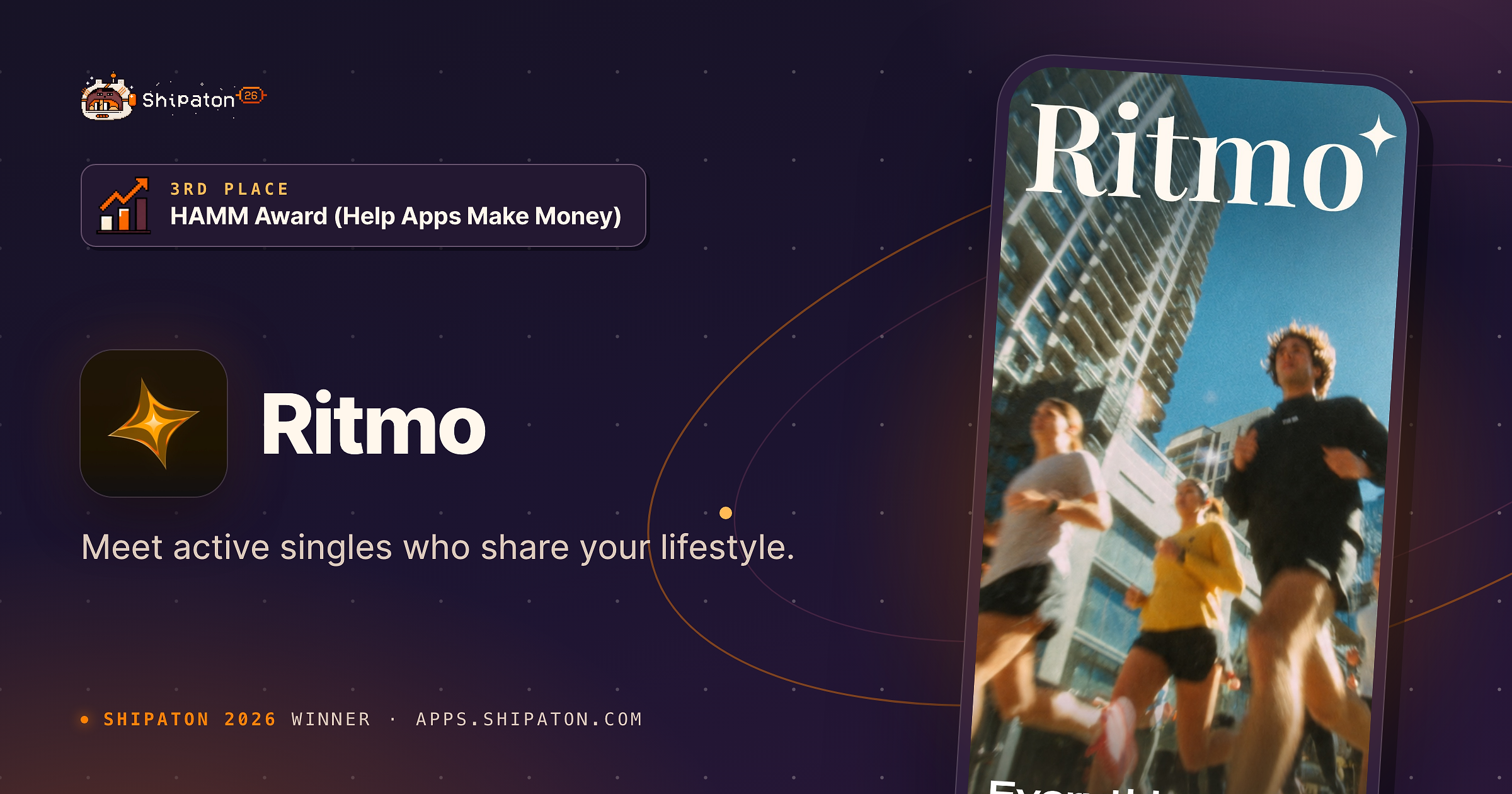
Adel Benzehda kept hearing the same question at run clubs: who's single? Ritmo builds a dating app around that natural overlap, with sport-based profiles, shared activity suggestions, and local clubs. Subscriptions sit alongside individual Boost and Super Like purchases, while the team experiments with pricing and paywalls that appear when someone wants to use a particular feature.
The judges highlighted how closely the subscriptions, Boosts, Super Likes, and contextual paywalls fit into the product.
Influencer Award - Nutrition & Healthy Eating: Abbey's Kitchen
In Abbey Sharp's challenge, the goal was to make satisfying meals easier to put together. Developers were asked to start with what someone already wanted to eat and suggest useful additions, such as protein, fibre, or healthy fats. The emphasis was on enjoying food and feeling satisfied, without calorie counting or rigid meal plans.
1st Place: Just Add
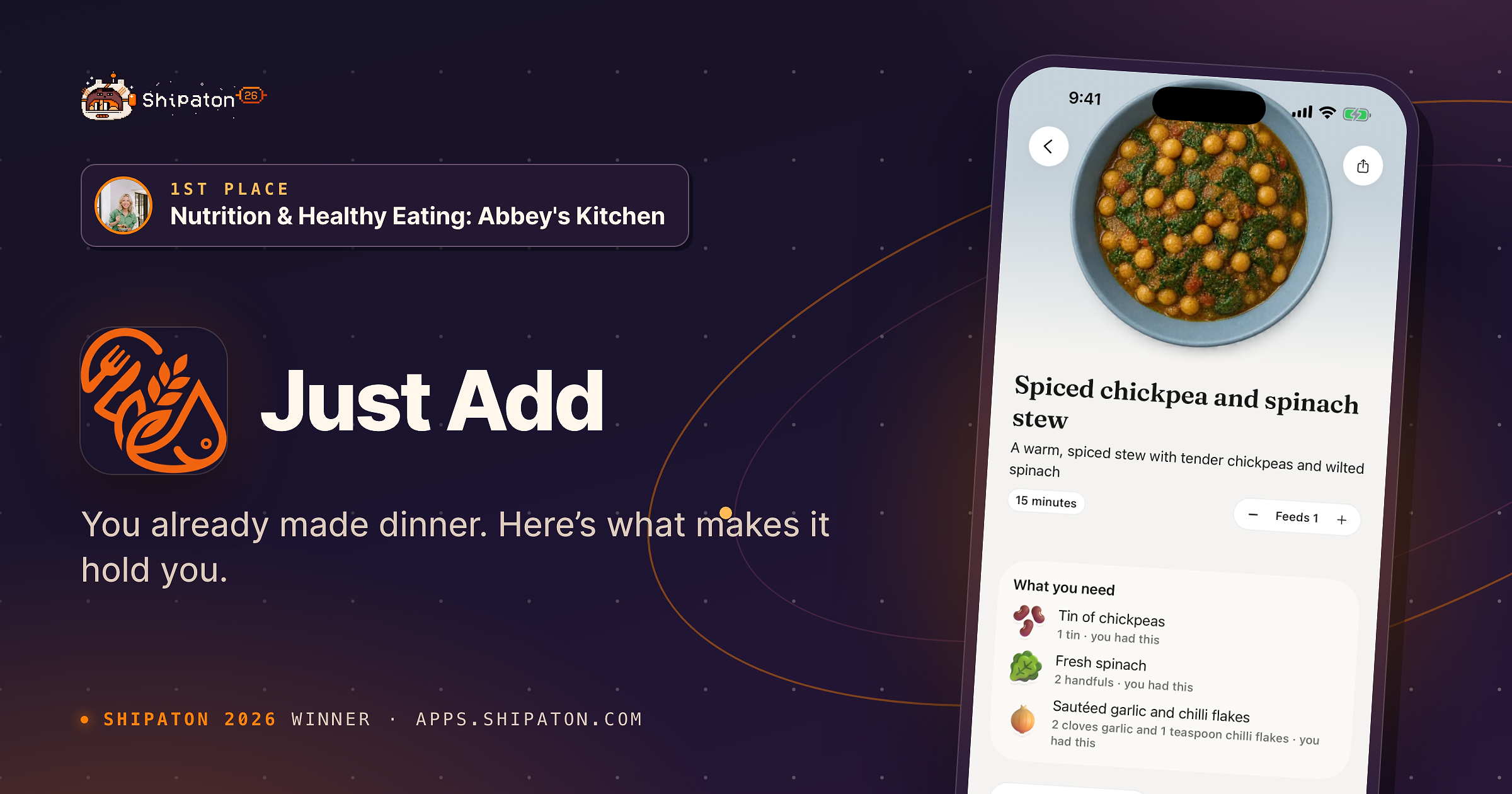
Just Add began with someone close to the creator who found food noise and counting-focused nutrition tools exhausting.
Describe what you feel like eating, take a photo, or say it aloud, and the app suggests three meals built around it. Protein, fibre, and healthy fats come in as useful additions, with shopping help and hands-free cooking to carry the idea through to dinner.
Remembered preferences, a cookbook, and a quick question about how satisfying the meal was help the app learn what someone actually wants to cook again.
The judges liked the approach to meal building, especially the dinner-host feature that includes other people's preferences.
2nd Place: satisfed
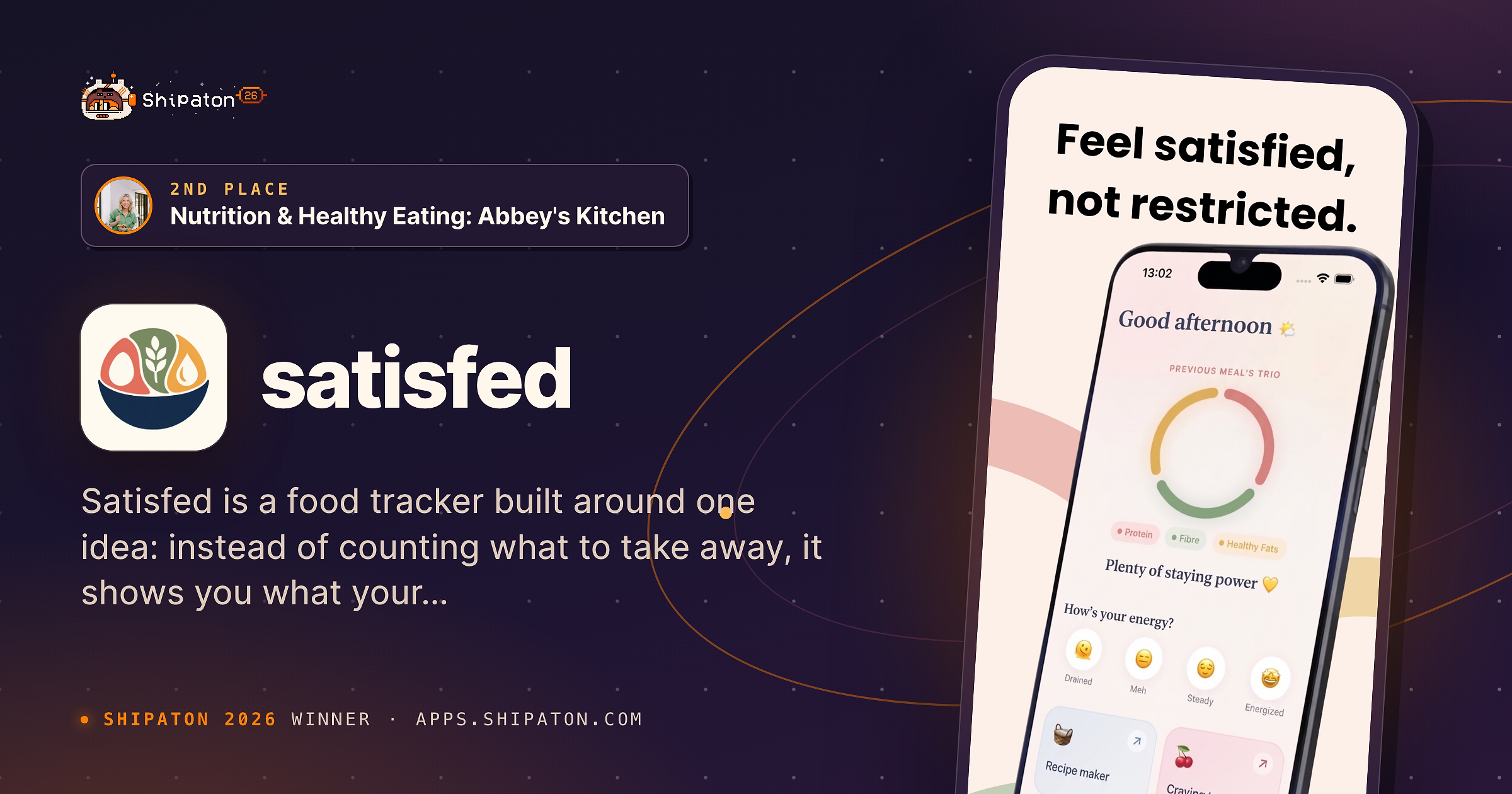
Irem Duran and Burak Eren Demir recognized their own experiences of nutrition guilt in Abbey Sharp's challenge. Their answer, satisfed, starts with the meal you already want and suggests easy additions to make it more satisfying. A visual Trio Ring brings protein, fibre, and healthy fats into focus, leaving room for leftovers, restaurant meals, and cravings along the way.
The judges particularly liked the welcoming design, which felt less rigid than other meal trackers and calorie counters.
3rd Place: The Plate
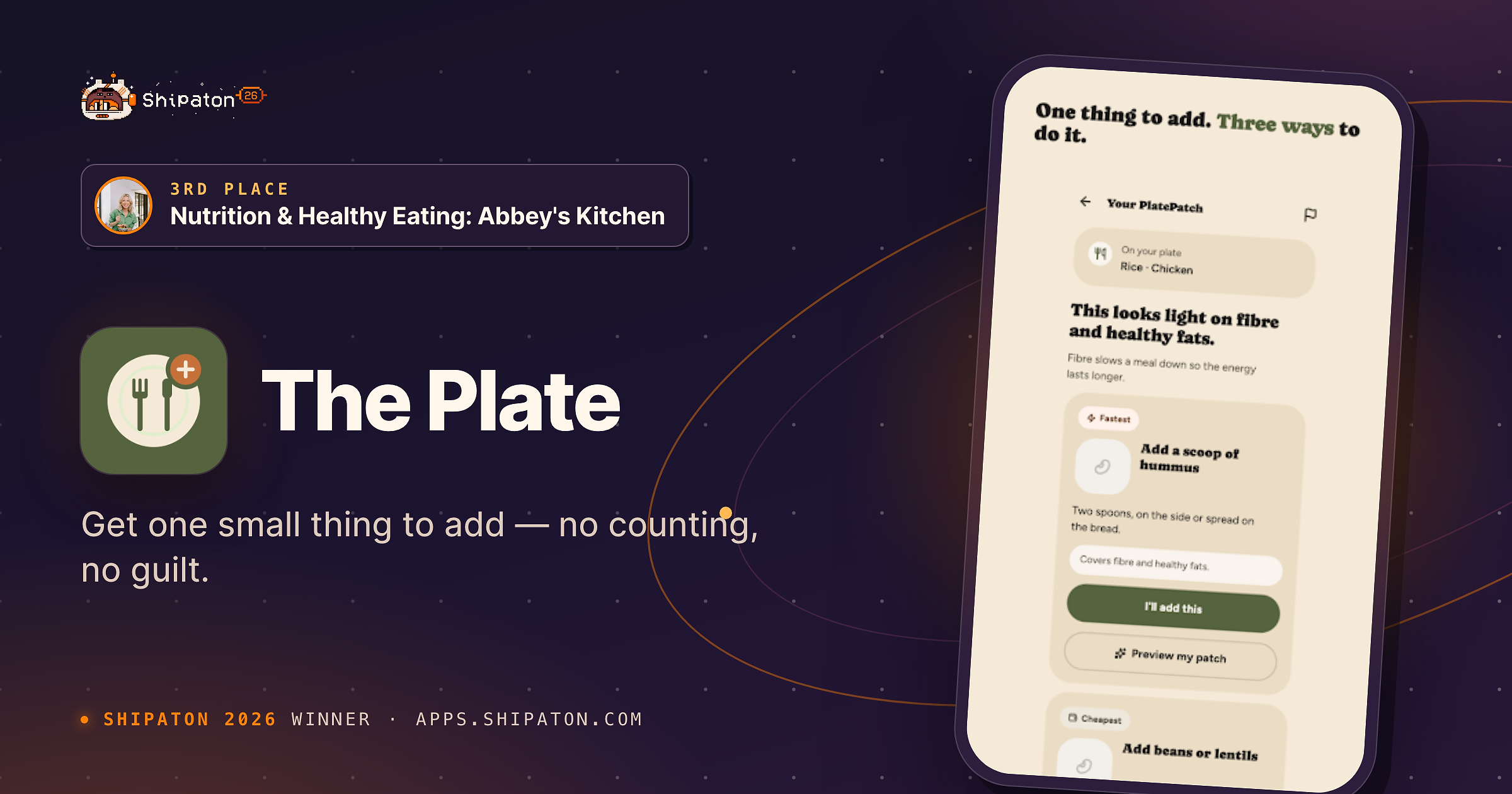
The Plate starts with a useful dinner question: what could I add to this? Describe a meal, take a photo, or say it aloud, and the app suggests additions that account for time, price, and preferences. Ramy Magdy's Egyptian and MENA-aware catalog also makes space for dishes such as koshari, fuul, and molokhia. The food you actually eat belongs here.
Influencer Award - Productivity: Christopher Lawley
In Christopher Lawley's challenge, the goal was to make the things you use repeatedly easier to find and reuse. Think of the reply you keep typing, the document you always need, or the image buried in your library. Developers were asked to give that material a fast, focused home that fits naturally into everyday work.
1st Place: SnipStash
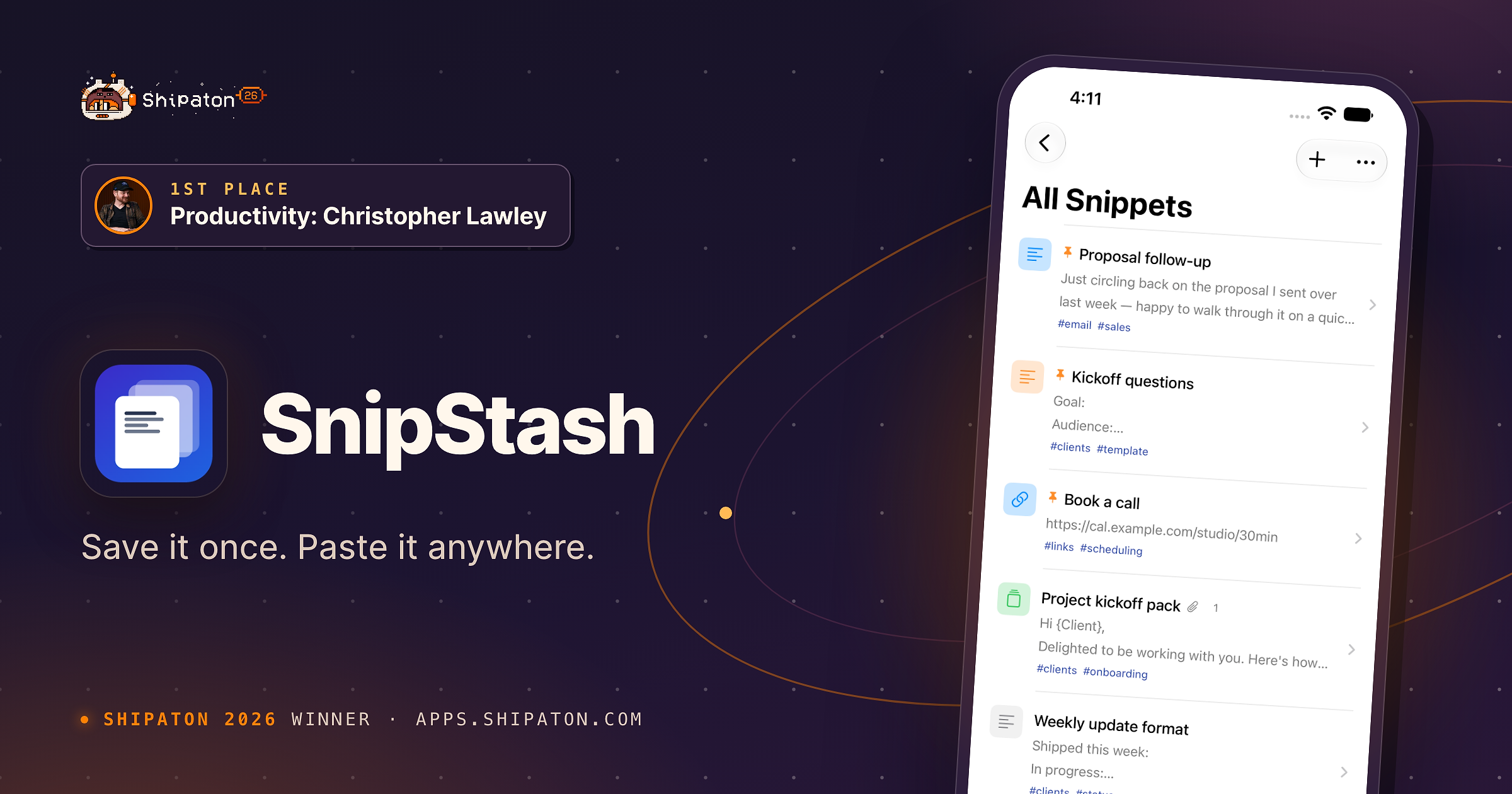
SnipStash is for the reply you've typed twenty times, the PDF you can never find, and the image you keep scrolling back for.
It keeps reusable material in one library across iPhone, iPad, and Mac, then brings it into reach through a keyboard, quick palette, hotkeys, and Shortcuts. Templates can hold several kinds of content together, so a repeated task takes fewer trips between apps.
Private iCloud sync keeps the library available across devices. At submission, Pro was offered as a one-time universal purchase rather than another subscription to manage.
The judges felt SnipStash delivered exactly what they'd hoped for in the challenge, particularly praising its speed and native interface.
2nd Place: Ribbons
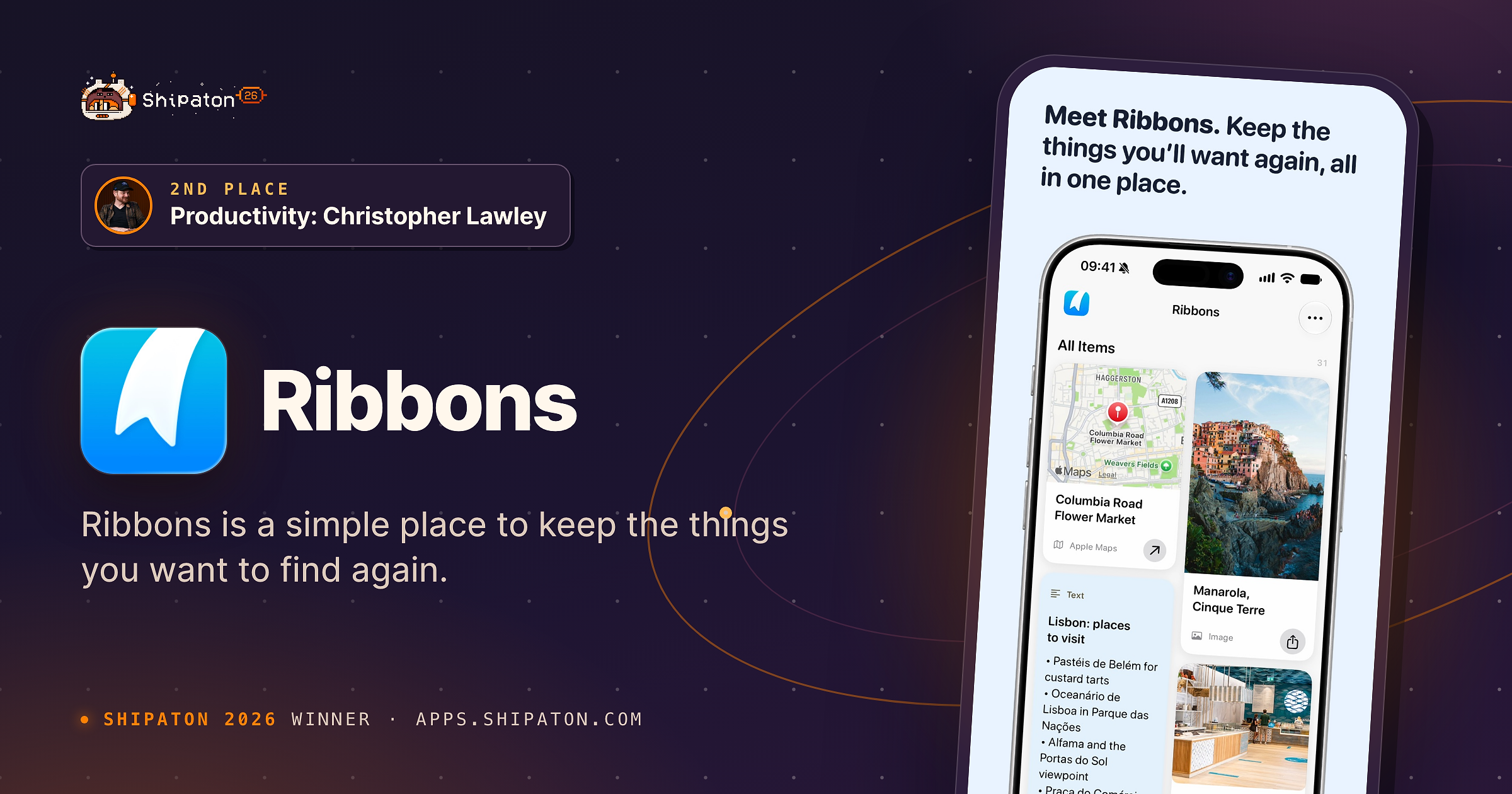
Paul Waweru's travel-agent wife kept losing saved photos as they slipped back to their original dates in her library. Ribbons gives those useful bits of information a home organized around what they're for. A Drawer can hold bookings, scans, links, and photos together, with search inside images and PDFs and shared Drawers for the material someone else needs too.
The judges particularly liked shared Drawers, making it easy to keep a useful set of snippets available to someone else.
3rd Place: Ledge
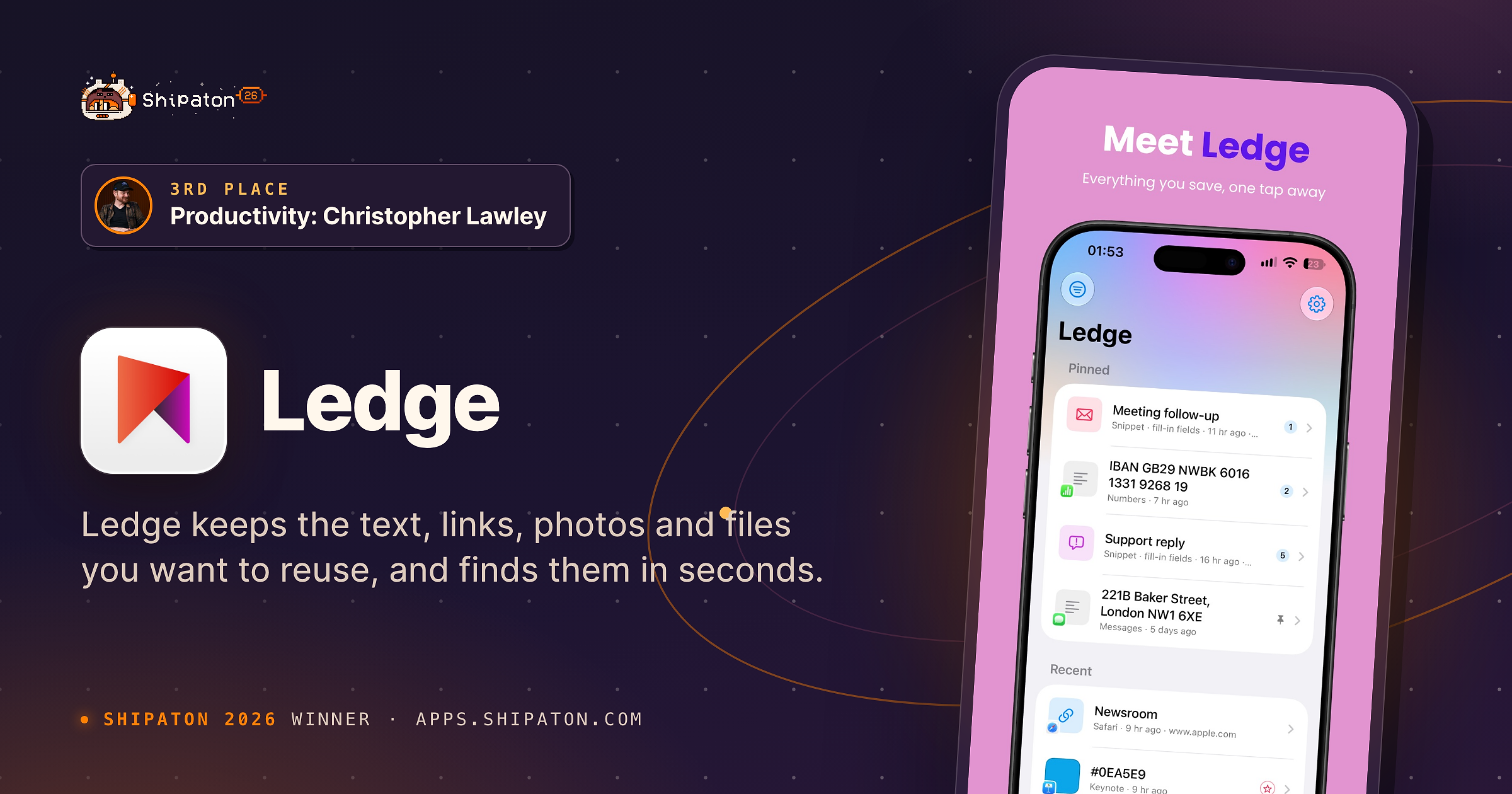
Copy something new, lose the thing you copied before it. Gaurav Kukreja built Ledge around that everyday annoyance, keeping clipboard history and reusable snippets close at hand on the Mac, with an iPhone companion alongside it. A quick palette handles search and paste, while Halo puts pinned items around the pointer. The things you keep reaching for stay within reach.
The judges particularly liked the capture tab, where having the options together made saving content fast.
Influencer Award - Career Coaching: Leadership Heather
In Leadership Heather's challenge, the goal was to help people practice the conversations they tend to put off. Giving feedback or pushing back on a request can feel very different once another person responds. Developers were asked to make that practice realistic, with useful feedback people could take into the actual conversation.
1st Place: Rehearse - Hard Conversations
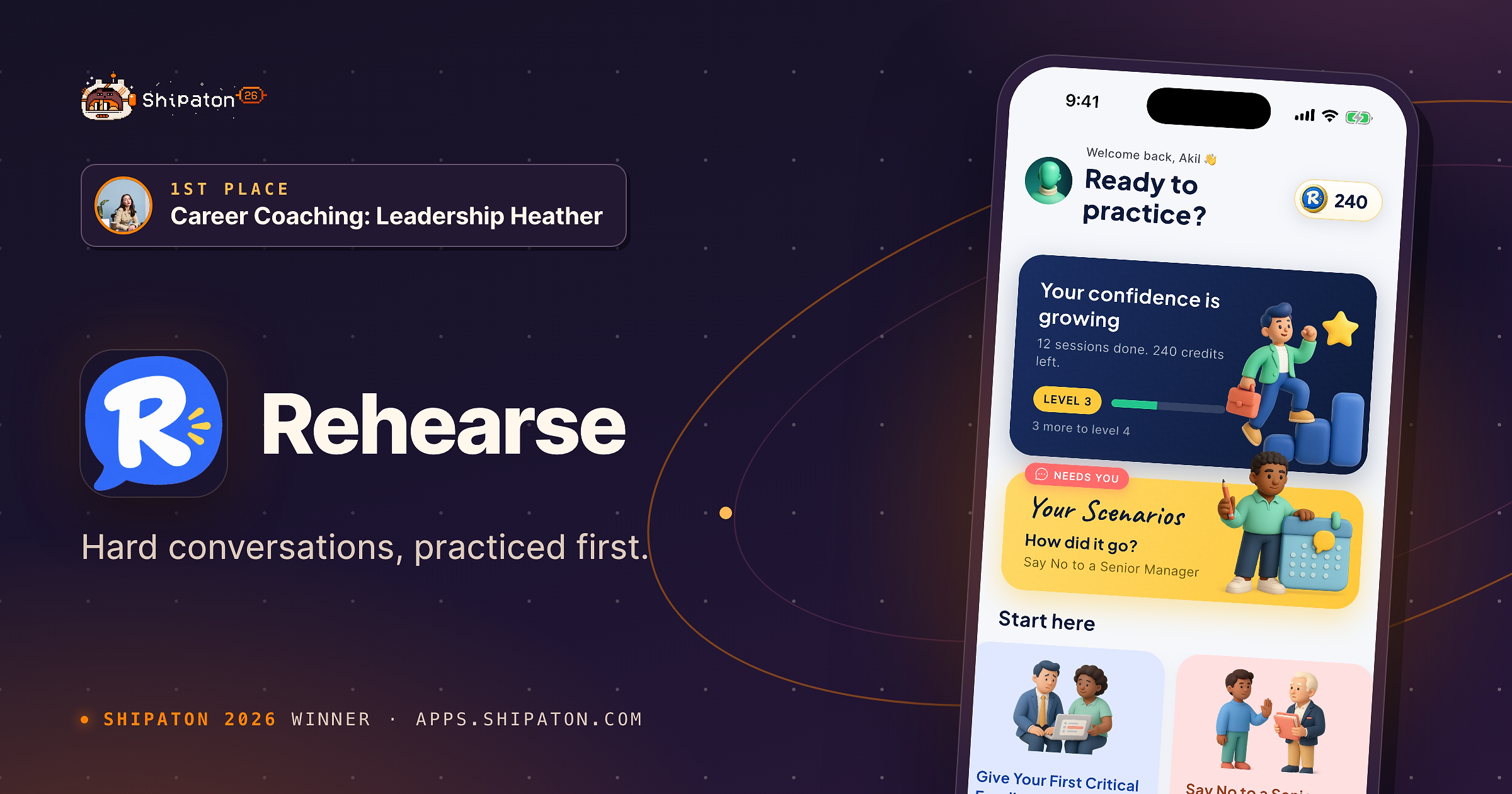
As a new product manager, Akil Saji struggled to push back when his manager promised more work than the team could take on.
Rehearse gives people a place to practice those conversations aloud with an AI counterpart that responds. Feedback points to the line where things changed, and a prep card helps carry the practice into the conversation that matters.
There are 33 prepared scenarios alongside custom situations, with feedback covering clarity, empathy, assertiveness, and structure.
The judges particularly liked the simplicity of Rehearse, which let it focus on doing its main job well.
2nd Place: Bravy — The work journal that teaches real conversations
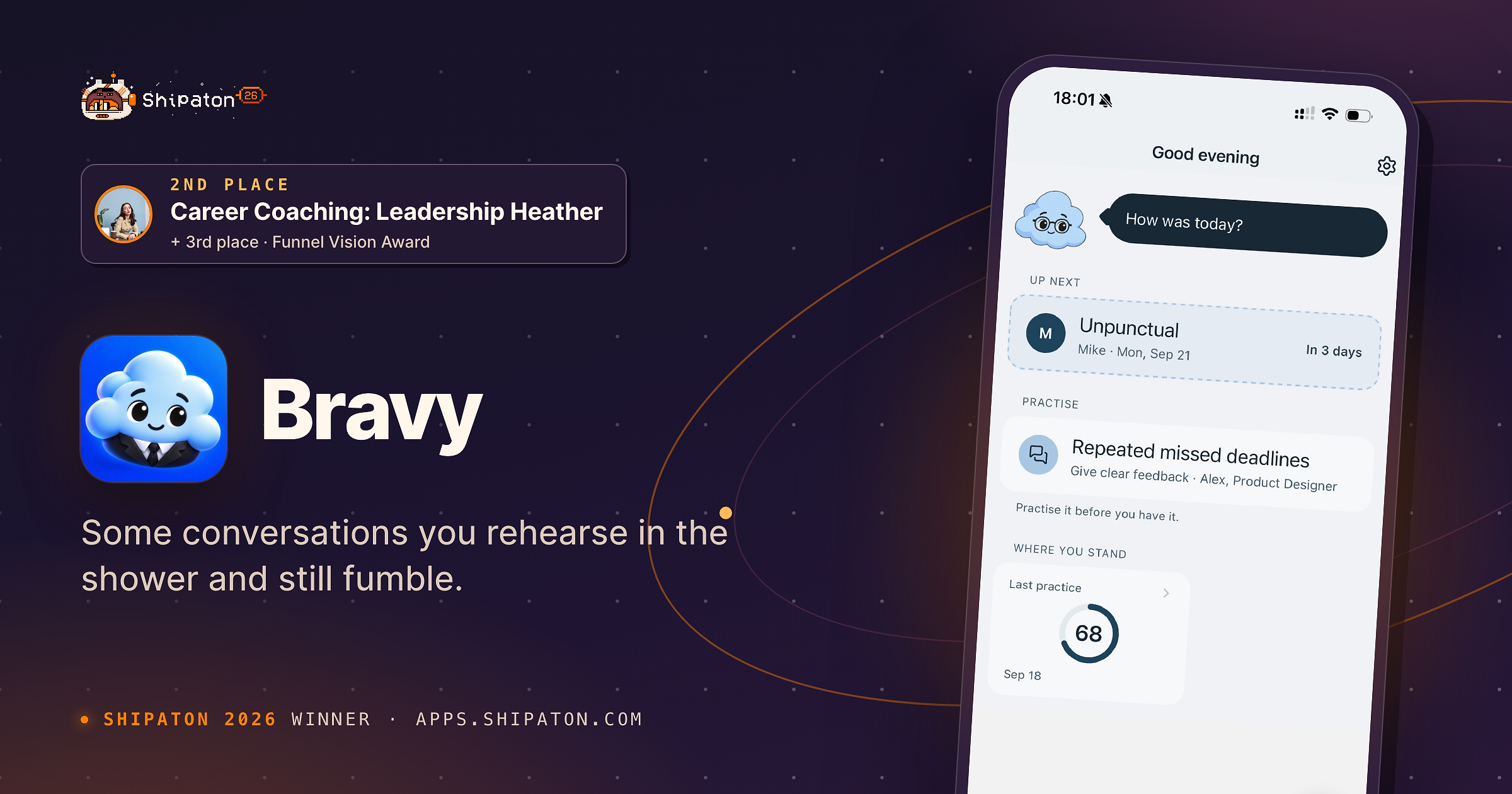
Leon Kraus had to give difficult feedback to the working student who'd helped onboard him. Rehearsing in his head hadn't made saying it aloud any easier. Bravy connects a work journal with voice, text, and avatar-based practice, so users can rehearse situations involving their actual colleagues and agreements. Feedback from early testers helped make that personal context central to the app.
3rd Place: Firmly
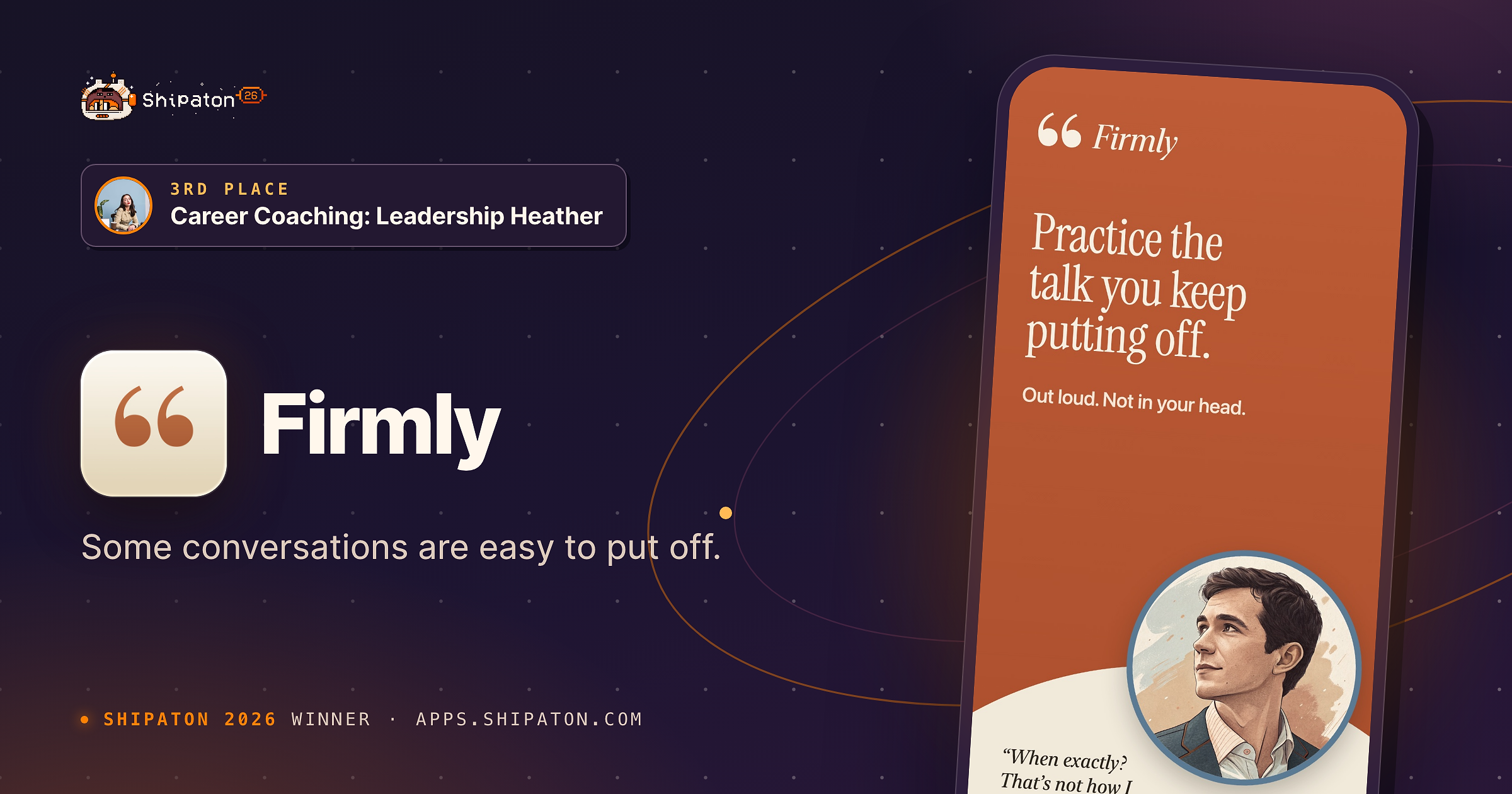
It's easy to prepare a good opening line. Staying clear when the other person pushes back takes practice. Firmly gives managers characters who argue, dodge the issue, or appeal to friendship, with different levels of resistance to work through. Debriefs quote the user's own words and suggest what to try next, followed by a check-in after the real conversation.
The judges loved how challenging the practice felt, giving users a chance to work through a genuinely difficult conversation.
Influencer Award - Gaming: Mr Lewis Blogs Gaming
Mr Lewis Blogs Gaming's challenge started with a familiar problem: seeing a game you want to play, then forgetting about it. The goal was to help people save discoveries, organize their backlog, and keep track of what they finished. Ratings and sharing would give those collections a life beyond the wishlist.
1st Place: Game Magnet
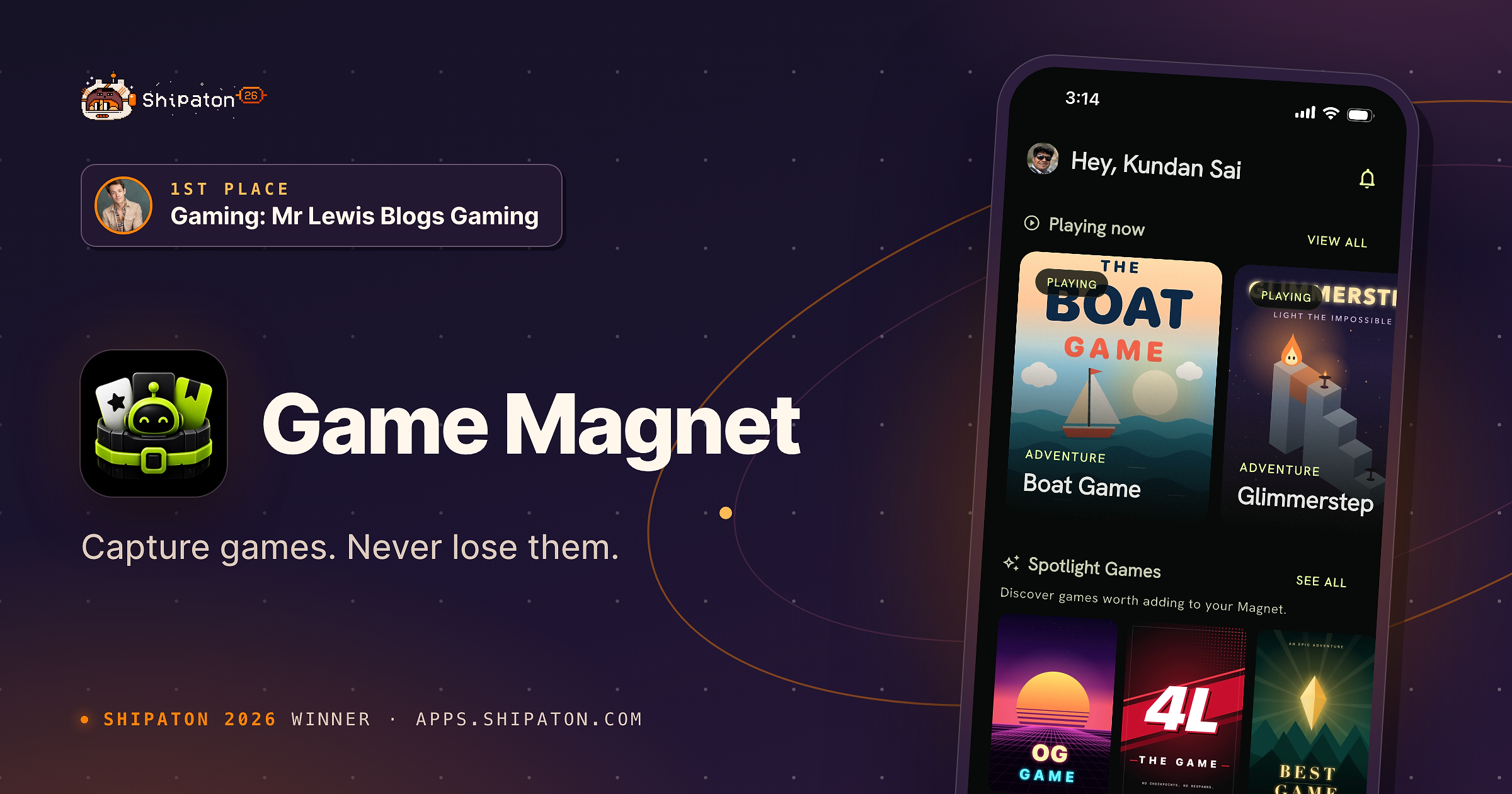
Kundan Sai Pannuru kept seeing games in short videos, then forgetting their names when he wanted to play them.
Game Magnet lets you share the clip instead: it identifies the games and saves them to your backlog. From there, shelves, ratings, and ranked lists help turn a fleeting discovery into something you might actually get around to playing.
Clips process in the background, with a notification when the result is ready. That means saving a discovery doesn't have to interrupt watching it.
The judges liked how fully Game Magnet answered the challenge, with a layout they found easy to use.
2nd Place: GameNight
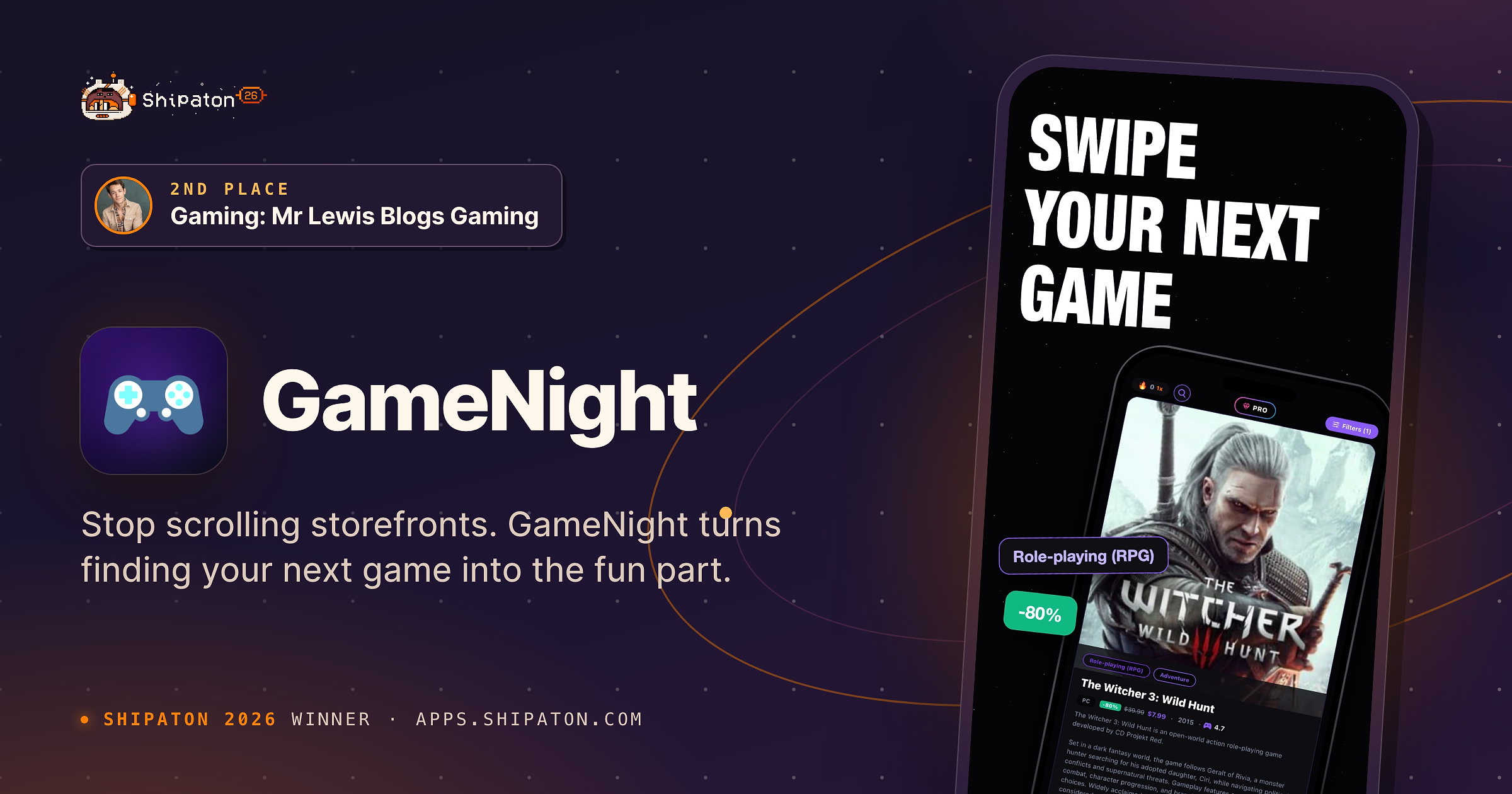
Sometimes choosing a game takes longer than anyone wants to admit. GameNight brings friends' Steam libraries, wishlists, and ratings together to find the overlap, then offers a slot-machine-style pick when the discussion still goes nowhere. Matthew Walmsley also built in reviews, challenges, and leaderboards, giving the group somewhere to keep the conversation going after they've finally picked something.
The judges particularly liked how the rewards and challenges made using the app and getting around to playing games feel fun.
3rd Place: Slyko
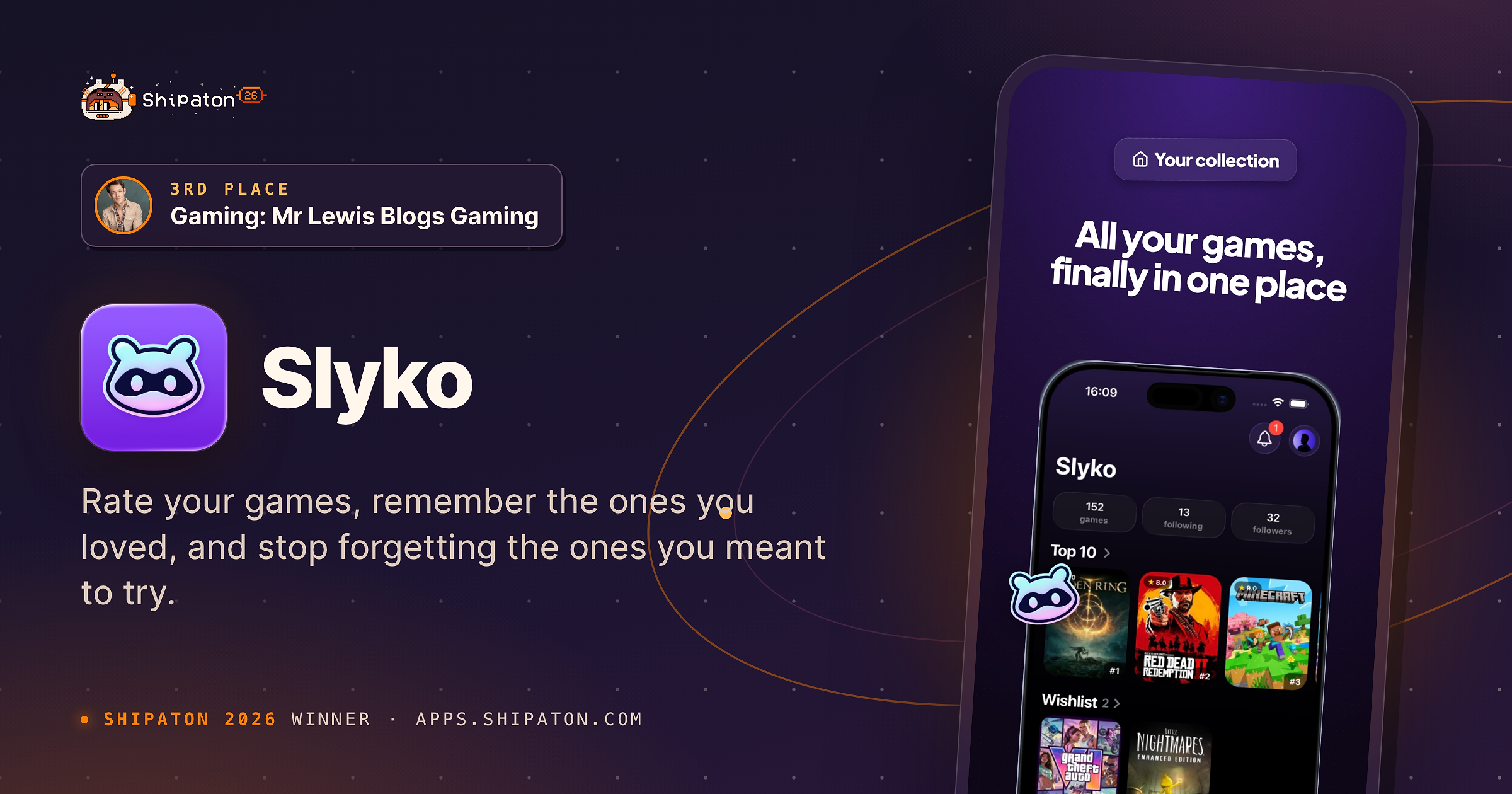
Enzo De la pena wanted the pleasure of keeping a film diary, applied to games. Slyko brings wishlists, reviews, library sync, and public favorites into one place, helping players remember what they've enjoyed and what they want to try. Share a social post and it can identify the game for you, saving that discovery before it disappears down the feed.
The judges appreciated having games from different libraries in one place, saving players from checking across multiple platforms.
Influencer Award - Yoga & Fitness: Simone Sharice
In Simone Sharice's challenge, the goal was to make choosing how to move feel more manageable. Developers explored ways to account for someone's energy, available time, and recovery needs, then offer a clear plan for the day. The focus was on helping people get started with something that fits how they feel.
1st Place: FeelGood: Movement Menu
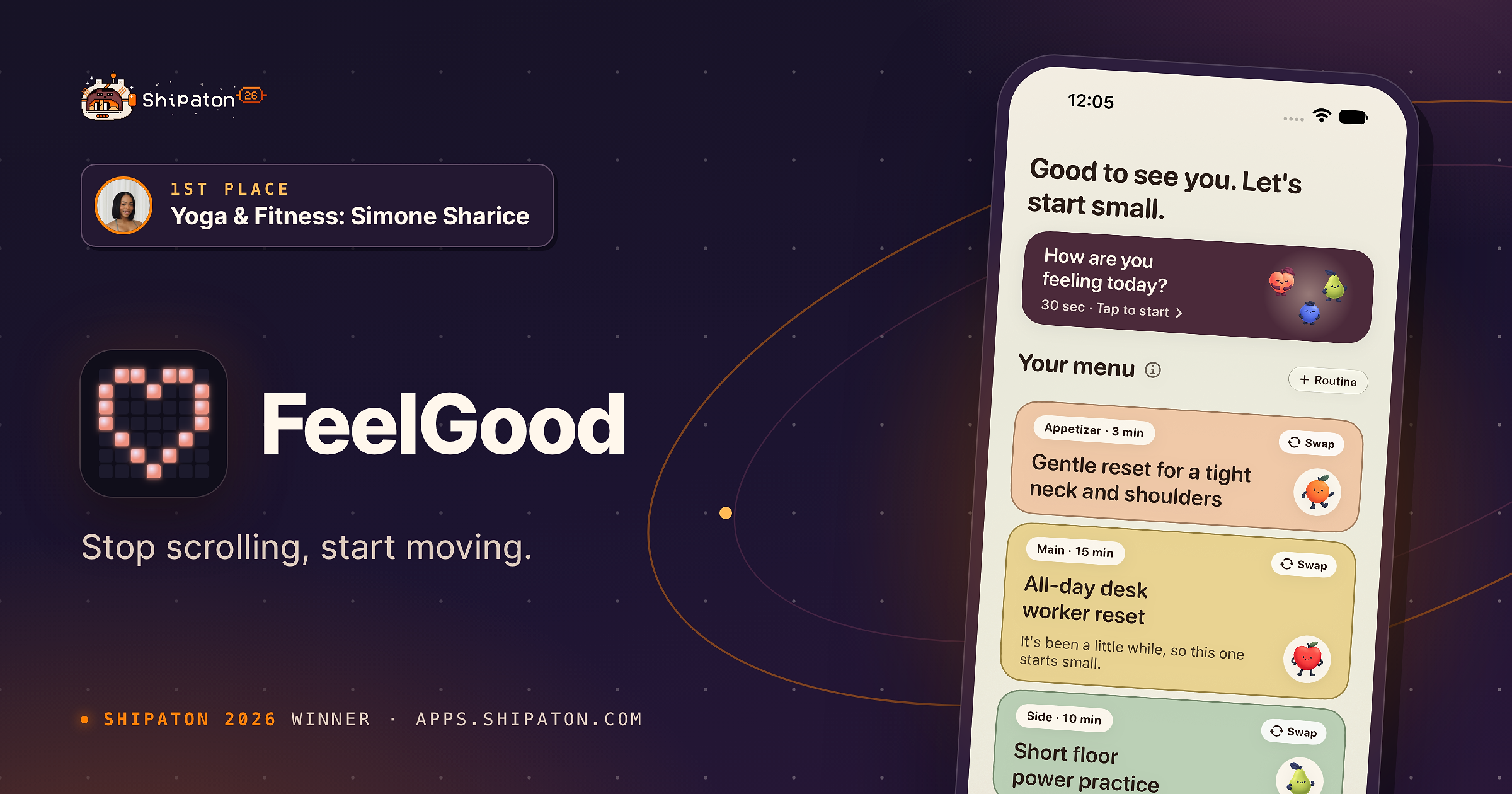
Sometimes the hardest part of moving is choosing what to do.
Yusra Salam and Ameena Malik built FeelGood around a short check-in, turning your energy, available time, and desired feeling into a small movement menu. An appetizer, main, and optional sides make the choices approachable; rest counts, and coming back after a break doesn't bring a broken streak with it.
The menu spans Pilates, yoga, strength, walking, stretching, and breathing, with a plain-language reason for each suggestion.
The judges particularly liked the theme and colors, describing the app as inviting, calm, and easy to look at.
2nd Place: GO: Chair Yoga for Seniors
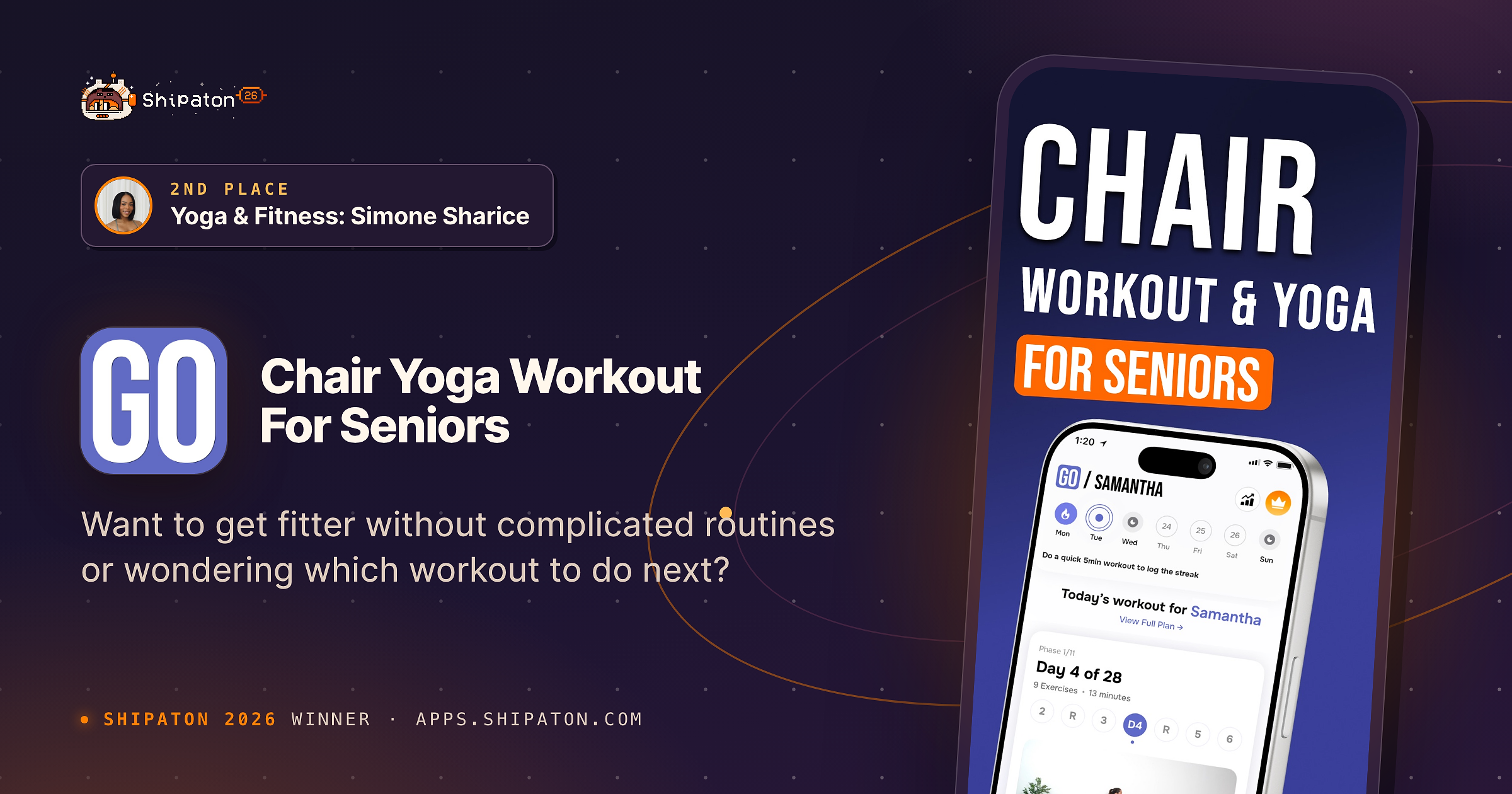
Subham Bhalawat wanted older adults to get the same care in fitness programming as everyone else. GO builds a daily plan from mobility goals, movement preferences, and available time, with chair-based and supported-standing sessions. Real trainer videos, previews, and voice guidance make the next step clear. Users get one workout to start, rather than another library to sort through.
The judges highlighted the clean onboarding and how well it was tailored to the intended audience.
3rd Place: Sadhana – Yoga & Meditation
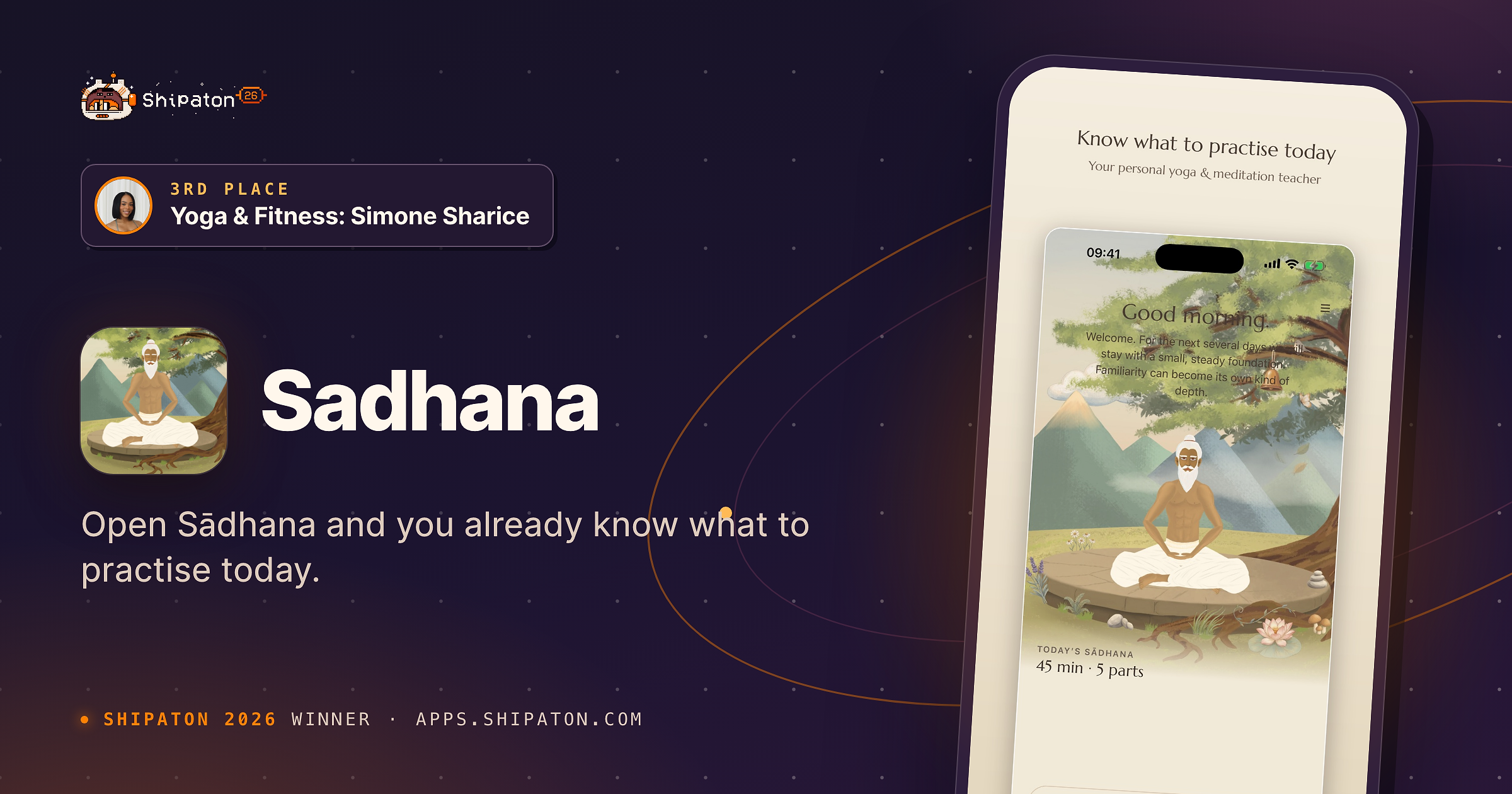
Sadhana grew out of a yoga teacher's frustration with conflicting instructions and too much choice. It offers one daily Hatha practice combining movement, breathing, and meditation, then asks whether it felt too gentle, just right, or too much. That feedback shapes the next session, with room for rest and a gradual return after a break. Hand-painted artwork completes the calm setting.
The judges particularly liked the hand-painted images, which they found beautiful and calming.
Ship Kotlin Everywhere
JetBrains' Ship Kotlin Everywhere award challenged developers to build a polished experience across platforms using Kotlin Multiplatform or Compose Multiplatform. We looked at how shared technology supported the finished product, from the interface to the work underneath it. The goal was an app that felt considered wherever someone picked it up.
1st Place: BoatBrawl
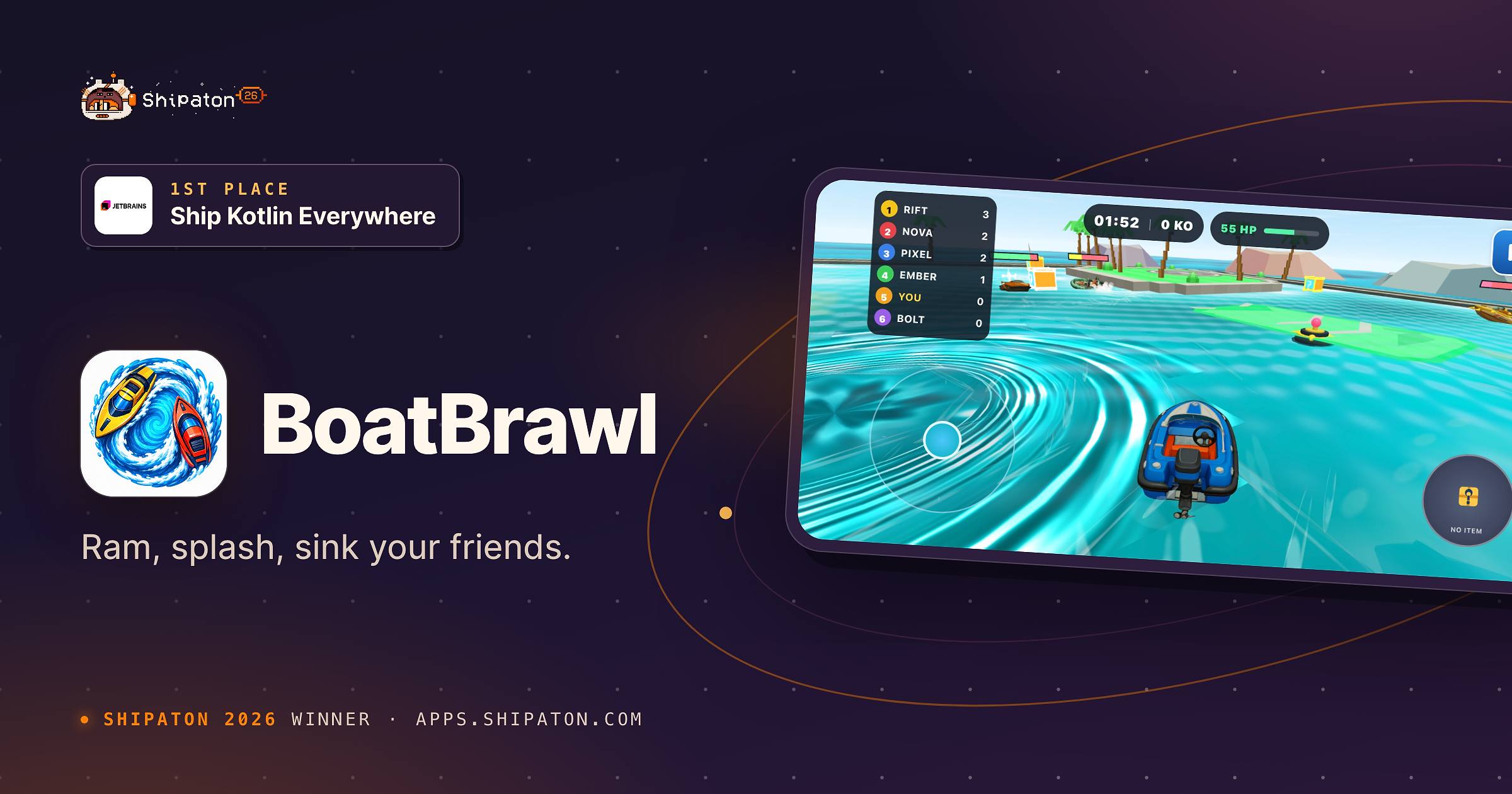
BoatBrawl brings the cheerful chaos of couch multiplayer to friends playing across phones and computers.
Up to eight players steer, fire, and scramble through interactive arenas, with bots and shared-screen play available too. Rehaan Cubes and Ashwin K M used Kotlin Multiplatform and Compose Multiplatform to share the game across platforms, keeping the same rules underneath every battle.
The shared approach covers the interface and much of the rendering and networking, across iOS, Android, Mac, Windows, and web.
The judges were especially impressed by how smoothly BoatBrawl played in the browser.
2nd Place: AfterFade
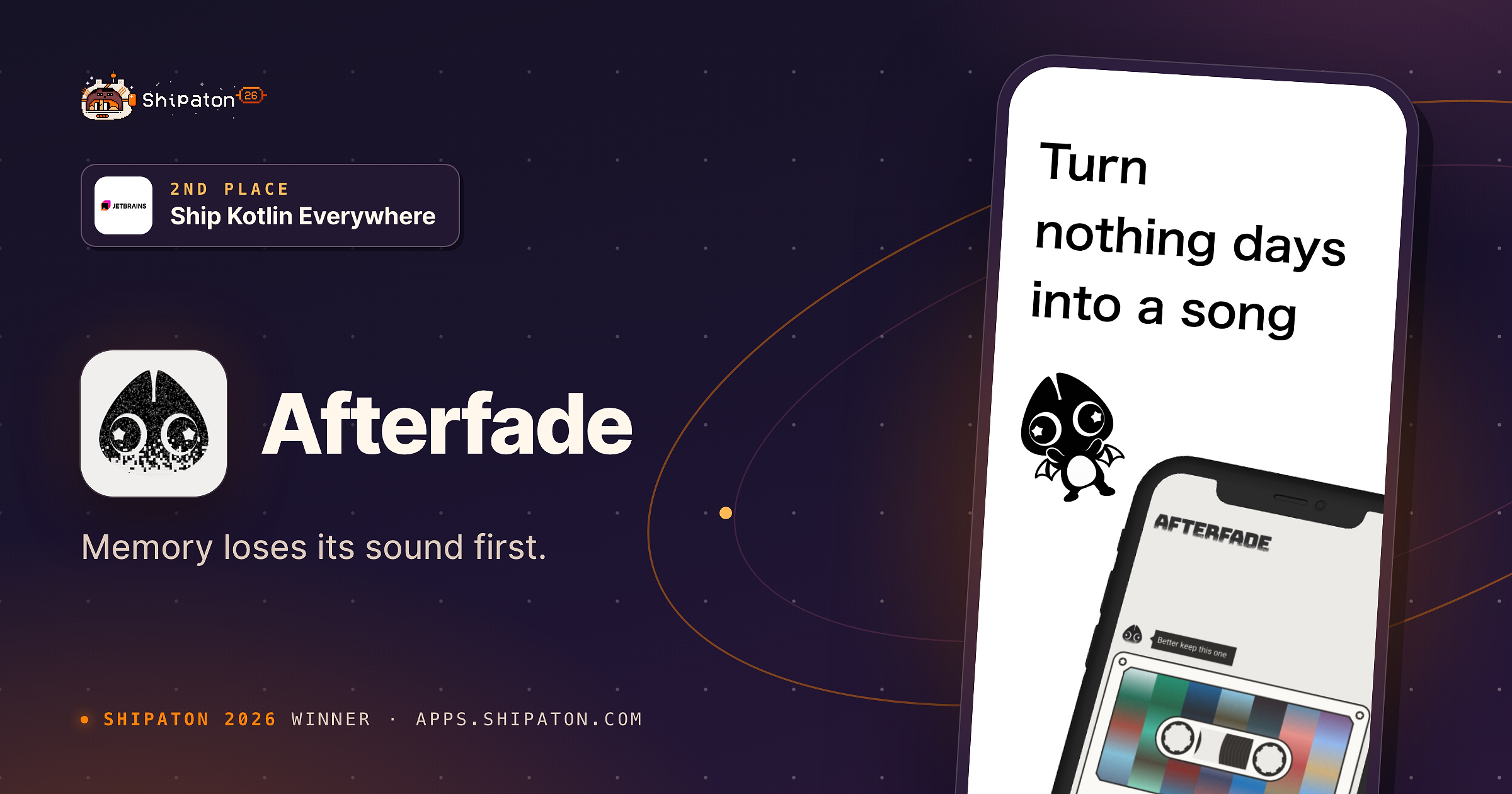
Kanon Fujita could look back at photos and remember how a day looked, but not how it sounded. AfterFade turns seven five-second clips into a music video, composing a lo-fi soundtrack from their colors and ambient sound. Kotlin and Compose share the interface and music engine across iOS and Android, with composition happening privately on the phone.
The judges particularly liked the ingenuity and creativity behind the idea.
3rd Place: Lumeo
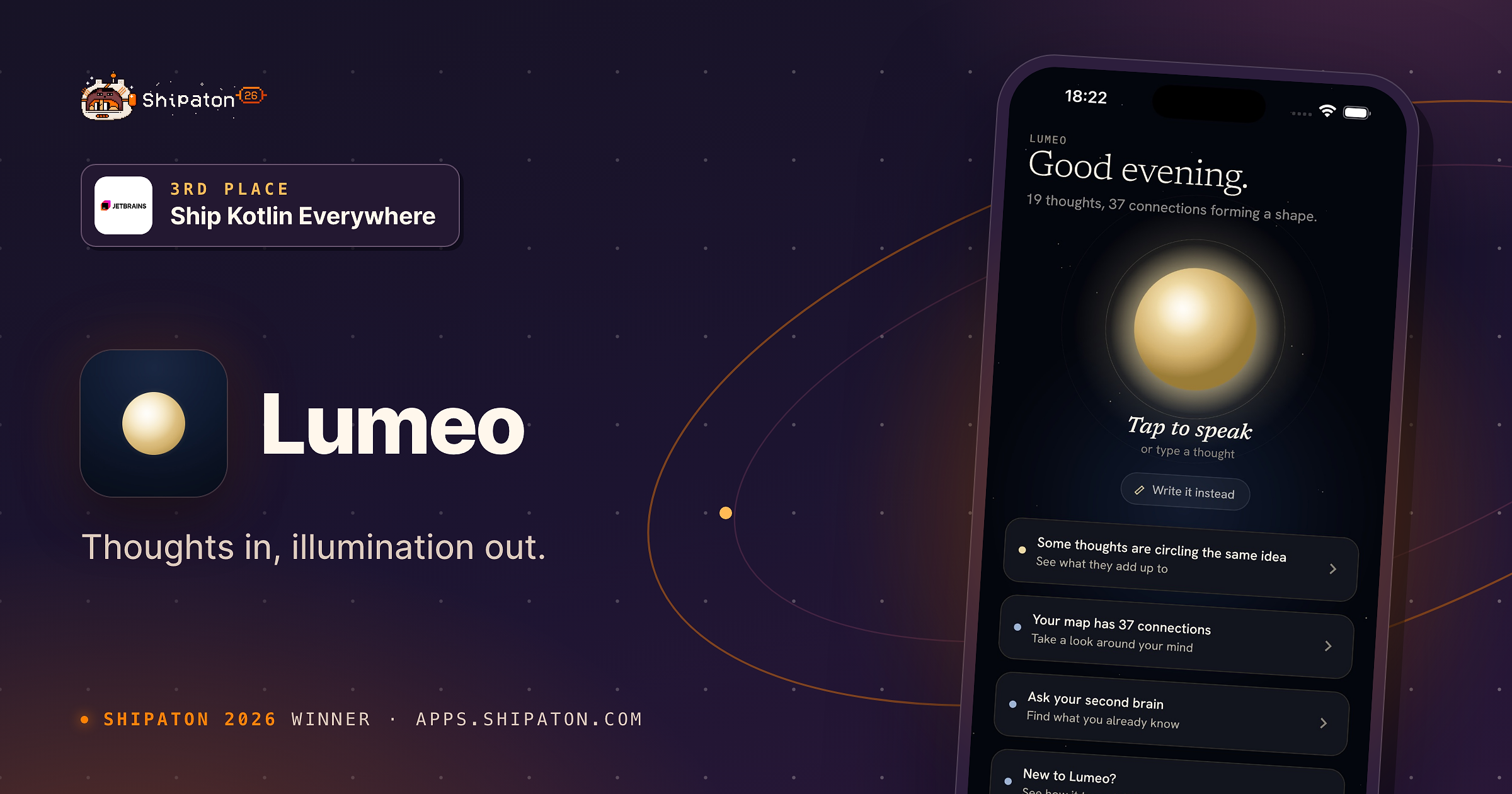
Some thoughts arrive while you're walking, commuting, or doing anything except sitting at a keyboard. Lumeo lets you speak them, then transcribes, organizes, and connects them with earlier notes. Piotr Prus uses a constellation view to make those links visible. Kotlin runs through the project, from shared mobile code to the backend and even the module that rendered its demo film.
The judges singled out the project's contributions to the Kotlin community.
Most Viral App
Noise's Most Viral App award focused on the creative work of getting an app noticed. Developers experimented with videos, hooks, and formats that could introduce the product to new audiences. We looked for a clear connection between the content people wanted to watch and the value waiting for them inside the app.
1st Place: Trazo: Golf Ball Tracer
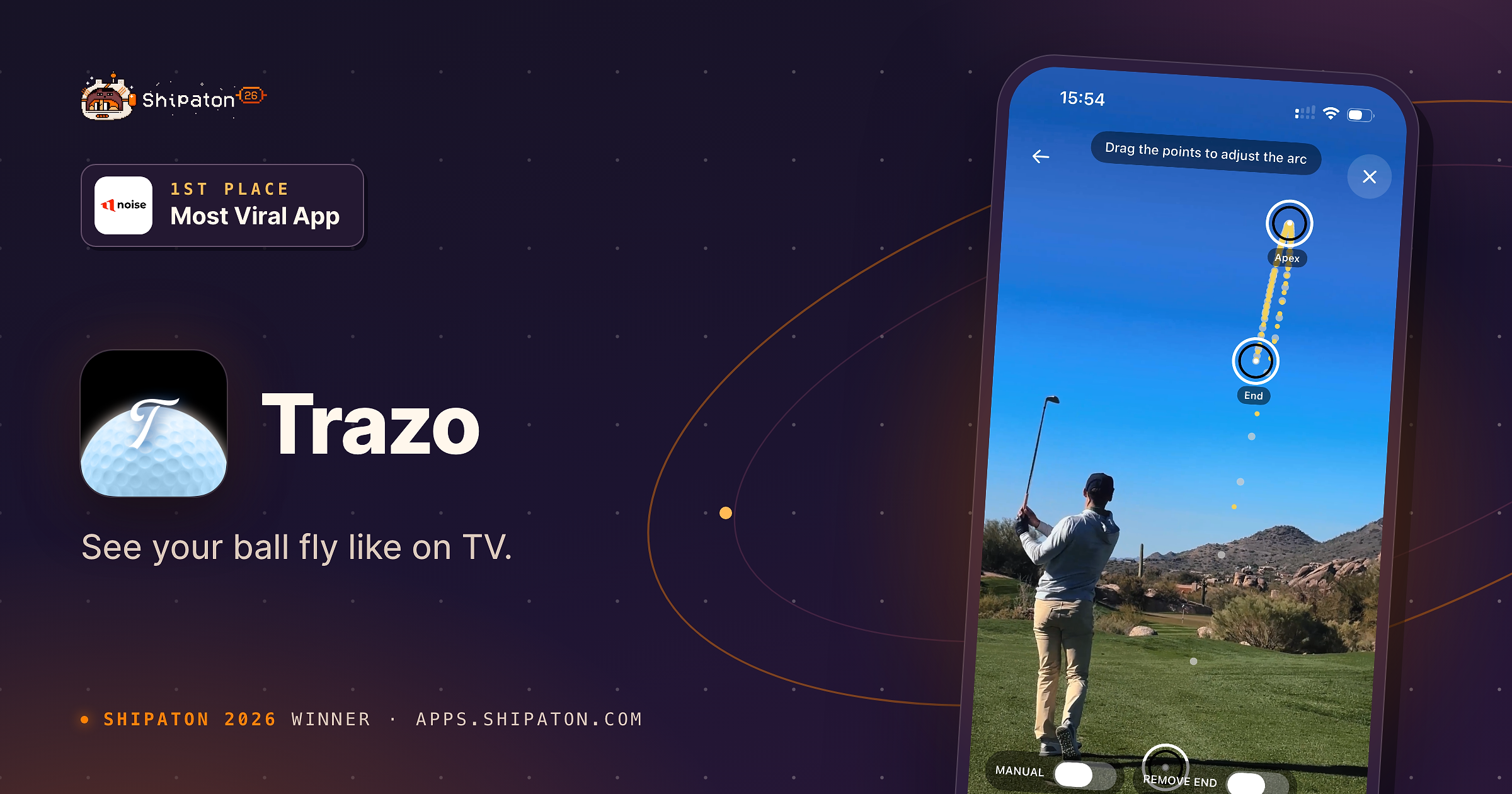
Trazo gives amateur golf videos the ball-flight line usually seen on a broadcast.
Julian Praest built the processing to run on the phone, starting from two selections of the ball. For the app's marketing, golf humor and advice became repeatable formats, with the tracer reveal giving viewers a reason to care about the product at the end.
The team evaluated formats for how well they could attract attention, be repeated, and lead to interest in the app, then stopped weaker ideas and kept working on stronger ones.
The judges highlighted the team's understanding of how to use organic content to introduce people to the app.
2nd Place: PlateDiary – Food Journaling
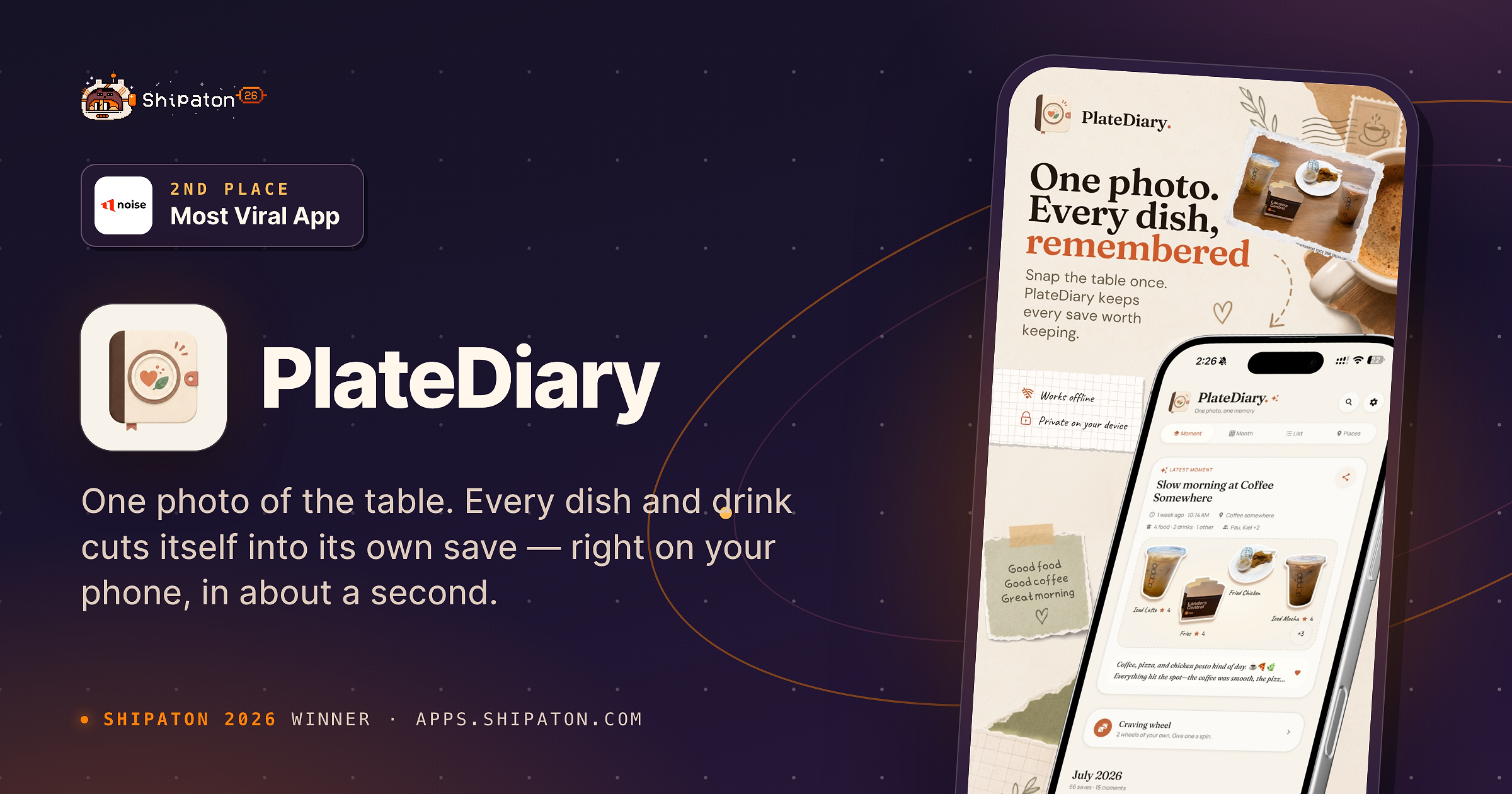
Most of us have a few good meals buried somewhere in our camera roll. PlateDiary gives those photos a home, organizing food and drink into a visual journal worth returning to. John Michael Degojas carried that familiar behavior into creator campaigns, testing hooks and formats that move from a recognizable habit to the pleasure of seeing the finished collection.
The judges saw the value in turning a food photo into a saved memory, particularly with its location on a map.
3rd Place: Quenched – Water Tracker
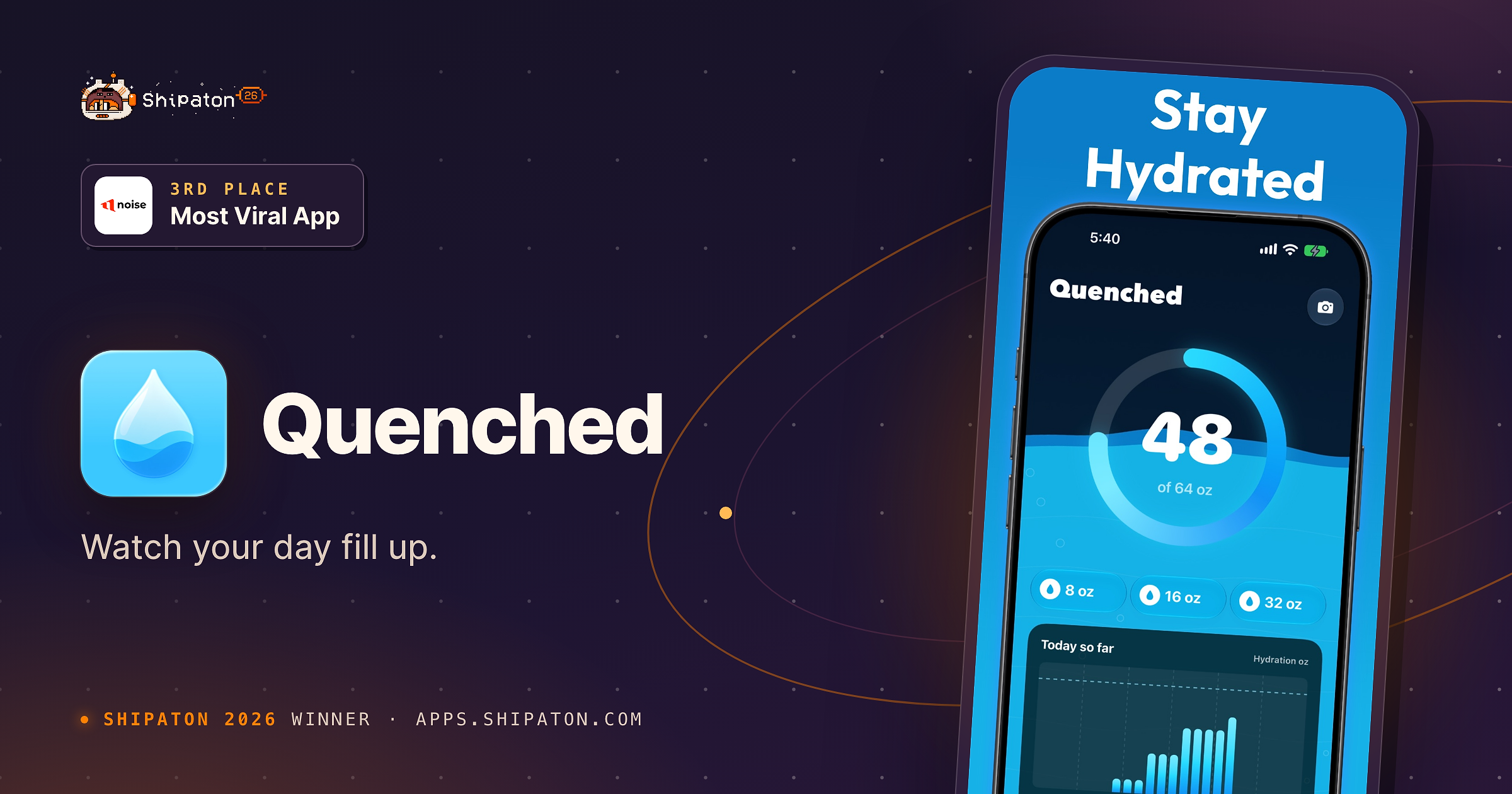
Jason Clardy built Quenched after a doctor's visit revealed he was dehydrated despite feeling normal. The app brings together a personal water goal, reminders, widgets, and quick logging, with water that reacts as you tilt the phone. That little physical detail gives the daily habit some personality, while marketing experiments tested different ways to introduce it to new users.
Best App for Galaxy
Samsung's Best App for Galaxy award asked developers to think about what their app could do on Galaxy devices. Publishing to the Galaxy Store was part of the challenge, along with adapting the experience to the hardware. Foldables offered particular room to explore how layouts and interactions could change with the screen.
1st Place: Grandfolio: OPTCG Card Game Scanner
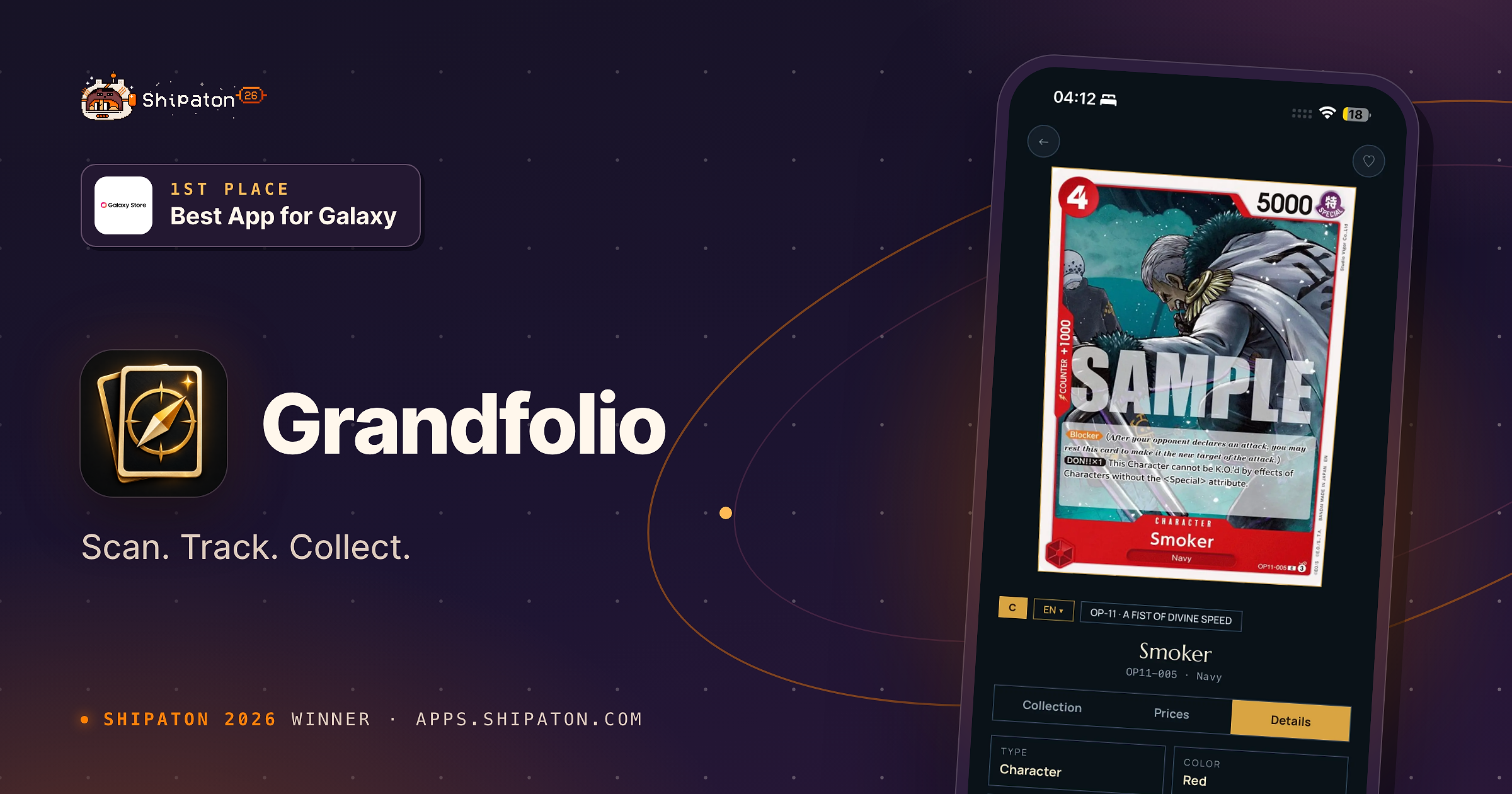
For One Piece Card Game collectors, two cards that look almost the same can be very different finds.
Aris Guimerá Orozco built Grandfolio to identify exact artwork variants, manage duplicates, and track a collection's prices and progress. Its Galaxy version adapts across folded, tabletop, and open-screen layouts, giving a growing collection more room when the device has it.
A dedicated Galaxy Store build also connects Samsung billing to RevenueCat, making distribution and purchasing part of the platform work.
The judges particularly liked the polish and foldable optimization, applied to a distinctive collecting use case.
2nd Place: Rainroam
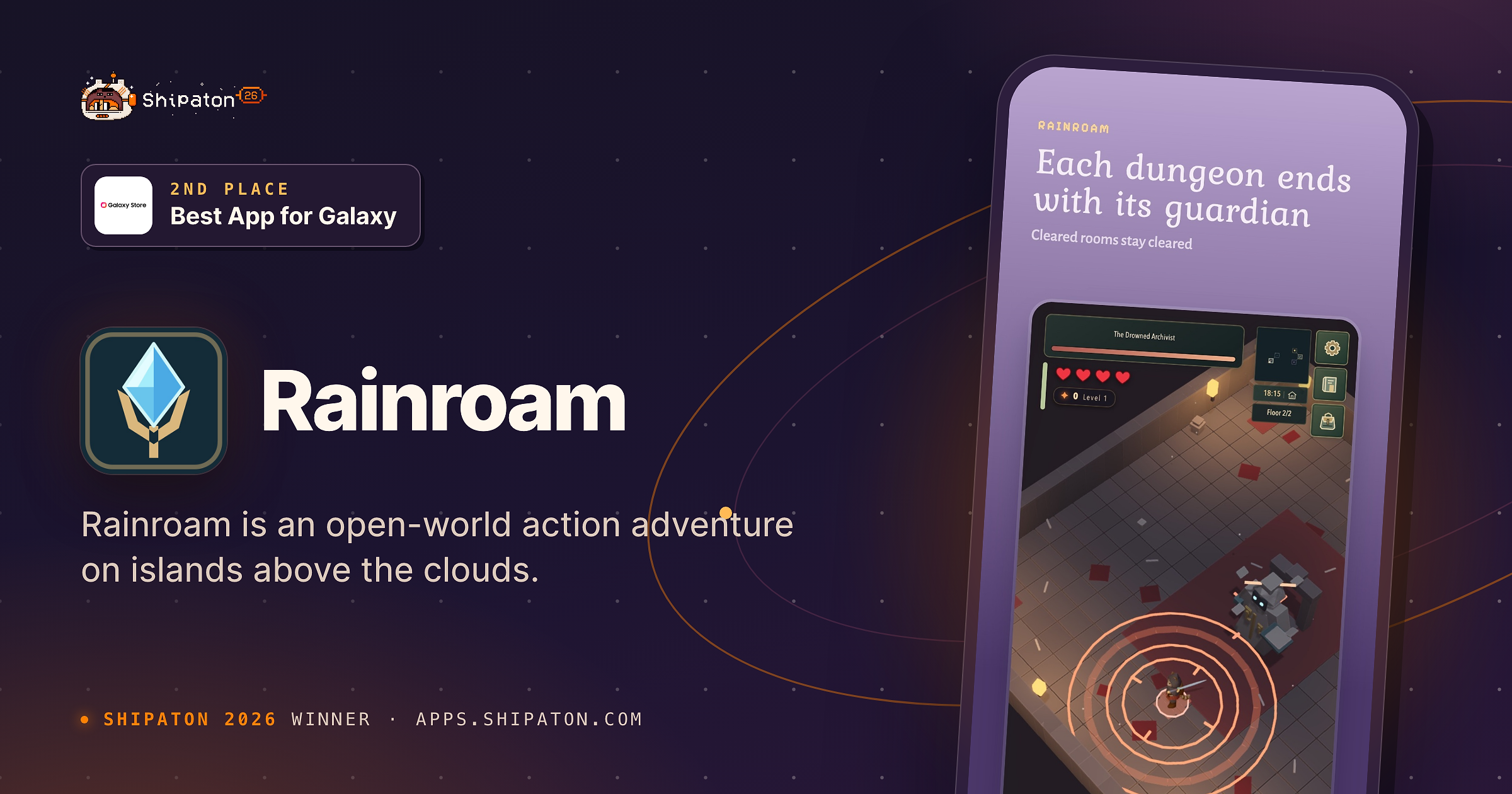
Rainroam lets players switch from a 3D adventure to pixel art in the middle of a fight. Both views run the same game, so the islands, quests, and bosses carry on without a restart. Hanna Shcharbakova and Yauheni Draitsau also worked through Galaxy folding, unfolding, and multi-window behavior, bringing that flexibility to the device as well as the art style.
3rd Place: SugarCurve: Gestational Diabetes Coach, Meal Planner & Glucose Tracker
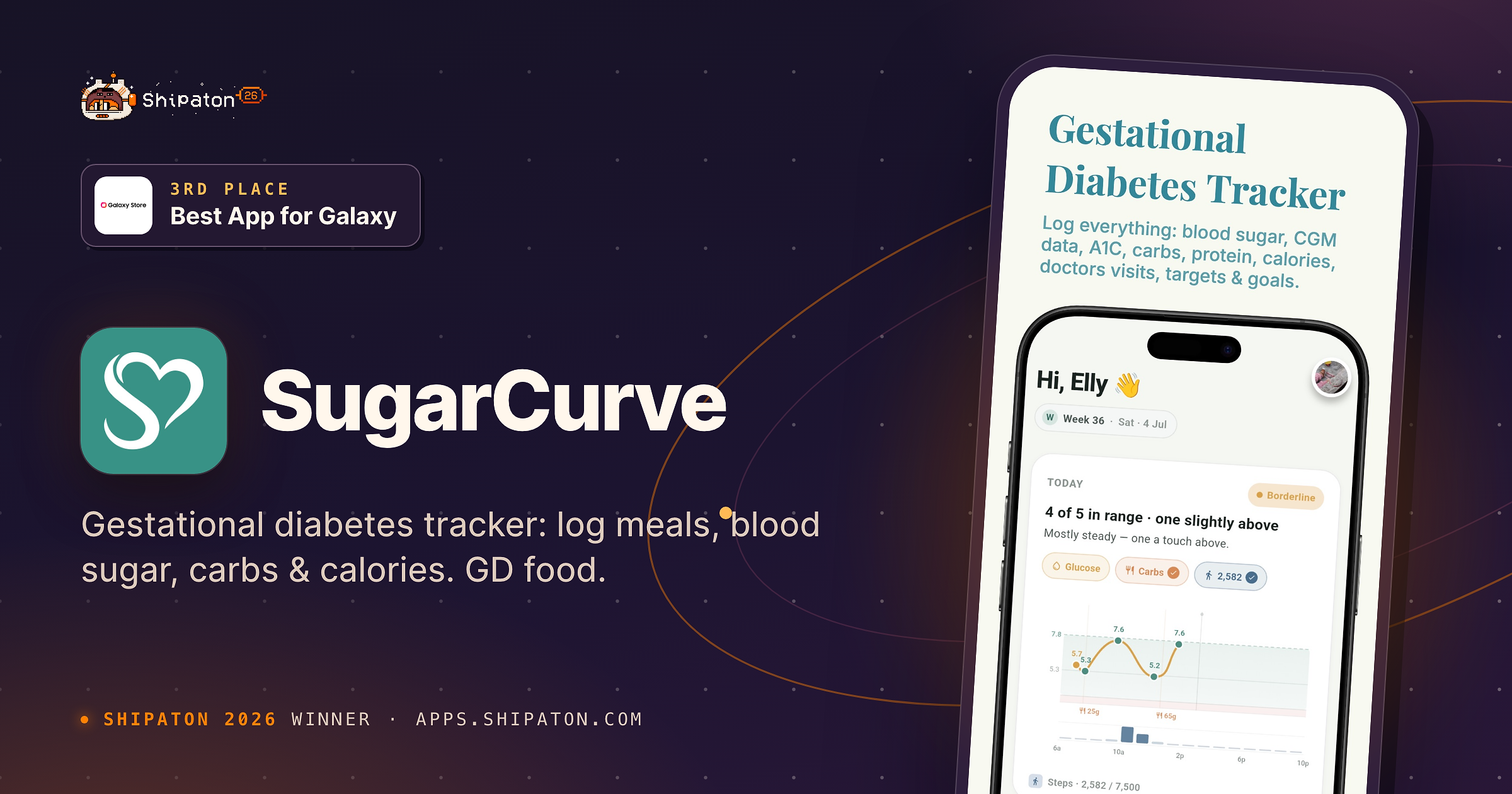
A husband-and-wife team's experience of gestational diabetes became the starting point for SugarCurve. Glucose records, meal planning, food information, and reminders follow the journey through pregnancy and postpartum. On Galaxy foldables, readings, targets, and trends sit side by side, using the extra screen space to make a personal record easier to look through.
The judges liked the overall presentation and noted the work on foldable optimization.
Replit's Idea to Income
Replit's Idea to Income award followed the journey from an idea to an app someone could download and pay for. Developers used Replit and RevenueCat to build the product, get it into users' hands, and set up purchases. The category celebrated taking those first practical steps toward an app business.
1st Place: Let’s Get Support by 3Dadz
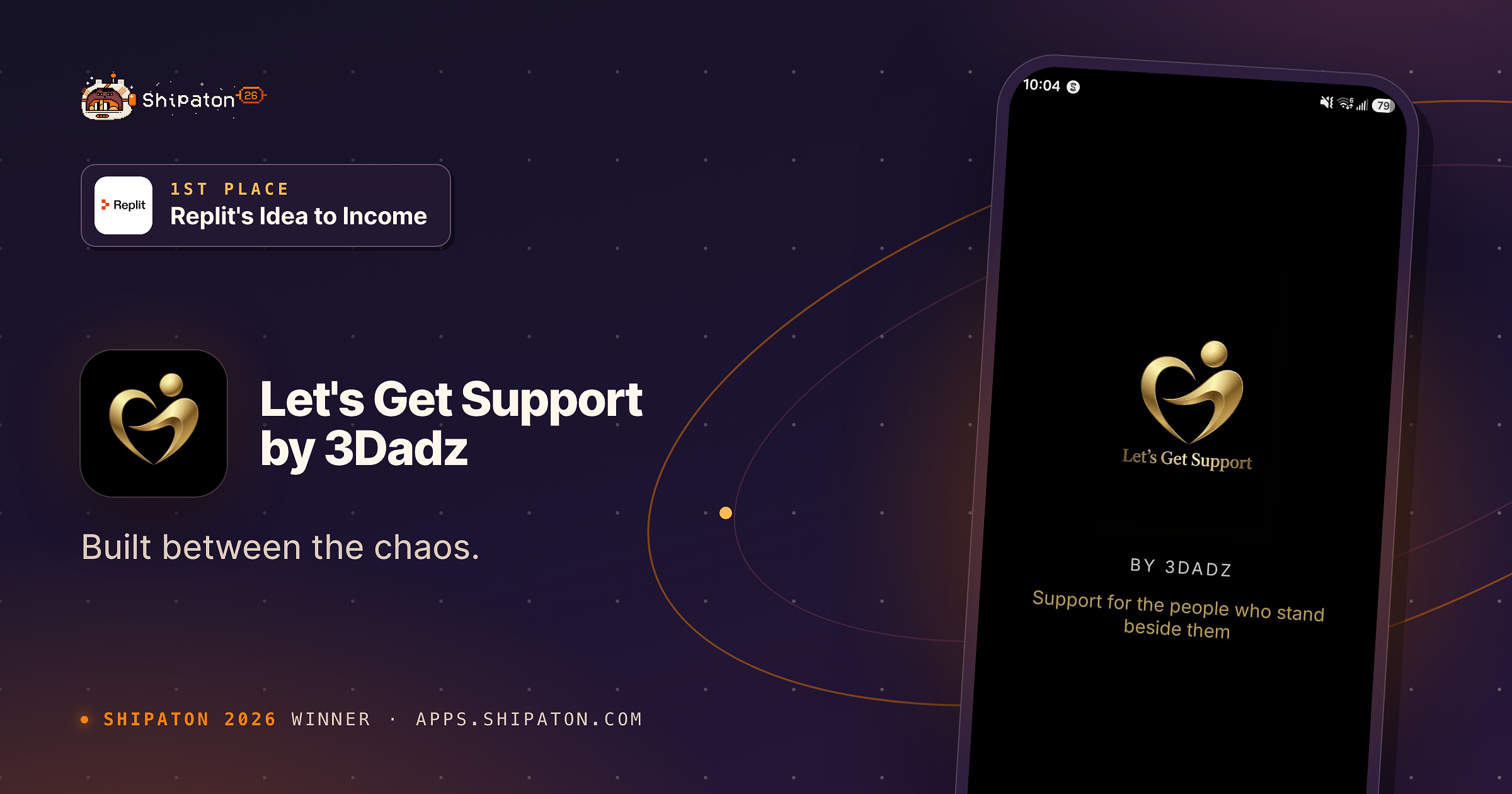
Let's Get Support focuses on the people affected by someone else's addiction: partners, parents, and friends who need support themselves.
Joshua Burgess and Aaryn B. built it from community conversations in Abbotsford and the Fraser Valley, bringing together check-ins, journaling, boundary-setting tools, and local resources. Replit helped the pair turn those conversations into a live app, with the core tools available for free.
Optional Plus purchases support the app, while journals and weekly calculations stay on the device. The team's submission describes an early launch with working purchases and community-led distribution.
2nd Place: Quarterday
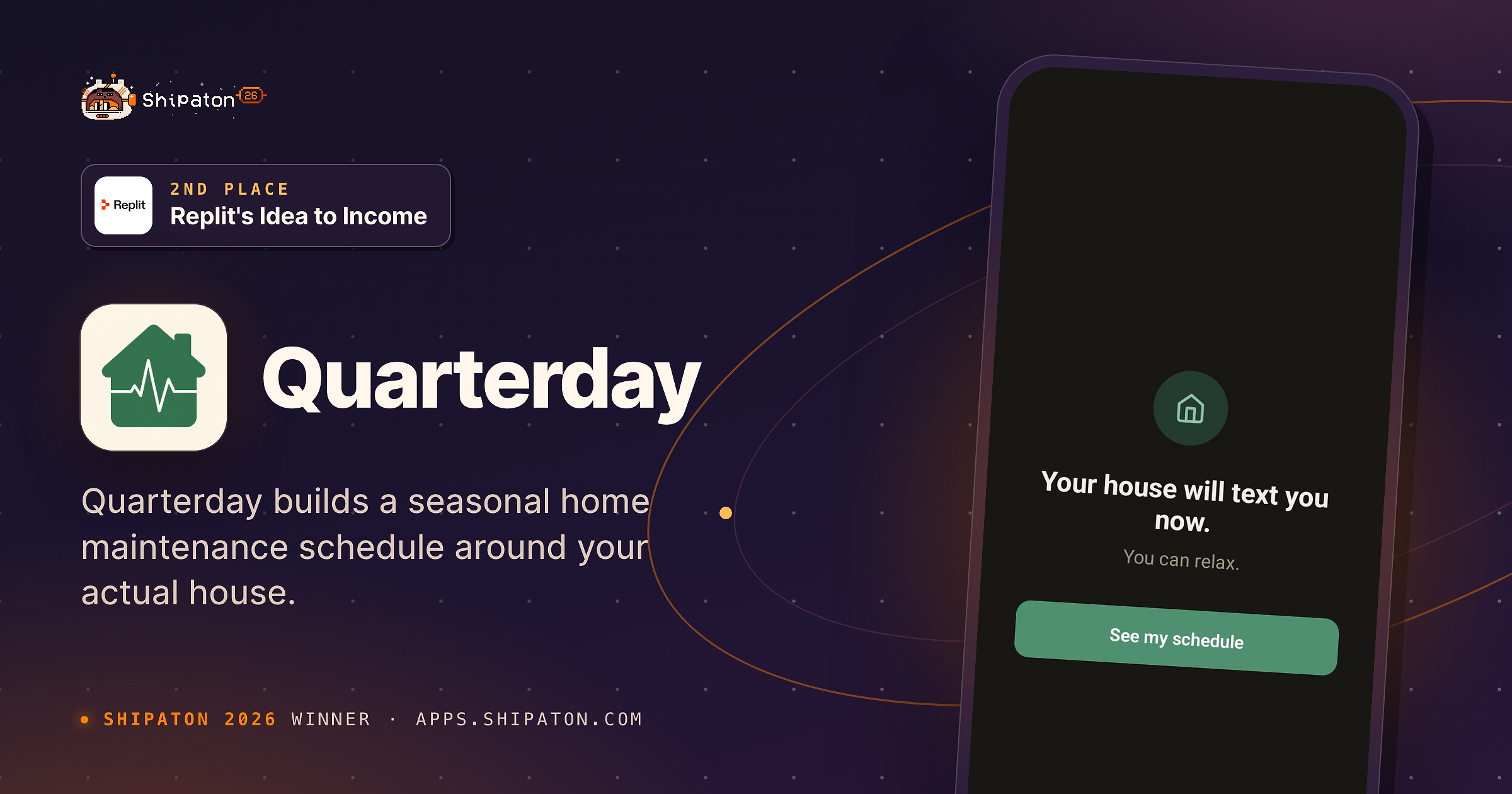
Home maintenance has a habit of becoming urgent just after you've forgotten about it. Quarterday starts with a quiz about your home, builds an annual schedule, and shows what's due now. Adrian Ferguson used Replit to get the first version working, then added a logbook and photo receipts to help homeowners keep track of the jobs they've actually done.
3rd Place: Family Prayer
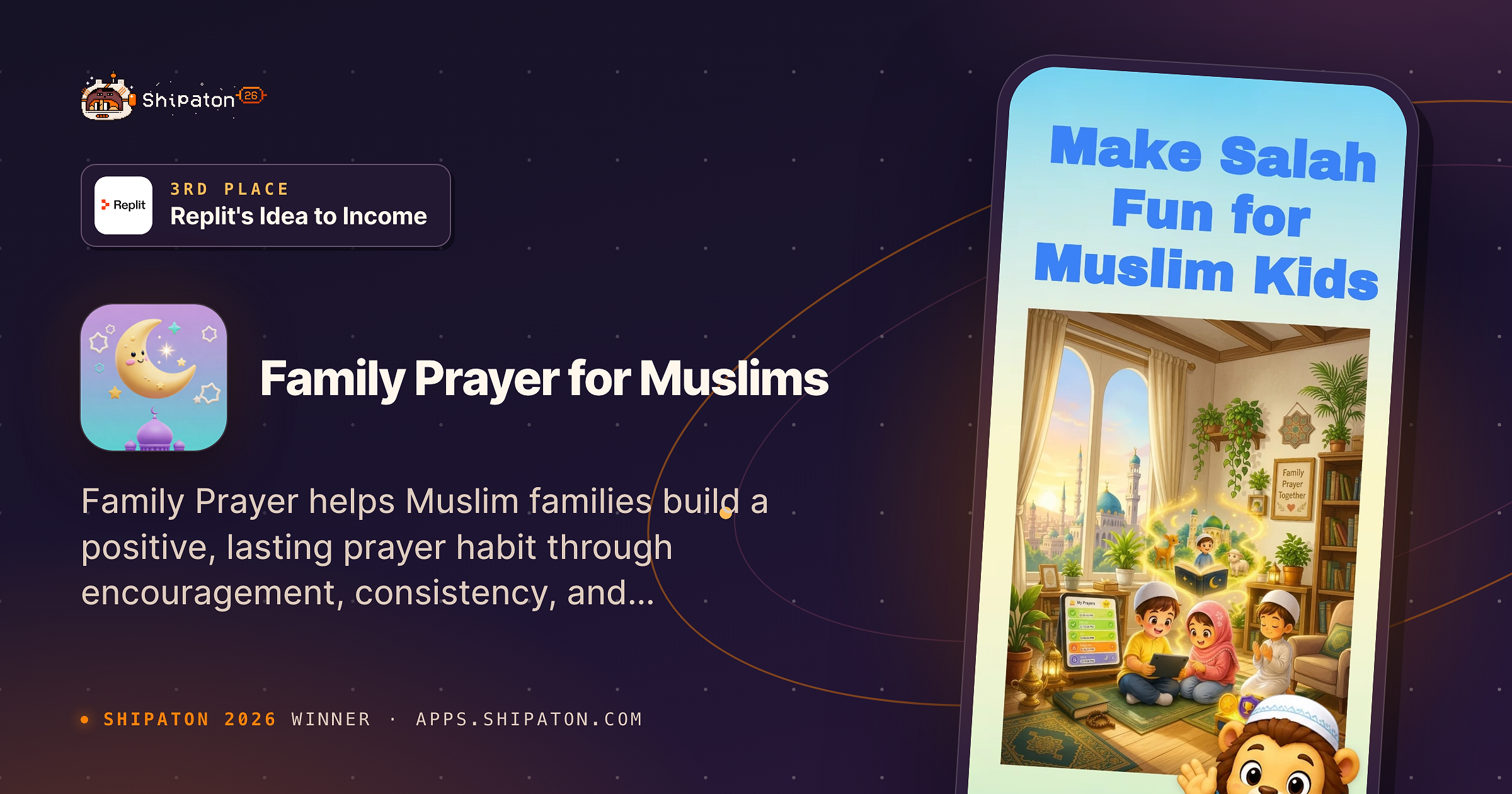
Family Prayer began with a mother's experiments in helping her sons build a daily prayer habit. Children get stories, achievements, and points, while parents choose real-world rewards that suit their family. Replit, Expo, and RevenueCat helped a first-time builder take that idea to the App Store. At submission, the team reported its first two annual subscribers.
The Growth Loop Award
Layers' Growth Loop Award was about learning what helps an app grow. Developers were asked to run focused experiments, measure what happened, and use the results to decide what to try next. An experiment that challenged the original plan could be just as useful as one that confirmed it.
1st Place: PoquitoTalk: Bocas del Toro
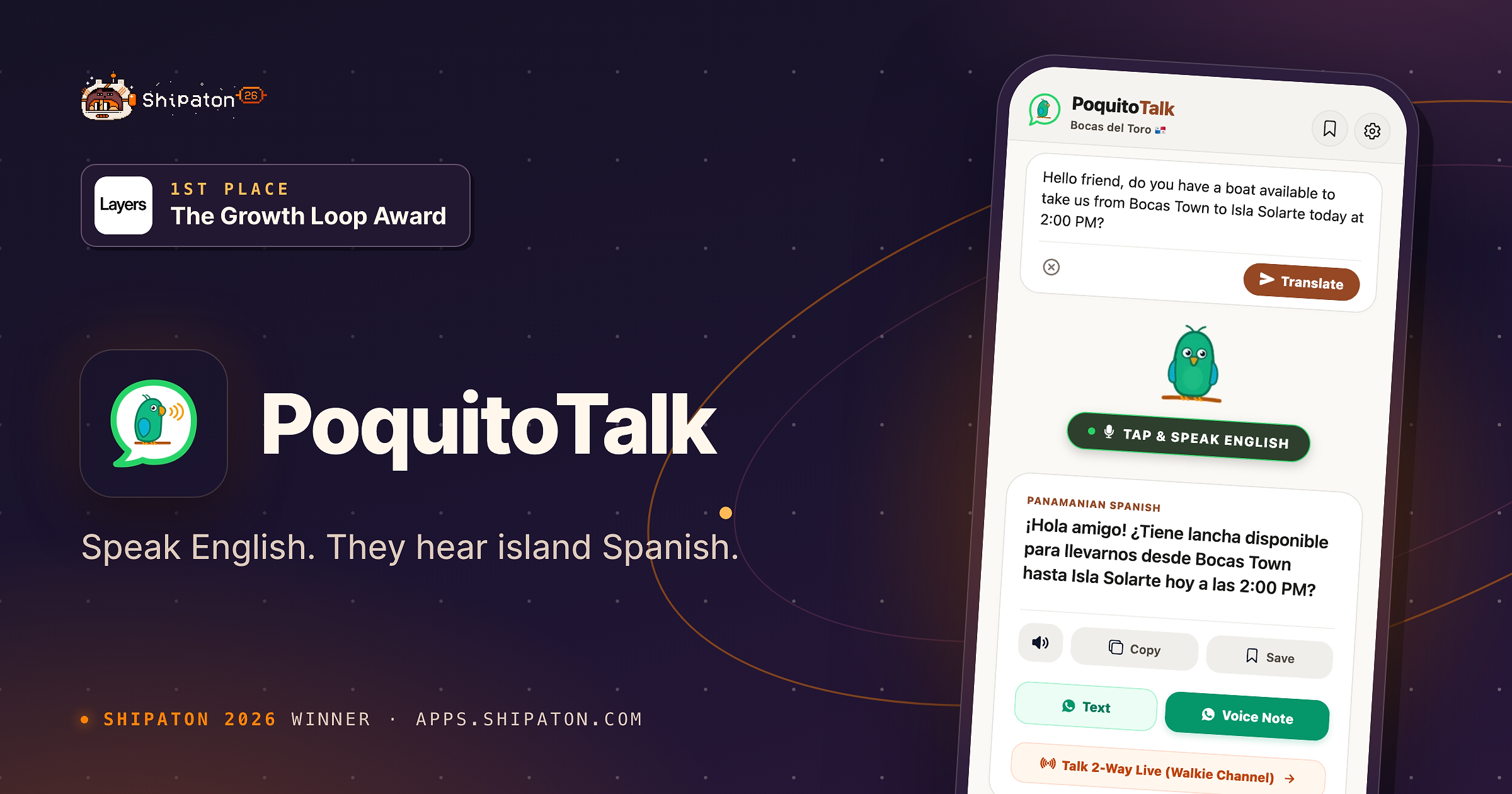
After 14 years in Bocas del Toro, Dorien Van den Abbeele had seen how often textbook Spanish misses the way people actually speak there.
PoquitoTalk turns English into local Spanish voice notes for WhatsApp and helps translate the replies. Recipients don't need the app, making it useful in a community where a voice message is often how everyday things get arranged.
Dorien's growth experiments compared automated clips with handmade local content. The submission also records where the evidence was inconclusive and where measurement needed fixing.
The judges highlighted the team's extensive experimentation, along with its openness about a measurement bug that the Layers data confirmed.
2nd Place: Better Yoga
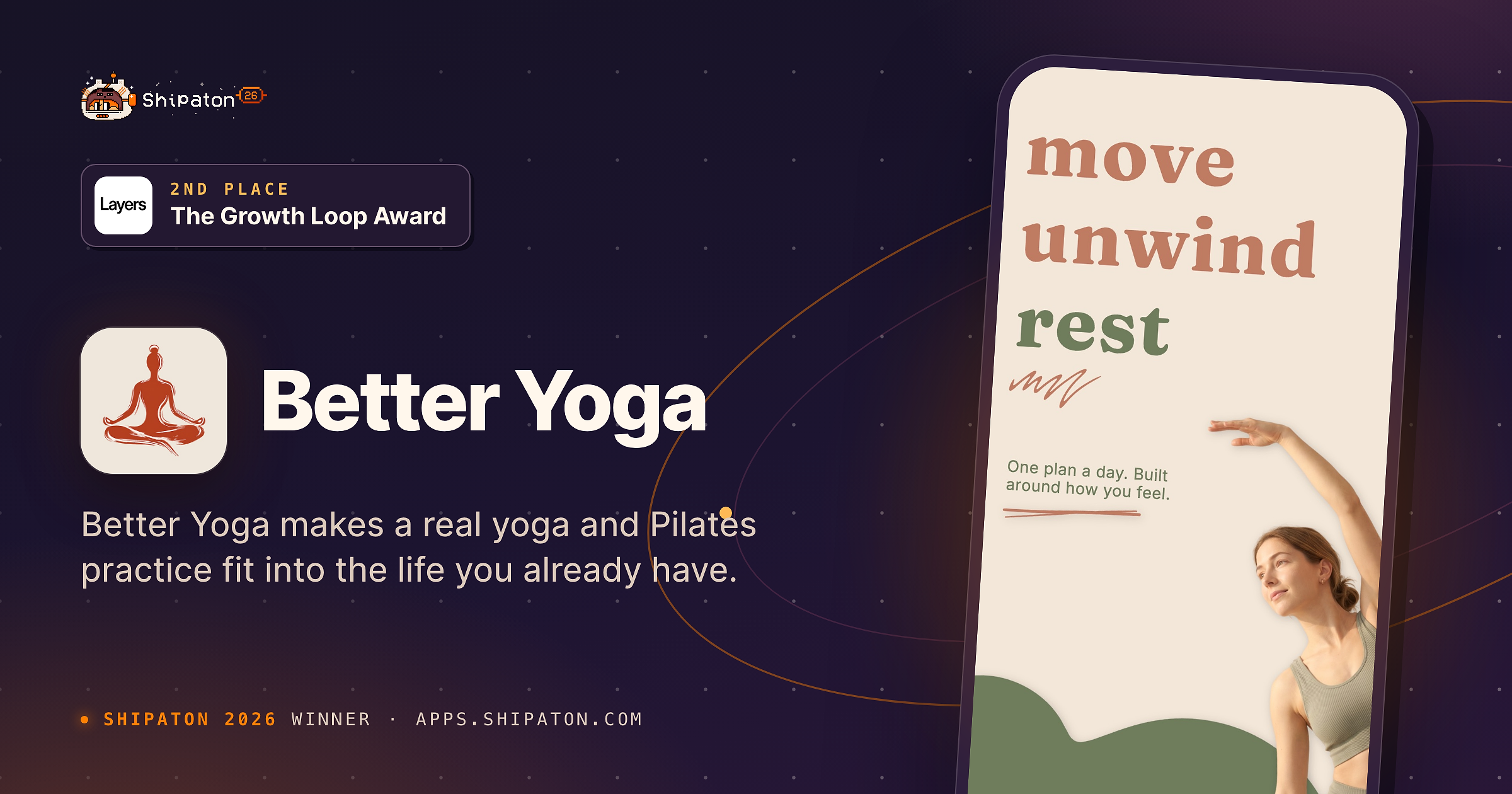
Better Yoga turns a quick check-in about energy, soreness, and time into one manageable yoga or Pilates session. Fakher Hakim applied the same willingness to adapt to the app's marketing, testing humor, product demos, and rest-positive messages through Layers. When the results challenged the original idea, the messaging changed. The submission makes the learning visible, including the surprises.
The judges appreciated that the team followed through on its experiment even when the results disproved the original hypothesis.
3rd Place: Green Hour: Time Outside
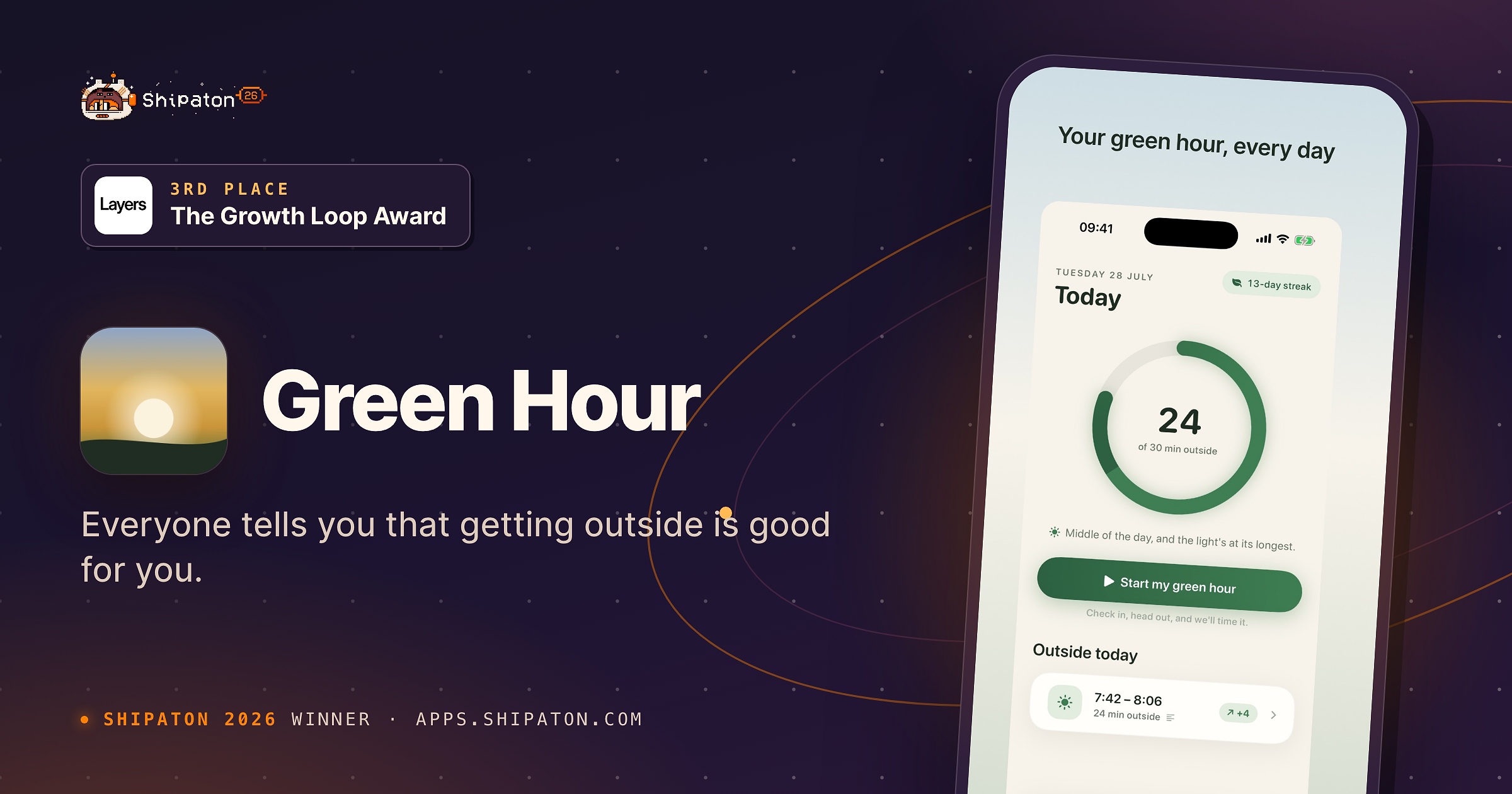
Natasha Wilson found that short breaks outside helped her days, but winter made the habit easy to lose. Green Hour records mood before and after time outdoors, helping users see their own pattern. Its Layers experiments bring similar care to growth, separating social attention and store visits from installs the team could actually attribute. The early learning stays grounded in the evidence.
The judges singled out the thorough use of the platform, including nine experiments, separate channel links, audience personas, and bot filtering.
Keep Them Coming Back Award
OneSignal's Keep Them Coming Back award asked developers to give people a useful reason to return. That could be an alert they'd requested, a timely update, or a message connected to their own progress. We looked at how communication supported the app's purpose and continued to help between visits.
1st Place: Parky!
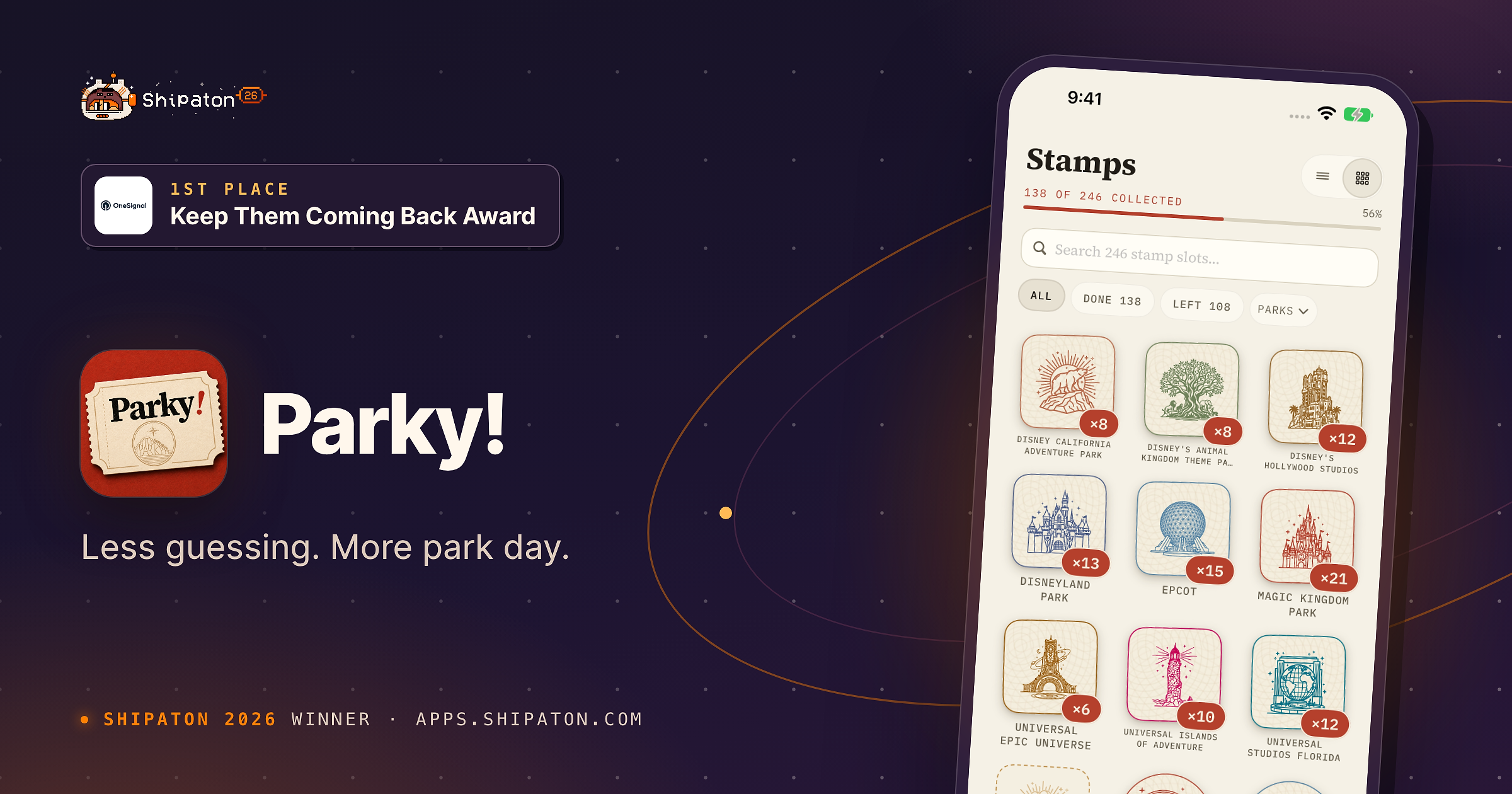
Chase Van Derrick brought his experience as a Disney Cast Member to Parky!, a companion for Disney and Universal visits.
It combines wait times, dining availability, and park-day memories with the kind of timely help a guest might ask for at a front desk. Dining alerts can even become a conversation from the Lock Screen, where you can ask about another time or restaurant.
Requested alerts, queue Live Activities, and recap messages give the app reasons to get in touch that fit the visit, from planning a meal to remembering the day afterward.
The judges particularly liked the interactive notifications, including the ability to reply directly.
2nd Place: Inference
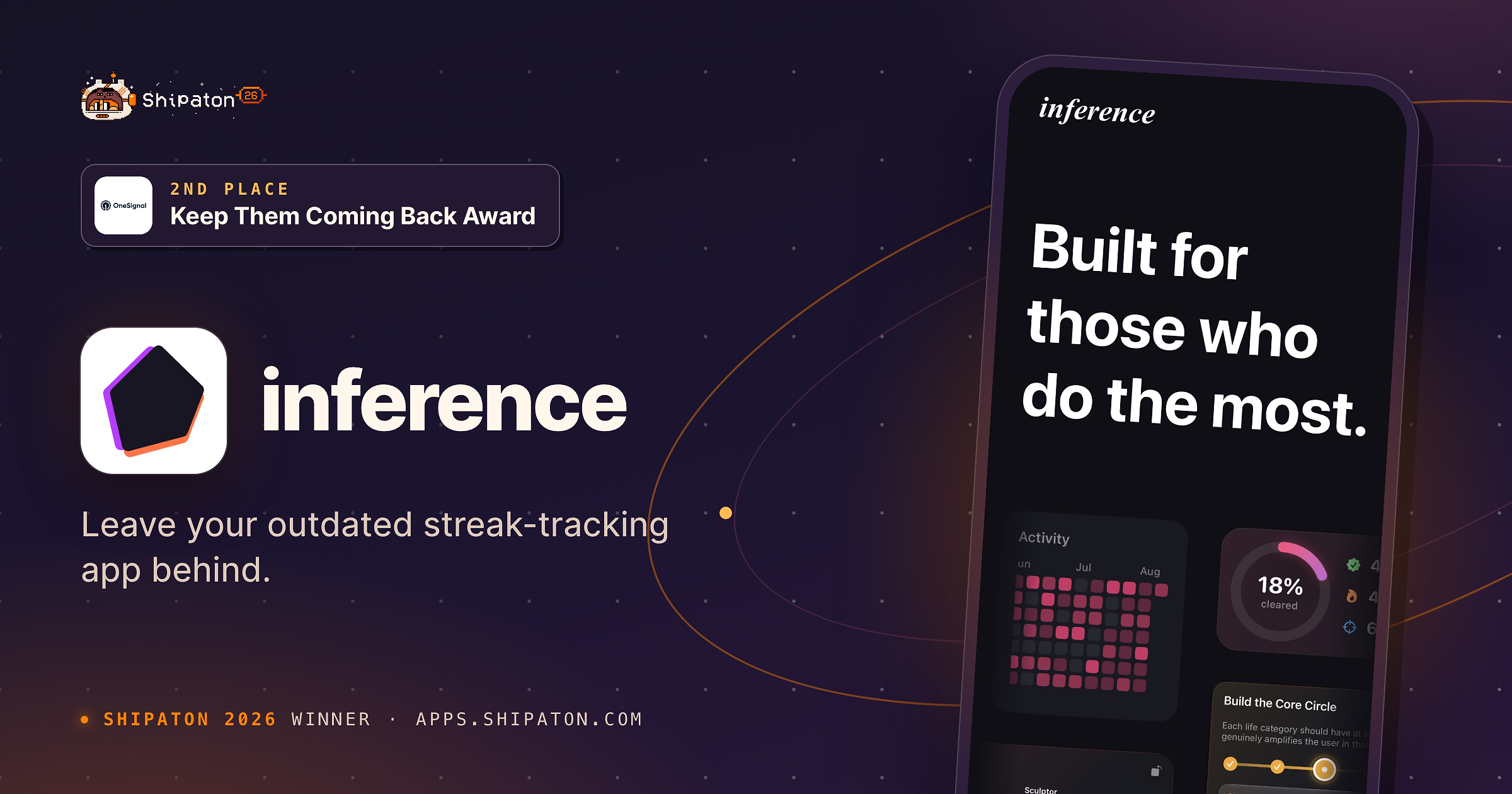
Samuel Anozie found that budgeting money and time still left a harder question: where was his energy going? Inference uses journal entries to spot patterns around work, health, relationships, and rest. OneSignal carries follow-ups through push, in-app messages, Live Activities, and email, including a monthly letter that connects the user's history with the goals they're working toward.
The judges highlighted the thoughtful use of Live Activities, in-app messages, emails, and journeys to keep the conversation going between sessions.
3rd Place: Tikku
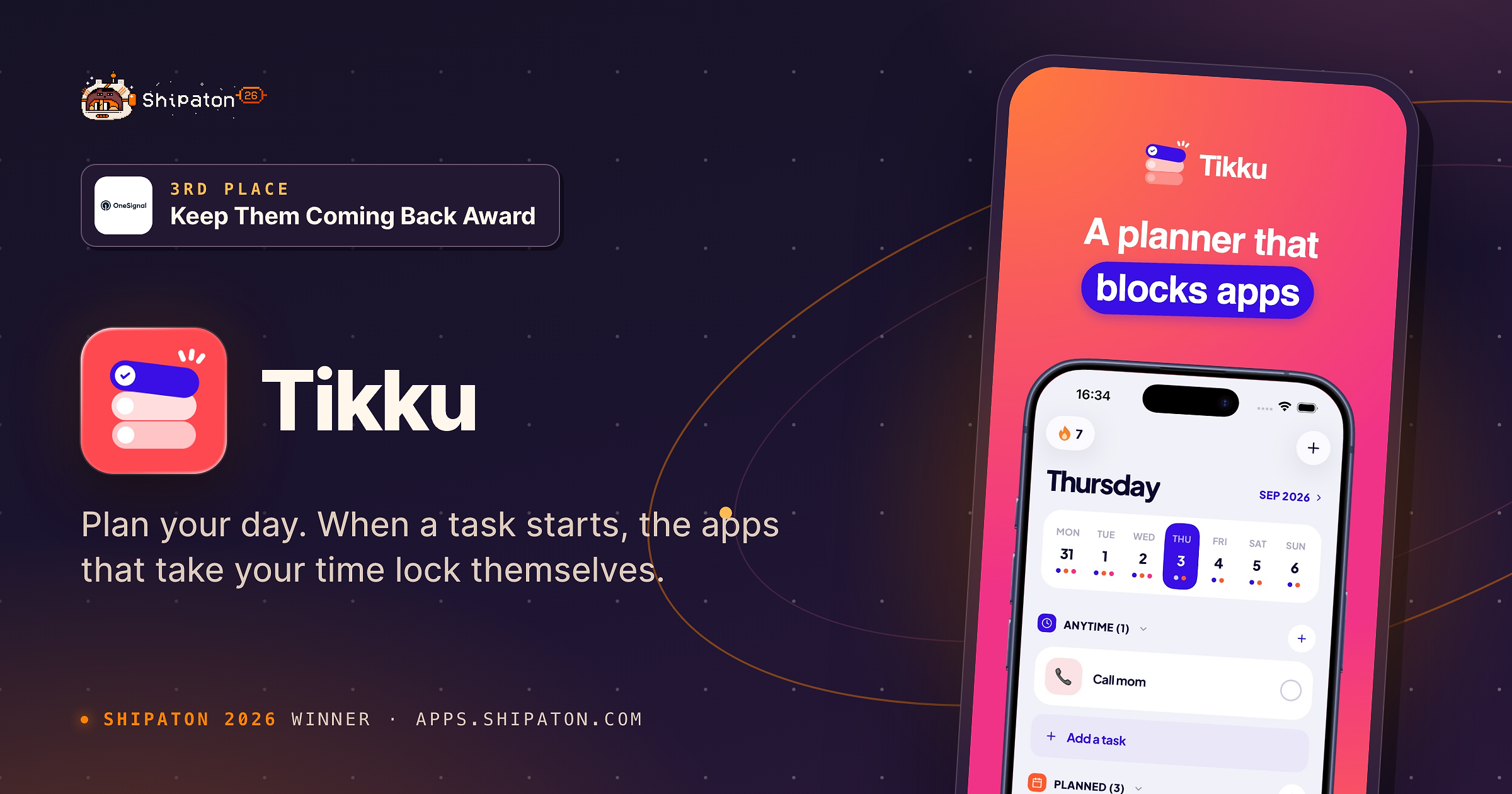
Tikku joins two things that make more sense together: choosing what to do and protecting the time to do it. Tasks and routines connect directly to distraction blocking, while OneSignal messages wait until focus sessions finish. The device adds personal Screen Time figures locally, keeping those details on the phone. Even its reminders respect the time someone set aside.
The judges praised both the polish of the app and its use of OneSignal, from rich push notifications and journeys to Live Activities and in-app messages.
Funnel Vision Award
Stripe's Funnel Vision Award focused on the journey from the web into an app. Developers built payment funnels with RevenueCat Funnels and Stripe, connecting an introduction to the product with checkout and access in the app. The challenge was to make that whole path work, from the first question to a completed purchase.
1st Place: In Your Own Words
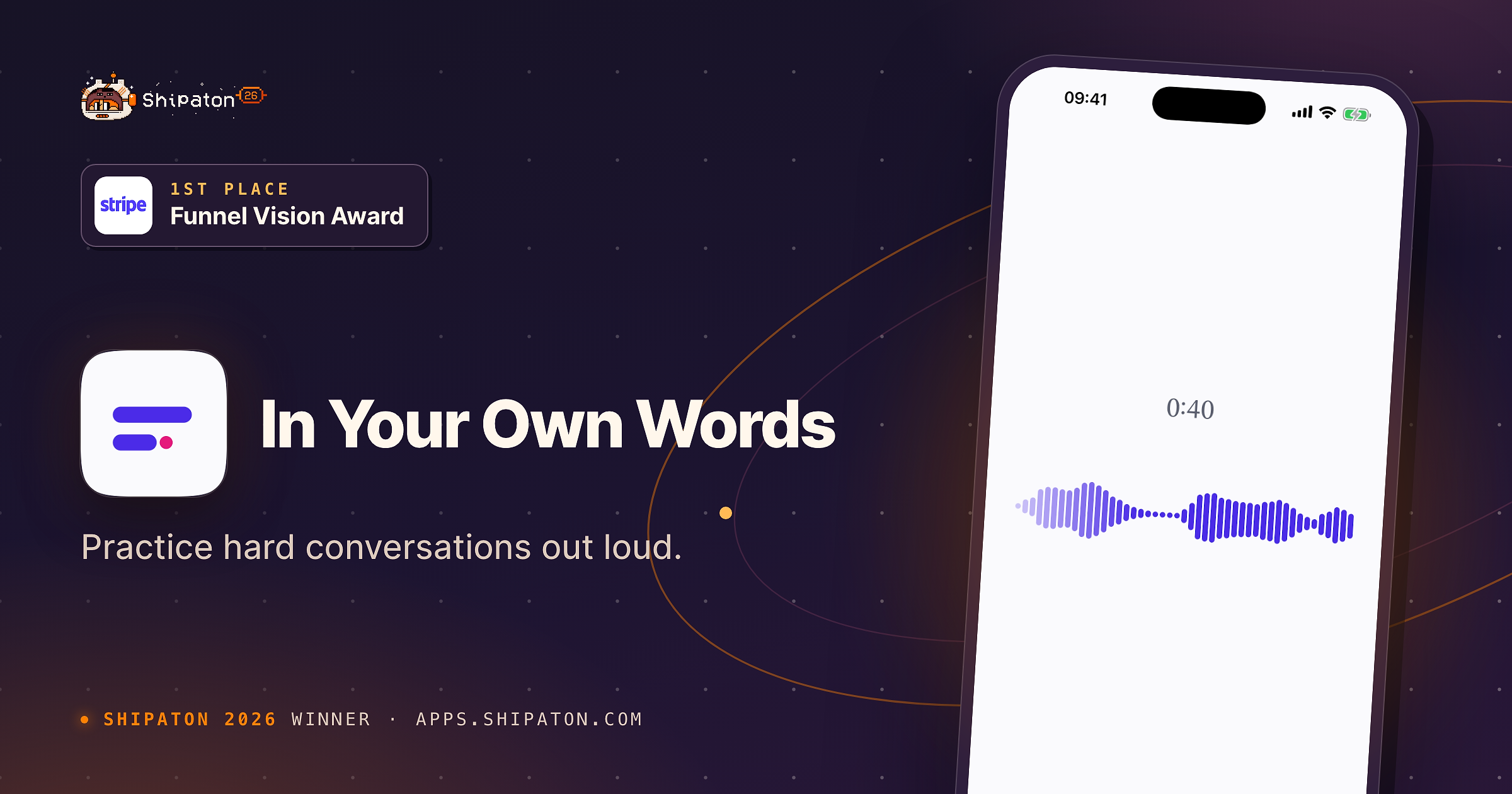
In Your Own Words gives people a minute to practice saying something they might otherwise avoid.
Natasha Wilson's app offers real-world conversation scenarios and feedback on pace, hesitation, and filler words, with speech analysis happening on the phone. Its web quiz starts that journey before download, guiding visitors to a relevant practice deck and letting a web purchase unlock it in the app.
The submission documented a £2.99 web purchase successfully unlocking the right deck on an anonymous install, a small but complete demonstration of the path from quiz to practice.
2nd Place: Kettlebell Body
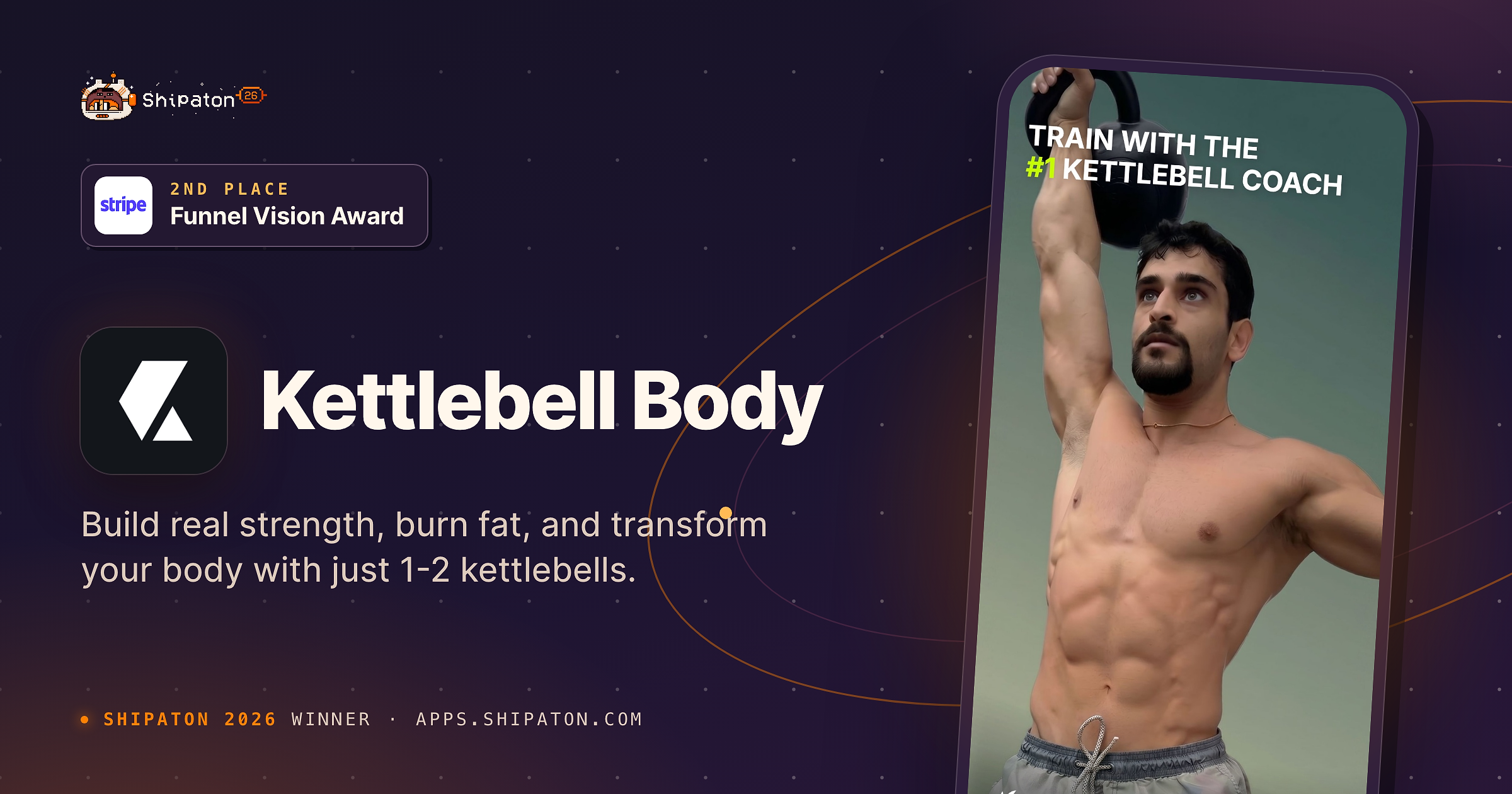
Kettlebell Body gives kettlebell training the room it deserves as a discipline of its own. Built with coach Trevor Shan, it pairs an eight-week Foundation program with weekly workouts, coaching videos, timers, and progress tools. Different formats, from EMOM to ladders, get their own structure, helping users follow a program beyond picking an exercise from a general fitness library.
3rd Place: Bravy — The work journal that teaches real conversations
Bravy gives visitors something useful before asking them to subscribe. Its web-to-app funnel starts with a three-question quiz, then offers an opening line and a practical conversation tip tailored to the result. Monthly, three-month, and annual plans follow, with a Stripe-backed purchase and redemption link unlocking Pro in the app without an account. The first bit of coaching happens before download.
Conflict of Interest Award
Last year was the first time we allowed RevenueCat employees and Shipaton sponsor employees to participate in the hackathon. That year we only got two submissions so it was refreshing to see that this year we increased that number to 23 submissions. Most were RevenueCat employees (some of them even submitting more than one app).
This year we decided to open the judging of these apps to the other Shipaton participants. Seemed only fair that after judging the apps you built, you should judge the apps we built. Judging was done through a custom judging platform where you were shown two apps at a time, and had to pick the better one. After a week, we had a pretty clear winner:
Winner: Friendpire
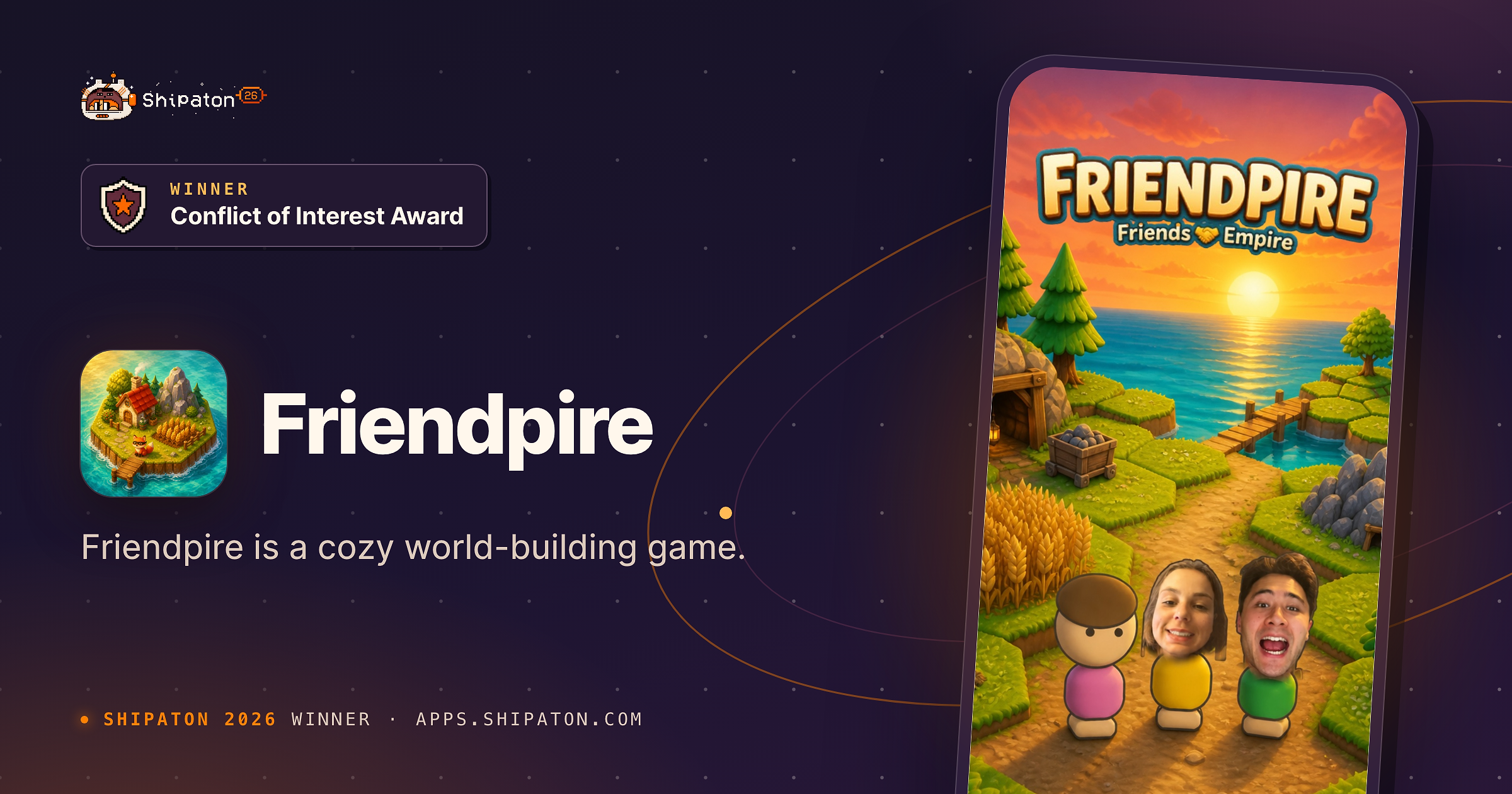
RevenueCat employee Erik MacInnis wanted to bring back Catan nights with friends who could rarely find time to play together.
Friendpire turns that idea into a shared hex-tile world where friends gather resources, build farms and docks, and expand their little empires. Erik used Fable in Cursor to work through the art direction, mechanics, and social features, shaping a familiar board-game ritual into something easier to fit around everyday life.
See you next year
Every year, Shipaton keeps growing and you’ve once again outdone yourself. We saw so many great apps, and it’s a shame we can’t award every great app. The work all of the Shipaton participants put in is nothing short of inspiring.
Finally, from all of Team RevenueCat: congratulations to all the winners! And thank you to everyone who contributed, mentored, or simply encouraged someone else to ship. While it might be the end of Shipaton 2026, it's just the beginning of your apps. We can't wait to see where they go.
How did you find Shipaton? Did you have fun? Were there things you wish we had done differently?
We'd love to hear your thoughts. Let us know on Twitter or LinkedIn, and keep an eye out for a survey we'll be sending to all participants to gather your feedback.