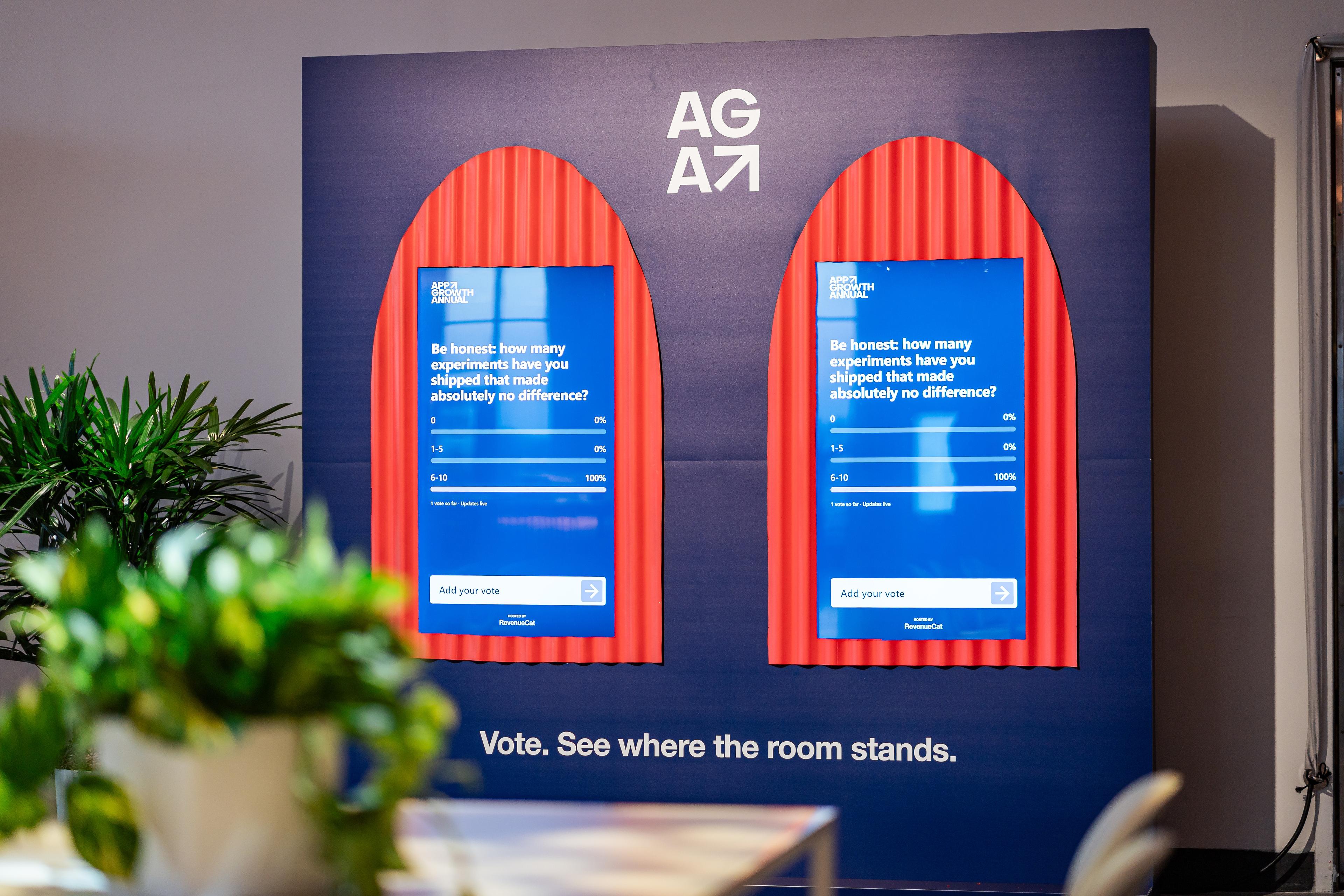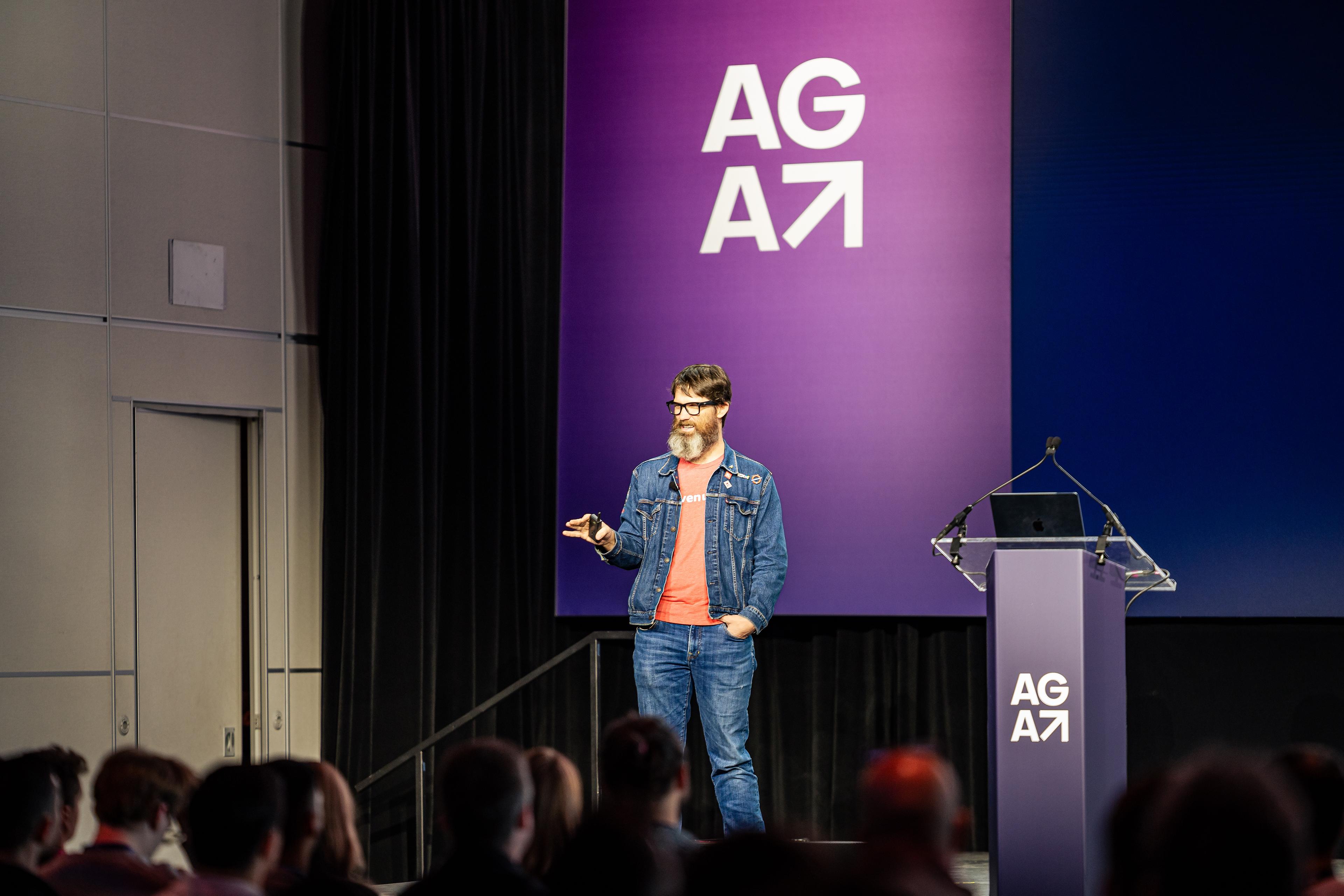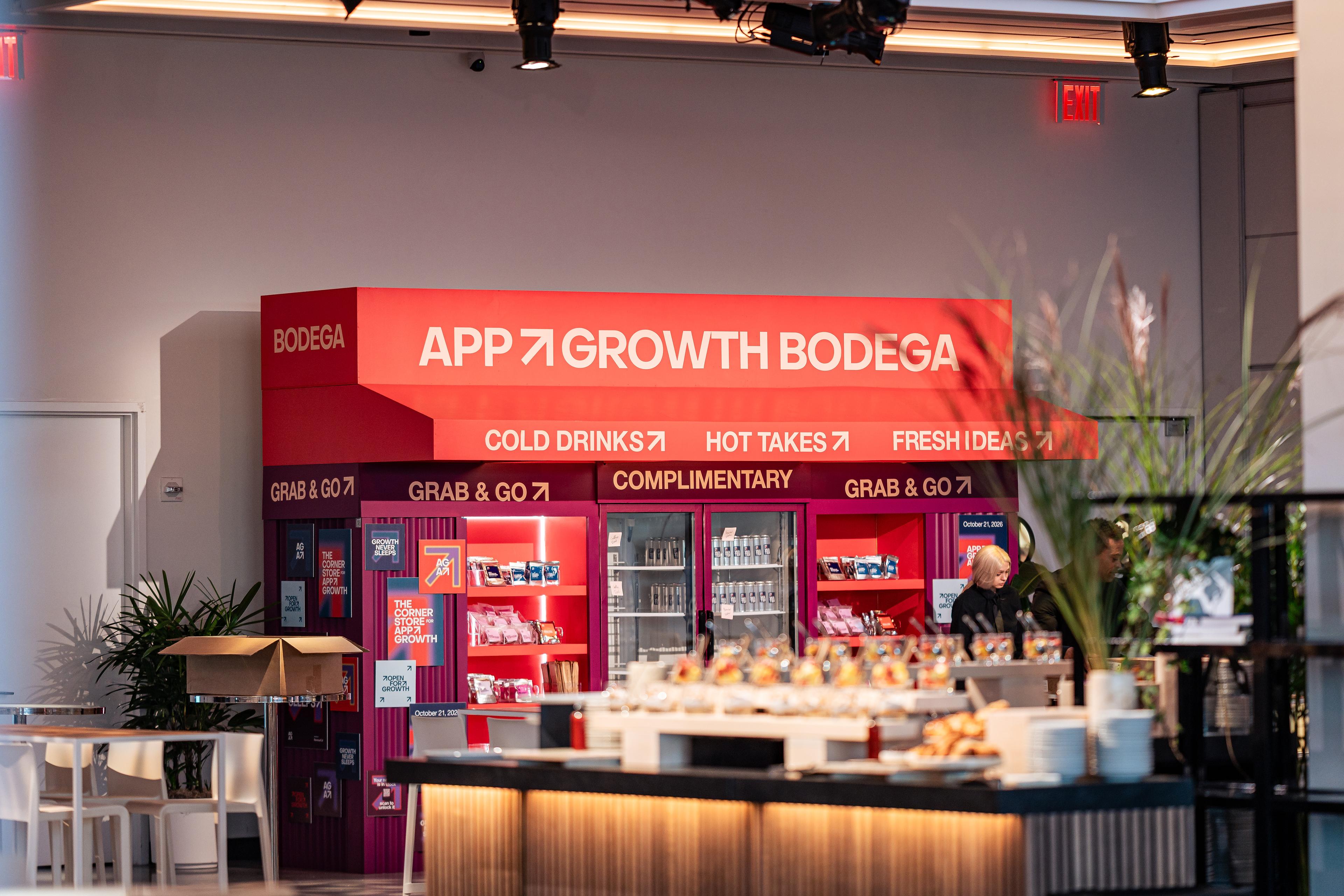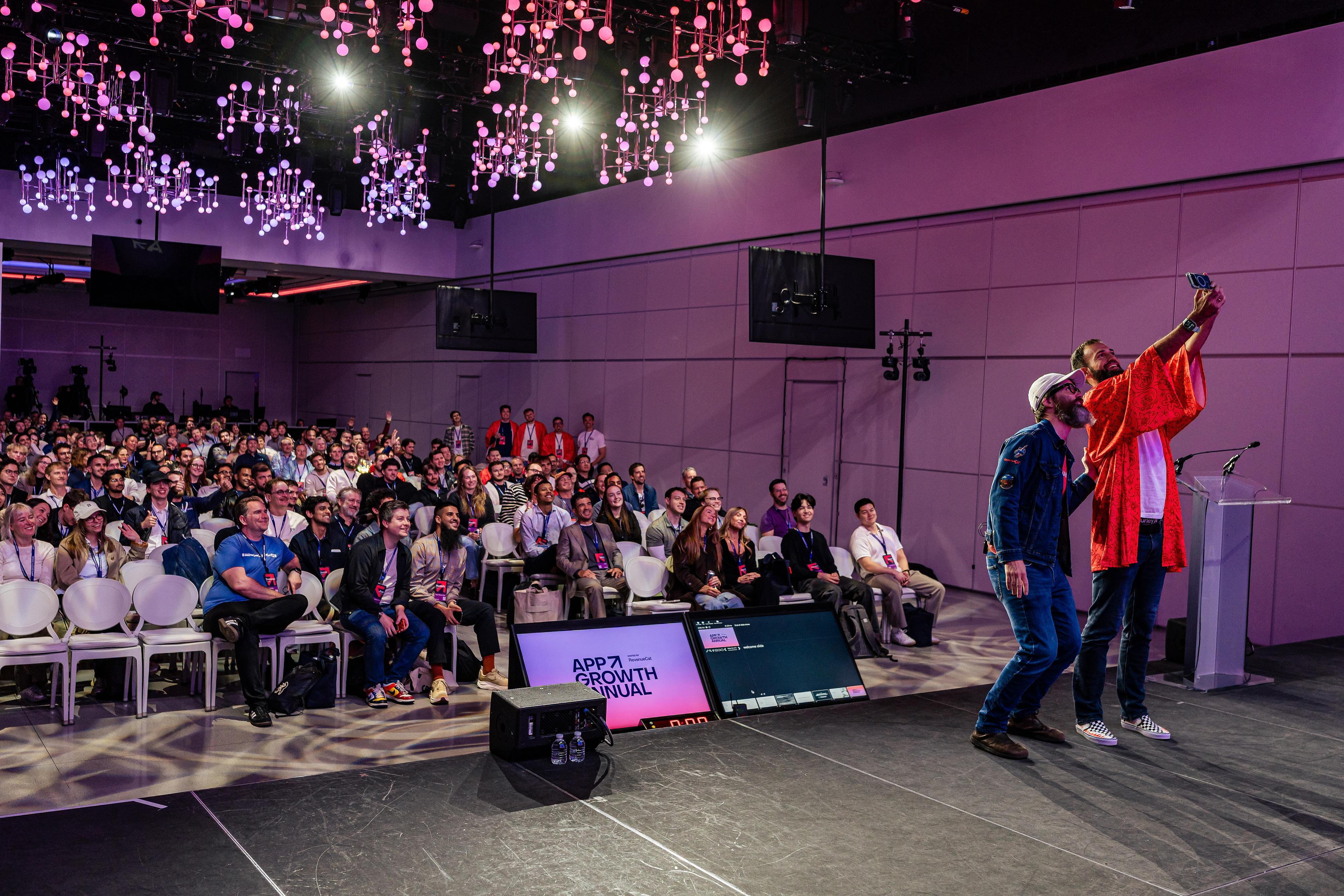

On October 21, App Growth Annual took over The Glasshouse in New York, hosting a room of 400+ app builders, with 5,000+ joining online from around the world. Whether you joined us on the day or are looking to catch up on what you missed, read on for the definitive debrief on everything that went down, including all the session recordings — plus five growth experiments inspired by the day’s presentations, so you can keep the momentum going.
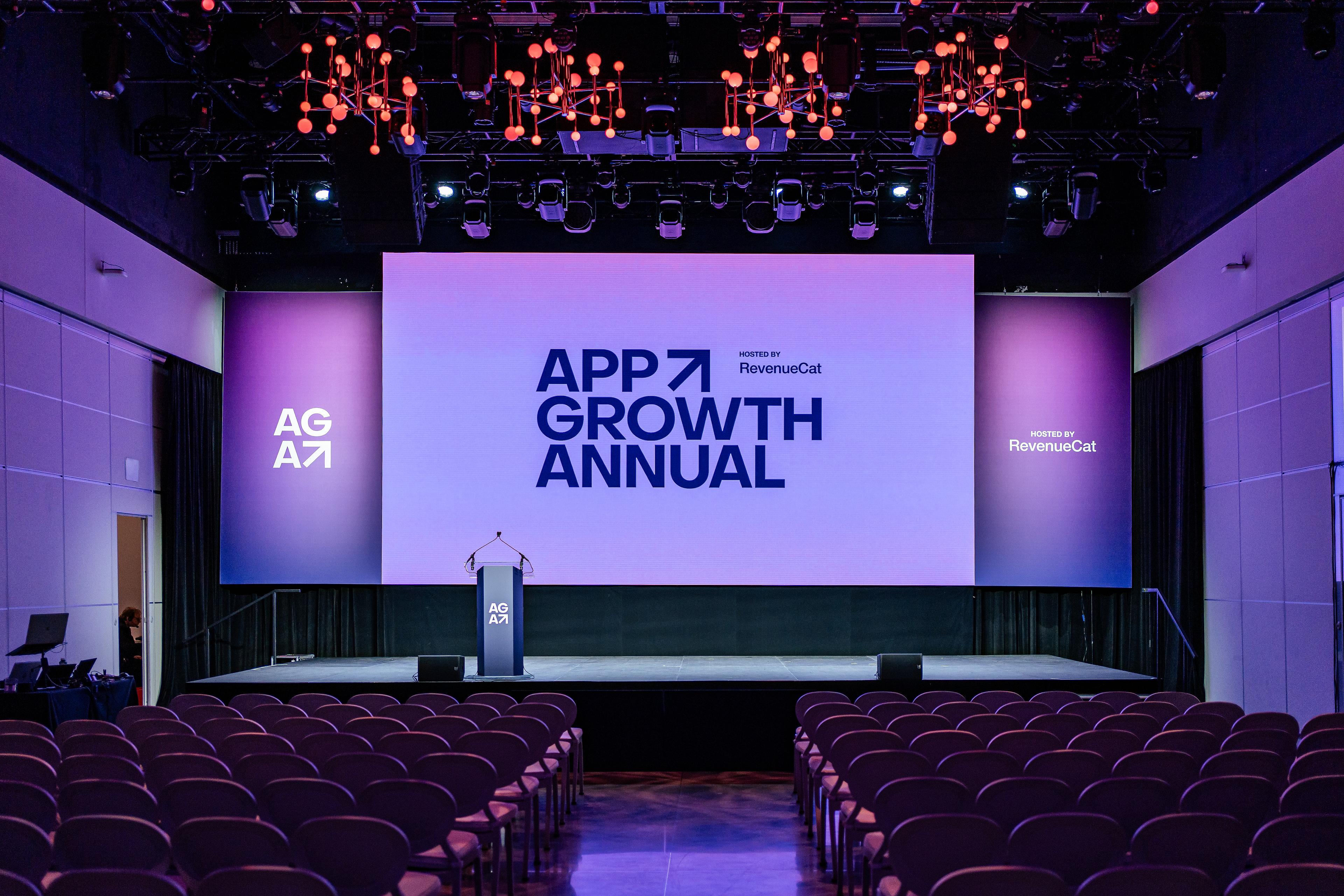
Let’s kick off with our main stage sessions.
1. Julie Hansen (Babbel): breaking the rules is sometimes what’s best for your app
Growth advice typically favors freemium, short funnels, recurring subscriptions over lifetime, and focusing on US markets first. But Julie Hansen, CRO and US CEO of Babbel, opened the day by walking through exactly what Babbel ignored from the industry’s rulebook.
Maybe one day we will start to do things a bit more conventionally — go against our own rule-breaking.
 Julie Hansen—CRO & US CEO, Babbel
Many of the contrarian bets behind Babbel’s 19 years of growth — and now 30 million subscribers — trace back to a single unconventional decision: going premium in 2009. Here are the key decisions Julie shared, and the trade-offs behind them.
- Premium filters for motivated users: Babbel tried ads before going premium in 2009. For a language-learning app, they found asking for money upfront identified users who would retain better, as they were committed to putting in the work long-term. The choice funded the business and sharpened product-market fit, but it also meant a smaller audience and more pressure on marketing.
- Longer onboarding is only valuable if the product delivers: asking how many minutes a day you'll study, why you're learning, and whether you've studied before can reinforce commitment. But if onboarding promises personalization, the product must deliver it; additional questions are only valuable when they build commitment or inform the experience.
- Web checkout creates trade-offs: Babbel values its web funnel for data, speed, and economics, including avoiding app store fees. The flip side: Julie notes Babbel lost focus on app marketing for a time. It’s important to optimize the full web-to-app experience, not just checkout costs.
- Lifetime plans can match the job: language learning is a journey people dip in and out of, so short plans create performance pressure. Lifetime subscriptions remove that, and “Babbel sells a lot of them”. The downside: lifetime is the end of the monetization road, unless you have new products to offer or hybrid monetization in play.
- Win-backs matter more over time: People drop in and out of learning, so Babbel is increasingly investing in retention and reactivation, balancing it against new user acquisition.
Experiment inspired by Julie’s session
Add one or two questions to onboarding about your user’s goals or intended commitment. Compare completion, trial-to-paid conversion, and early activation against your current flow, by acquisition channel. Do those questions build commitment or simply introduce drop-off?
2. Greg Cohn (Burner): fighting churn is a missed opportunity
What do you do when your app's aha! moment is the moment users throw it away? Greg Cohn, Co-founder and CEO of Burner (Ad Hoc Labs), took to the stage to explain how Burner stopped trying to turn "tourists into locals" and instead designed a growing business that embraced its churn-by-design.
Trying to get them to stay long-term when they had a short-term use case was fighting gravity.
 Greg Cohn—Co-founder & CEO — Burner
The impact is undeniable, with a returning Burner user's subscription now worth 25% more than a new user's, and returning-user LTV up by 35%. Here are the lessons that got Burner here:
- Strong conversion can hide the wrong retention strategy: Burner converted installs to paid at almost 6x the median, but M1 retention was 38%, below the RevenueCat median. The challenge was that many customers needed a number temporarily, not indefinitely.
- Look for returners in your data: over a quarter of people who cancelled came back within a year (2.6x the utility app median), with zero effort from Burner. Returners made up about 10% of MRR, and over 30% of new subscription revenue.
- Make leaving easy: instead of fighting cancellations, Burner offers a $1.99 ‘pause’ plan (vs. $9.99 standard) to hold a user's number. It saves about 10% of would-be cancellations. They’re also testing keeping numbers active for a period after a plan expires, so users can see what they're missing.
- Don't treat returners like new users: returning users already know why they're there. Rather than wasting their time with normal onboarding, Burner shows them what's new, offers a more generous free trial, and leads with annual pricing as the best value. As a result, returning users have 2x the trial conversion of new users, and 5x the annual take rate.
Experiment inspired by Greg’s session
Calculate how many customers return after cancelling, and how much new subscription revenue they generate. If the opportunity is meaningful, test one tailored returner experience — like a welcome-back paywall or a different offer — against the standard path. Compare conversion, plan mix, and LTV to see the impact, then use our reactivation calculator to size the opportunity.
3. Ajay Mehta (Tolan): hybrid monetization gives apps a way to balance compute cost
Two years ago, Ajay Mehta was sitting in the audience at the first App Growth Annual. This year, he was on the main stage.
In those two years, he co-founded Tolan, a voice-first AI companion app that has since grown to more than one million users and 100k+ subscribers. But with 70+ million AI conversations happening in Tolan, Ajay knew from the first OpenAI bill that its unit economics were unsustainable.
Spend your extra margin on growth and on the people who already love you.
 Ajay Mehta—Co-founder — Tolan
Ajay’s session broke down the monetization models Tolan speedran while racing the compute cost countdown. Here are the key learnings that got Tolan to healthy unit economics:
- AI changes the math: for the last generation of consumer apps, a big, engaged user base was pure upside. For an inference-heavy product, tokens cost real money, and cheaper models don't automatically fix margins. Tolan quickly learned that every user conversation carried a cost, and growing was actually hurting their profit margins.
- Product-market fit should factor in conversion: Tolan first clicked with Gen Z, which drove installs but not payment. Users in their late 20s–40s found deeper, everyday uses for Tolan, and had the means to pay for a subscription. Tolan rebuilt its creator program around this ICP, and added new character designs to appeal to them.
- A hard paywall has a ceiling: a hard paywall protects margins, but it caps your audience at the people who'll pay right away. Rather than lose users who couldn’t pay (like its Gen Z audience), Tolan moved to a freemium model, with a high-intent onboarding paywall (personalized with what users shared during onboarding) and feature-gated paywalls further down the funnel.
- Price for willingness to pay and serving cost: Tolan now offers Lite, Plus, and a $200/month Unlimited plan, with tiers set by cost to serve. Expensive new AI capabilities start on higher tiers and only move to lower tiers as serving costs fall.
- Hybrid is the natural fit for AI apps: mixed monetization allows AI apps to lower the floor and raise the ceiling. Tolan combines subscriptions and one-off top-ups, while experimenting with ads and offering a family plan. Its emphasis on monthly subscriptions challenges the assumption that annual is always best. Instead, evaluate plan mix using conversion, retention, billing success, and revenue per user.
Experiment inspired by Ajay’s session
Are your most active users also your most profitable? Segment subscribers by usage, revenue, and estimated cost to serve. Where usage and costs vary significantly, test an additional plan tier or one-off top-up, measuring contribution margin, conversion, and retention.
Want to dig into the numbers first? Read the hidden cost of AI features.
4. Ravi Mehta: the right onboarding is whatever onboarding builds user confidence
Our closing keynote came from Ravi Mehta, former Chief Product Officer at Tinder.
Taking us on a journey from Boeing’s 1935 Model 299 bomber plane all the way through to Tinder’s two-minute onboarding, Ravi explained why one of onboarding’s most well-known ‘best practices’ isn’t always right.
Most product teams ask, "Should our product onboarding be shorter?" In reality, the right question to ask is, "What does a user need in order to feel confident at the moment of decision?"
 Ravi Mehta—Former-CPO — Tinder
This is how Ravi matchmakes the perfect onboarding for each app:
- Sometimes more steps convert better: when Ravi's client Sesame launched a weight loss program with Costco, its three-step checkout converted below target, and the users who did convert had so many questions that refunds were unsustainable. Replacing it with a 25-step intake (covering medical history, lifestyle, goals, and motivation) lifted conversion by 40%, and refunds went way down.
- Not all friction is created equal: good friction — like asking medical questions in a health app’s onboarding — builds confidence. Bad friction drains it, like asking for a password before you've given users any value, or asking a question they can't easily answer. (Sesame’s "When was your last physical?" became "Have you had a physical in the last six months?")
- Pick a lane: the worst onboarding sits in the "messy middle", usually the result of compromise: too long and too short at the same time. The best onboarding is opinionated, either doing the work to build confidence or cutting everything that isn't essential.
- Engineer confidence: give users the information they need, at the pace they need it, to help them make a confident decision. The right onboarding depends on both the stakes and complexity of your app. For example, a glucose monitoring app is high stakes and high complexity, a meeting reminder app may be high stakes but low complexity, and a crossword game is low stakes and low complexity.
Experiment inspired by Ravi’s session
Plot your app on the stakes/complexity matrix, then audit every onboarding step (including auth screens) for whether it builds confidence or creates doubt. Rewrite or remove one major doubt-creator and A/B test the change, measuring trial conversion alongside refunds or early cancellations.
5. The Big App Roast: paywalls and lifecycle messaging are more connected than you realize
Lunch for our virtual audience came with a side of paywall critique, as CRO Designer Julie Buzhynskaya and CRM Strategist Luigi Forte put five pairs of popular apps head to head, including Calm vs. Headspace, and FaceApp vs. Facetune. Julie dissected the paywalls, followed by Luigi reviewing everything after that: permission prompts, push notifications, emails, and in-app messages.
Four lessons came up repeatedly:
- Show value before asking for payment: both Cal AI and FaceApp use short demonstrations or before-and-after visuals to show what the product actually does. Test whether a concrete demonstration helps users understand the offer better than generic creative.
- Make the offer and trial easy to understand: multiple apps lacked clarity around trial and offer terms. Explain what users receive, when billing starts, and how to cancel.
- Use lifecycle messaging to reinforce activation: ask for notification permissions in context and explain their value. Useful reminders should help users experience the product, with timing and frequency tested against engagement and opt-outs.
- Keep communicating with trial cancellers (where appropriate): cancellation during a trial does not necessarily mean the user has lost interest. Relevant, respectful follow-up can help people discover value before access ends.
Experiment inspired by the app paywall roast
Review how understandable your trial is, purely from what’s shown on the paywall. Then, test a paywall that explains your free trial in its simplest terms: what users get, when they will be charged, and how to cancel. Measure trial starts, trial-to-paid conversion, and early cancellations vs. your current paywall.
Other highlights from App Growth Annual
It wasn’t just the main stage sessions that got people talking at App Growth Annual. With 36 interactive workshops, a game show, and a surprising after-party guest, here are some moments you may have missed.
Hands-on workshops
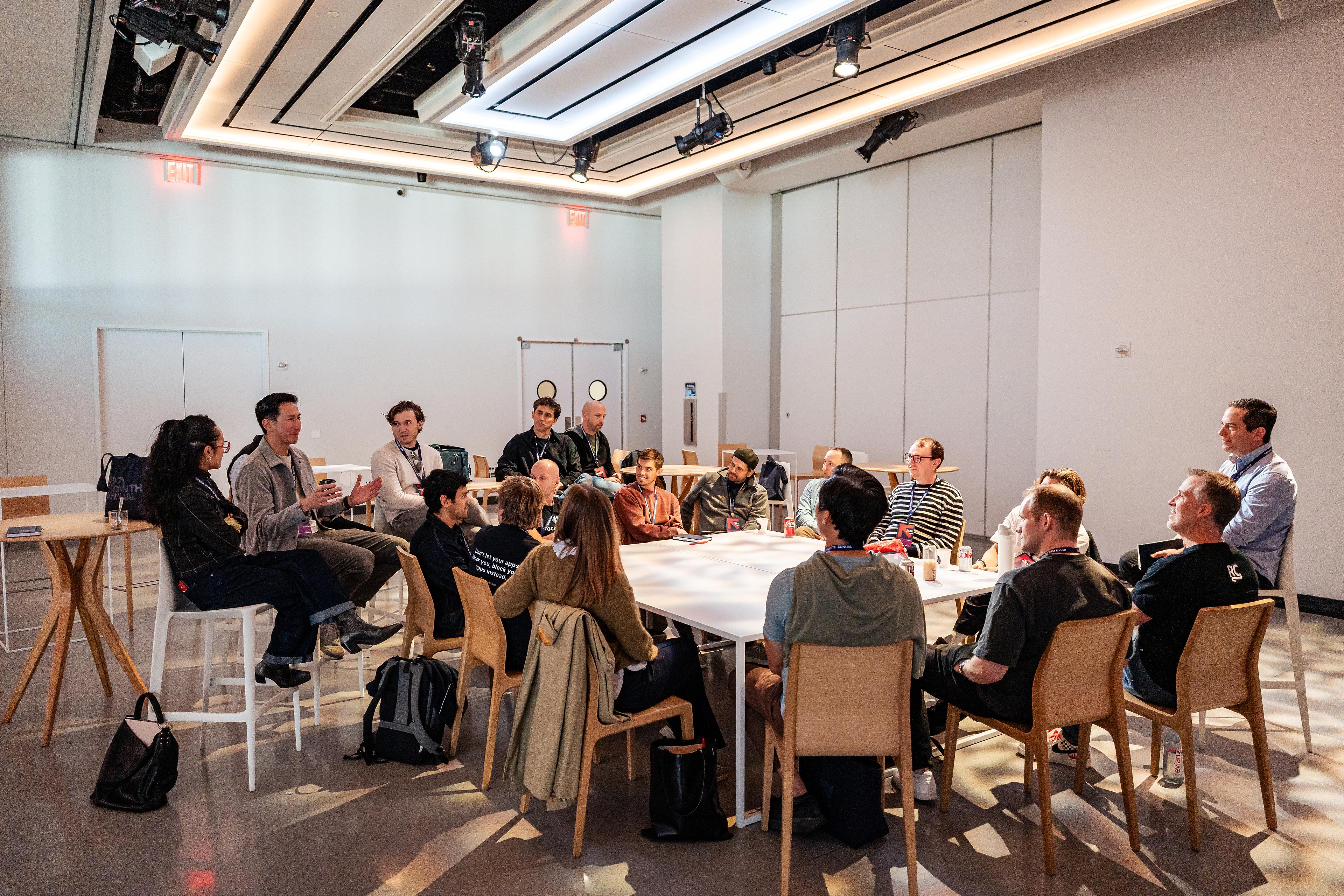
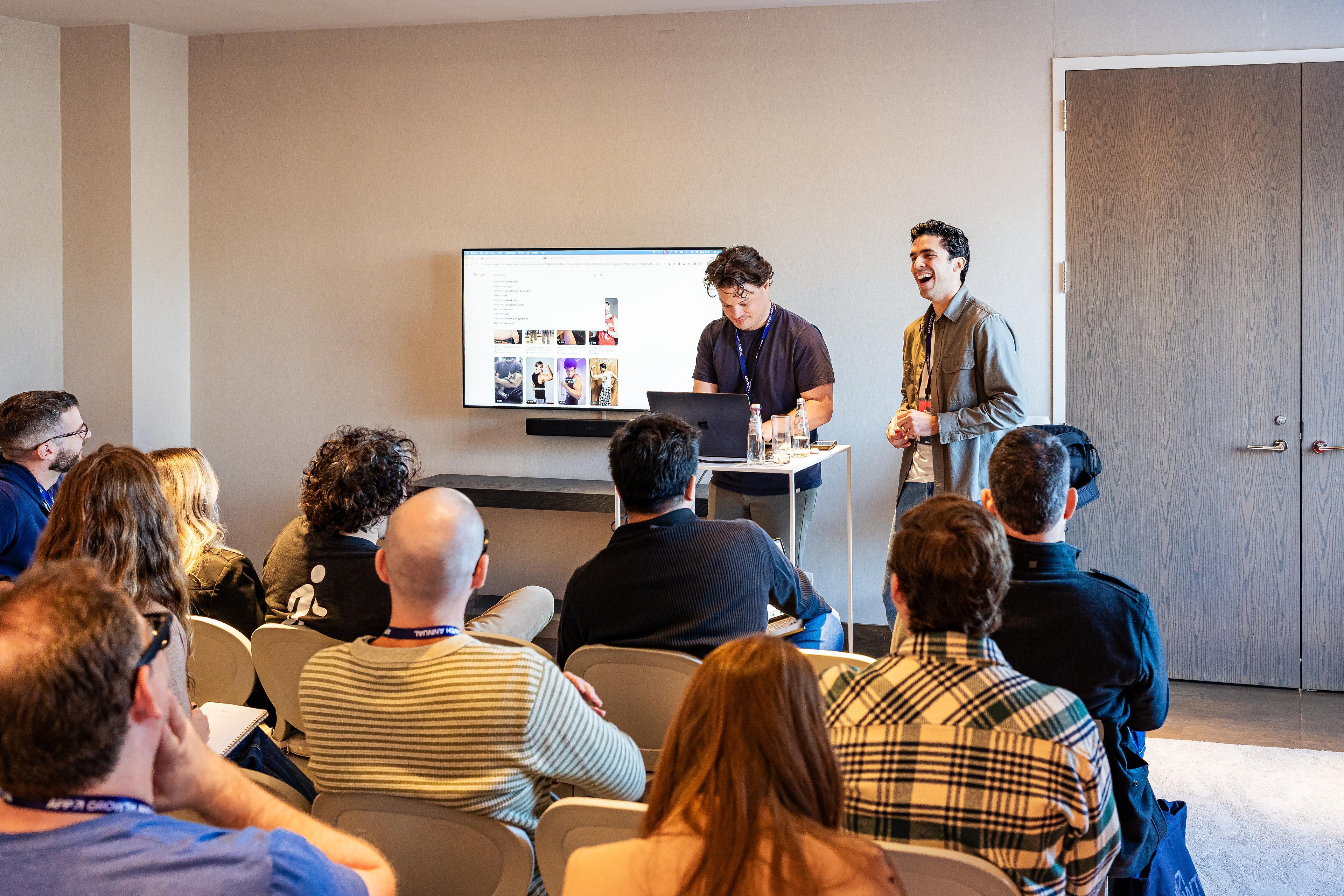
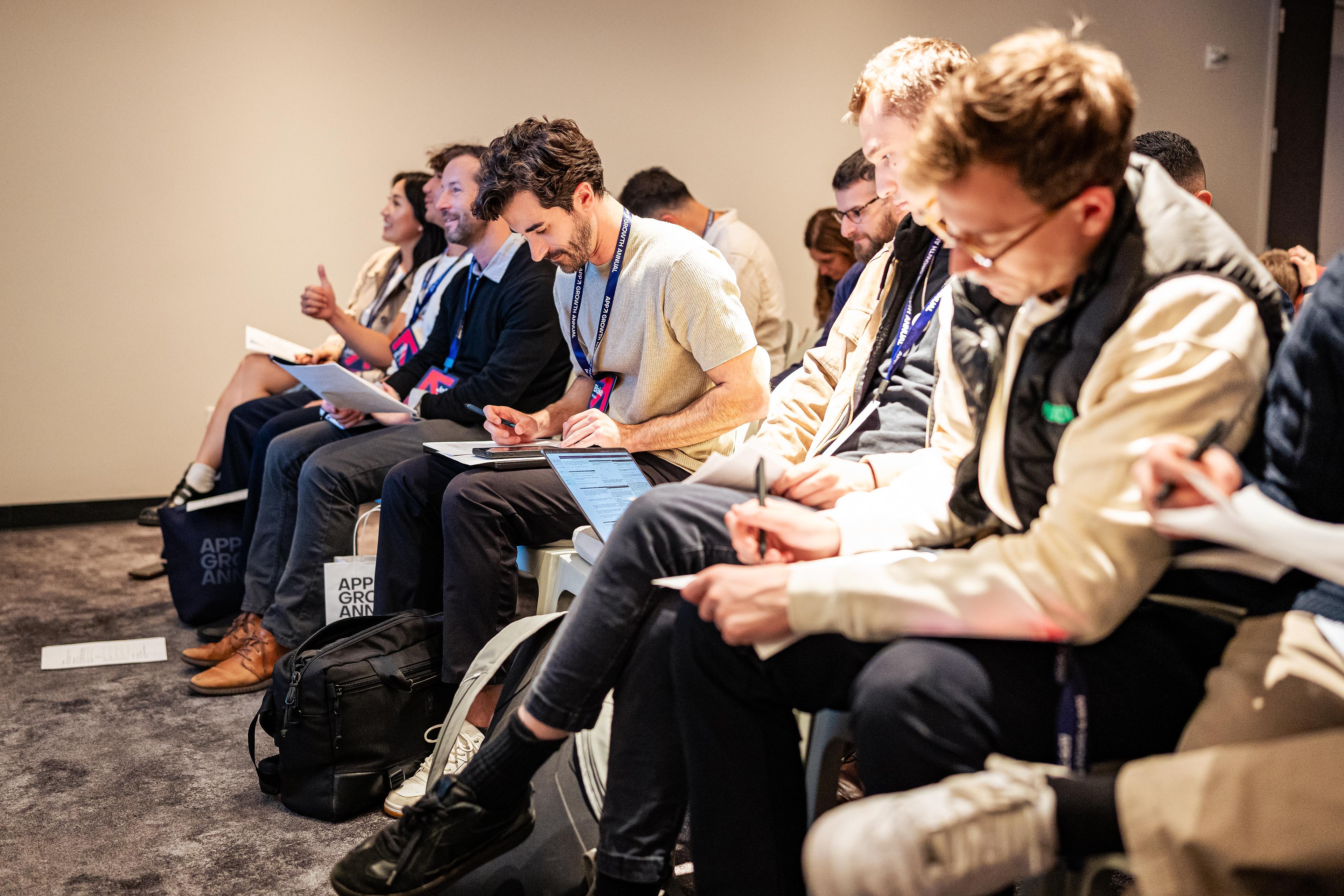
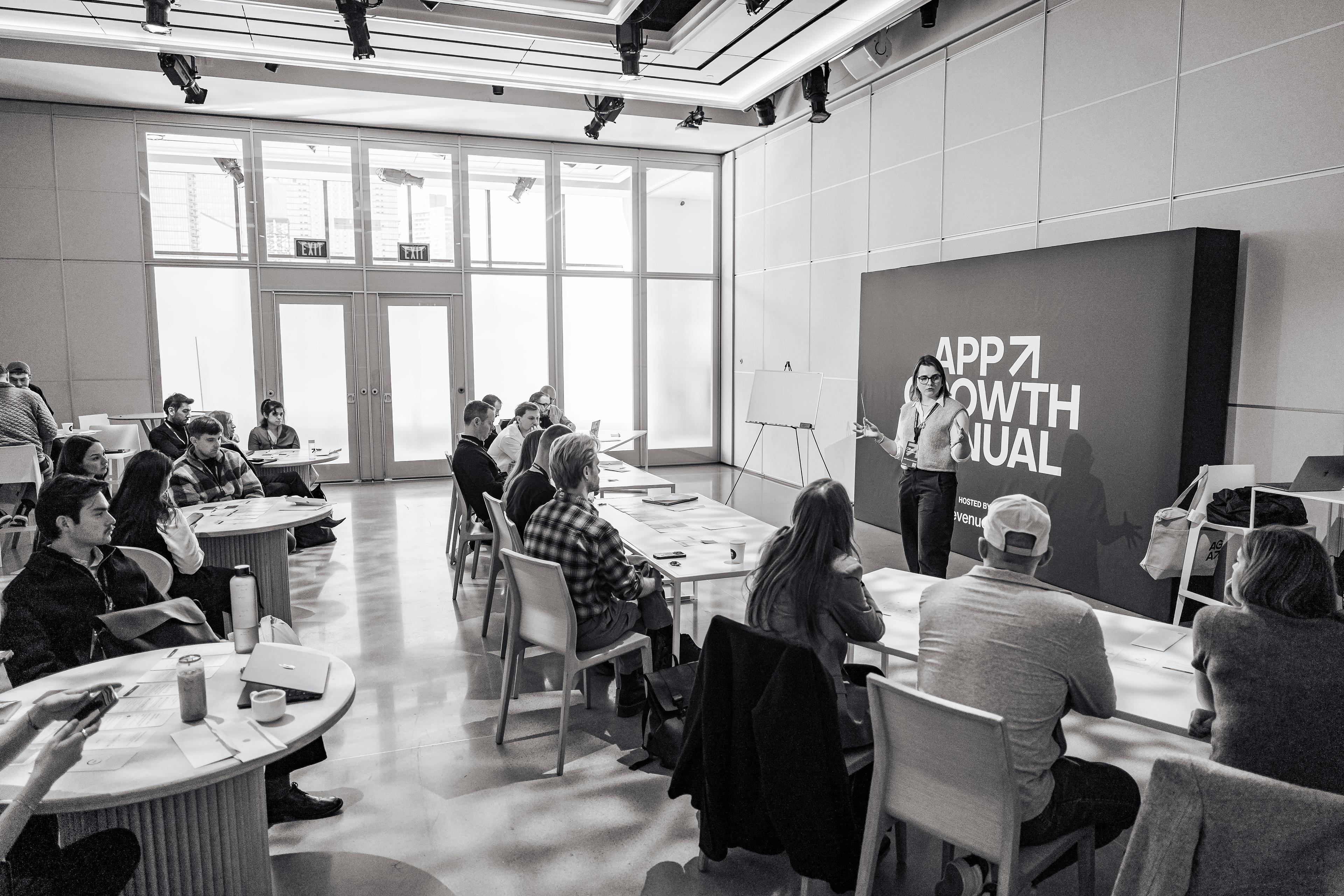
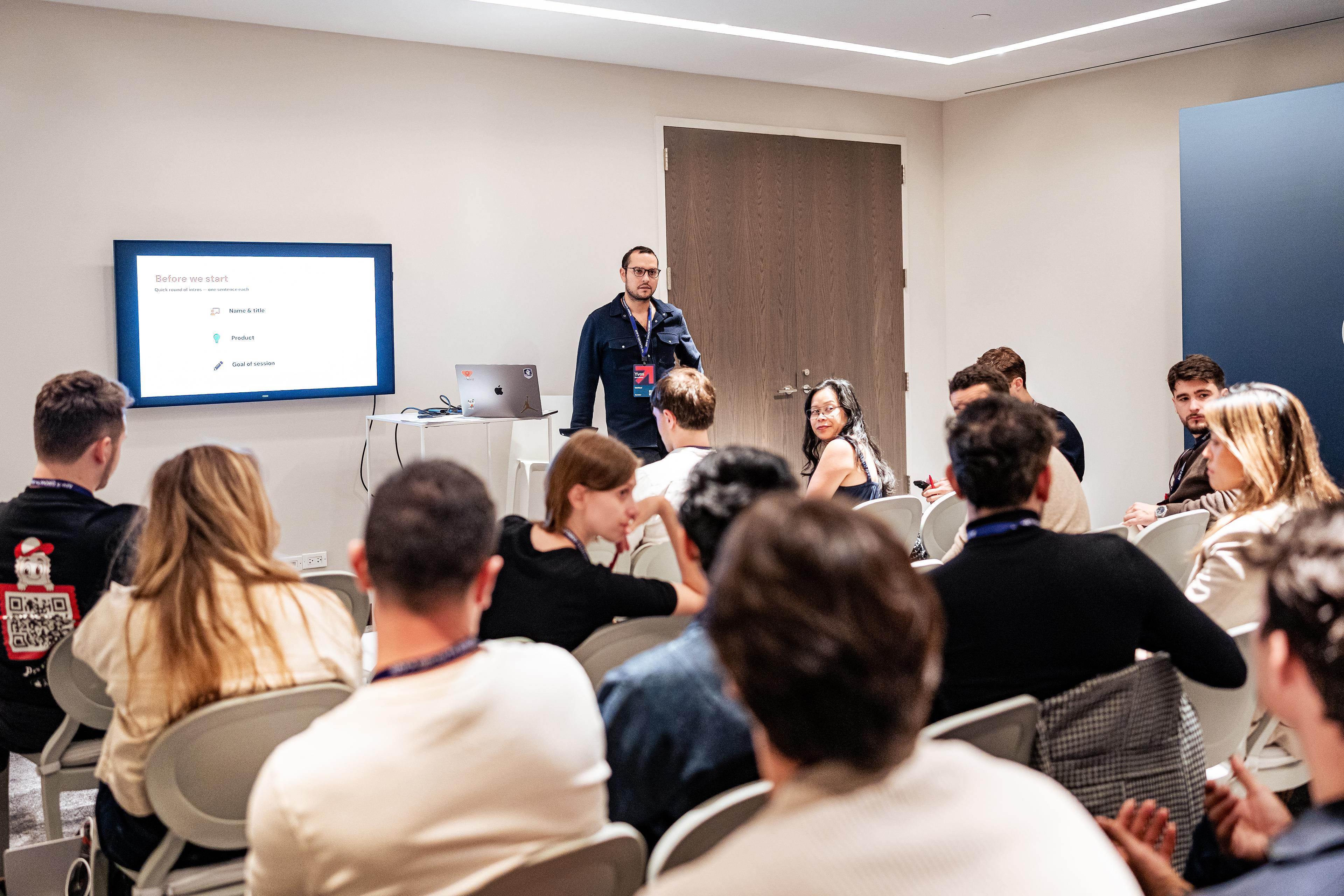
Throughout the day, three blocks of time were reserved for intimate, hands-on workshops. In-person attendees had 30 to choose from, with content exclusive to those in the room. Online, attendees got to select from live workshops with Lisa Kennelly (Klarna), Marcus Burke (Ctrl Shift), Bria Sullivan (Honey B Games), Sven Jürgens, Julien Daver (SplitMetrics), and Yuliya Lennox (Genesis Tech).
Each virtual workshop is available to watch now, complete with the presenter’s full slide deck. Check out our recap on the workshop content here to see what you missed.
RevenueCat product keynote
Our annual product update saw RevenueCat CEO & Co-founder, Jacob Eiting, share news about Early Payouts, ad monetization, and everyone’s favorite in-dashboard AI advisor, Rico. We also got a glimpse into Targeting by Checkpoint, a new way to personalize your funnel to each user by matching the right experience (like a specific offer or paywall variant) to each moment on their journey.
Read the full rundown of every product announcement from App Growth Annual 2026.
From RevenueCat data land, Jacob also highlighted these stats:
- More apps are shipping than ever: 107,000 apps have gone live on RevenueCat so far this year, up from 41,000 in all of 2025, and all-time annual revenue tracked across RevenueCat now sits at $17 billion+
- Spending isn’t keeping pace: per Appfigures, app launches are up 85% year over year, while consumer spending grew just 15%, so more apps are competing for roughly the same growth
- Newer apps have begun to make a dent: as a cohort, apps that launched on RevenueCat in 2023 and after grew 124%, while apps launched before 2023 declined -2%
The takeaway? When anyone can build your features in days, software alone isn’t a moat anymore. Your edge has to come from network effects, brand, content, and what you are uniquely placed to understand about your customers.
It's never been easier to make software, but it's never been harder to make that software a successful business.
 Jacob Eiting—CEO & Co-founder — RevenueCat
Who Wants to Be a MillionARR?
Last year, we turned building paywalls into an e-sport. This year, we turned the State of Subscription Apps into a game show. Next year, who knows what we’ll do. There is no stopping us.
Who Wants to Be a MillionARR? kicked off with a qualifying round open to the whole room: 10 timed multiple-choice questions, answered from attendees' phones (and won by whoever answered fastest). The top three — Hamad, Daphne, and Adrian — then took to the stage for a Jeopardy-style final, complete with real buzzers and categories covering the app market, paywalls, retention, and AI apps.
The prize? Not quite a million dollars, but still very cool: $500 and a massive, wrestling-style championship belt, with $300 and $200 for second and third place.
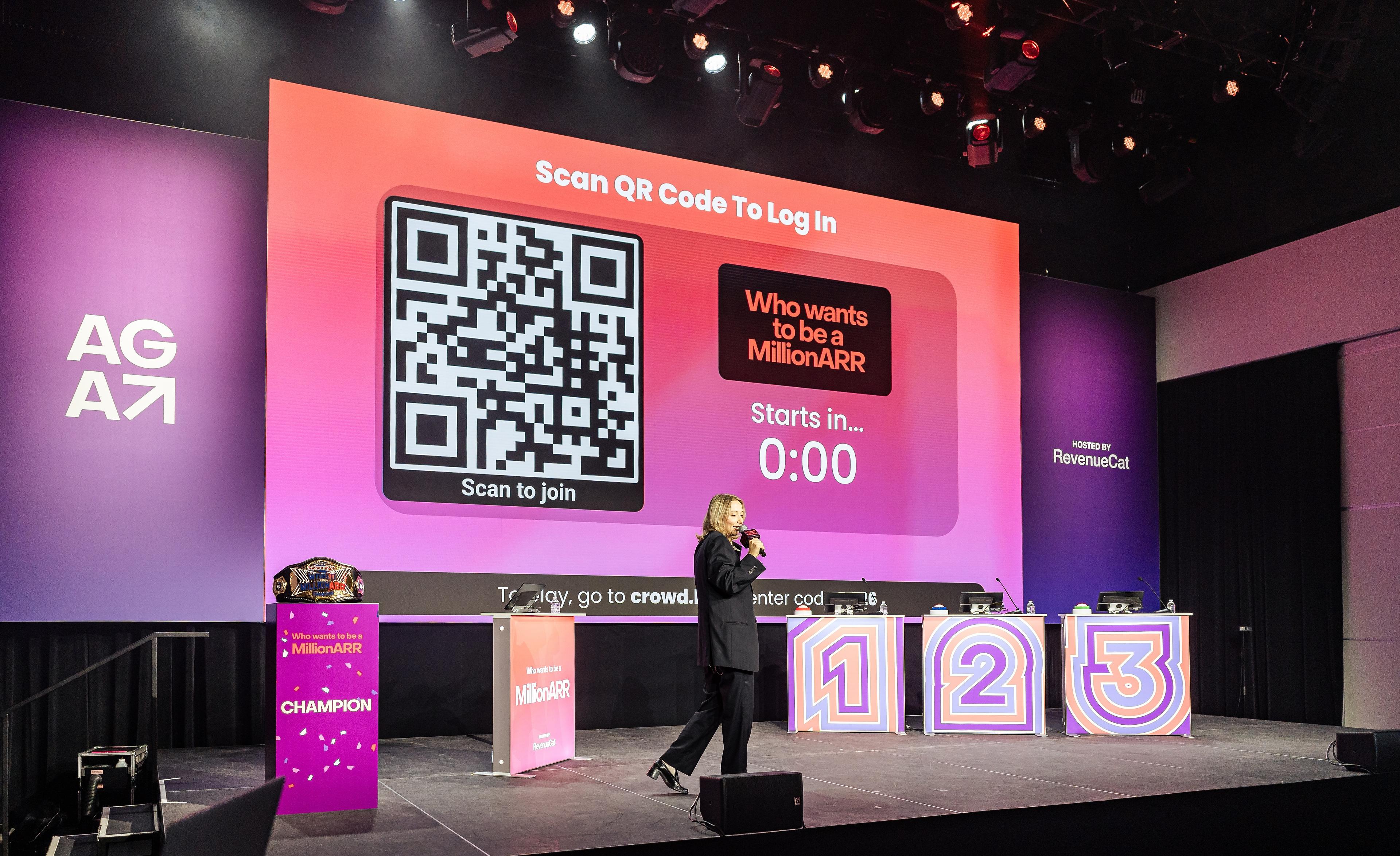
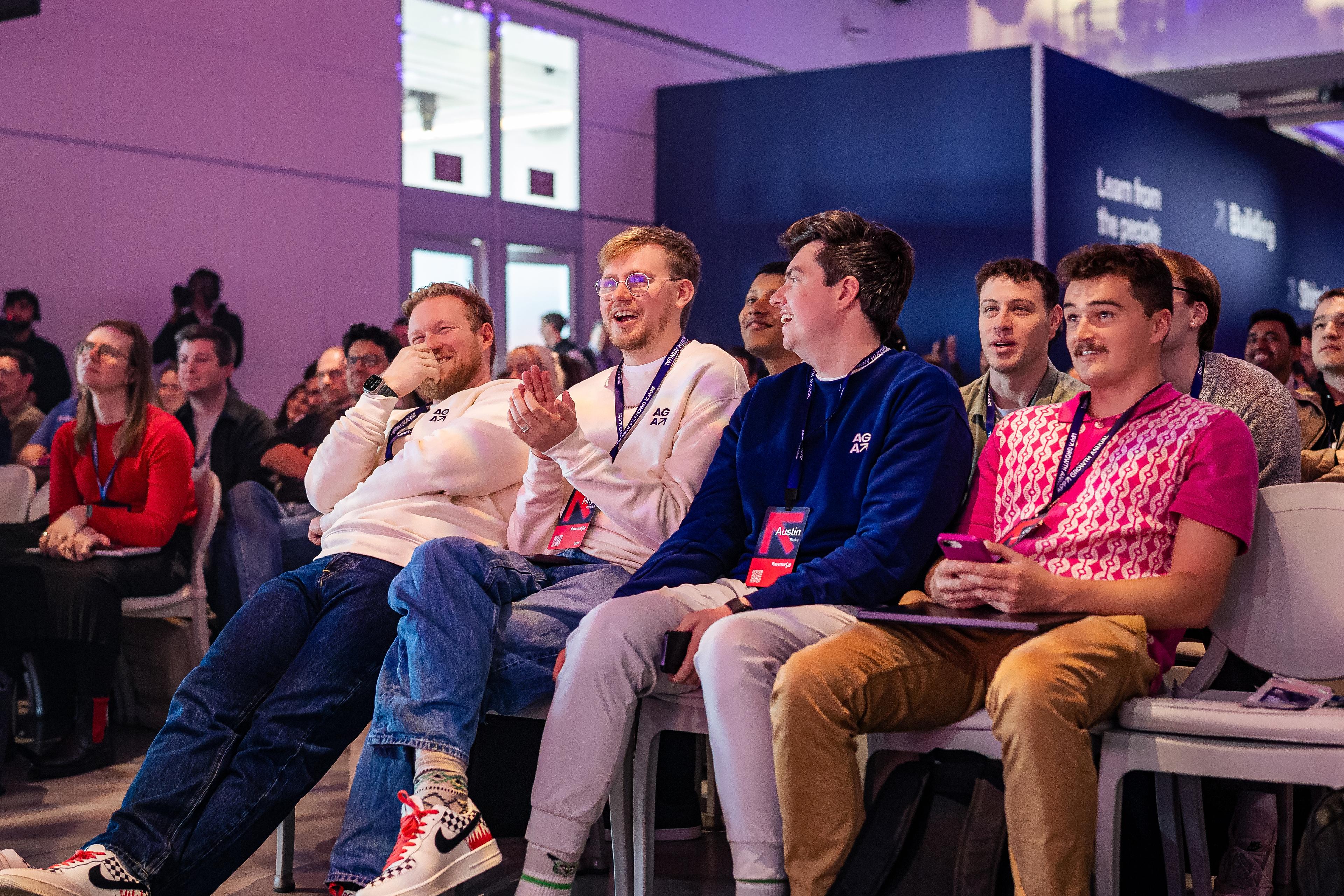
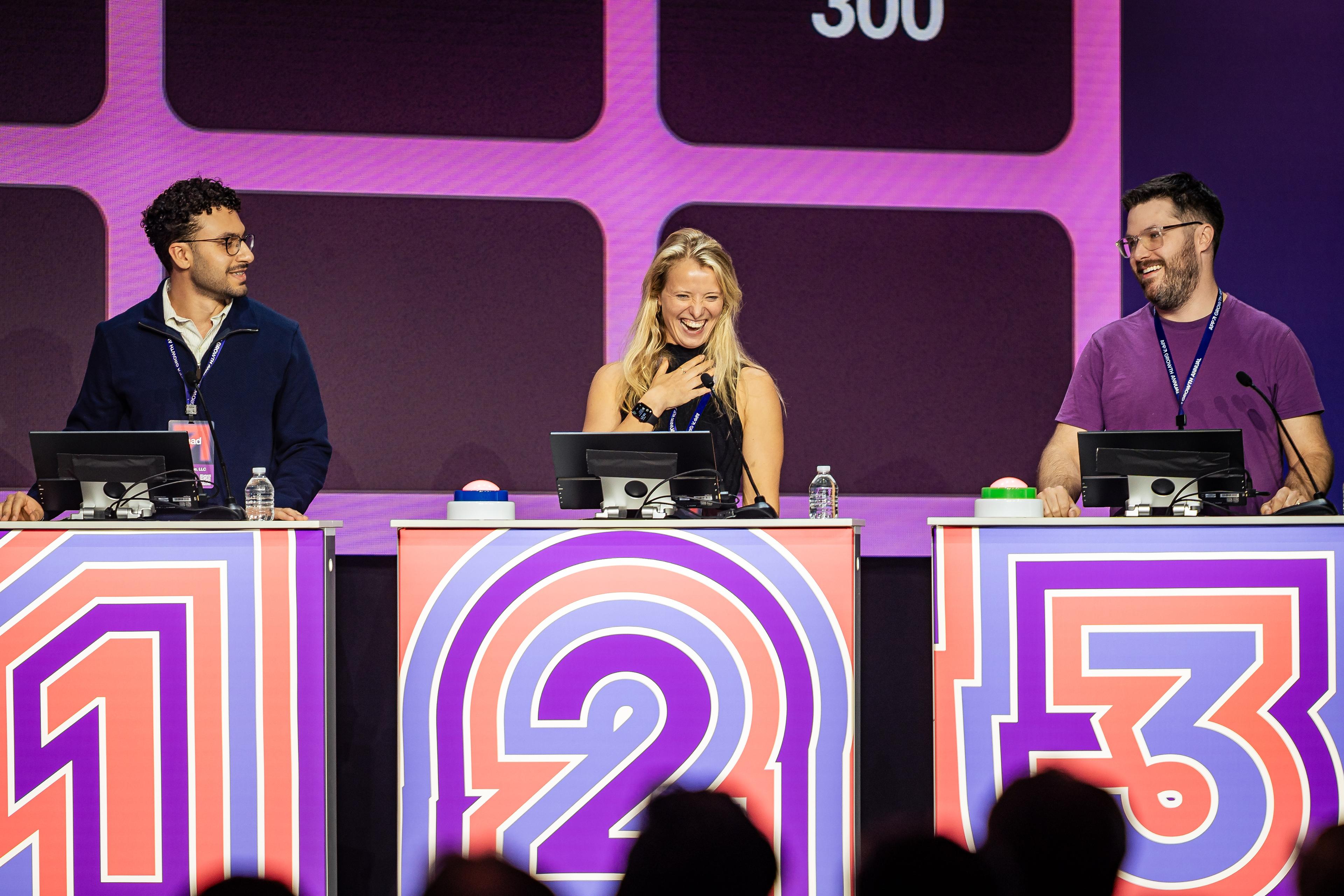
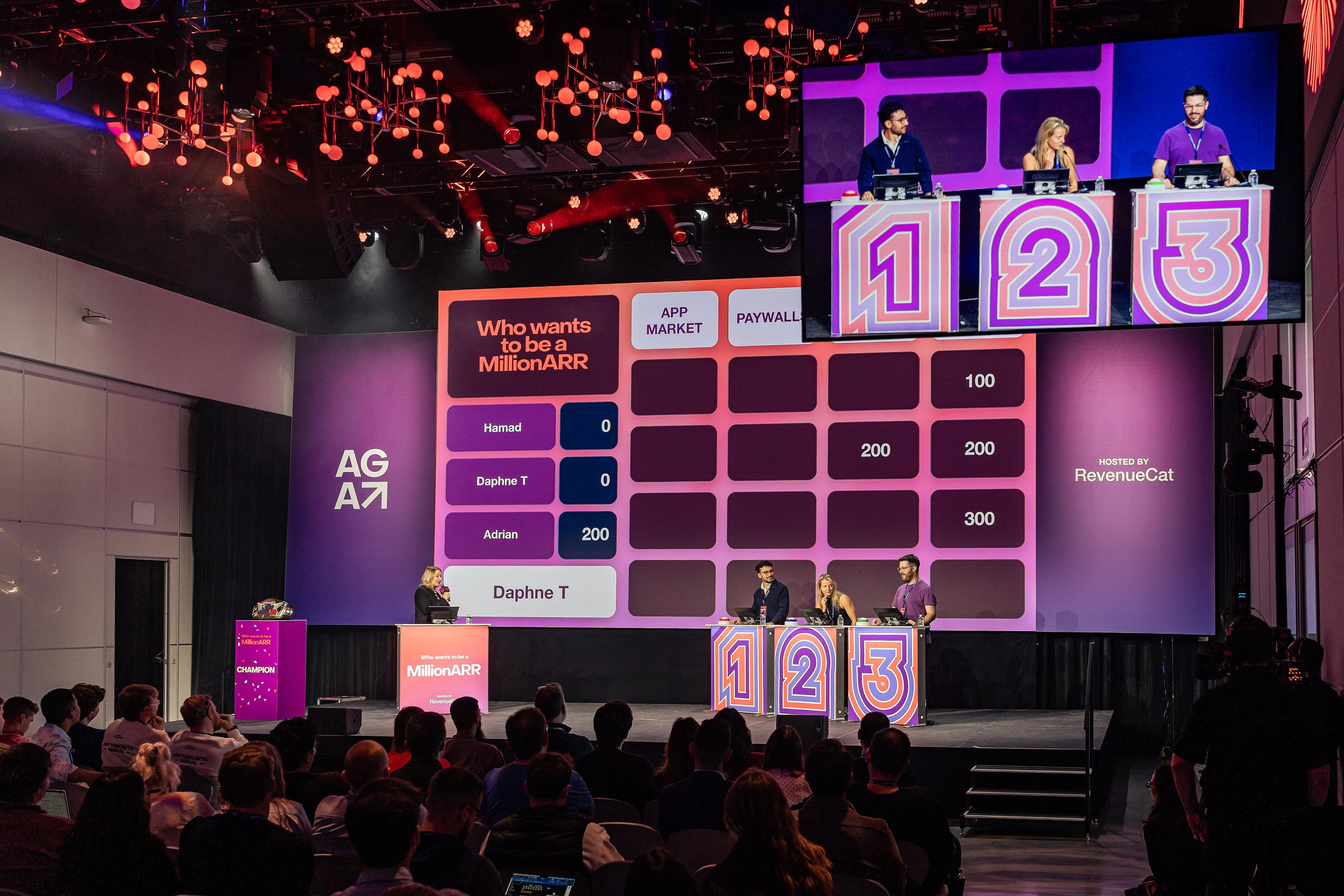
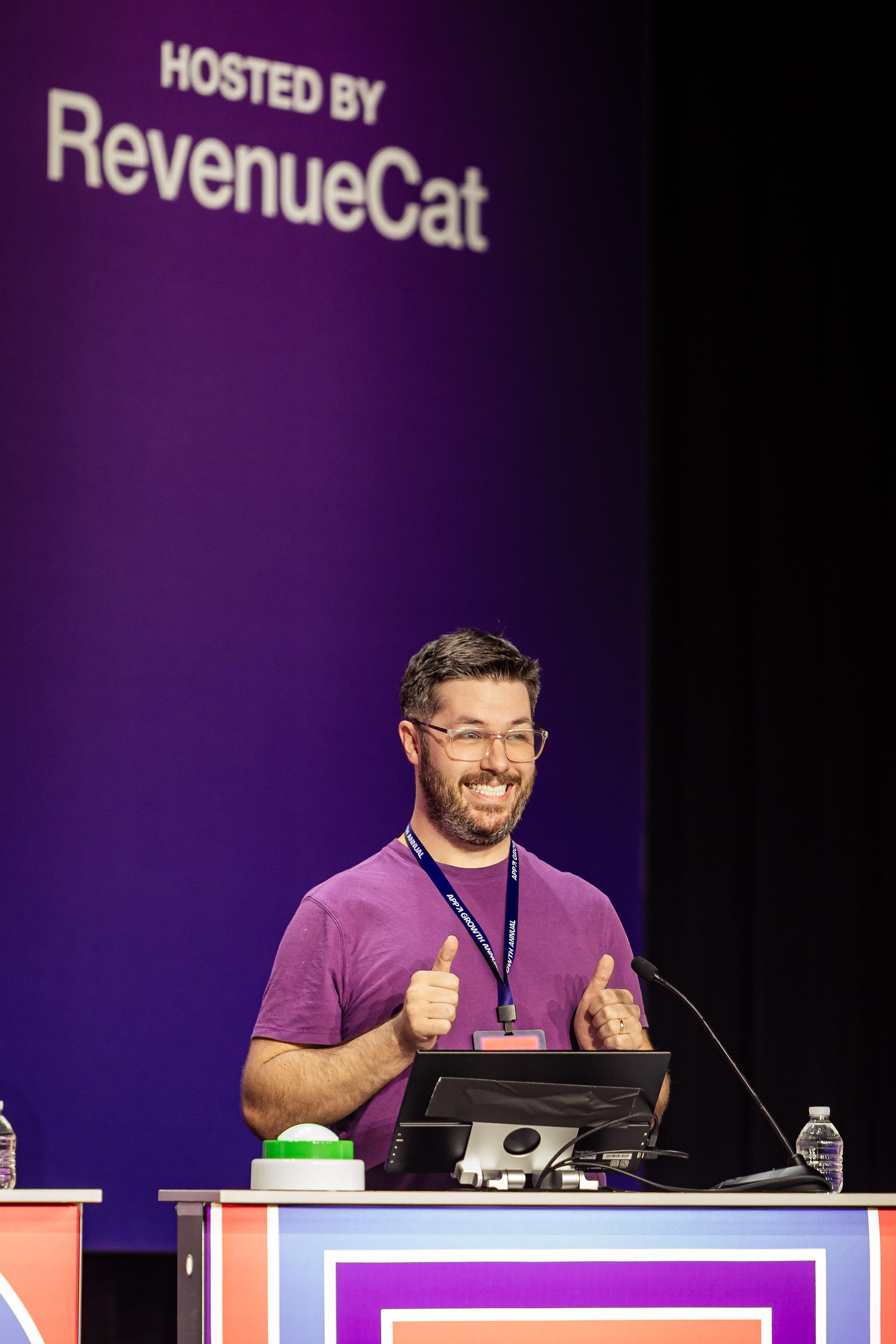
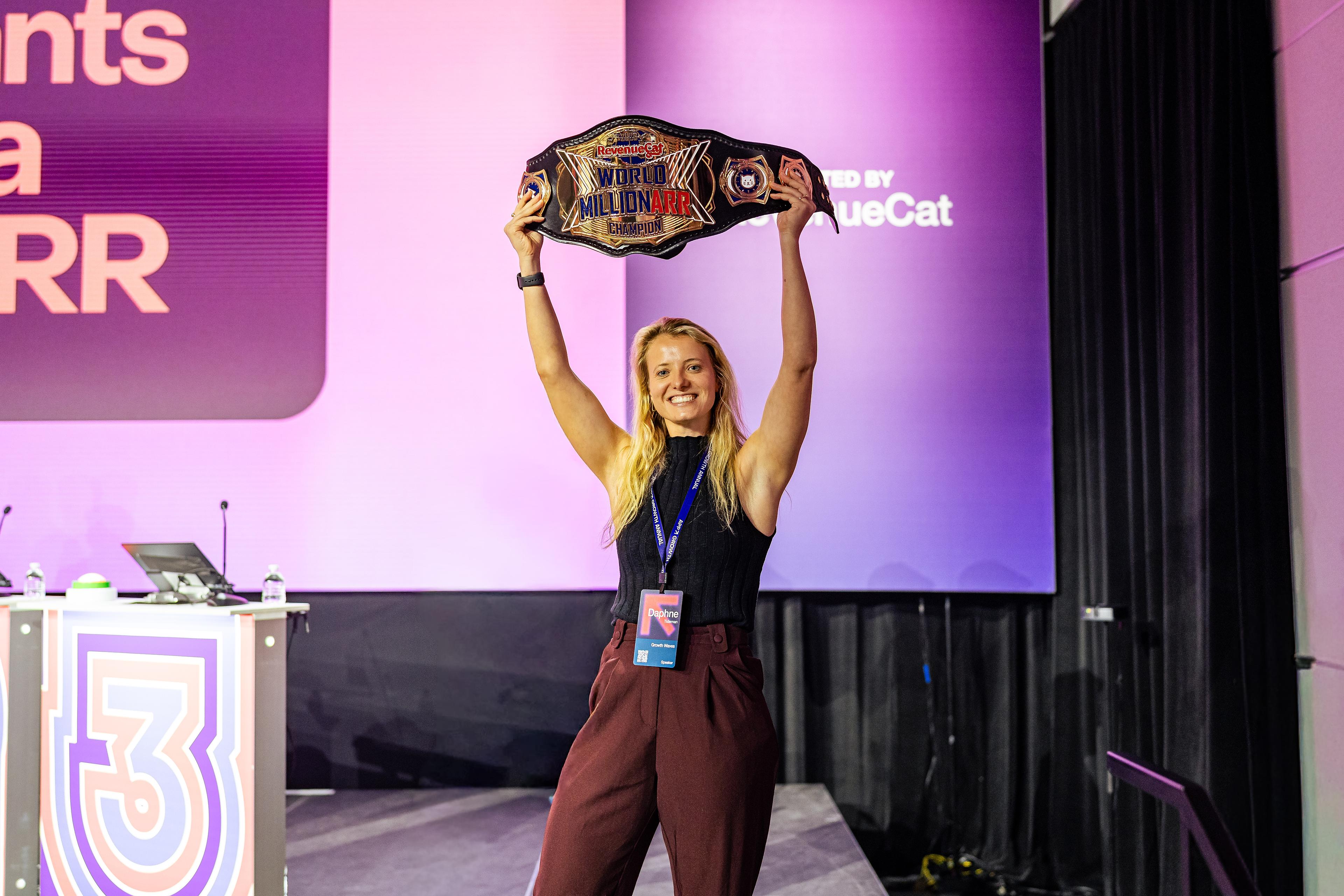
After a rocky start that saw her drop to -800 points, Daphne Tideman staged a comeback (or as she called it, a winback), answering question after question to take the crown.
Five consecutive correct answers later, she was the proud owner of the Who Wants to Be a MillionARR belt. Proof that it pays to be persistent (and to read the RevenueCat blog), even in the face of challenging odds.
Think you'd have made the final? Try these questions from the day, then scroll down for the answers.
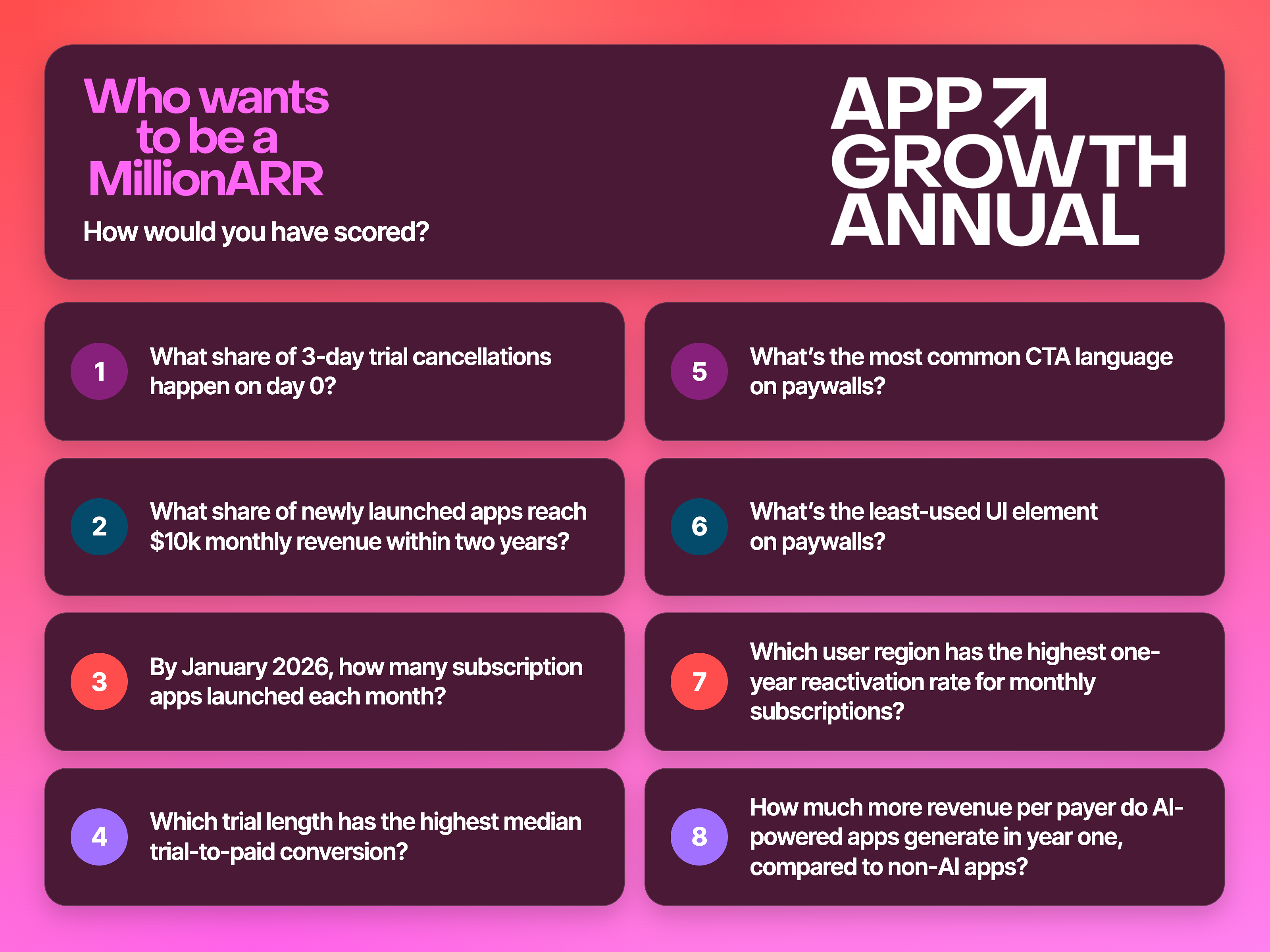
Answers:
1. 55%
2. 4.6%
3. 14,700
4. 17–32 days
5. “Continue”
6. Progress bars
7. Asia-Pacific (APAC)
8. 41%
Hint
All the answers come from our State of Subscription Apps report, so you know where to study up for next year.
After-party with Marc Rebillet
Every year, the RevenueCat team brainstorms who should perform at the App Growth Annual after-party. And every year, it’s the most unexpected option on the shortlist that makes the cut.
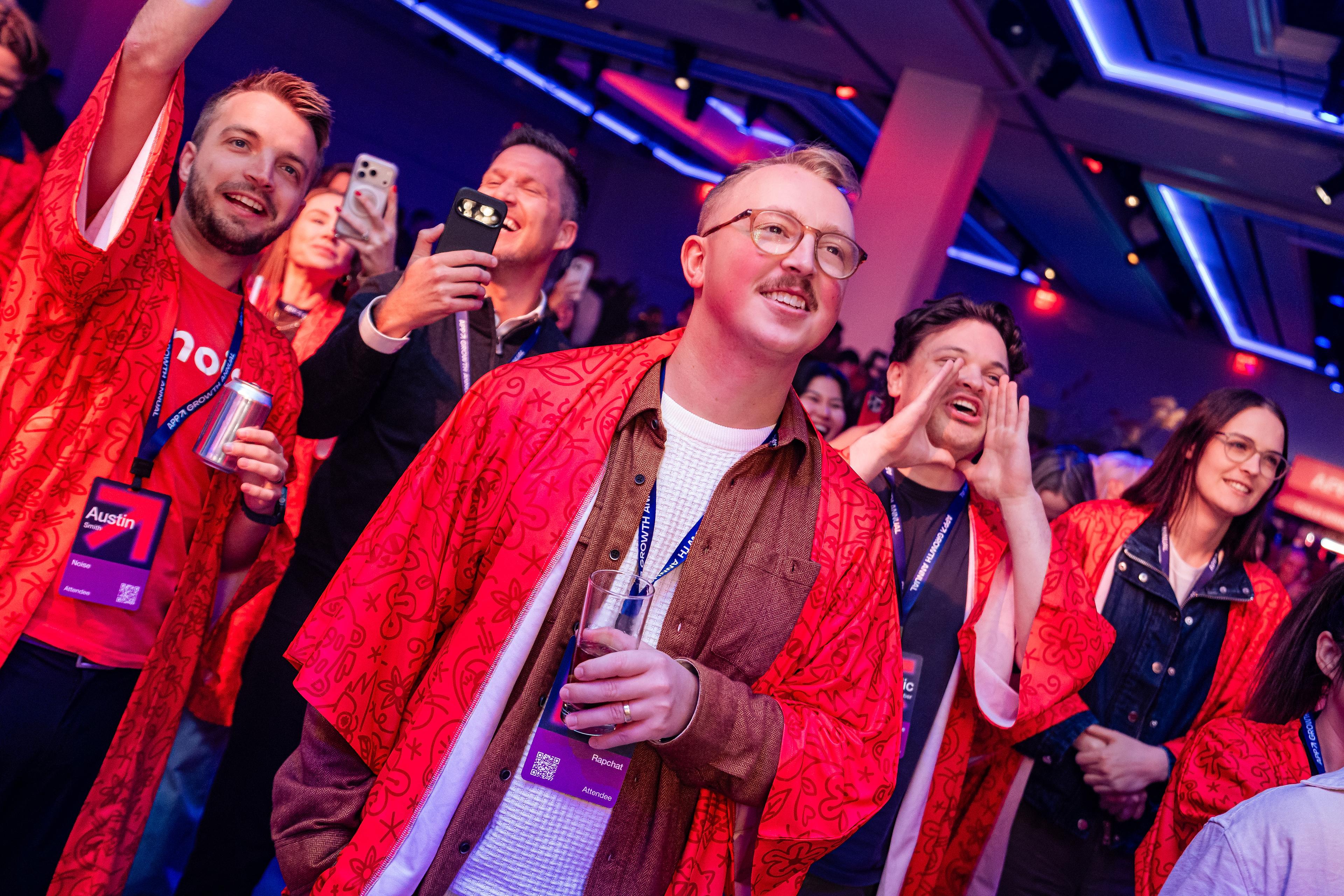
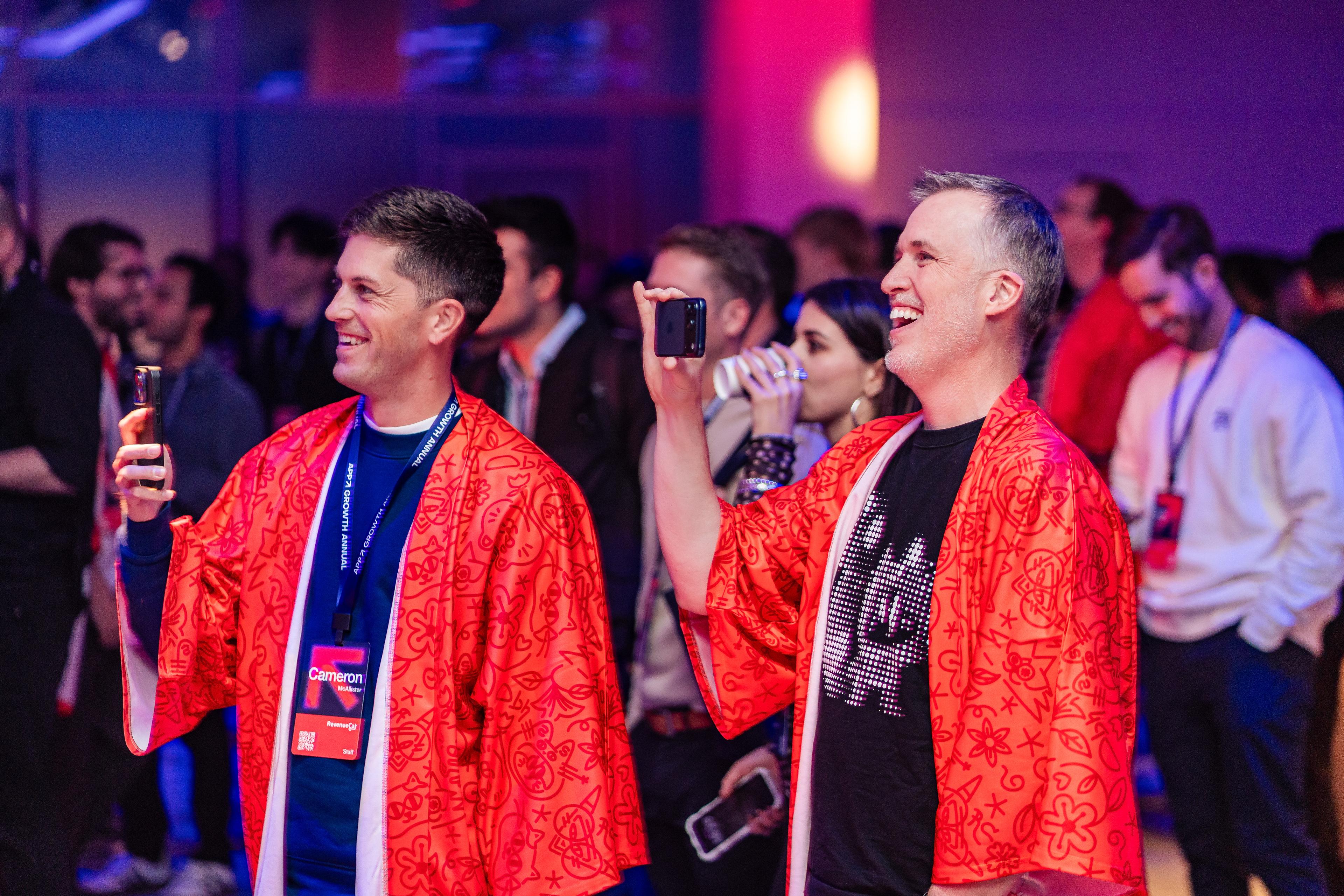
This year, Marc Rebillet took The Glasshouse by storm, delivering his signature improvised electronic tunes, complete with an app monetization-themed track. There was dancing, drinks, dim sum. And (of course), custom RevenueCat silk robes for every attendee. So everyone got to party in true Marc Rebillet style.




We'll see you next year
That’s it for your whirlwind tour of App Growth Annual 2026. Five keynotes, 36 workshops, one championship belt, and more cat-themed swag than even we expected — but you can only fit so much into a blog post.
If you want to relive the day for yourself, here’s everything you need:
- Watch the highlight reel
- Replay all the main stage sessions on YouTube
- Catch up on the virtual workshops
- Read all the product news we announced
- Hear Thomas Petit and Sylvain Gauchet’s top insights from App Growth Annual
- Browse the official photo gallery in search of your candids