

Hybrid monetization means combining subscriptions and additional ways to earn money from users — think in-app purchase (IAP), consumables, ads, or partnerships.
But before we go much further, I want to emphasize something: the goal isn’t to replace subscriptions. It’s about complementing them. As different users discover, use, and leave your app, hybrid monetization captures as many of them as possible.
Why hybrid monetization? The limits of subscription-only models
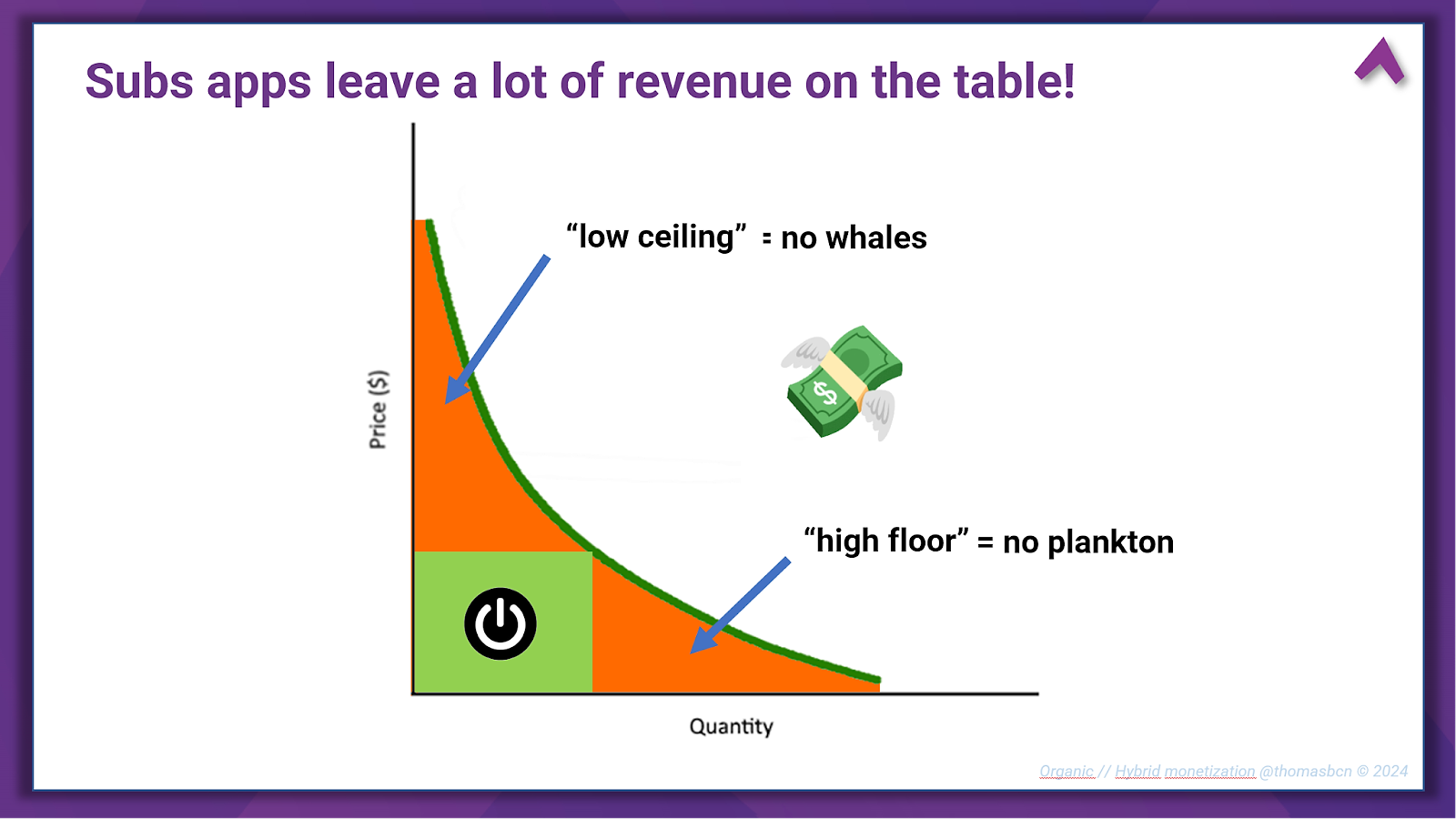
I’ve been advocating for hybrid monetization for a long time because acquisition is essentially a business model competition: more ARPU = a better position in the paid auctions, faster payback, and more margin to invest in retention, onboarding etc. So while subscriptions are great, they come with a fundamental flaw: a high floor, low ceiling nature (more on this in a moment).
Subscriptions are binary: pay, or don’t.
But real demand is not binary — it’s distributed across willingness to pay.
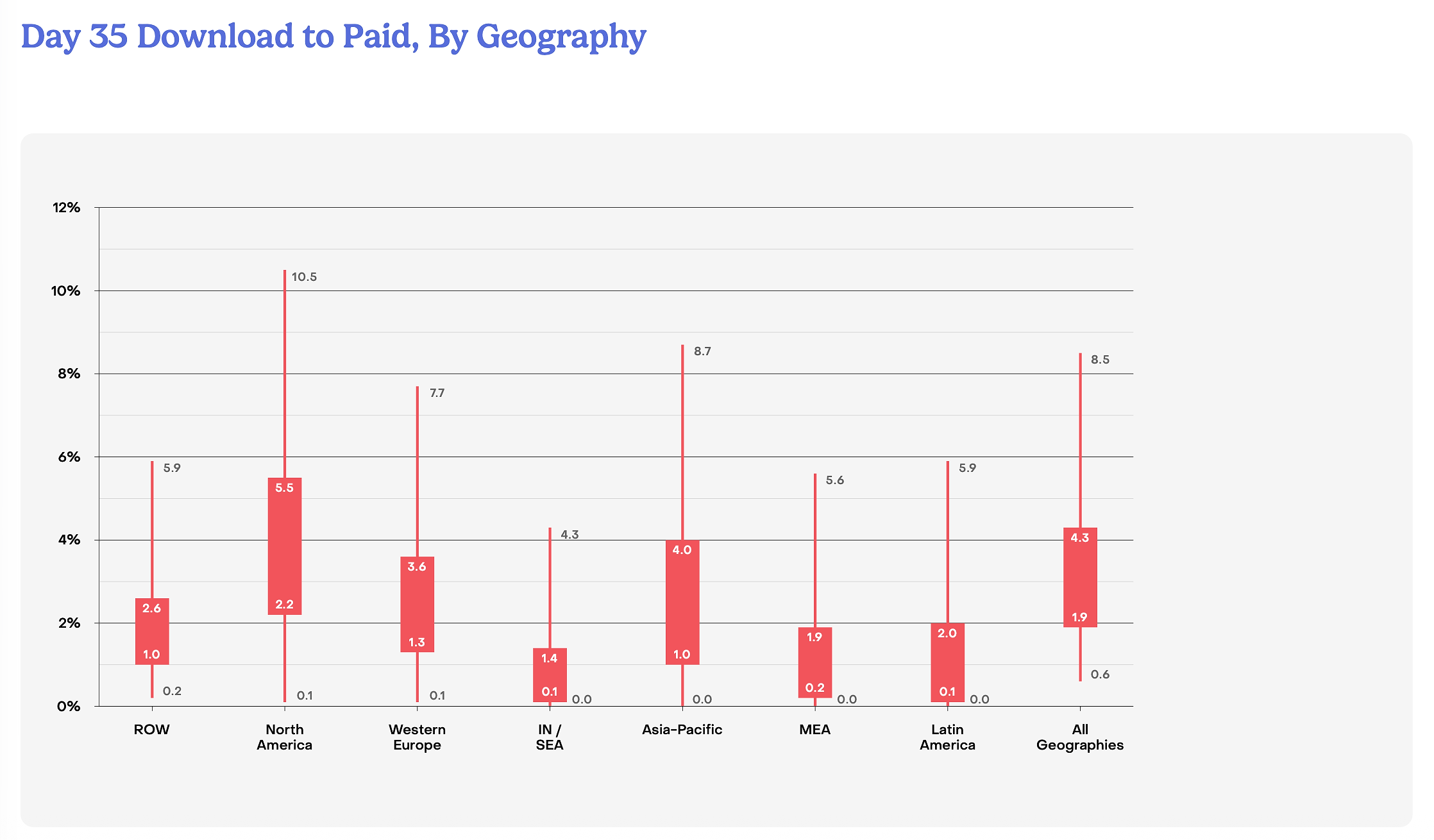
Based on the graph above (from the State of Subscription Apps 2025), it’s expected that 90% of users won’t convert, and for a number of verticals, regions, and non-iOS platforms, it gets even worse. Last year, I saw an app attract over a million users in one country, only to get less than 1,000 paying subscribers!
The problem is that a single recurring price assumes that most users have roughly the same willingness to pay. But in reality, some users are happy to pay a premium, others get occasional value but can’t justify a recurring commitment, many will never subscribe at all.
This creates two common blockers:
The high-ceiling problem
A single offer presents too much friction for low-intent users. You can try to discount it or shorten the subscription length, but some users (such as Android users in developing countries) still won’t engage.
Many will never subscribe. They still generate value (attention, data, virality), and some may be willing to be something — if offered differently (enter in-app purchases, for example) or at a lower price point.
Problem: you’re leaving revenue on the table from low-intent users. Users who value the app, but won’t cross the psychological or financial barrier of a subscription.
The low floor problem
Maybe even worse than a high ceiling… The majority of subscription models have no ‘whales’ (aka, mega spenders). Gaming apps, who pioneered hybrid monetization (typically IAP + ads), can see a handful of users accounting for a large share of revenue, even if other users contribute less. For example, I once saw numbers from a large ‘match three’ game showing that <2% of its 2% payers (i.e. 0.04%) actually generated more than half of revenue. Subscription-only apps lose this possibility.
Problem: you under-monetize high-intent users, as your subscription price can’t move higher without hurting conversion of other users.
At its core, hybrid monetization is about matching price granularity to demand granularity.
Adapting to the demand curve
Most apps serve users with very different levels of intent, frequency, and urgency. A single subscription price flattens those differences.
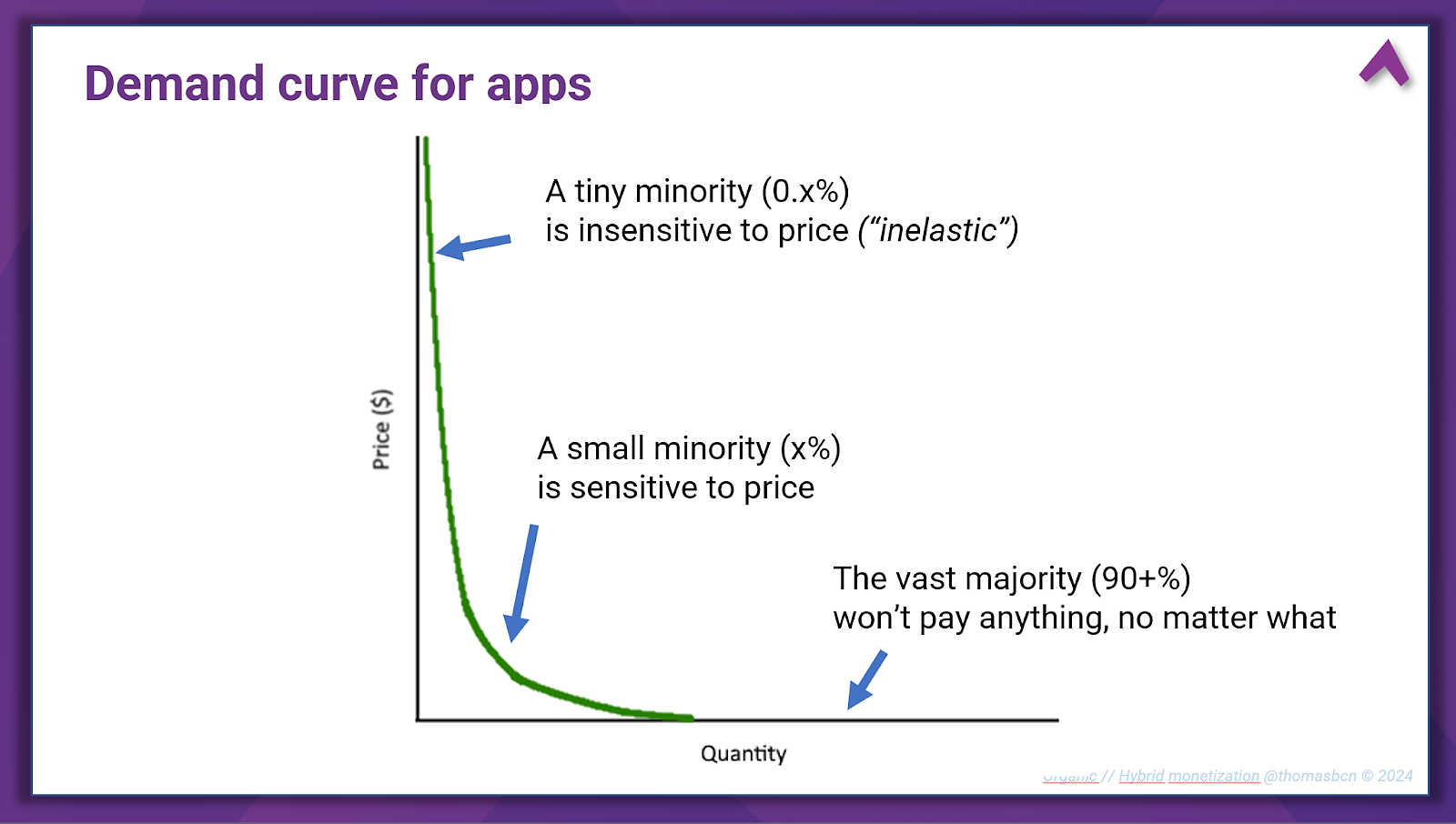
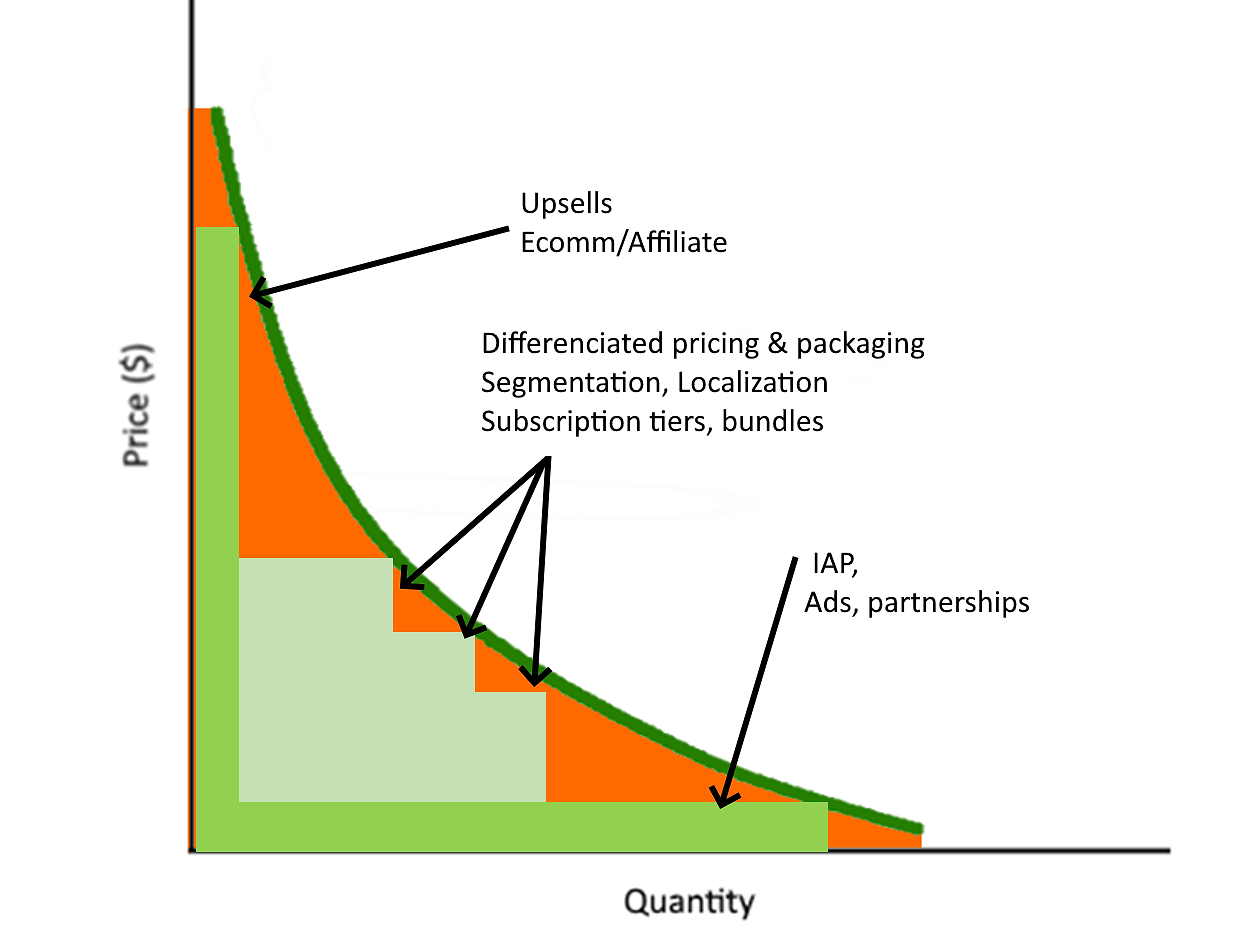
Visually, you can think of your audience as a demand curve:
- On the left: users willing to pay more for power, speed, or convenience
- On the right: users who won’t pay anything
- In the middle: users who want value occasionally, but resist subscriptions=
Hybrid monetization places the correct monetization lever at the ideal point on that curve, for every user, and avoids forcing everyone into the same choice.
The demand curve of app monetization is extreme, and could be represented this way:
By choosing a single point on the line, binary subscriptions models are leaving a lot of money on the table:
There are a variety of options to improve the offer and increase ARPU by adapting to your demand curve. Here are some of those levers:
Techniques for hybrid monetization (with app examples)
All the instances of hybrid monetization that I’ve worked on and observed keep subscriptions as the core center of gravity, then add layers on top. Let’s go through some examples.
1. Pricing and packaging
I won’t go into this in much depth, but the most obvious and first step towards more sophisticated monetization is adjusting pricing and packaging. This is already happening a lot, thanks to increasingly-easier ways to A/B test paywalls.
In this step, developers can (and should) experiment with different pricepoints, combinations of plans (e.g. how many plans do you offer? Are they weekly/monthly/yearly?), segmentation (which I predict will finally become a thing thanks to AI after years of lag), price localizations etc.
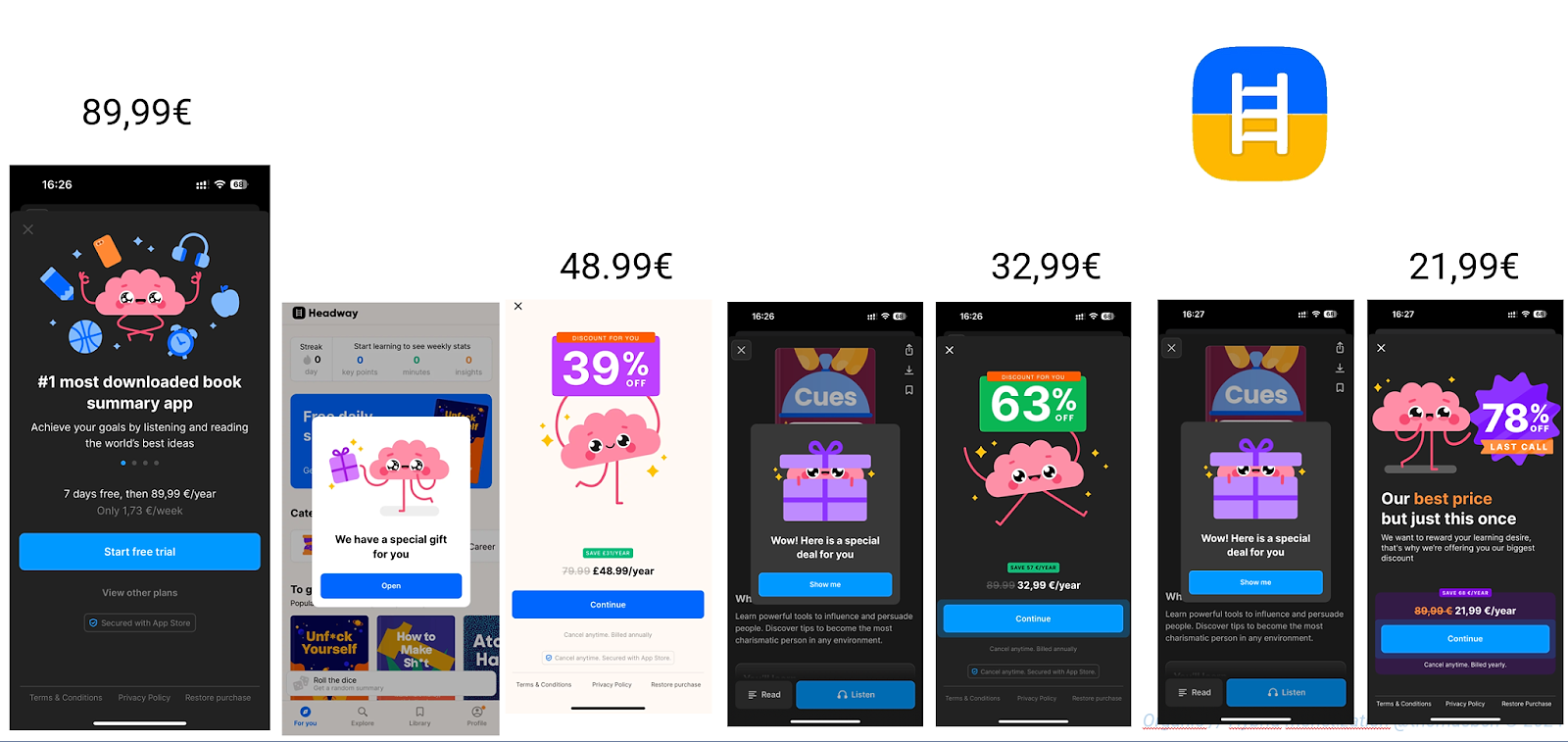
A fairly extreme example is the discount flow from Headway, which moves offers all the way from €89.99 to €21.99 in my personal case:
2. Subscriptions tiers
While offering multiple tiers of subscription isn’t strictly ‘hybrid’ (as it’s still only subscriptions), it moves towards hybrid monetization by adjusting to the demand curve.
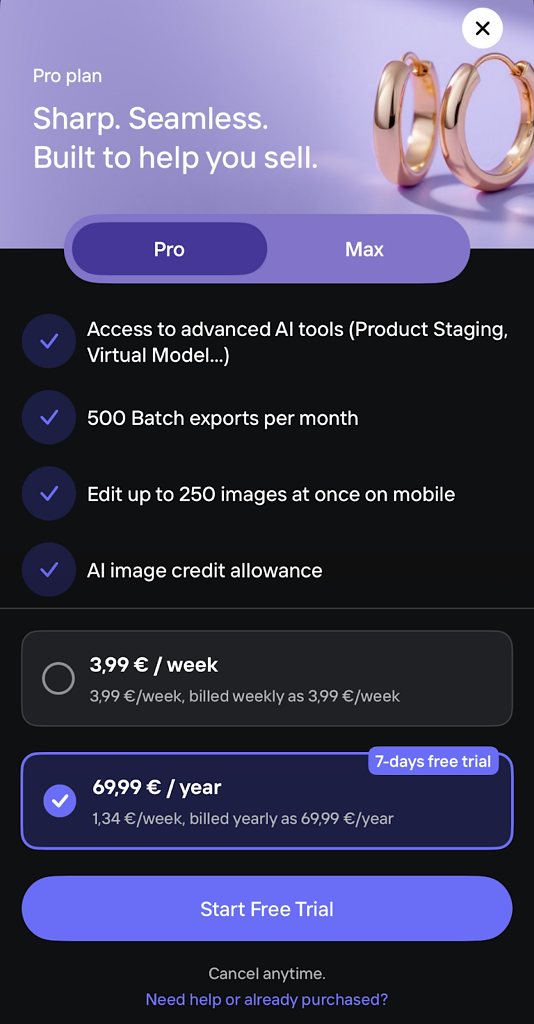
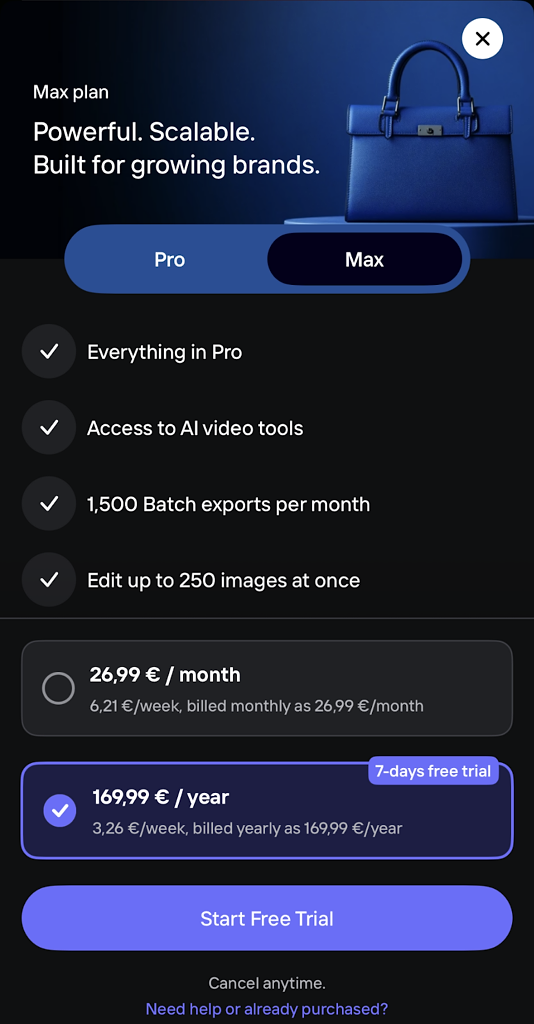
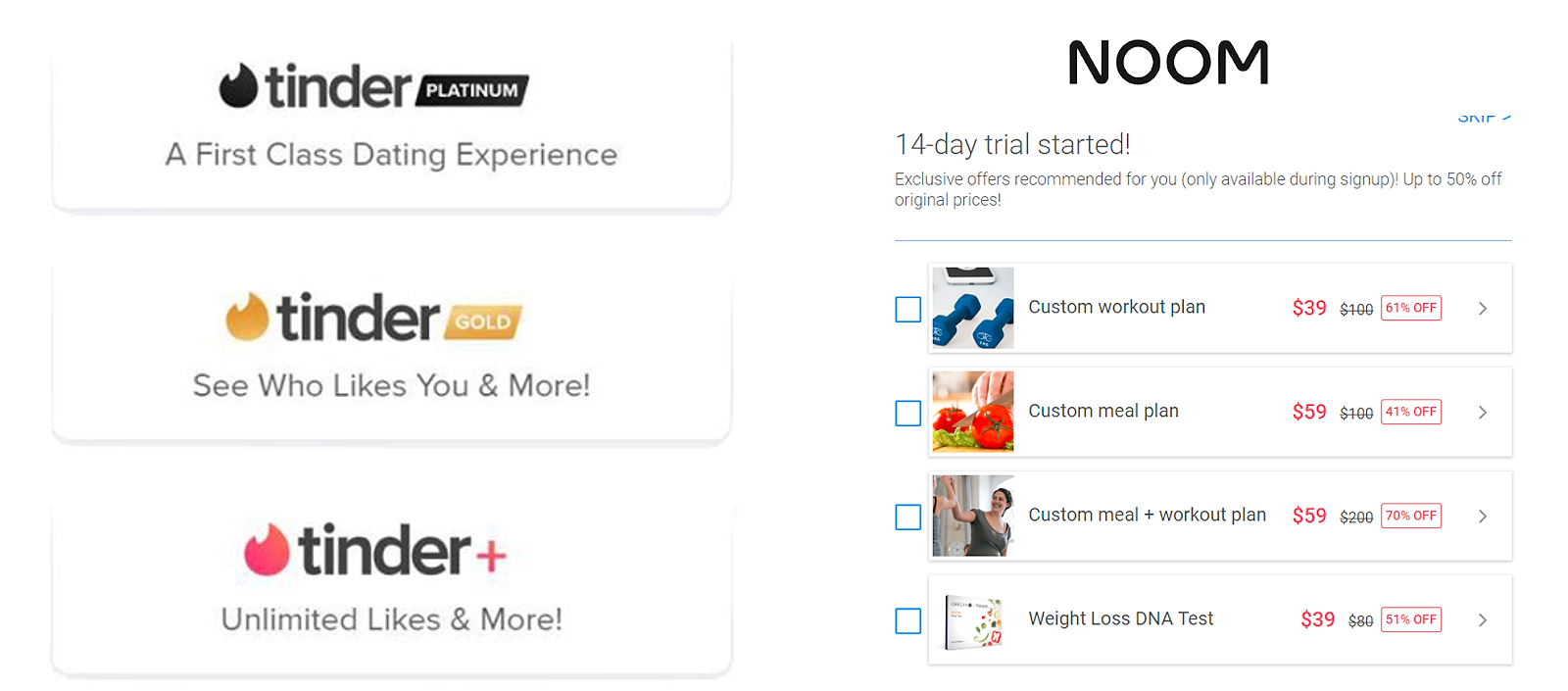
Software-as-a-service (SaaS) businesses have done this successfully for some time by offering tiered-features to different user profiles. One example is Photoroom, which offers Photoroom Pro, Max and Ultra to different segments of users , based on usage patterns.
Subscription behemoths Noom and Tinder both user tiers as well:
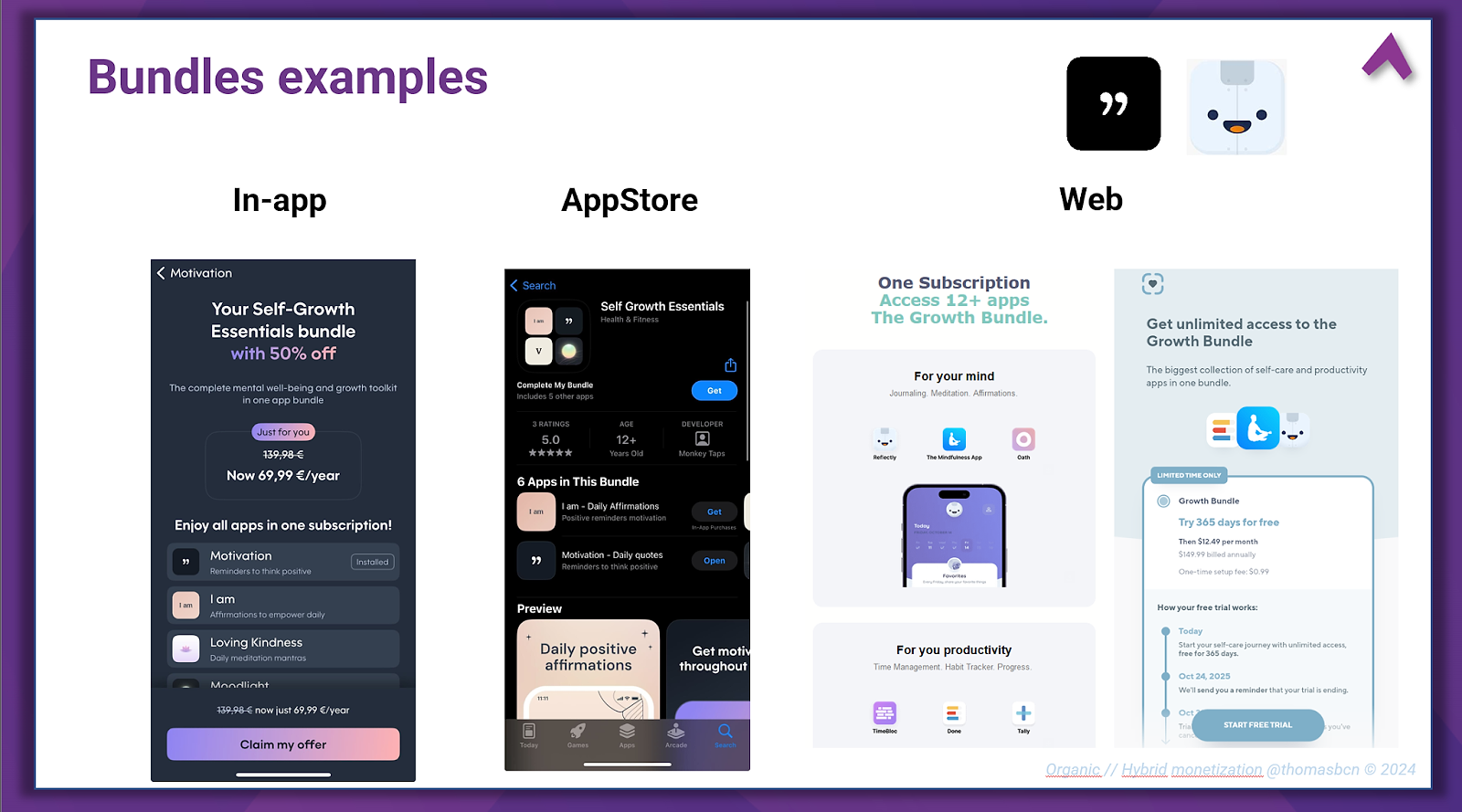
While not strictly a subscription tier per se, many developers with a portfolio of different apps choose to bundle as a way to upsell a higher pricepoint. Examples include Monkey Taps (in-app and in the app stores) or Reflectly (on web).
3. Subscriptions + ads
Ads are maybe the most obvious ways to monetize the 90% of users who show zero willingness to pay for anything (regardless of pricepoint). I remember trying a 99% off discount only to have little incremental uplift on conversion rate. If you have users like this, supplementing with ads can be a good technique.
A well-known example of this use case is subscription role model Duolingo, who combine their core freemium offer with ads, plus premium plans to remove ads, and IAP. Some case studies suggest developers can expect revenue uplift of 10-30% with subs + ads, depending on their user base and execution.
RevenueCat now tracks your ad revenue alongside subscriptions
Apps using ad mediation platforms like Google AdMob or AppLovin can send ad events directly to RevenueCat via the SDK — giving hybrid monetization apps a complete, unified view of your business in one dashboard.
However, it’s worth bearing in mind that revenue here is limited for hard paywall apps. Spotify, for example, makes less than 5% of its revenue from its majority users: free users who put up with ads. In another case I worked on it was as low as 1%.
Considerations when implementing subs + ads
Privacy laws, apps with ad SDKs, effect on churn and many more things should be considered when including ads in your app. Some good resources to look at are:
- 7 smart ways to monetize low-intent users
- How to turn freemium users into loyal subscribers
- Boosting ARPU with ads: How to monetize free users without degrading UX
- Sylvain Gauchet’s pros and cons of ads in subscription apps
Techniques for subscription + ads
Some apps think of ads not as a way to add revenue, but a way to create friction and promote the ad-free offering: a subscription. For instance, Impulse prompts users to remove ads in different strategic places:
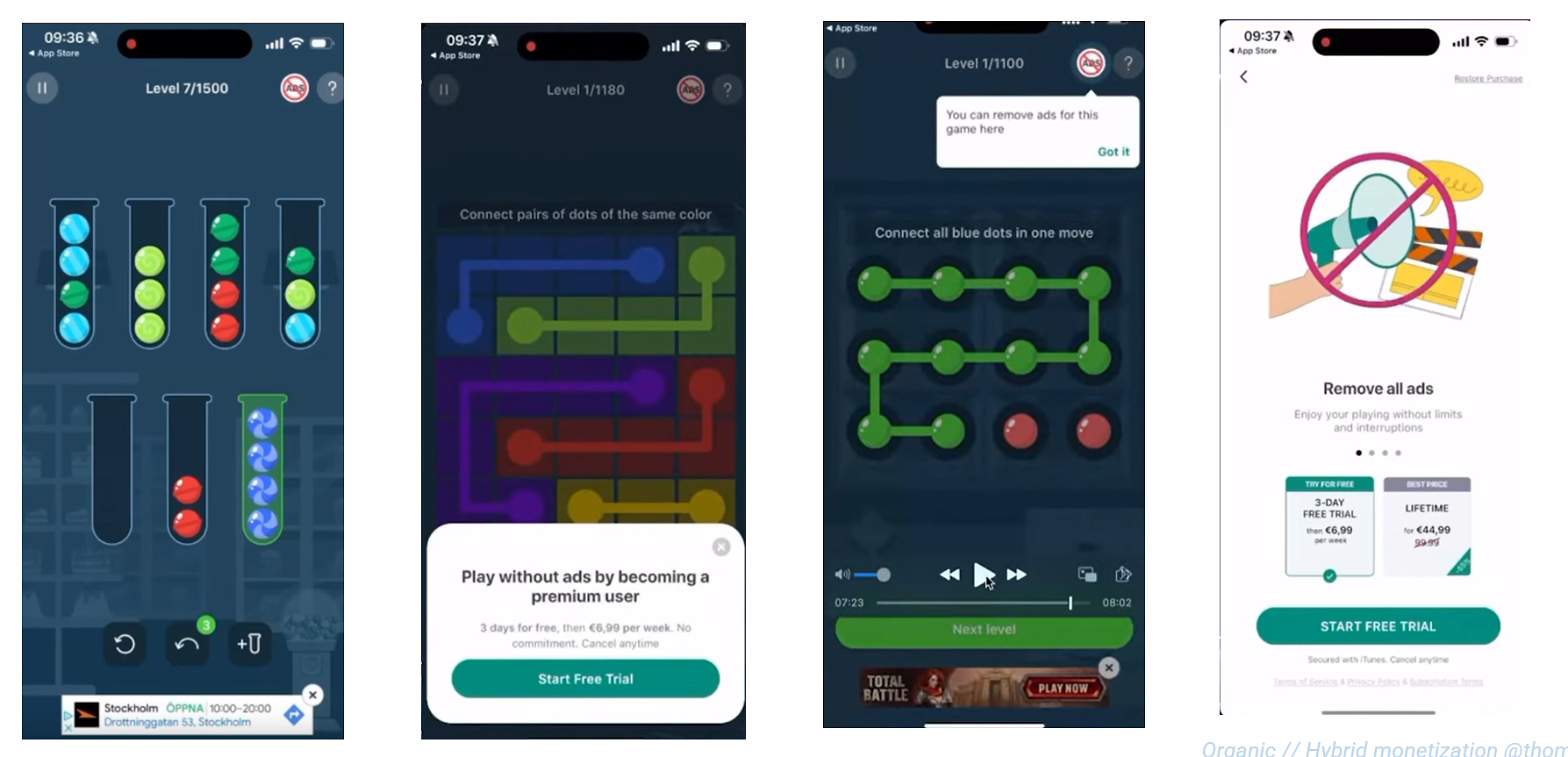
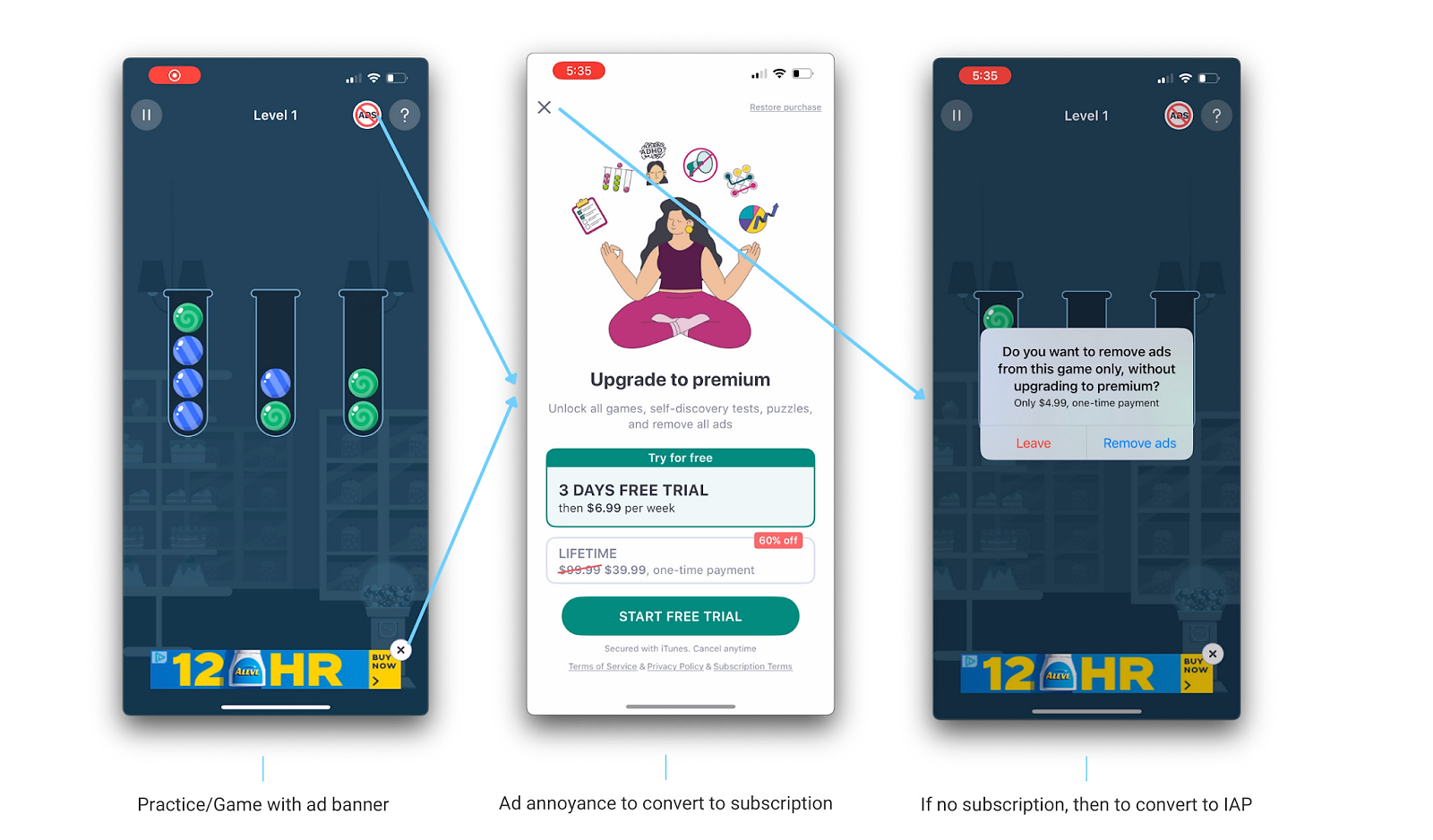
In this flow (from GrowthGems), you can see how closing the ad triggers a subscription paywall with weekly and lifetime plans. When closed, there’s then a non-renewable IAP to remove ads for $4.99!
Gaming experts Matej Lancaric and Felix Braberg have agood video analyzing Impulse’s hybrid model. You can also use ad placements to promote your own subscription: this video shows Duolingo’s ad break — two ads show, one for NYT Games, then one for Duolingo MAX. It’s a bit meta, but it can work!
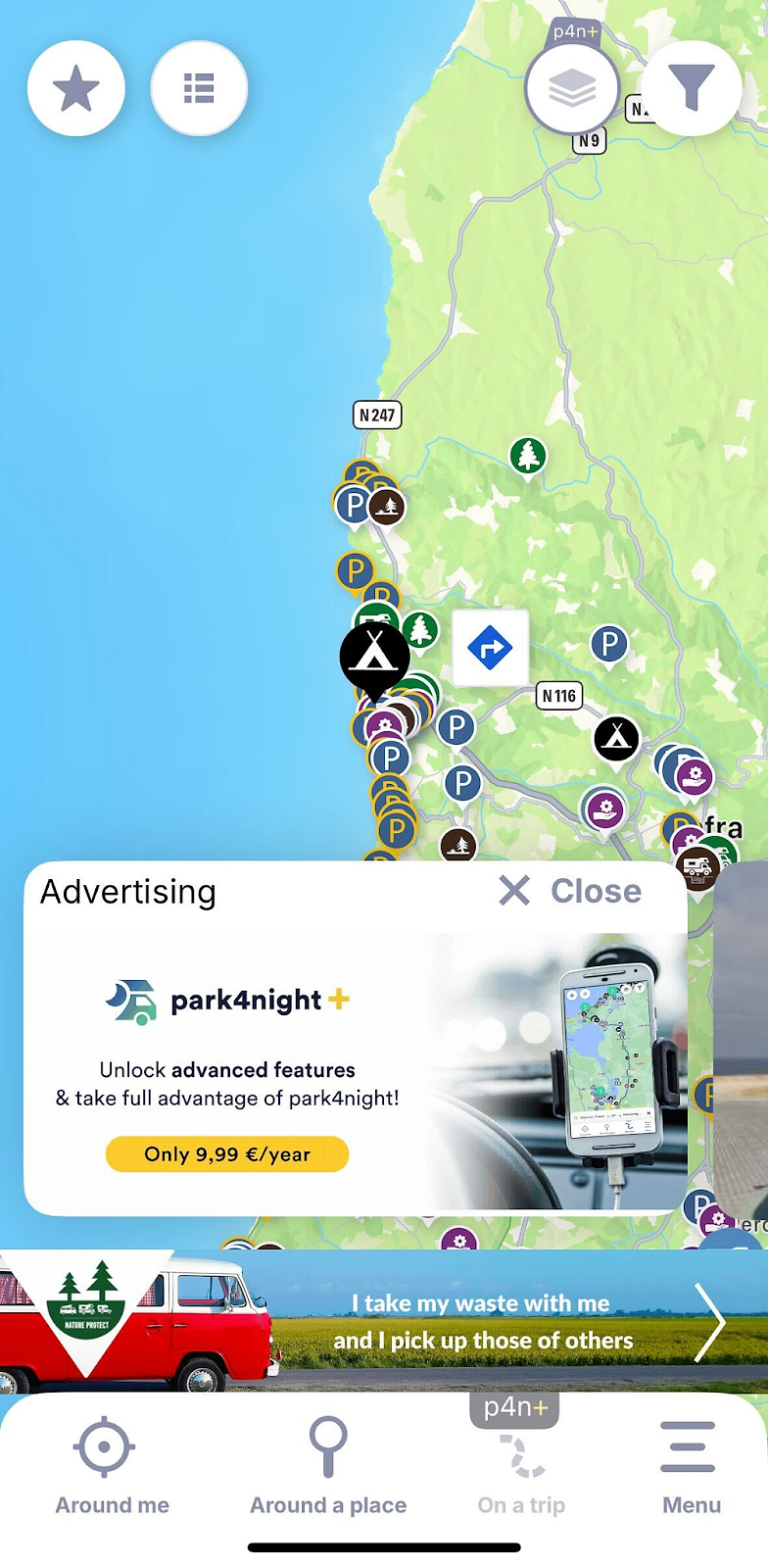
Finally, a simple banner can go a long way, like in this example from park4night (which interestingly drives to an off-store, even outside the US).
4. Subscriptions + partnerships
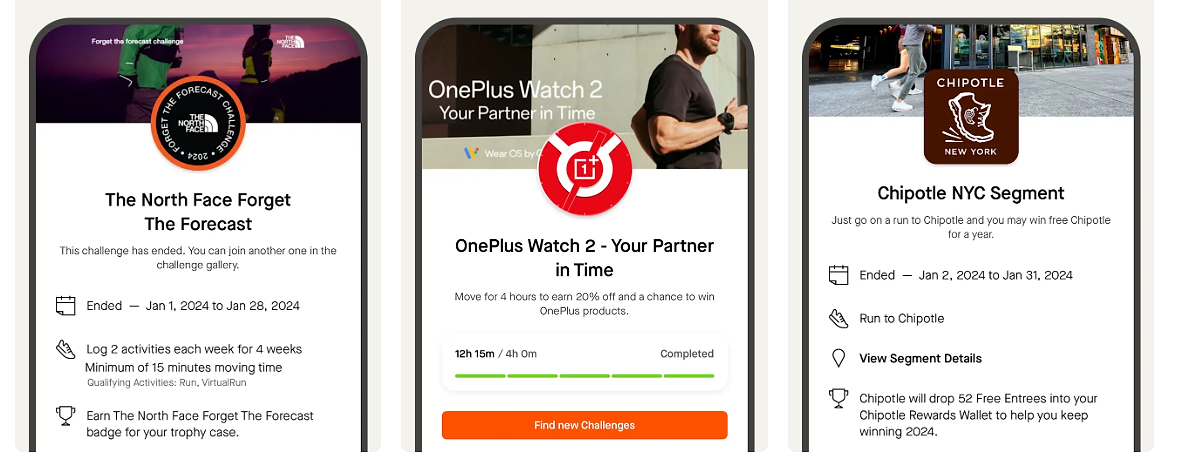
By ‘partnership’, I mean an alternative to the common ads model sold via SDK with partners such as Applovin, Unity or Admob. In specific verticals, partnering up with a relevant brand can yield significant impact — and potentially revenue — depending on the vertical, as they may add value, including for premium customers.
See for instance Strava’s Sponsored Challenges:
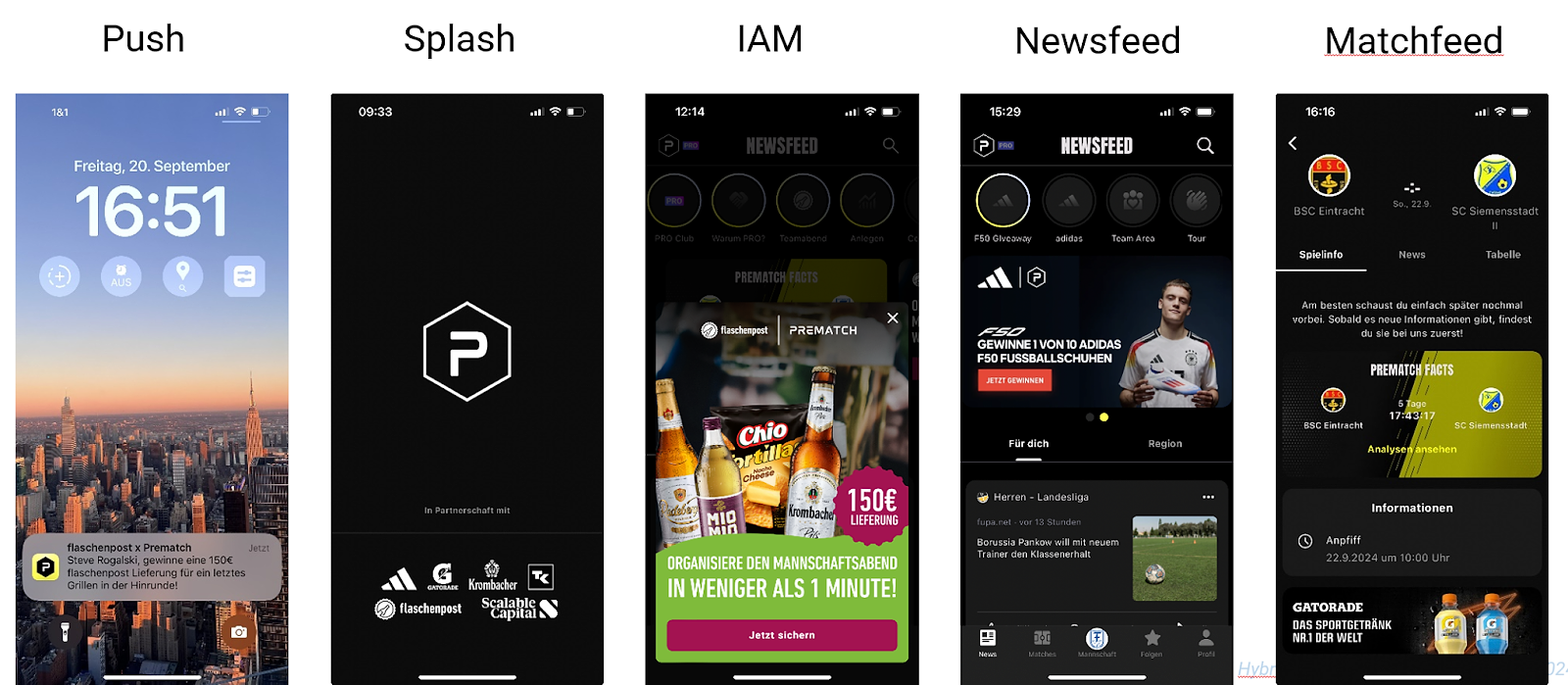
Such partnerships can be implemented at very different trigger points of the journey, as illustrated below with Prematch:
5. Subscriptions + ecommerce/affiliates
As mentioned earlier, one of the limits of the subscription-only model is that it doesn’t offer your bigger power users and ambassadors any opportunity to engage further with the brand. So one way to supplement subscriptions is by adding ecommerce or affiliate strategies.
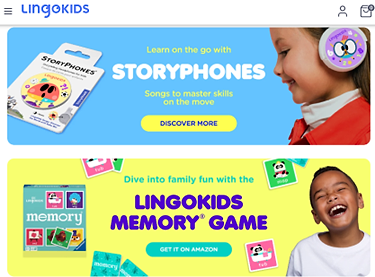
For example, a few mega fans might be willing to buy brand swag or physical goods, like Lingokids:
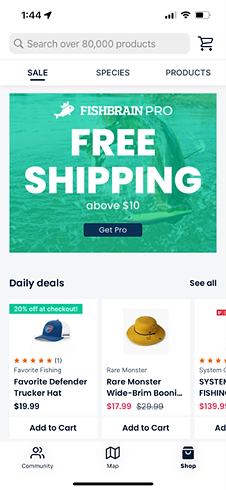
Sometimes, the ecommerce opportunity lives within the product, such as the anglers’ social network app, Fishbrain, having a marketplace:
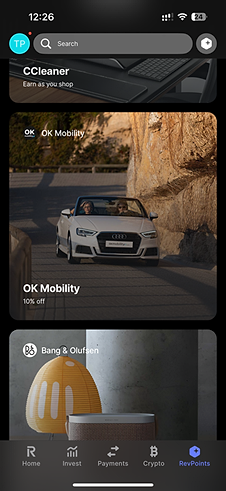
As a more indirect tactic, you can partner with other businesses to offer deals or discounts to your users, like Revolut does:
6. Subscriptions + consumables/one-off in-app purchases (IAPs)
Finally, here is the biggest potential uplift (for most apps): offering consumables and one-off IAPs alongside your subscriptions. These have great rewards for app businesses, yet are still vastly underutilized.
RevenueCat’s State of Subscription Apps 2025 report shows limited use of consumables — except in gaming (~40%) — with only 5–15% of apps using these monetization models.
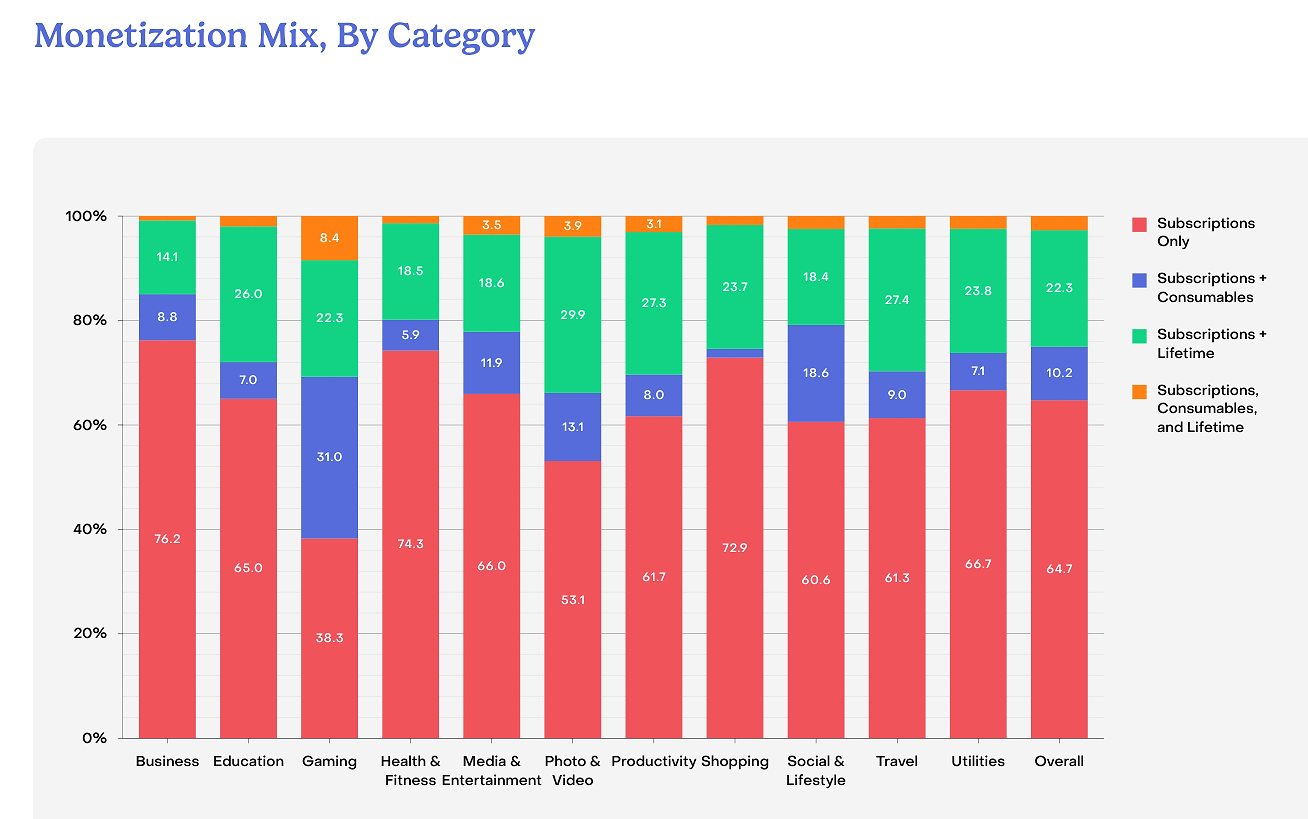
While few apps are taking this route, the few that do monetize much better: a recent stat showed that hybrid buyers make up only 7% of buyers, but generate 25% of total revenue.
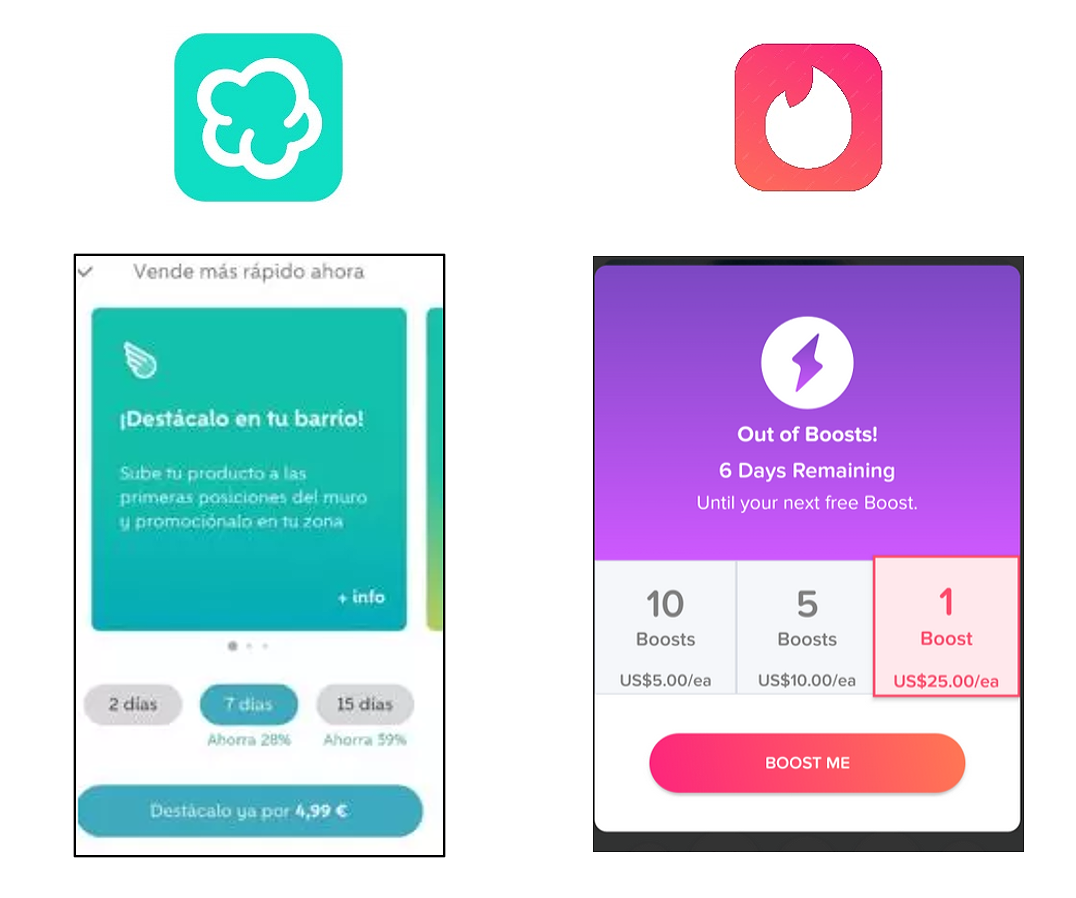
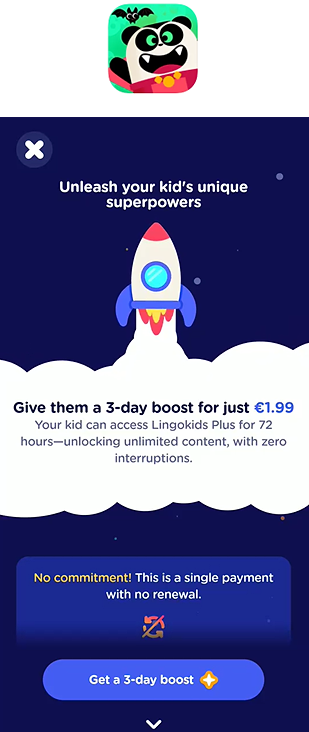
Non-renewable/consumable items fit many use cases that subscriptions don’t cover, either substituting for a subscription (which wouldn’t be purchased) or slotting on top as an additional spend. Depending on the app, those consumables may be very different things — one example is ‘boosts’ which are pretty common in dating apps or marketplaces, such as Tinder or Wallapop:
In-app purchases can also be used to enable price-sensitive users to unlock premium features individually, or for a limited time. For instance, one learning app I worked with added a one-time IAP which granted access to all content for a couple of days (a ‘weekend pass’). We also added IAPs to gain access to very specific lessons without having to unlock the rest of that content tier.
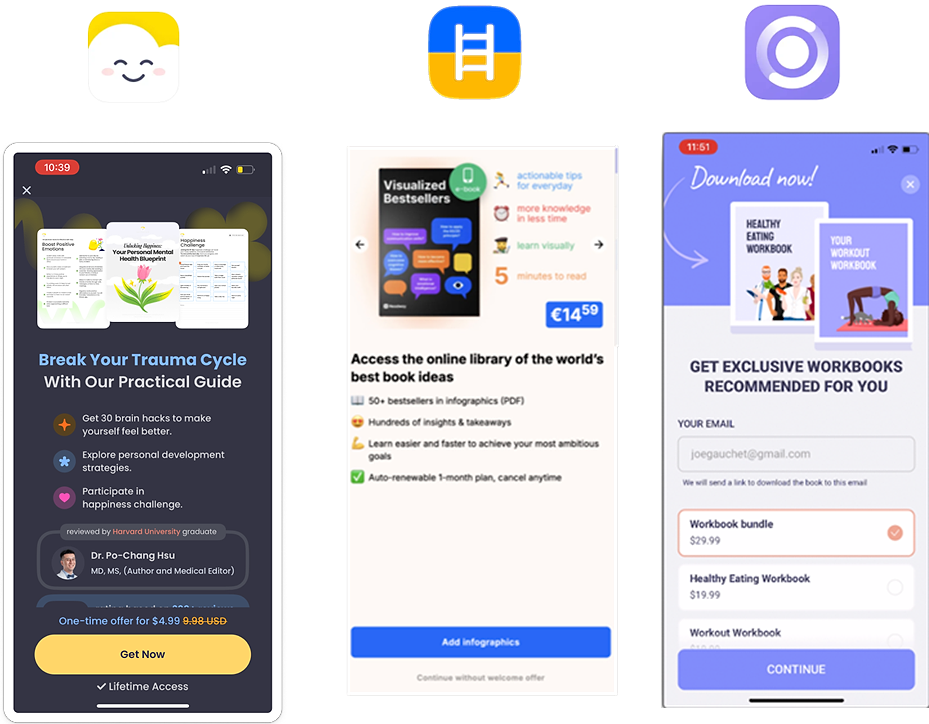
Consumables can also be upsells, which have proven particularly effective in the health and fitness space; for example, guides to train specific body parts, certain individual coaches, dedicated workout or meal programs… These are sometimes even sold as a direct upsell right at onboarding, though this is a tactic I’ve seen work better on web (once the payment is recorded) than in-app.
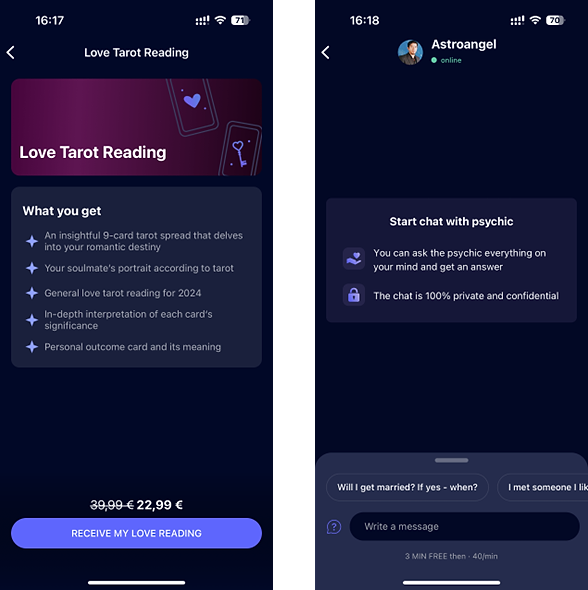
The possibilities for IAP are endless: Nebula sells one-off tarot readings and 1:1 chats with psychics, Duolingo offers individual tests and certifications. Many apps offer tipping, stickers, customization, and more.
One caveat for consumables, and probably the elephant in the room here, is AI.
Because AI comes with significant costs, the cost of use can vary massively between users who are charged the same. Maybe the first hybrid AI model I’ve seen was Lensa AI, which was selling 200 AI avatars for $9.99, but entering the subscription allowed you to get 50% off the credit price. (I thought it was interesting that they specify why it’s a paid feature.)
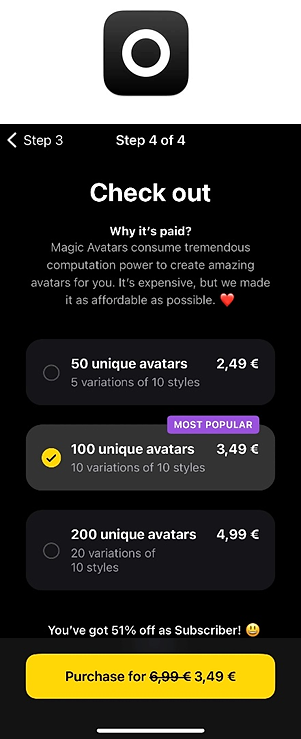
Alongside tiered subscriptions like ChatGPT, these single-payment purchases for extra use are becoming more common among AI apps.
7. Pile them up: combine hybrid monetization options
Hybrid options are additive, not mutually exclusive, so why not stack them? The most advanced subscriptions apps don’t just pick up one way to upsell — they combine several.
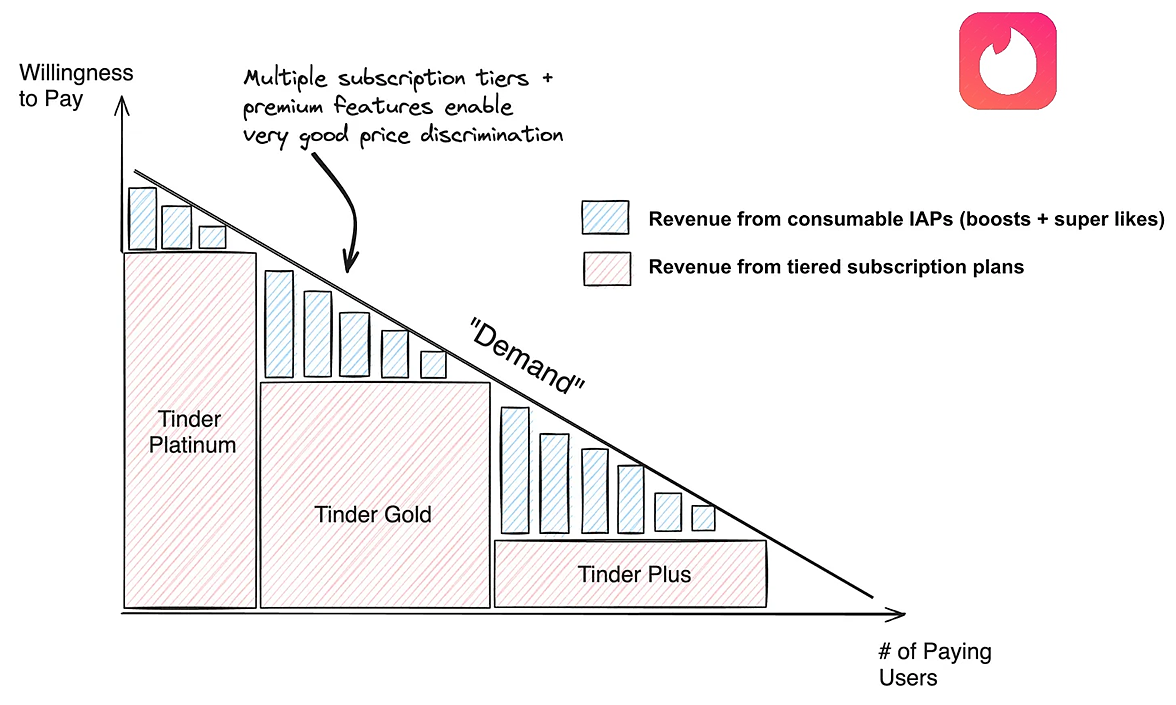
This diagram from Phil Carter, creator of the Subversive podcast and the famous Subscription Value Loop, shows how Tinder adapted to the demand curve. Ravi Mehta, Former Chief Product Officer at Tinder, spoke about their strategy in depth on the Sub Club podcast — I highly recommend giving it a listen for examples of hybrid monetization in action.
Listen to the Sub Club episode
How Tinder Captures More Value With Tiered Pricing and Consumables — Ravi Mehta

Here are some ways you can combine multiple non-subscription revenue streams.
Offer everything!
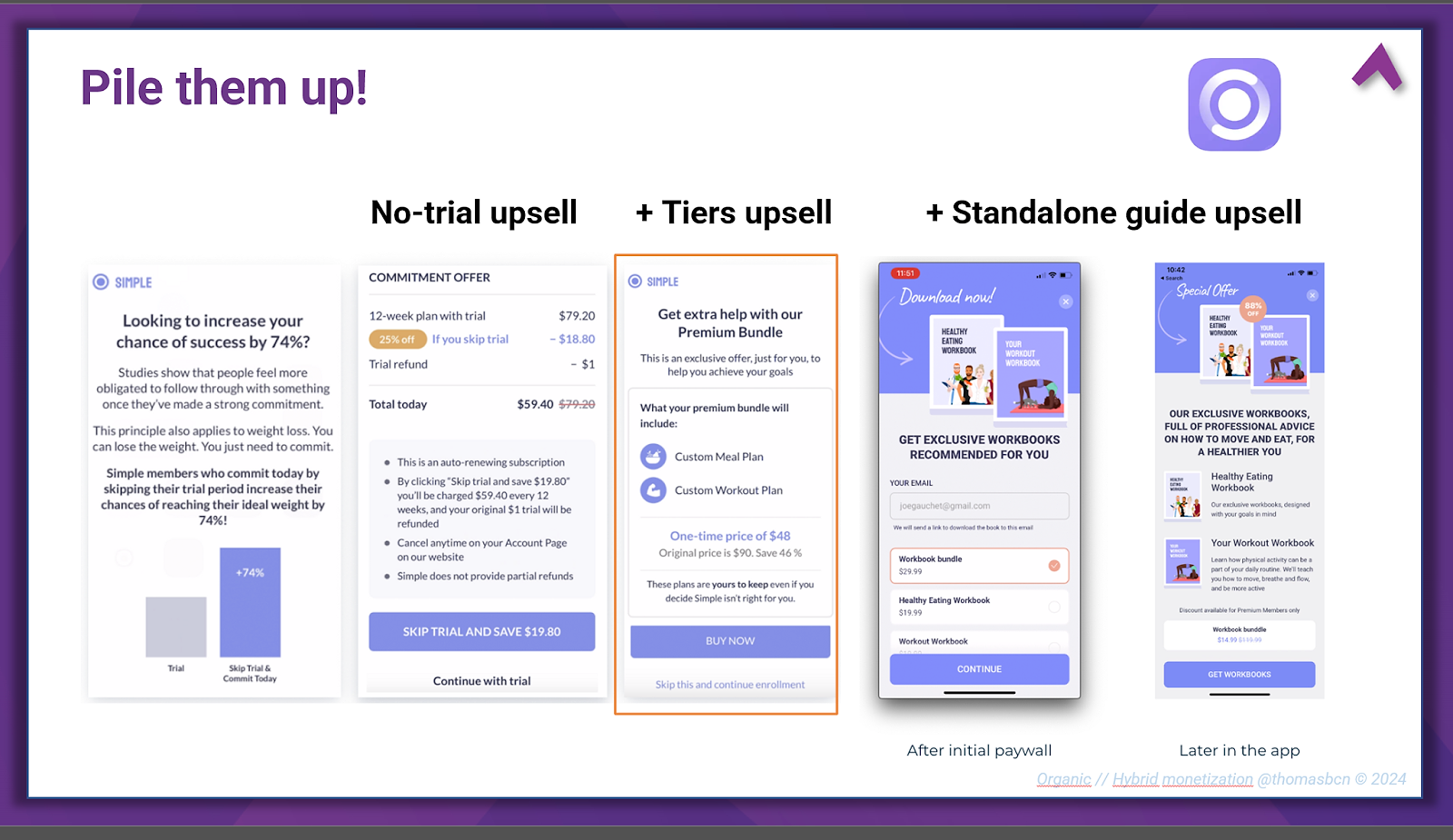
For instance, weightloss app Simple offer users an upsell to skip the trial period, then offer different subscription tiers, and then also offer one-off purchases for in-app guides. It’s a lot.
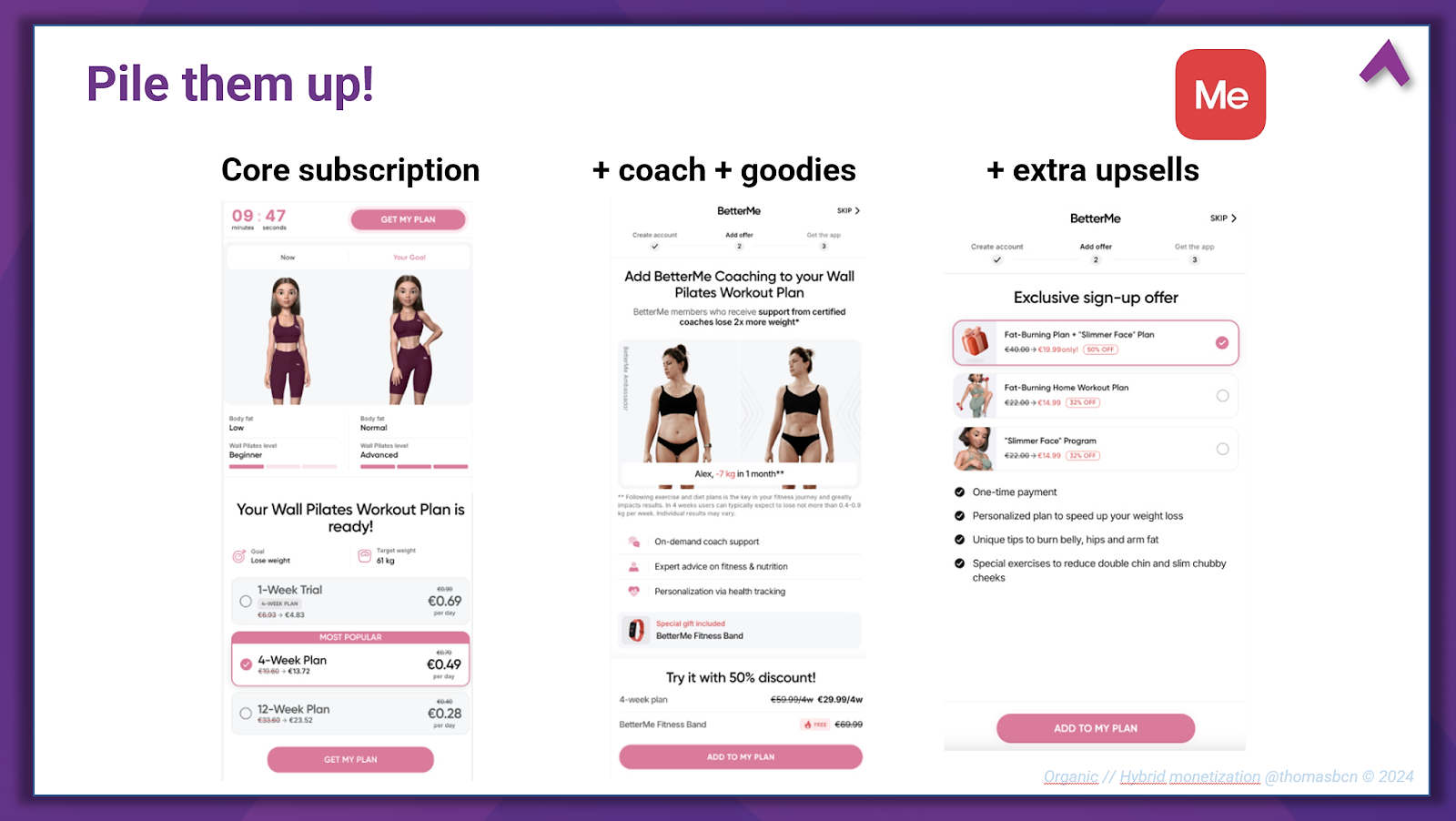
Me app also has a similar pattern, with coaching, goodies, and upsells in addition to the core subscription:
Bundle physical and digital goods
Another innovative example, albeit less common, is to bundle digital and physical goods. This feels suited to luxury brands or designers, but it could work for any app. Arya does this in its initial offering and later through store upsells:
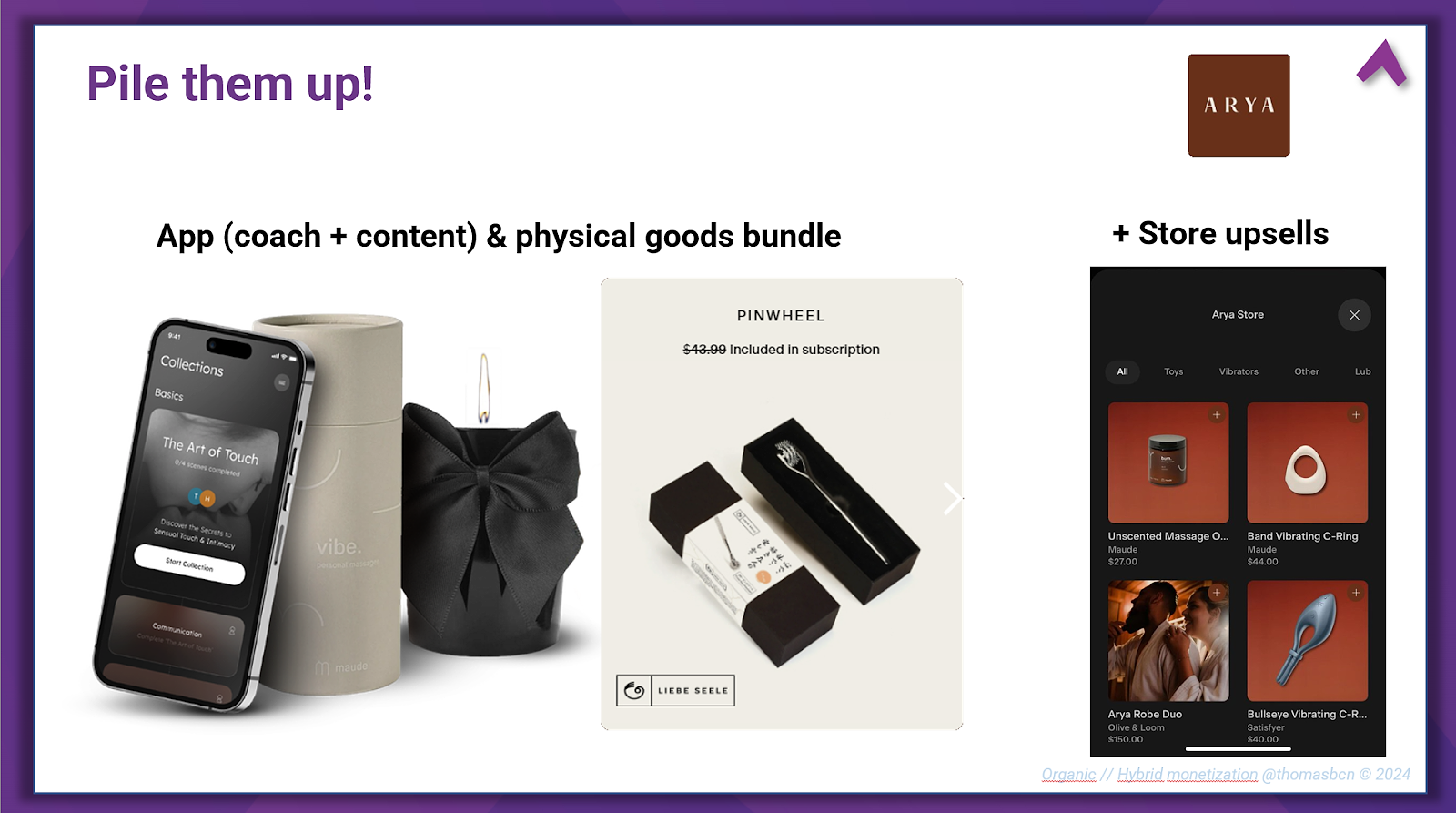
While the specifics of those examples differ, the logic is the same: it’s hard enough to convert users into paid subscribers, so if there’s an opportunity to monetize subscribers in extra ways, take it. Demolish that low floor and find your big spenders, even if they’re few and far between. If there’s an opportunity for a big ARPU increase, whether on the spot (e.g. onboarding) or later (e.g. merch), it’s worth pursuing.
Offer them even more
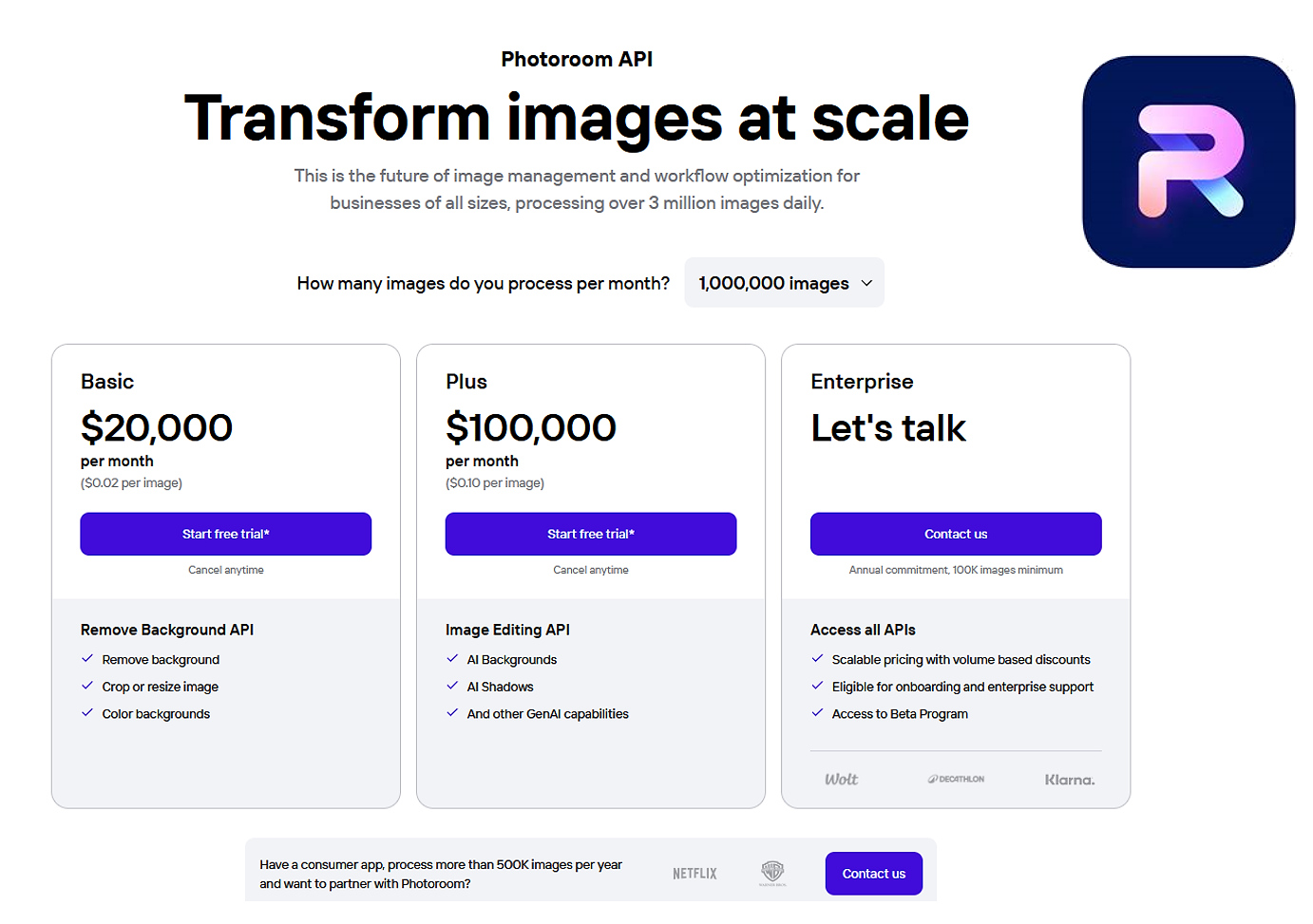
More and more subscription businesses operate beyond pure B2C models, often with a mix of end consumer, ‘prosumer’, small businesses, and even larger businesses. This is particularly common in graphics, photo, and video tools. One example is Photoroom: on top of its several subscription tiers, Photoroom offers B2B plans for clients that go beyond heavy user requirements:
Caveats and considerations before implementing hybrid monetization
Hybrid monetization isn’t a free win, it takes planning and practice. And like anything in app monetization, there are risks. But the most common blockers are predictable:
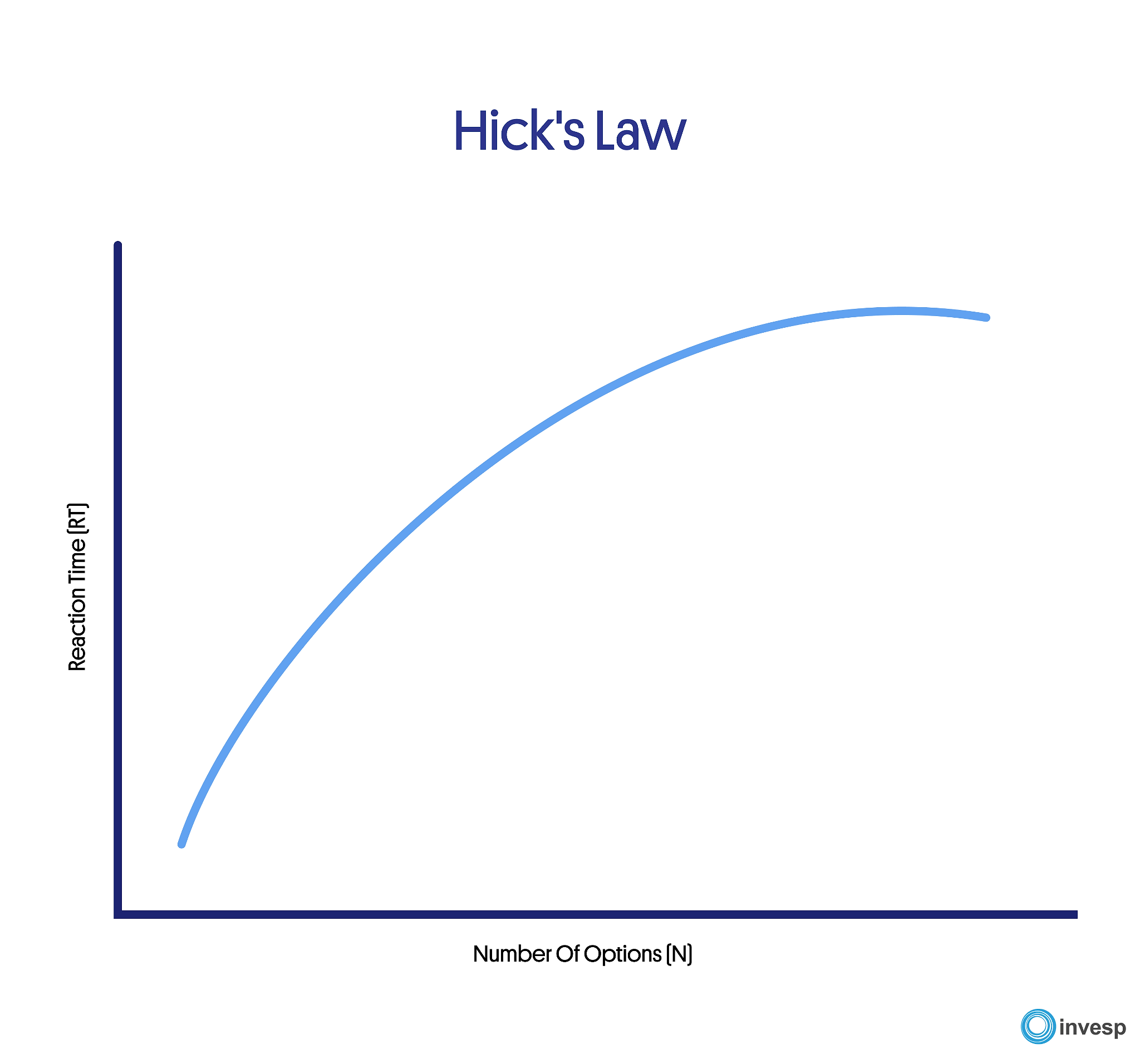
For users, choice overload can hinder conversion
Every new monetization path should earn its place, especially at decision points. Otherwise you risk too many options leading to no decisions. How and when the options are offered is critical. For example, Netflix has found when it shows more than seven titles per row, user engagement drops. This is also a good blog detailing examples of Hick’s Law and other choice overload instances, featuring the likes of Duolingo, Zapier, Airbnb and Trello.
For developers, complexity creeps up quickly
More SKUs = more logic and more edge cases.
This might be the biggest caveat: hybrid monetization is definitely not for everyone. Hybrid models fail more from organizational structure than product design: various teams will see their current KPIs affected, so new alignment needs to happen between monetization, UA, and product teams.
Offering multiple options requires stronger product, data, and ops discipline, and can add up on data and tech debt quickly — especially if many rounds of experimentations are required to find what clicks with your audience from the get-go.
For many earlier-stage or smaller teams, this is actually a very good reason to stick with a pure subscription model initially.
Hidden signals and risk of cannibalization
Measuring the actual uplift of hybrid monetization might look straightforward, but it isn’t! Discounts can be detrimental. Poorly designed IAPs can undermine subscriptions. Aggressively-priced consumables can just be shifting revenue to earlier (which arguably, is still great for cash flow even under similar LTV), but hurt renewal revenue later and eventually decrease LTV. Ads could inflate short-term ARPU while depressing long term retention and late conversions.
Even simple pricepoints changes can have multiple, long-lasting impact on renewals, retention, upsell potential.
In short: be conscious of the analytics required before jumping in — hybrid monetization creates some of the most convincing false positives.
Country and culture dependencies
There’s a massive monetization gap in subscriptions between platforms (this is the reason the Google Play team was an early advocate for mixed models). For example, low-amount IAPs are often more impactful on Android than iOS, due to different user profiles and intent.
Payment habits, ad tolerance, and price sensitivity also vary massively by location. Spotify didn’t scale meaningfully globally for some time, while Tencent music (which offers pay-per-song, one-off purchases, and tipping) is a global success. Some cultures are currently just more reluctant to engage with long-term subscriptions (e.g. China), while others are skeptical of silent auto-renewals (e.g. Germany), so mixed models can benefit hugely in these contexts.
On top of local habits, you have specific regulations, from Japan and Korea’s 2025 changes plummeting renewal rates, and California’s ‘click to cancel’ law being proposed.
Rulings and regulations
Keep up to date with global app-to-web regulations and purchase guidelines here.
Wrapping up: is your app ready for hybrid monetization?
We’ve covered a lot. You have many potential frameworks for hybrid monetization, and many pros/cons to consider before getting started. So to finish up, here’s the questions to ask yourself before introducing a new revenue stream:
- Do we clearly understand who our high-, mid-, and low-intent users are?
- Do we have reliable cohort-based retention and revenue data?
- Can we run clean experiments without stacking changes?
- Do we know which metric we’re willing to trade off — and which we aren’t?
If you can’t answer these yet, fix that first. Hybrid monetization only works if you introduce it deliberately. Otherwise, it’s messy, chaotic, and reactive. Don’t get caught out misreading misread short-term gains while harming long-term retention.
Remember there is no hack: Hybrid monetization is not a shortcut to fixing poor ARPU. If subscriptions aren’t delivering clear, repeatable value, adding more monetization layers will only make things worse. Bad products monetize badly, and they will only do so in more ways with more sophisticated models.