

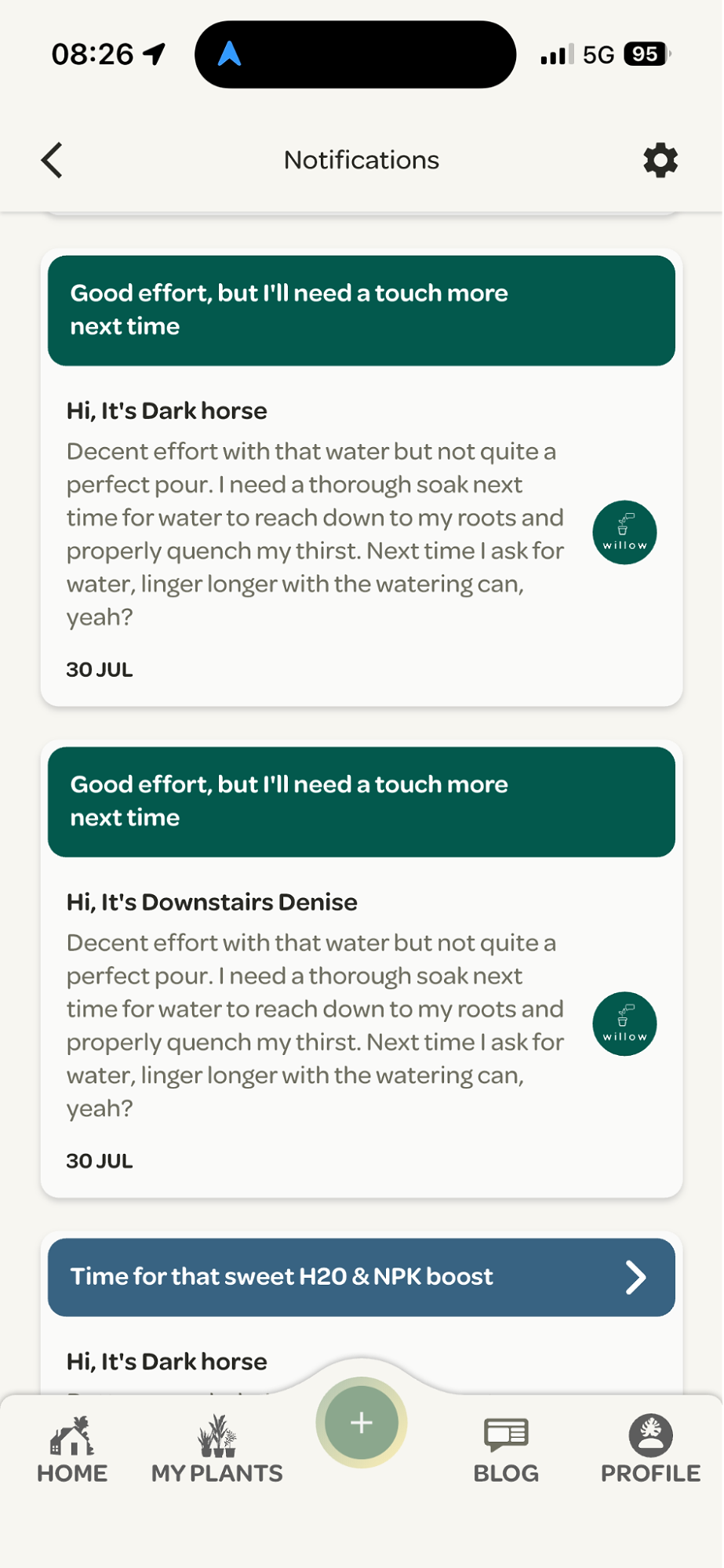
My husband, probably fed up with our plants dying (or with me constantly uploading photos to Claude to figure out what was wrong with them), bought me some Willow plant sensors. I downloaded the app, set everything up, and was pleasantly surprised to discover I could not only give each plant a fun name, but also have them sassily ‘talk’ back to me.
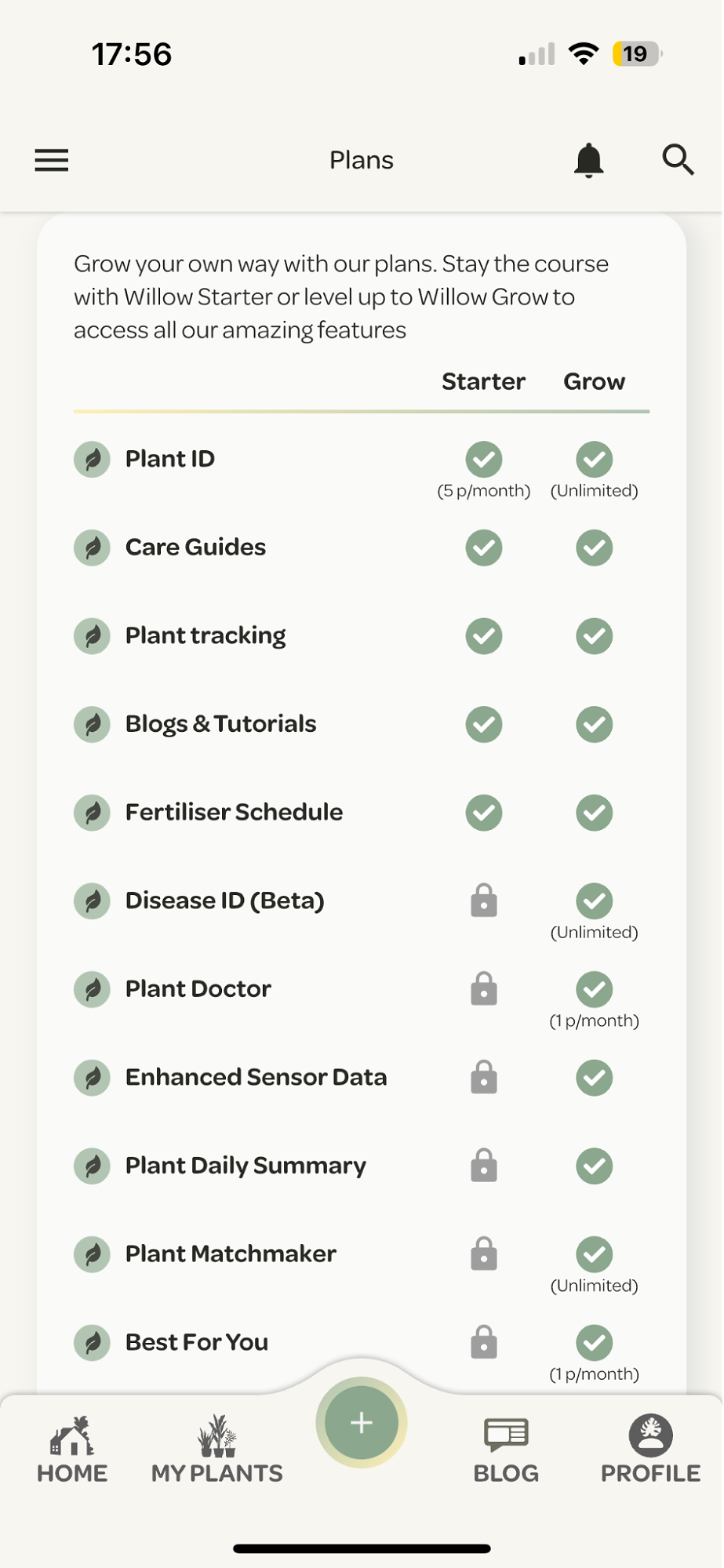
While reviewing all the data, excited to find out what my plants needed (and slightly stressed about providing enough humidity during a London heatwave), I noticed that Willow had a paid subscription. Usually, when a physical product pushes you to also pay and subscribe for an online product, it feels cheeky — you’ve already paid for the thing, haven’t you? But for once, it felt great.
The combination we're used to is physical products where you need a subscription to really make use of them. They’re especially popular in the health category, like the Oura Ring, Whoop, and Peloton. But Willow is different. I got enough value from the physical product alone; so the subscription felt like a genuinely valuable add-on, rather than paying for something twice.
It made me realize how rare that is: a physical product and app coexisting perfectly.
In my 2025 monetization trends piece, I flagged the rise of hybrid monetization through combining online and offline products. Physical goods are one of the most overlooked hybrid monetization techniques, because they're the opposite of what we usually picture when we think of apps.
I've also seen this from the other side — I used to be Head of Growth at an e-commerce brand where we looked into building digital experiences — and have observed five models for combining apps going physical, and physical brands going digital. When done right, I genuinely believe it isn't a trend, but a powerful way to improve your lifetime value.
But before we even get to that, we’ve got two questions to answer.
Why physical, why now?
I touched on physical goods being on the rise last year due to the popularity of hybrid monetization, but there's more to why this is an important and growing trend.
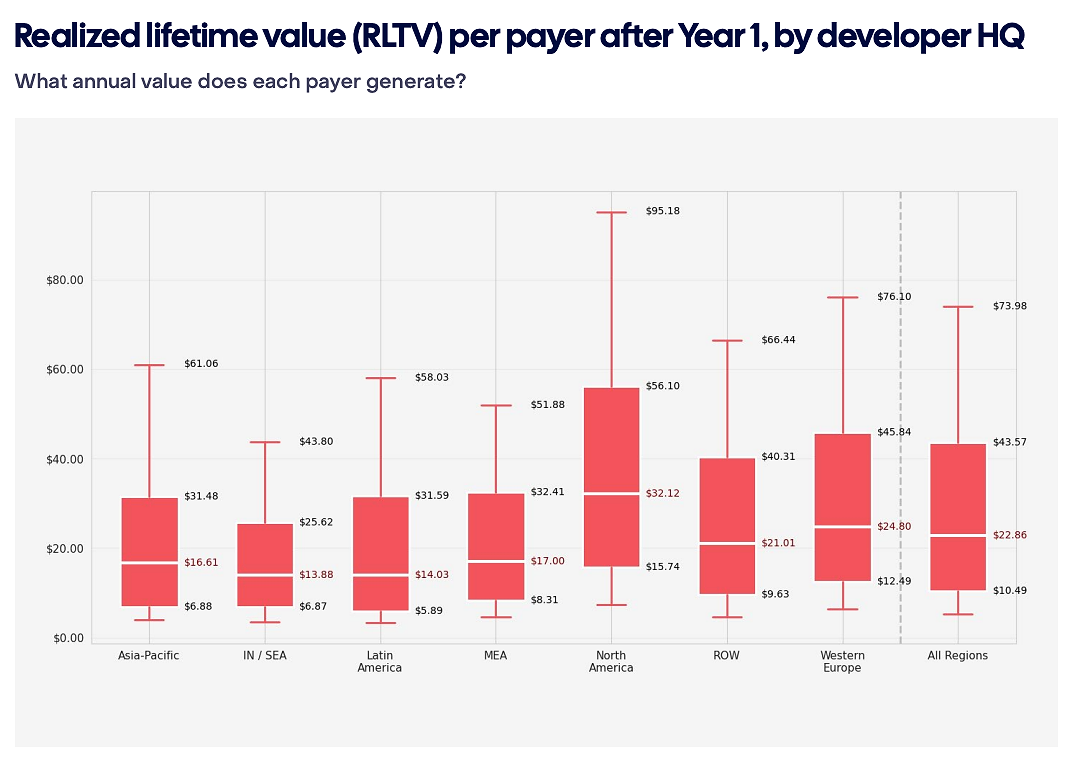
Yes, most apps are still subscription-only: 63.5% of apps offer nothing but a subscription However, as the number of apps grows, the median realized LTV per payer is lower: $23 per year.
This makes the economics tricky, but physical goods add a way to build on that. Here’s how that looks in practice for my plant app:
- The subscription: £25 per year (about $34 per year)
- The sensors: about £75 ($101) for three sensors (Yes, I looked up how much the gift was worth for this article)
So physical products can extend your LTV hugely. Even as we’ve gotten used to paying more and more for apps these days, physical products still have higher value.
The other reason this is more relevant than ever: web revenue completely exploded in 2025, with 41% of top-tier apps now generating revenue on the web. This makes integrating some form of store or physical-goods upsell easier.
Physical goods can't be natively and easily offered inside your app either: Apple's guidelines (3.1.3(e)) state that physical goods must be sold outside in-app purchases. The upside: they also carry no Apple commission. The downside: if you aren’t used to selling via web checkout, it makes physical products harder to set up and more hidden from users — which is where most physical goods attempts fall flat.
If it's not an integral part of your monetization system, it feels like a bad add-on: a gift shop bolted onto your app, an extra shakedown, or a cheeky ask. So how do you know if this is the right route for you?
Why fair expectations are key to success
I'm not being dramatic when I say there's one question that matters more than any other: what do customers believe they've already paid for?
I wasn't upset by Willow's subscription. Not because I work in subscription apps and love a good subscription, but because I believe I already paid (well, my husband paid) for what my plants needed to thrive. I got that. I learned when they needed water. I learned when they needed humidity, more or less light. Heck, I was even so dedicated to keeping them alive that I took them into the shower, in the hope of helping them through the summer’s dry heatwave.
So before even knowing about a subscription, I had gotten what I paid for.
The subscription was all extra: the data, the history, and the tracking. And I'll be honest, as a data and plant nerd, I am very happy to geek out on that, especially when it comes at a fair price. And as I hope to receive more sensors (they’re on my birthday list), the subscription becomes even more worth having.
Contrast that with BMW, who dropped a subscription for their heated seats after 15 months… Unsurprisingly, the subscription had been controversial from day one, because people buying a car with heated seats do not expect to pay separately to use them.
This is the golden rule for adding physical products to your subscription: fairness is key.
Now, fairness doesn't just come down to whether customers can use your product without paying again. It comes down to whether they expect to.
Take me, for example. I bought a secondhand Peloton last year and eventually canceled my subscription because the classes were becoming too repetitive for my needs and no longer fit my workout routine.
While it's annoying that I now can't use the device to its full extent without the subscription, it still functions as a basic stationary bike. And when I bought it secondhand, I knew up front I would need a subscription to get the most out of it, so it didn't feel unfair. Perception is a key part of whether your physical + digital partnership works.
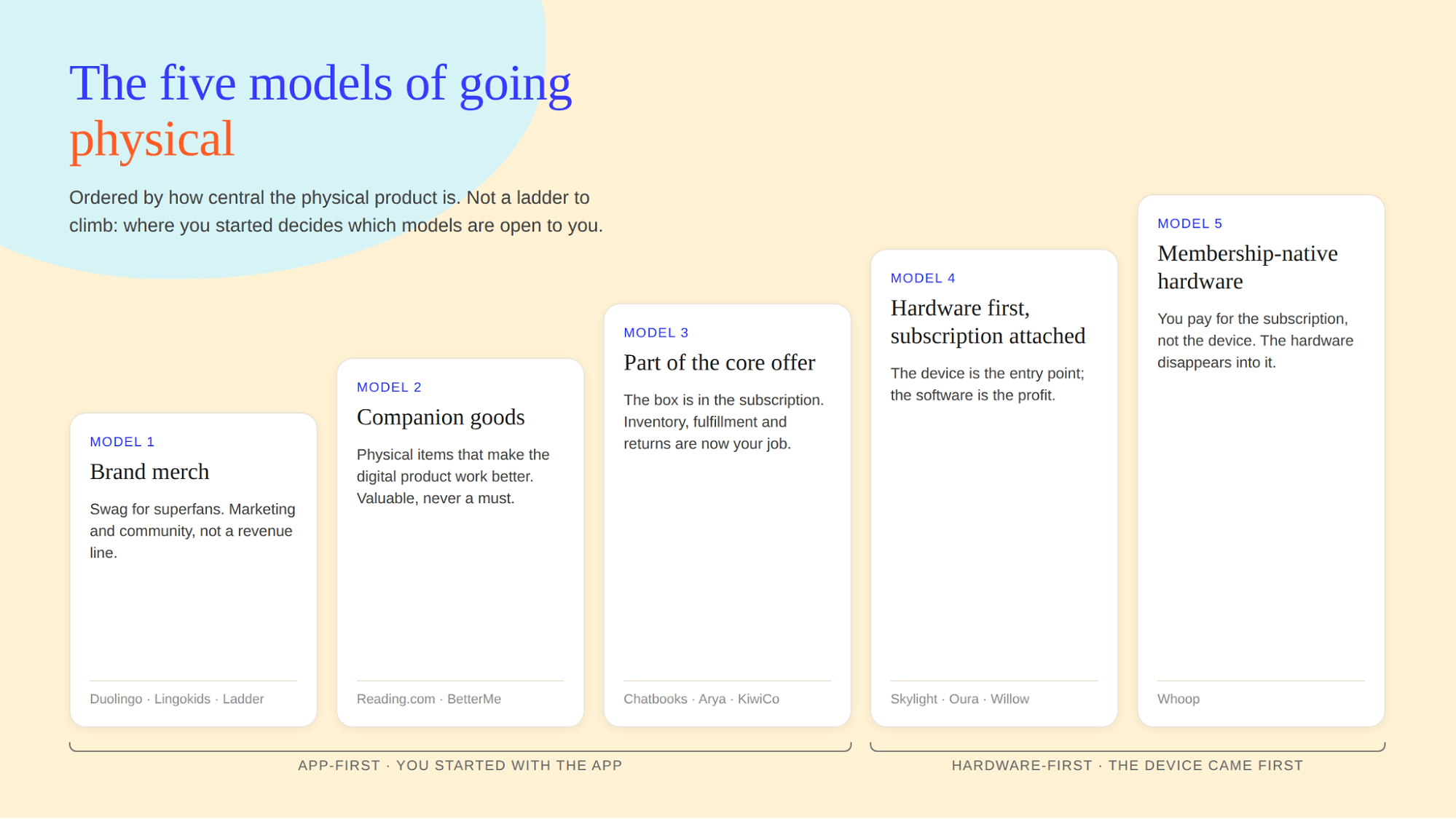
From there, it's working out where physical fits into your strategy. There are five models I see subscription apps following, split across two approaches.
Approach 1: App first — you started with the app
- Model 1. Brand merch: swag for superfans, built for brand and community
- Model 2. Companion goods: physical items that make the digital product work better
- Model 3. Physical as part of the core offer: the box is part of the subscription
Approach 2: Hardware first — the device came first
- Model 4. Hardware first, subscription attached: the device is the entry point; software is the profit
- Model 5. Membership-native hardware: the hardware disappears into the subscription
Let’s break down each model.
Approach 1: App first — you started with the app
This approach is for app-first companies: you started with the app and then decided to add in physical, for whatever reason.
Model 1: Brand merch
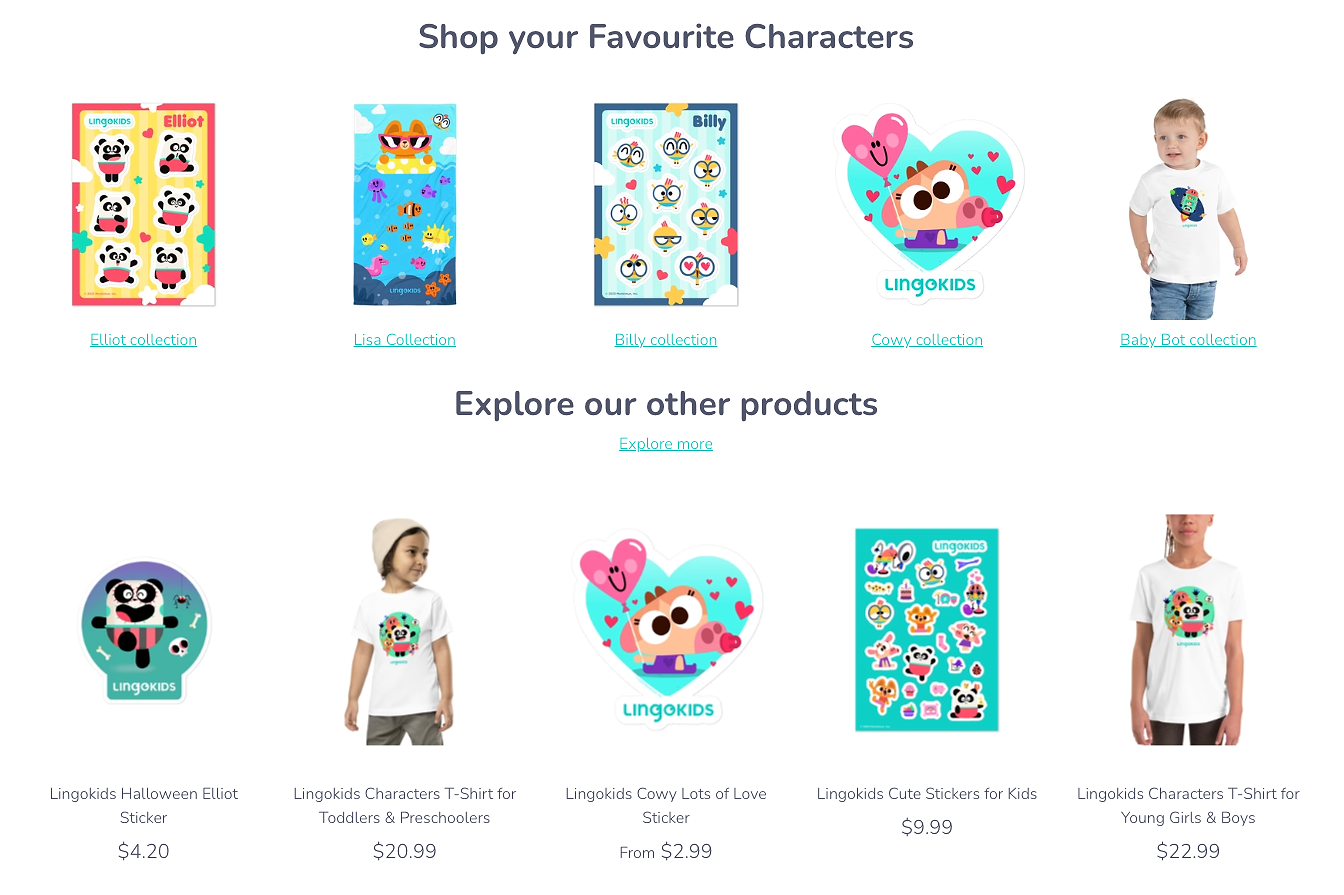
A great example of this is Lingokids, a learning app for children. In 2022, they created an off-screen brand presence through a character store:
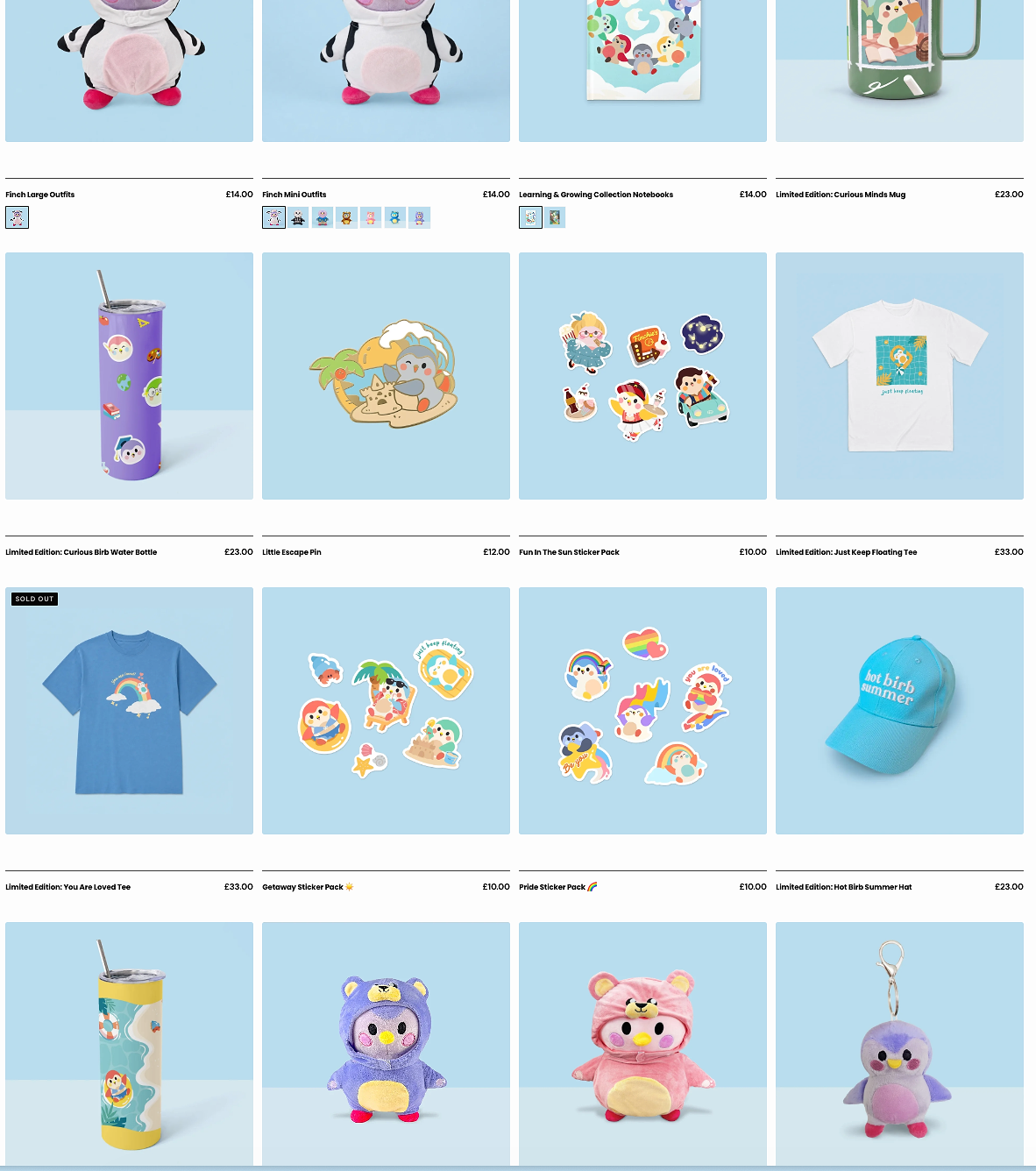
Self-care app Finch also did this, selling stickers, clothing, and plushies of their signature bird.
Duolingo has a brand store where the products mostly don't relate to using the app, except that if you're learning chess through Duolingo, you could also buy the Duolingo chess set (which, by the way, is ridiculously adorable).
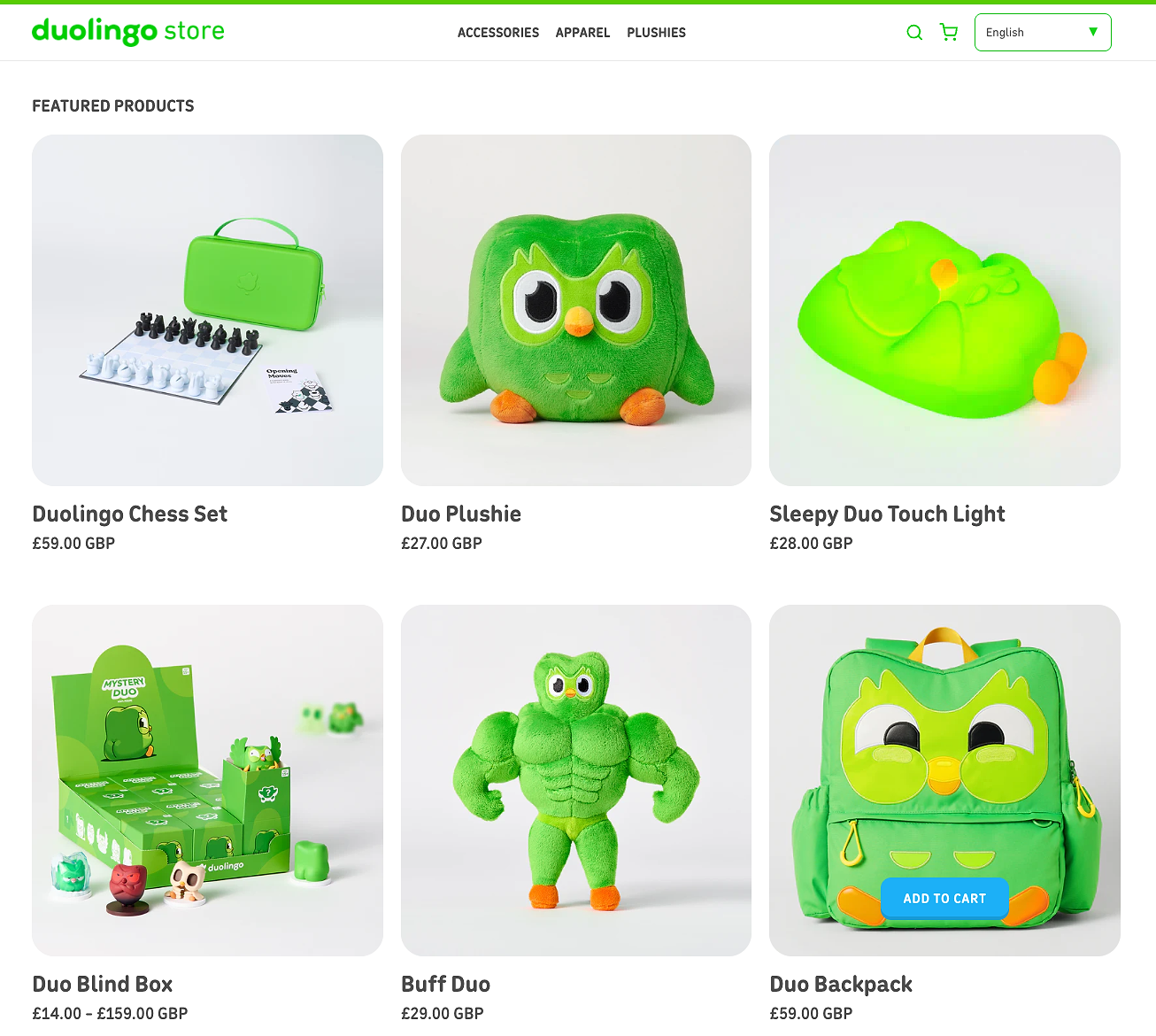
The key thing about this model is that it's more about marketing than monetization. Duolingo said it on the record: yes, merchandise sales doubled two years running, yet "sales is secondary to spreading brand love". Not all apps build a strong brand connection, and not all apps need one. But for those that do, related merch can be a value add or, in some cases, even the basis of a referral scheme.
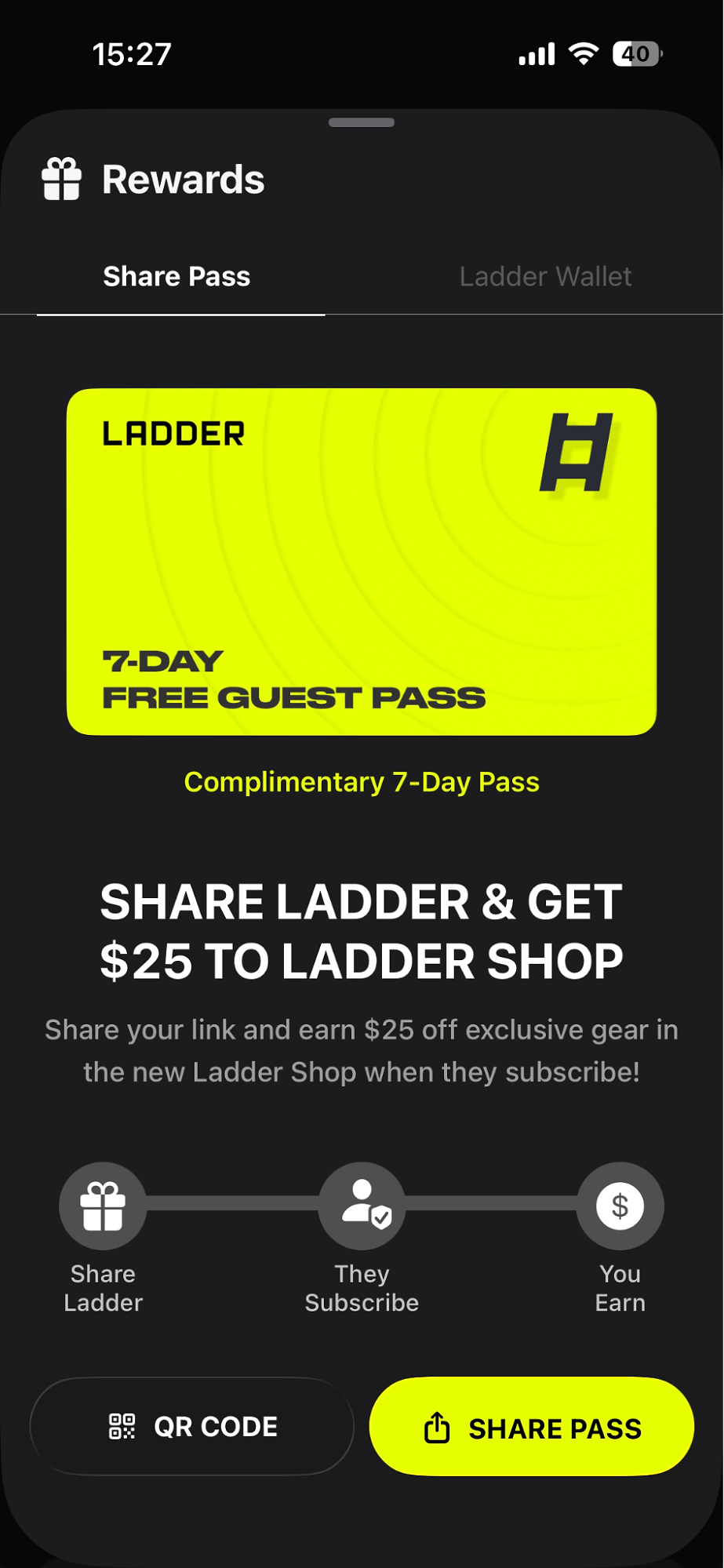
For example, Ladder, an app for personalized workout plans, has a merchandise store where you can buy merch with credits earned from referring other users.
Model 2: Companion goods
The next model is where added products create value but, again, aren't a must. It's a sweet spot: loyal users can get extra value from your app by buying your products, but they don’t need the physical product for the app to function or deliver its core value. Companion goods can also often be bought elsewhere.
Reading.com, a reading app for young children, created printables that you can buy as an extra. COO Tim Dikun shared on the Sub Club podcast that about 20% of people starting a trial or purchasing on the web take the $9.99 upsell. But their biggest physical good, in my opinion, is their Amazon books:
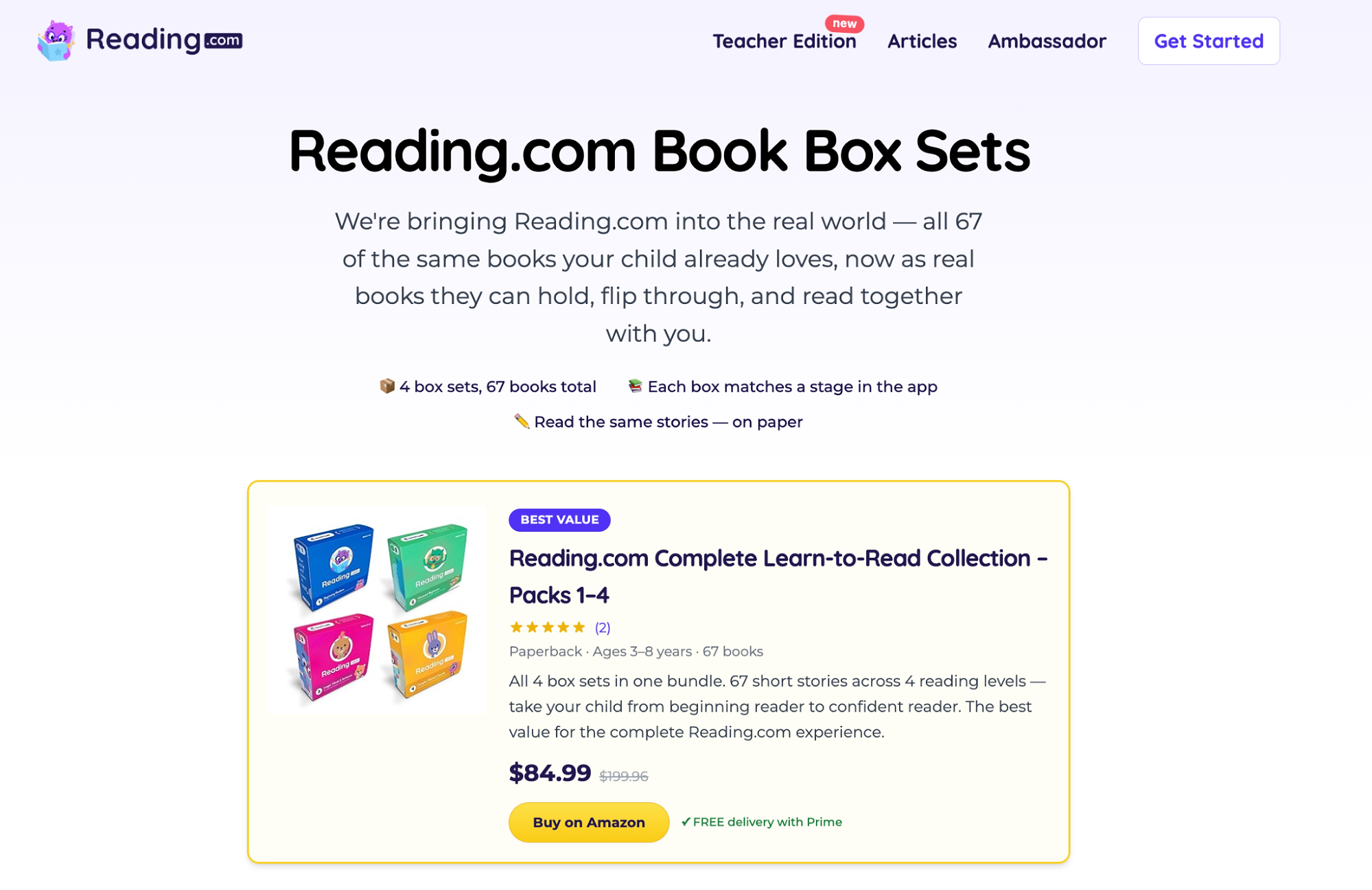
These had two purposes:
- People were asking for them: parents often re-read the books with their children, and they liked the idea of a physical book to hold rather than doing everything on a screen
- Amazon is additional exposure: a new platform, new reach, and a potential way to get discovered by people who never would have found the app
Two birds, one book!
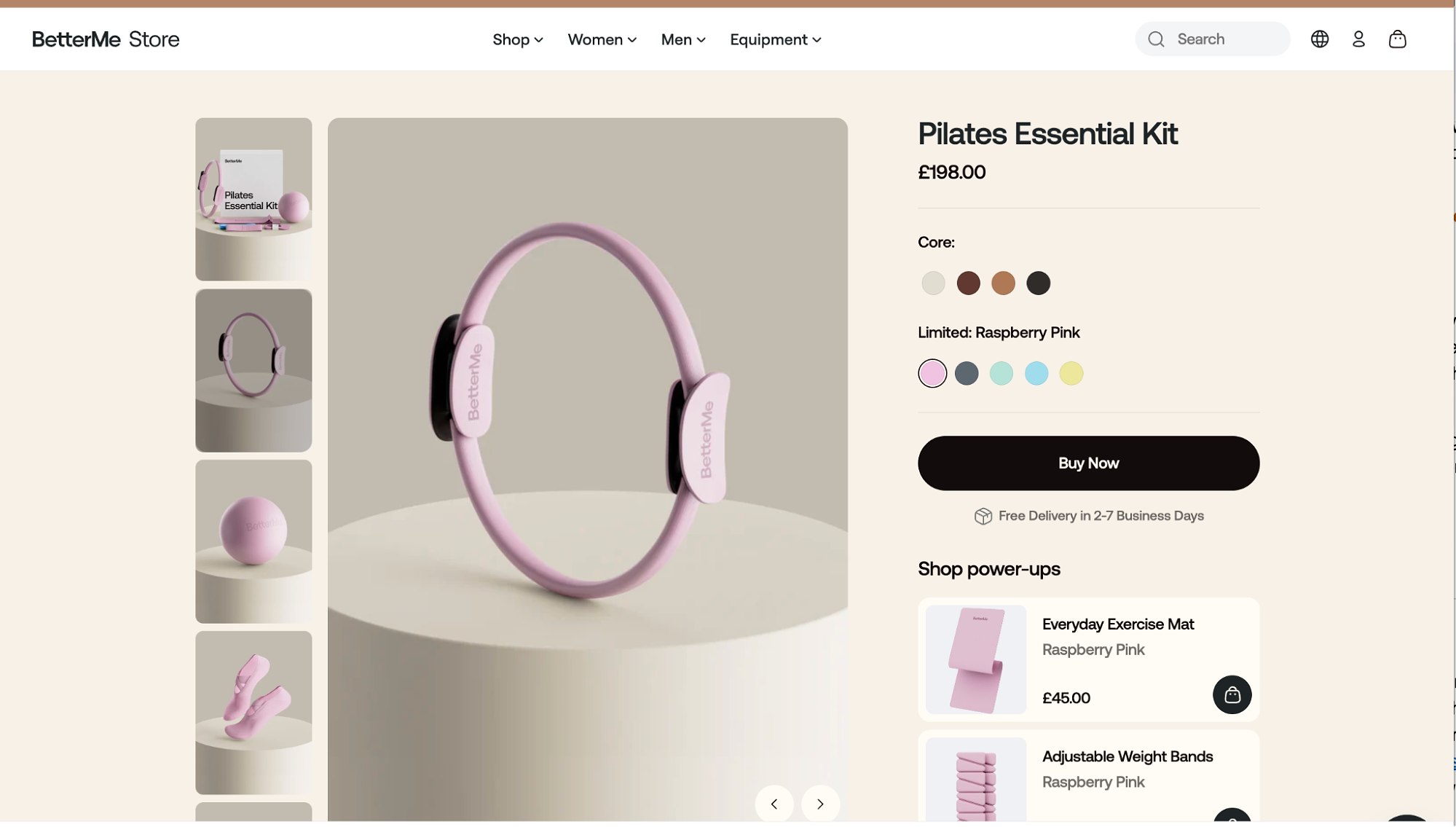
Another great example is BetterMe, a personalized wellness app. As you go through their onboarding flow on the web, you get offered a Pilates kit with all the things you need to use their app. If you're new to Pilates, or at least Pilates at home, you probably don't have much of this equipment, so this add-on can be really valuable. And if you do, it’s an optional extra rather than a must-buy.
Model 3: Physical as part of the core offer
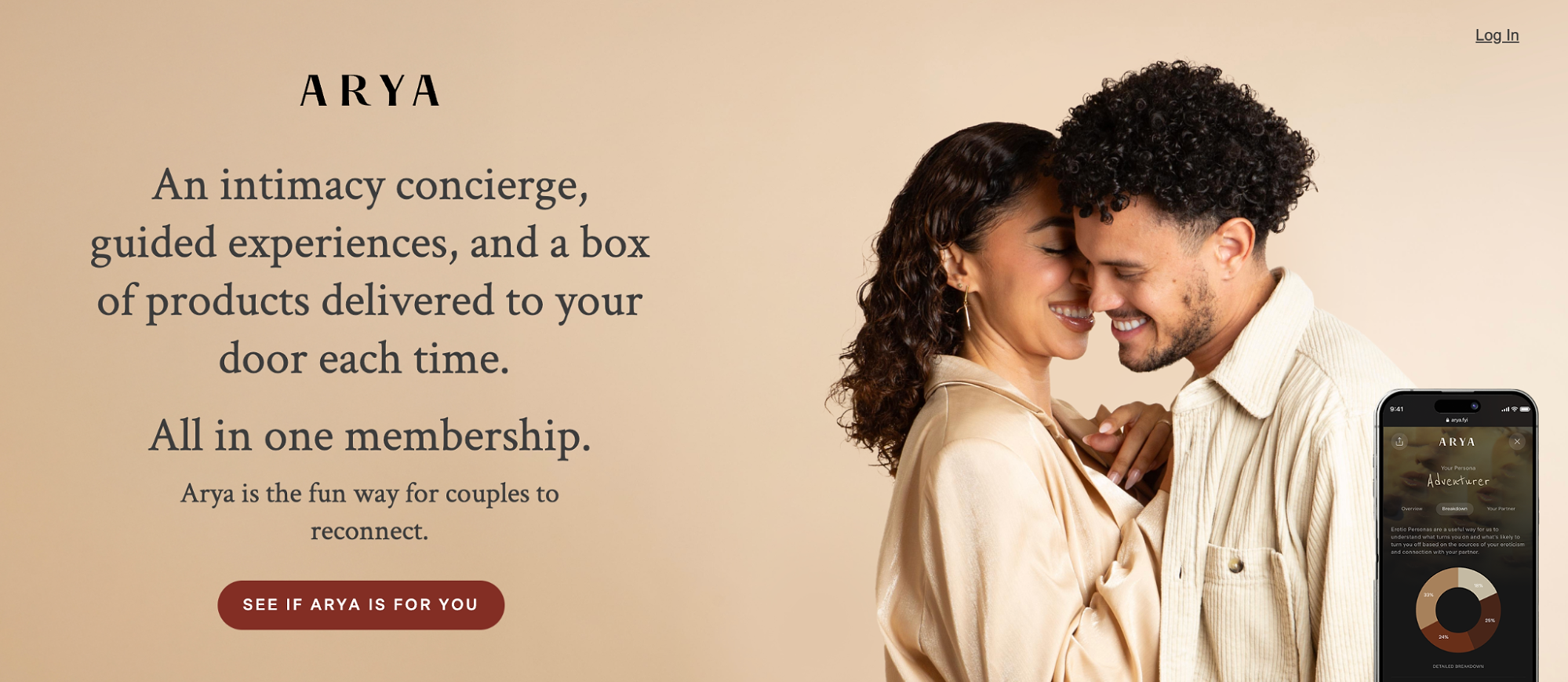
Here is where the lines start to blur. The app still often has value by itself, but the physical is a huge part of the offering. Arya, an intimacy concierge app, is a great example: you get a box of products delivered, and then the app provides guidance to help you through it all, with instructions on how to use them.
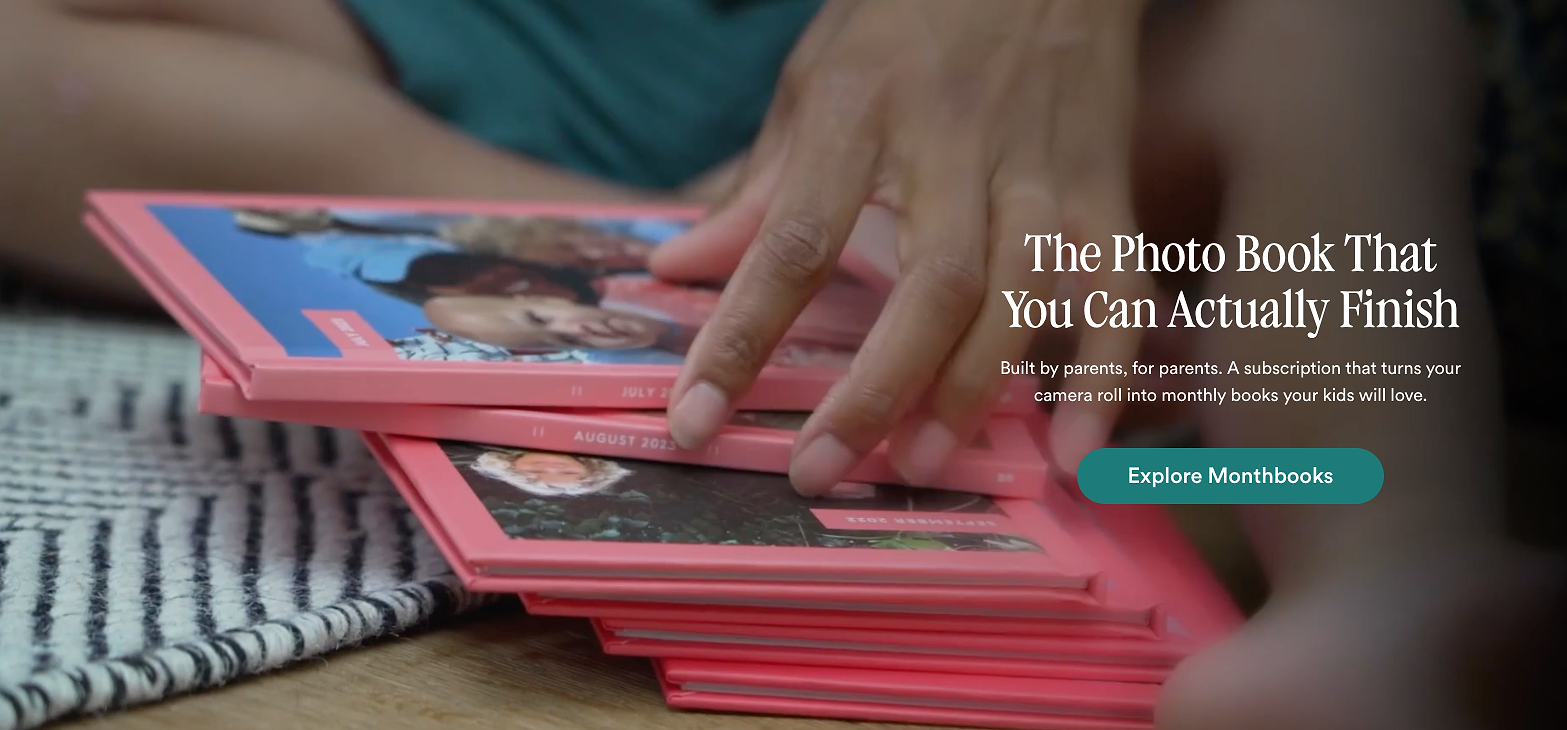
Another example is Chatbooks, which turns your camera roll into monthly photo books. The lines are blurry here: is it a subscription app or a photo book subscription? I’d argue the app is the key part because their value proposition is the ease of turning your camera roll into books and the app is the key way they do that:
Yet their subscription in the app is for a number of books per year, making the lines very blurred:
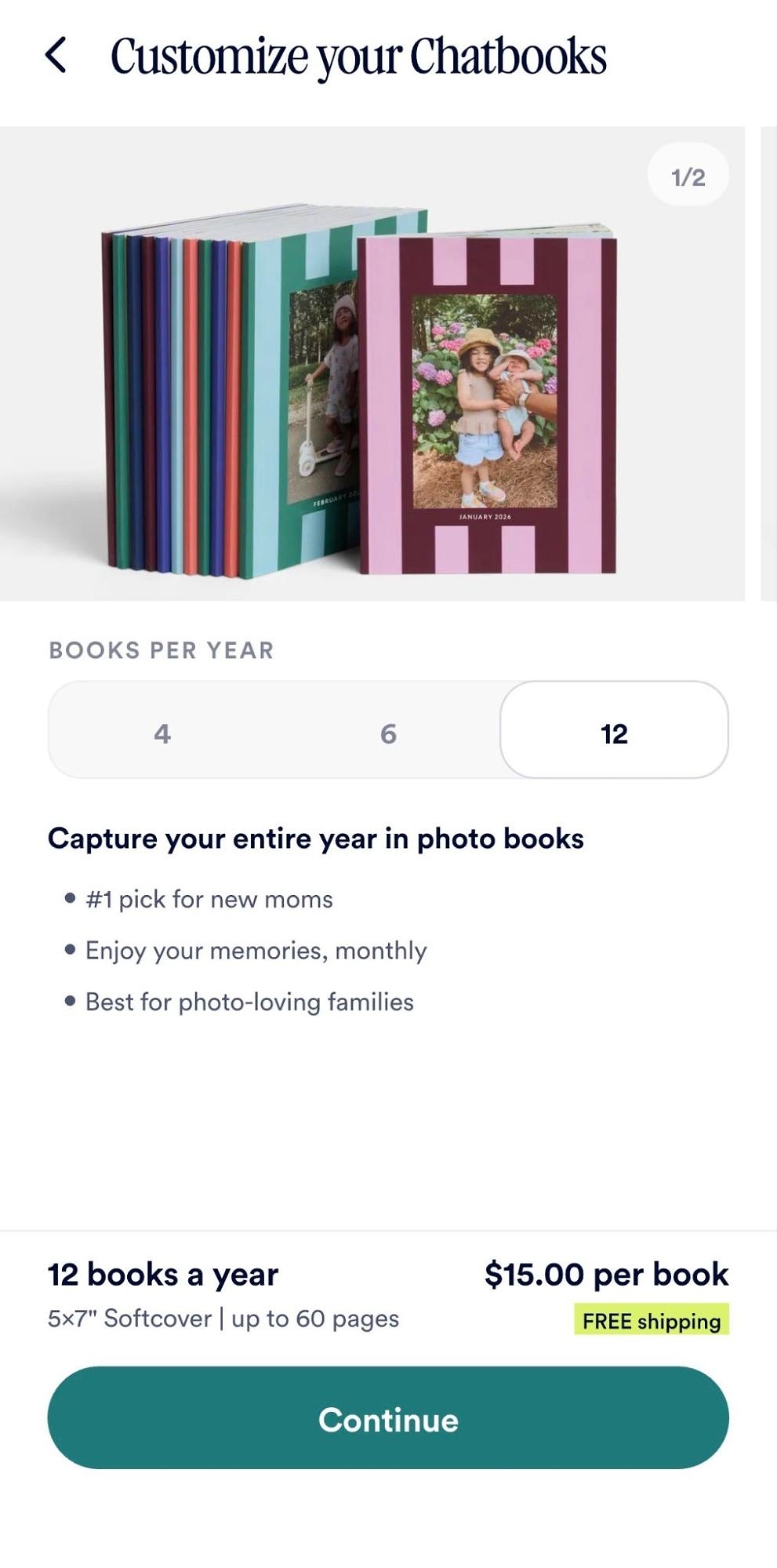
In this model, physical goods are no longer an add-on but are becoming a bigger part of your business. Arya’s app value comes from the box that is delivered and from guiding you through it. Chatbooks' value is turning your photo roll into a photobook. Neither works without the physical goods. You'll need more of an operational system in place as a result because it will be near 100% of your subscribers ordering/receiving physical goods, vs. what could be a few percent for model 1 or 5–20% for Model 2.
Then there are the apps where the hardware comes first.
Approach 2: Hardware first — the device came first
One of the toughest things about physical goods is their margins. I've seen the margins of e-commerce and of apps, and they are night and day.
Peloton shares this openly on the hardware side: even though we could all agree their equipment is expensive, they only made a 13.4% gross margin on hardware in Q4 FY26, compared to 73.6% on their subscription. Hugely different. This is where expensive-to-make hardware boosts its value with a hardware subscription.
Model 4: Hardware-first with subscription attached
In this model, you buy the hardware first, then add a subscription. My plant care app and sensors from Willow follow this model. Likewise, Peloton fits into this bucket. Another popular hardware-first product is the Oura ring, where most revenue comes from the hardware (roughly an 80/20 hardware-to-subscription split), but the subscription is a growing part of the model.
Another good example is Skylight, a digital photo frame. The irony is that on their landing page, they promote that no app or subscription is needed.
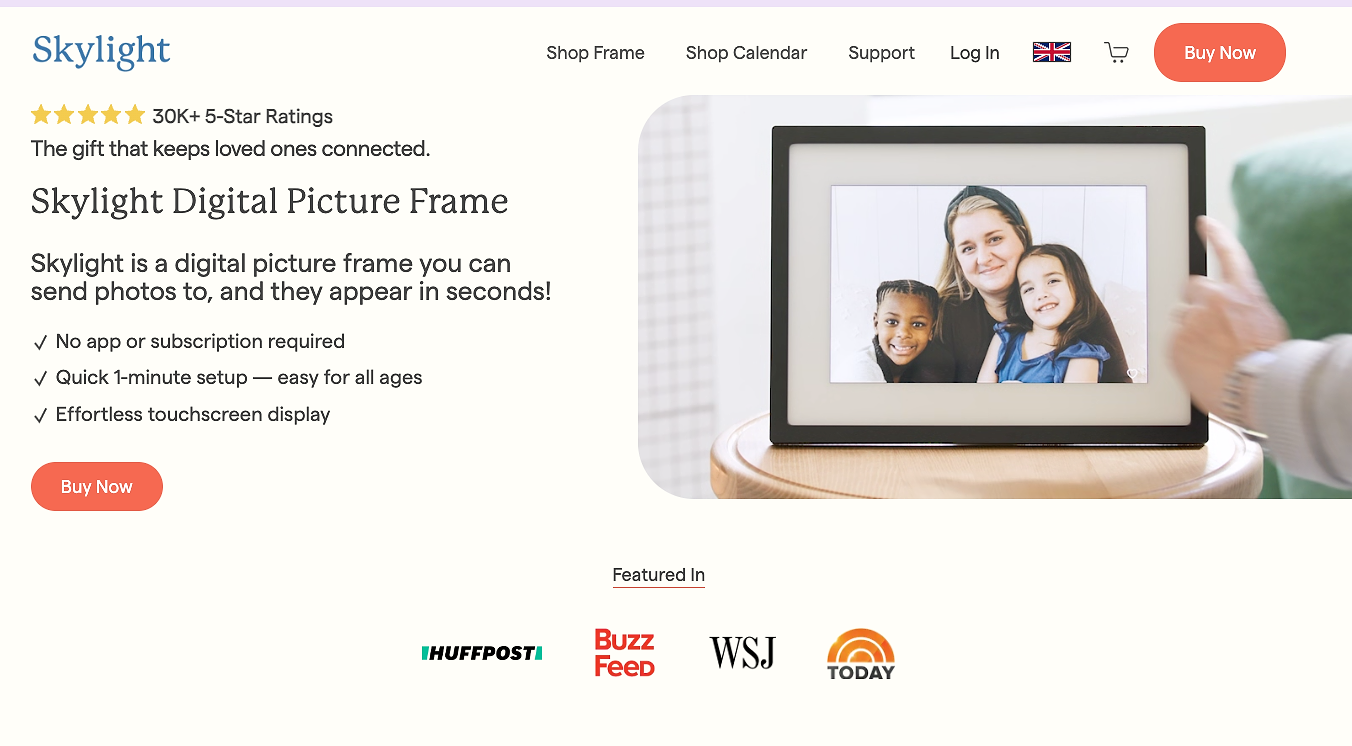
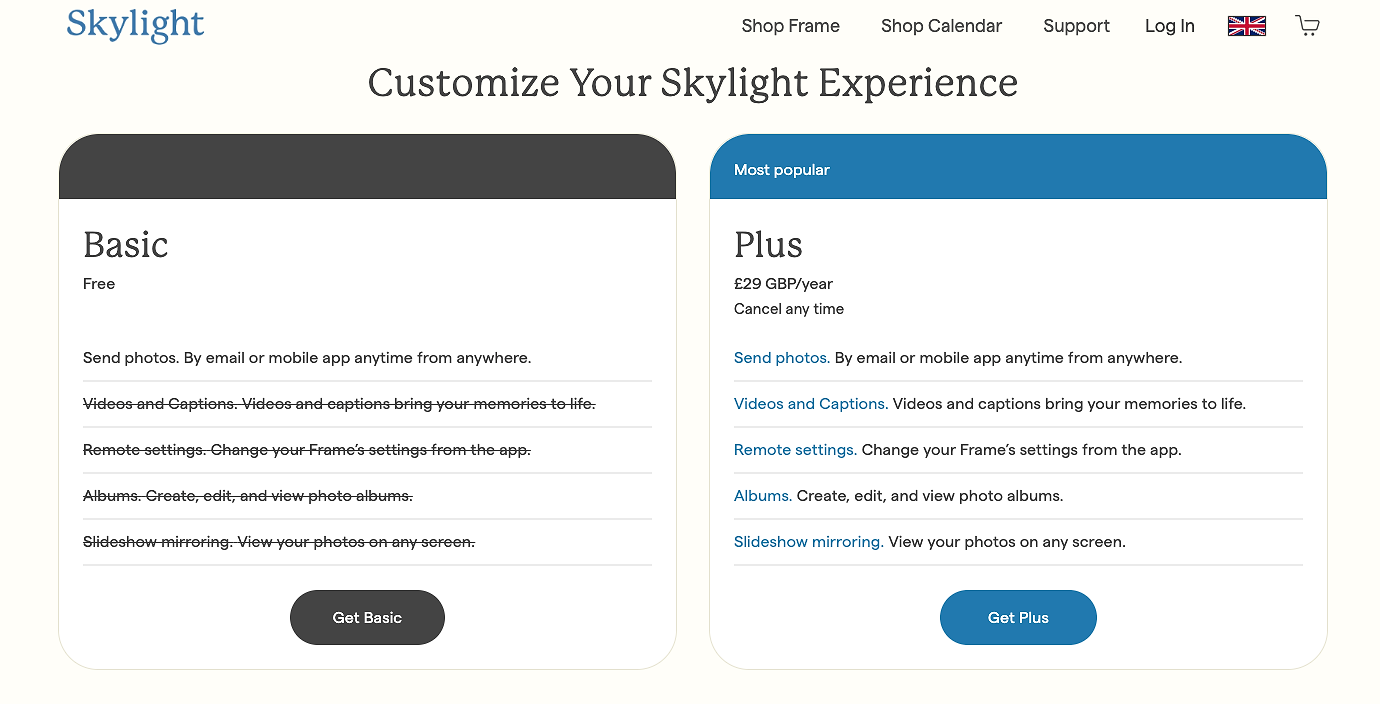
And it's true, you can use the frame without a subscription. But the app allows you to do so much more, such as:
- Sharing videos and photos
- Managing remote settings via the app
- Creating photo albums and mirroring slideshows on any screen
Their digital calendar product goes further, with additional app-based tools such as meal planning and chore tracking. You buy the frame first, but the app provides the extra value. And according to the numbers their founders shared on the Sub Club podcast, while the app is only 10% to 20% of their revenue, it's about half their profit.
They keep their fairness principle in mind, though: what the customers bought the device for — displaying digital photos — stays free.
Model 5: Membership-native hardware
The most integrated model for combing offline and online products is membership-native hardware: you aren't paying for the actual hardware, just for the subscription.
This is the Whoop example, where 85% of revenue is the subscription. You get the device for free as long as you have a subscription. About 10% of their revenue is from selling accessories, like paying for a specific band: physical goods layered on top of a membership core.
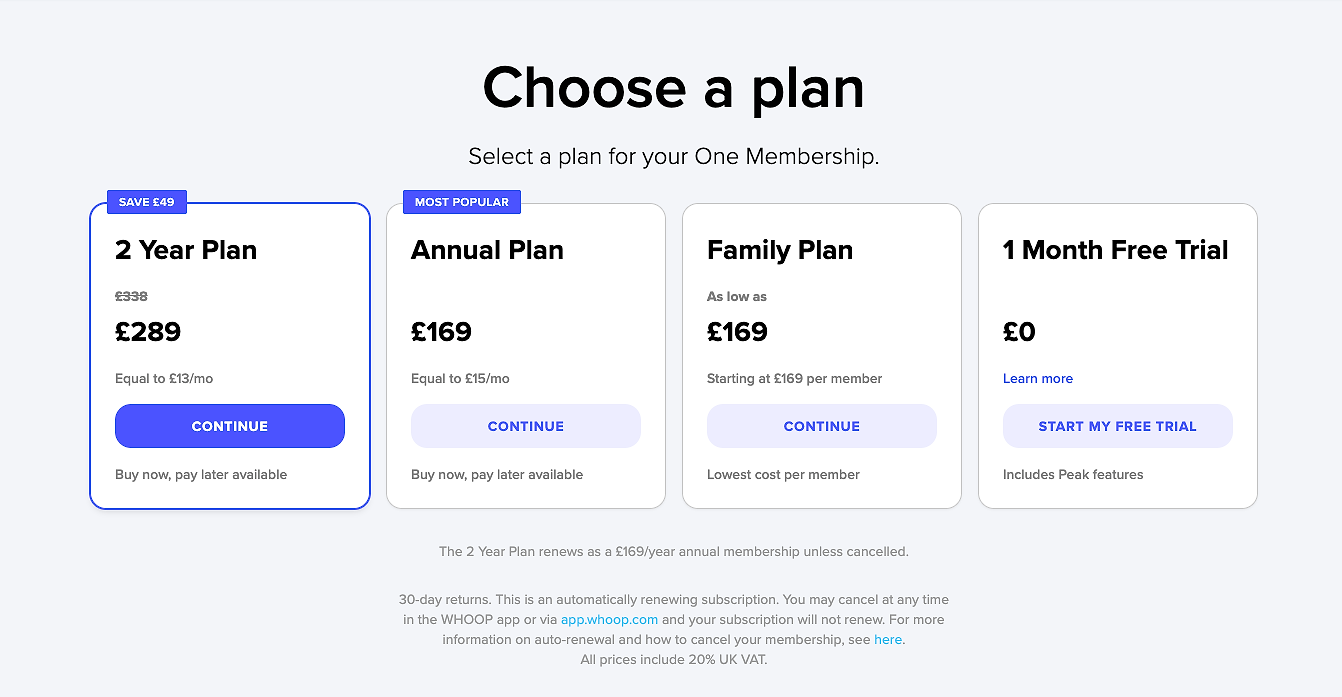
For this model, if you stop paying, the device either stops working or has to be returned, but that's the deal you knowingly signed up for. Nothing you were originally promised is taken away.
This model is arguably the hardest to get right, because hardware typically runs on slim margins. Look at Mirror: the interactive fitness mirror cost around $1,500 upfront and still required a monthly subscription. Once the pandemic’s at-home fitness fad faded, demand dropped off. Lululemon, which had acquired the company for $500 million in 2020, shut it down in 2023.
That's a simplification of the story, of course. The pandemic-fueled boom in at-home fitness inevitably faded — we saw the same thing happen to Peloton — but it also highlighted just how difficult it is to build a sustainable business around both hardware and subscriptions. Tellingly, Lululemon then partnered with Peloton to offer digital fitness content instead. It kept the subscription and dropped the hardware.
Where do hardware subscriptions go wrong?
It's not just the high cost of hardware that can make this tricky to get right. It's the fairness question we started with. A hardware subscription feels fair when customers can keep using what they bought without paying again, unless ongoing payment was clear from day one. But there are a few cautionary tales to consider when planning your approach.
1. Grandfather with double care
Take the Snoo, a $1,700 smart bassinet. It's an expensive purchase for something babies typically use for only six months, so many parents justify the cost knowing they can resell it afterward. When Happiest Baby added a $20-per-month premium subscription in July 2024, it tried to handle the change fairly: anyone who had already bought a Snoo kept those features for free.
Except that's where things fell apart. The grandfathering applied to the original owner's account, not the device itself. Overnight, a used Snoo no longer came with the same features it had the week before. Secondhand buyers suddenly had to pay extra for functionality the product was advertised to have, while original owners saw the resale value of their bassinets fall. Technically, nothing had been taken away from existing customers. In practice, though, the promise of ownership had been broken — just one transaction downstream.
The lesson: if you change the deal, let existing customers keep the old one for as long as possible. And don't just think about your direct customers either. If your product has a healthy secondhand market, price or rule changes may have an additional negative backlash.
2. Never break a core function
Another cautionary tale is Whoop. For years, the company advertised free hardware upgrades after six months of membership. But when it launched the Whoop 5.0, members suddenly found that upgrading required either a 12-month membership extension or a $49–$79 fee. After widespread backlash, Whoop reversed course. The episode showed that fairness isn't just about the fine print; it becomes anchored to whatever promise customers have come to expect, even in a subscription-first business.
The lesson: if you're selling a physical product, customers should always be able to keep using it without paying another penny, unless ongoing payments are clearly part of the deal from day one (like in Model 5).
3. Price under the disgust line
Skylight lived this one. They doubled their Calendar subscription from $39 to $79 with minimal impact on attach or retention. $99 penciled even better on paper, but their customer research put it firmly in "not worth it" territory, so they stopped at $79 and left the money on the table, as they shared on Sub Club.
There's a difference between what will maximize revenue and what will build lasting trust. I've always said that high prices come with high expectations, but they also raise the stakes: when someone has already paid a premium for a physical product, they're far more likely to feel cheated if they're asked to keep paying to unlock or maintain its core value.
The lesson: In theory, you can often charge more by treating the hardware and the subscription as separate products. In practice, bundling them too aggressively can damage the relationship with your customers. Sometimes it's worth leaving a little money on the table in exchange for stronger retention, better word of mouth, and the reputation that comes from treating customers fairly.
4. Communicate what the money funds
Oura learned this one the expensive way. In 2021, they put previously-free metrics behind a new membership and asked people to trust that the fee would fund ongoing development, before showing any of it. Even with free lifetime memberships for Gen2 upgraders (which some rumours say were the ‘cost’ of the change), the move drew backlash. Five years later, the same subscription barely raises an eyebrow, because now their CEO can point at receipts: 14 new features and two integrations shipped in a year, framed explicitly as what the membership pays for.
The lesson: A subscription for a hardware product feels fair if the money visibly maps to something being made or added (e.g. storage, data, calculations) or the improvements it enables. If you can't point to what shipped or is improving, users may question it.
Note that with all of this, the takeaway is not ‘don't do physical goods.’ It's really ‘think through all the levels of fairness and what the expectations of your customers are’. And keep these four rules in mind.
The e-commerce economics app people underestimate
A final consideration before you go down this route: keep in mind what it's really like to run an e-commerce business. I've worked closely with so many e-commerce founders and know the horror stories of running out of stock, high returns because of issues, couriers letting you down, and more.
There's a reason I love apps — and only work with apps these days: none of that, and all of the data.
In exploring this world, keep in mind what the margins look like. They will often be far lower than digital subscriptions. The risk and work around returns, inventory, and stock management is huge, and so are the cost and effort of building up fulfillment.
We haven't even touched on the technical setup of it all, with many apps going down the route of either building a Shopify store or working with a third-party distributor. (You can use tools like Stripe on this side too, but it's worth exploring the setup upfront.)
I believe the most successful apps win with a physical product when it fits the experience, gets your most valuable customers to spend even more with you, and builds retention loops.
Five questions to get you started
So, are physical products right for you? Which approach should you consider? These are the five questions to ask yourself:
- Do your superfans already ask for merch? (Model 1 is permission, not strategy)
- Is there a physical object that would make your digital product work better? (Start at Model 2)
- Would your subscription survive shipping delays? (Go to Model 3)
- If you sell hardware: what did the customer buy, and does it work forever without you? (Model 4)
- Could you afford to give the hardware away? (Model 5 is a financing model, not a product decision)
I never expected to be attached to a plant sensor. To be curious what Downstairs Denise had to say about the lighting situation, to experiment with placement, or even to shower with a plant. I also never expected to be happy to pay a subscription on something that’s already doing its job. But I am, because my little sassy plants keep showing me that the subscription adds extra value: I get to track them over time and see the impact of learning and taking better care of them.
I don't feel obliged to subscribe. But as I buy more sensors, it adds value. It all comes down to fairness and thinking through (from your customer’s perspective) what they shouldn’t or shouldn’t ‘need’ to pay for. I shouldn't have to pay for an app when receiving a gift, and I don’t. But I want to pay to learn, to nerd out on all my plants' data, so I’ll happily pay. The offer was worth it for me as a customer. This perspective is where you need to start.