

In the early 2000s, Amazon popularised a product development framework that has since become Silicon Valley folklore: the Working Backwards method. Before writing a single line of code, Amazon product managers were required to write the press release announcing the product’s launch. The logic was simple but ruthless: if the press release wasn’t compelling, the product wasn’t worth building.
Today, consumer attention spans have shrunk from the length of a newspaper article to the length of a TikTok video. As growth advisor Phil Carter noted in a recent episode of the Sub Club podcast, the Amazon memo has evolved for the AI era:
“Now instead of a news article, it’s a Tweet or a TikTok video,” Carter explains. “It is really helpful to start with the end in mind because the reality is no matter how good your product is, if people aren’t willing to give it a shot, it’s not going to matter.“
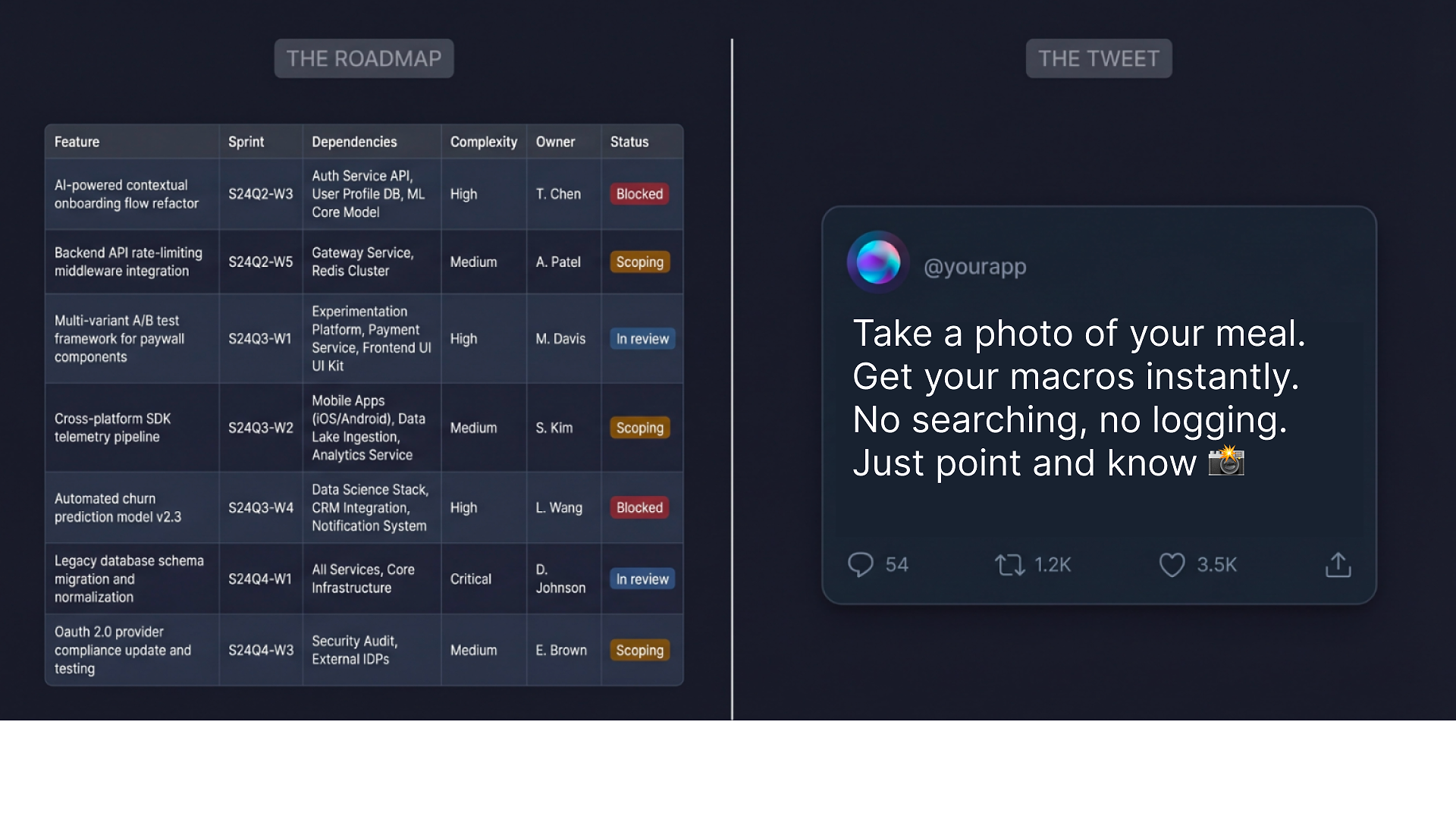
For modern subscription apps, especially those leveraging AI, the new forcing function for product development is this: write the Tweet before you build the feature.
The ElevenLabs approach to feature launches
This isn’t just a theoretical exercise. It’s how some of the fastest-growing consumer AI companies actually operate.
Take ElevenLabs. In a separate Sub Club episode featuring their mobile growth leads, the team revealed that their product specs often begin as a literal Twitter thread. Before building launch assets, landing pages, or writing code, they ask one question: can the value of this feature be explained clearly in a Tweet?
If the answer is no, it’s a red flag. Writing the narrative first forces clarity. It prevents engineering teams from falling in love with a technically-impressive feature that users won’t actually care about. By starting with the Tweet, ElevenLabs ensures every feature they ship has a built-in hook for organic distribution.
The TikTok filter: demonstrability is distribution
This concept extends beyond X (formerly Twitter) to video-first platforms like TikTok and Instagram Reels. In fact, visual demonstrability is arguably the most important attribute a new feature can have.
“It’s almost a good filter when building products,” says Sub Club host David Barnard. “Would this make a good TikTok video?”
Consider the rise of Cal AI. In a crowded health and fitness category dominated by established giants like MyFitnessPal, Cal AI broke through by building a product experience that was inherently viral. Their hook was entirely visual: take a photo of your meal, and the app instantly calculates the macros.
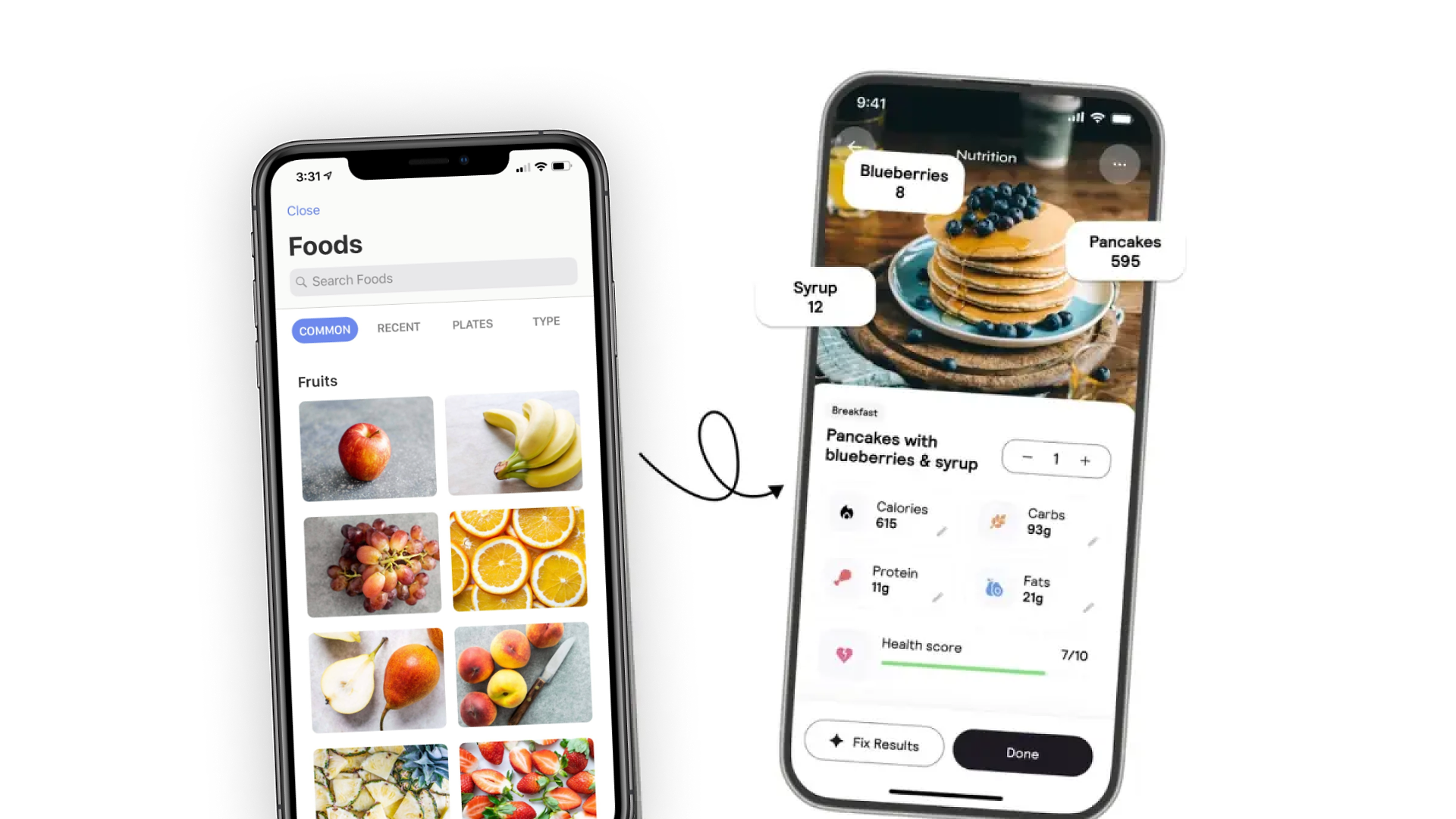
Is machine vision calorie tracking perfectly accurate every time? No. But as a product experience, it’s magical. More importantly, it’s demonstrable in three seconds. That demonstrability fueled a massive wave of user-generated content (UGC) and paid ad performance, propelling the app’s rapid growth.
As Joseph Choi highlighted in another Sub Club conversation about TikTok virality, platforms with algorithmic feeds reward products that can instantly communicate their value proposition visually. If your core feature requires a three-minute tutorial to understand, it will struggle to find organic traction.
Building for the ‘automagical’ moment
The ‘write the Tweet’ philosophy is ultimately about engineering an ‘automagical’ first-time user experience. In an app ecosystem where the average consumer is bombarded with thousands of ad impressions daily, and where hard paywalls often convert 5x better than freemium models, you have a very narrow window to prove your worth.
When you write the Tweet first, you are forced to distill your product’s value into its most potent form. You are designing for the aha! moment; for the exact moment a user realizes your app solves their problem in a way they’ve never seen before.
A perfect example of this is the screen time app one sec. Founder Frederik Riedel built the initial prototype in a weekend to solve his own social media habit. A single, well-crafted Tweet demonstrating how the app forced a deep breath before opening Instagram drove months of sustained organic growth. The product was the marketing.
How to apply the tweet first framework
If you want to implement this in your own product development cycle, start by adding a mandatory section to your product spec templates. Before detailing the technical requirements or user flows, require the product manager to draft:
- The hook: a 280-character Tweet announcing the feature. What is the single most exciting thing about it?
- The visual: a description of the three-second video clip that would accompany the Tweet or serve as a TikTok ad. What exactly is happening on screen?
- The user testimonial: what is the specific, enthusiastic quote you want a user to leave in an App Store review after trying it?
If your team struggles to write these three elements, you likely have a positioning problem — or worse, a product problem.
As Phil Carter puts it, “You need to start with the end in mind, which is how are you going to get your first hundred or first thousand users? And part of that is writing the Tweet upfront or figuring out what the TikTok video needs to look like upfront.”
In the AI era, shipping fast is table stakes. Shipping features that actually resonate requires clarity. So next time you’re debating a feature on your roadmap, don’t ask if you can build it. Ask if you can tweet it.