
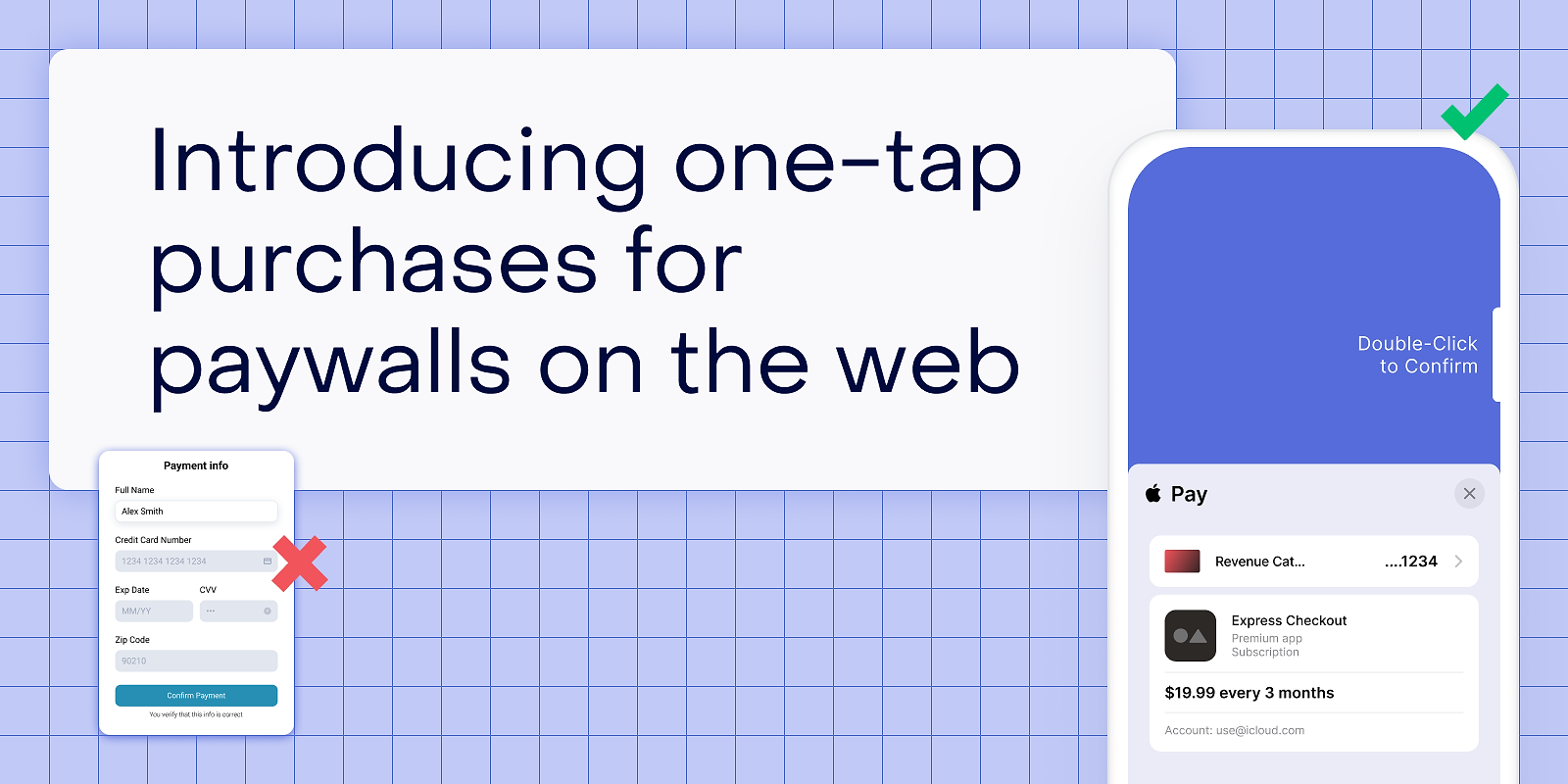

Your customers already decided to buy.
Checkout is where too many of them slow down, hesitate, or drop off.
Express Checkout adds a native wallet purchase button directly to your paywall when it’s shown in the browser, so customers can complete a purchase in one tap without being sent to a separate checkout page.
Checkout slows customers after they’ve already decided
By the time someone reaches your paywall, the work is mostly done. They understand the value, they’ve accepted the price, and they’re ready to move forward.
Then the flow asks them to leave.
They wait for a checkout page to load, choose a payment method, re-enter information their device already knows, and confirm a decision they already made. None of those steps build confidence or clarify value. They only introduce delay.
Checkout doesn’t persuade. It drains momentum at the exact moment it matters most.
Moving the purchase onto the paywall removes a full step
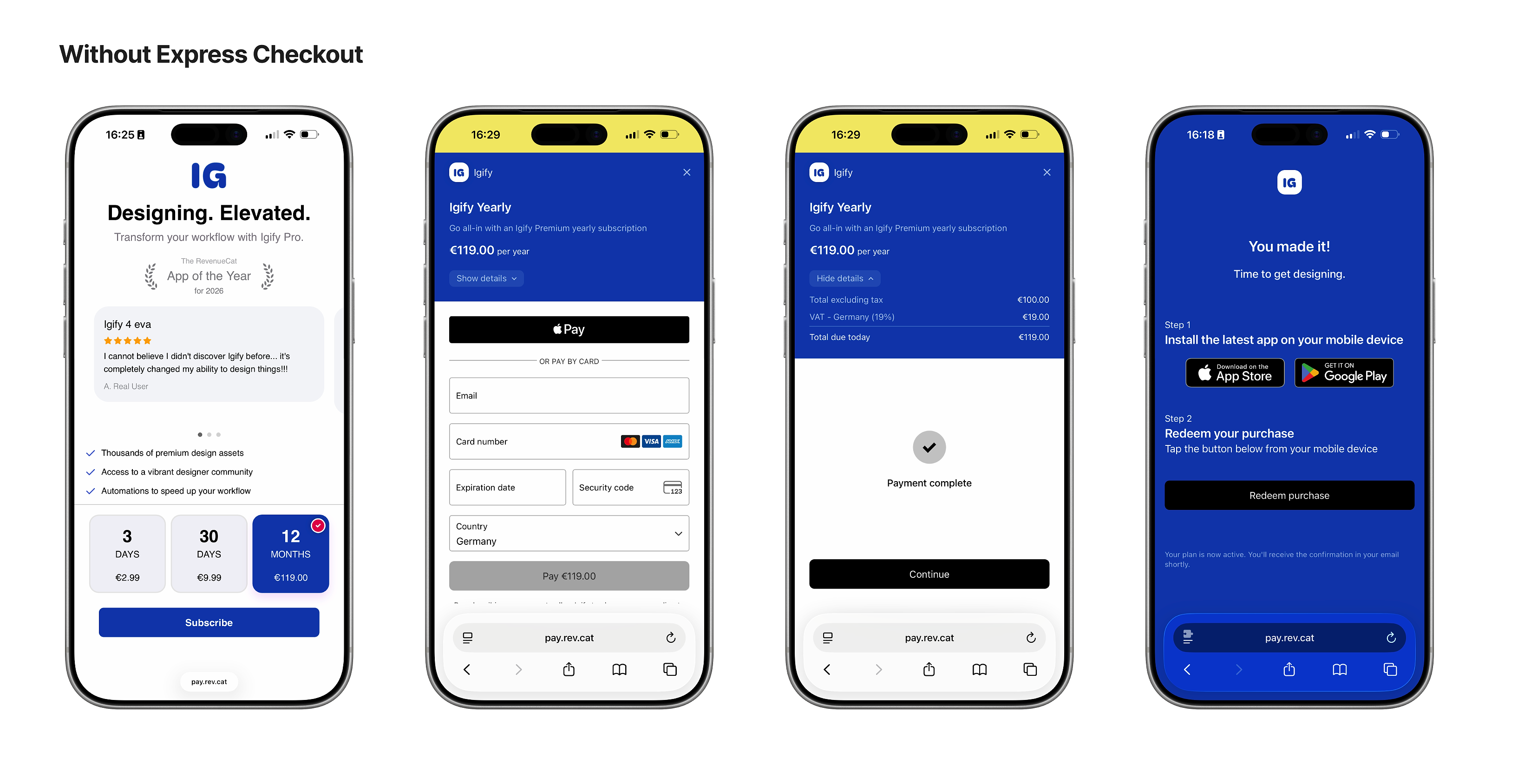
In a typical web flow, the paywall creates intent and hands customers off to another page to finish the purchase.
With Express Checkout, the purchase completes where the decision happens.
Customers tap a native wallet button on the paywall and the transaction is done. There’s no redirect, no form entry, and no extra decision between “yes” and “paid.”
That change removes an entire page from the funnel and several chances to abandon. It isn’t a visual tweak or a copy experiment. It’s a structural improvement to how purchases work in the browser.
What Express Checkout does
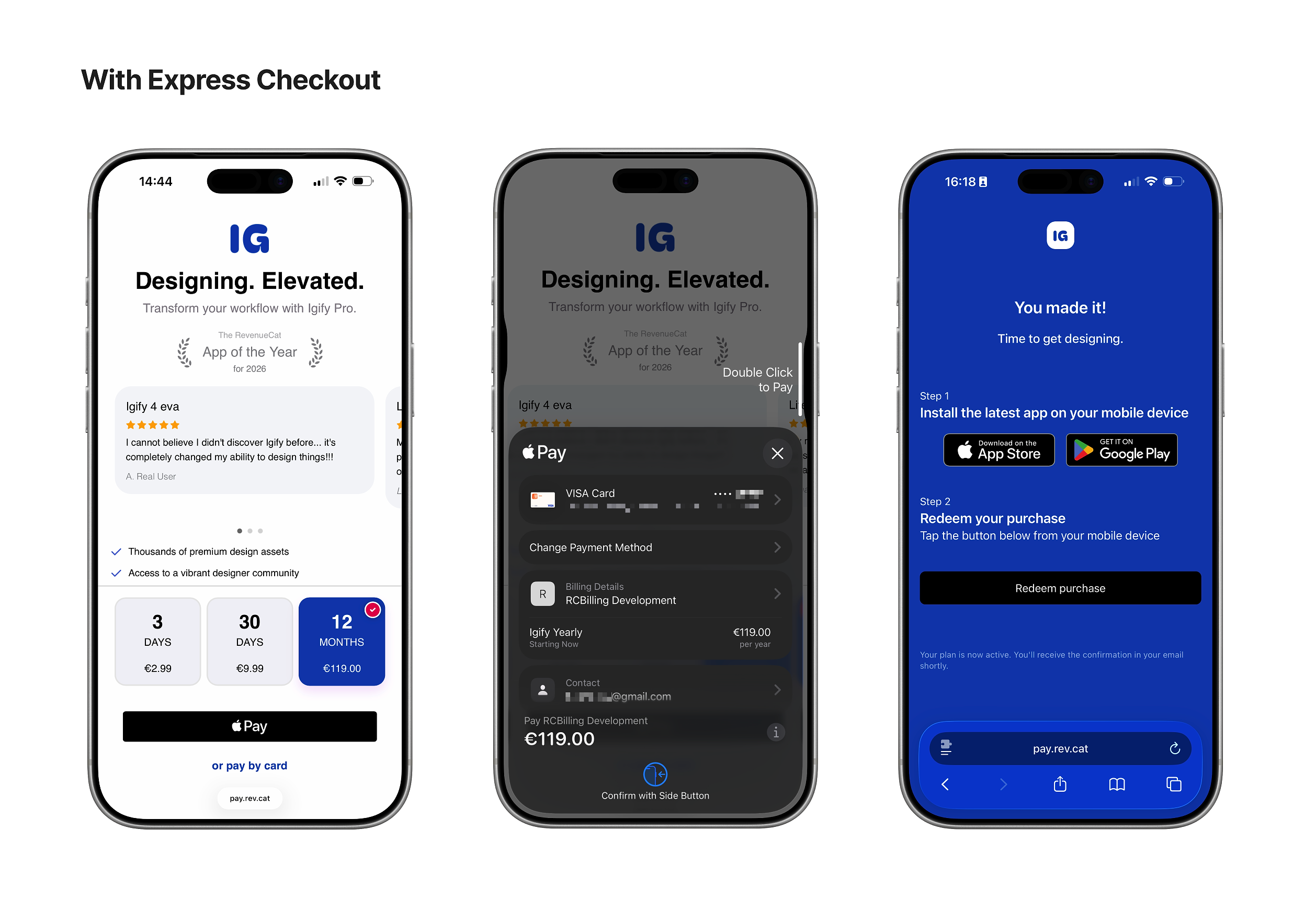
Express Checkout adds a native digital wallet button directly to your paywall when it’s shown on the web.
The component automatically renders the right option for each user, such as Apple Pay on iOS or Google Pay on supported Android devices and browsers. When a customer taps it, the device’s native payment prompt appears immediately and the purchase completes without going through the standard checkout flow.
On mobile, this feels closer to an in-app purchase than a traditional browser-based flow. The most failure-prone step in the journey disappears.
See the docs for configuration steps and wallet requirements.
It works for web, app-to-web, and web-to-app flows
Express Checkout improves conversion anywhere a paywall is the moment of decision.
Pure web entry
A customer taps an ad, a social post, or a link in your newsletter and lands on a paywall in the browser. They read the offer, decide it’s worth it, and complete the purchase immediately using their device’s native wallet. There’s no detour into checkout and no quiet moment where a new page loads and the impulse fades.
App-to-web completion
A customer starts in your app, hits a paywall, and finishes the purchase on the web. Instead of landing on a checkout page that feels disconnected from the decision they just made, they arrive at a paywall in the browser that mirrors the offer and lets them complete the purchase in one tap. The transition feels continuous rather than transactional.
Web-to-app journeys
A customer discovers your product on the web, purchases through a paywall in the browser, and then continues into the app. Even though the journey spans platforms, the purchase step stays fast and familiar. The paywall acts as a clean entry point, not a temporary stop.
In every case, the benefit is the same. When customers reach your paywall in the browser, Express Checkout removes unnecessary steps at the exact moment they’re ready to buy.
Standard checkout stays available automatically
When a native wallet is available and supported on the user’s device and browser, Express Checkout appears on the paywall and completes the purchase directly.
When a native wallet isn’t available, customers see a standard purchase button and continue through the full checkout flow as usual. Both options can coexist, guiding users to the fastest path while always preserving a reliable fallback.
Taxes, compliance requirements, and edge cases are handled behind the scenes. You reduce friction when you can, without ever blocking a purchase when one-tap payment isn’t available.
Full setup details, supported wallets, and fallback behavior are covered in the Express Checkout docs.
Get started
If you’re already using RevenueCat Paywalls on the web, you can add the Express Checkout in the Paywall Builder.
If you’re new to selling on the web, this is the fastest way to offer a one-tap purchase experience in the browser. It works with your existing products, trials, and offers, you’re changing the last step of the funnel, not your pricing model. We’ll share conversion results once teams start running experiments, and this same button also lays the groundwork for more advanced app-to-web paywall flows coming next.