
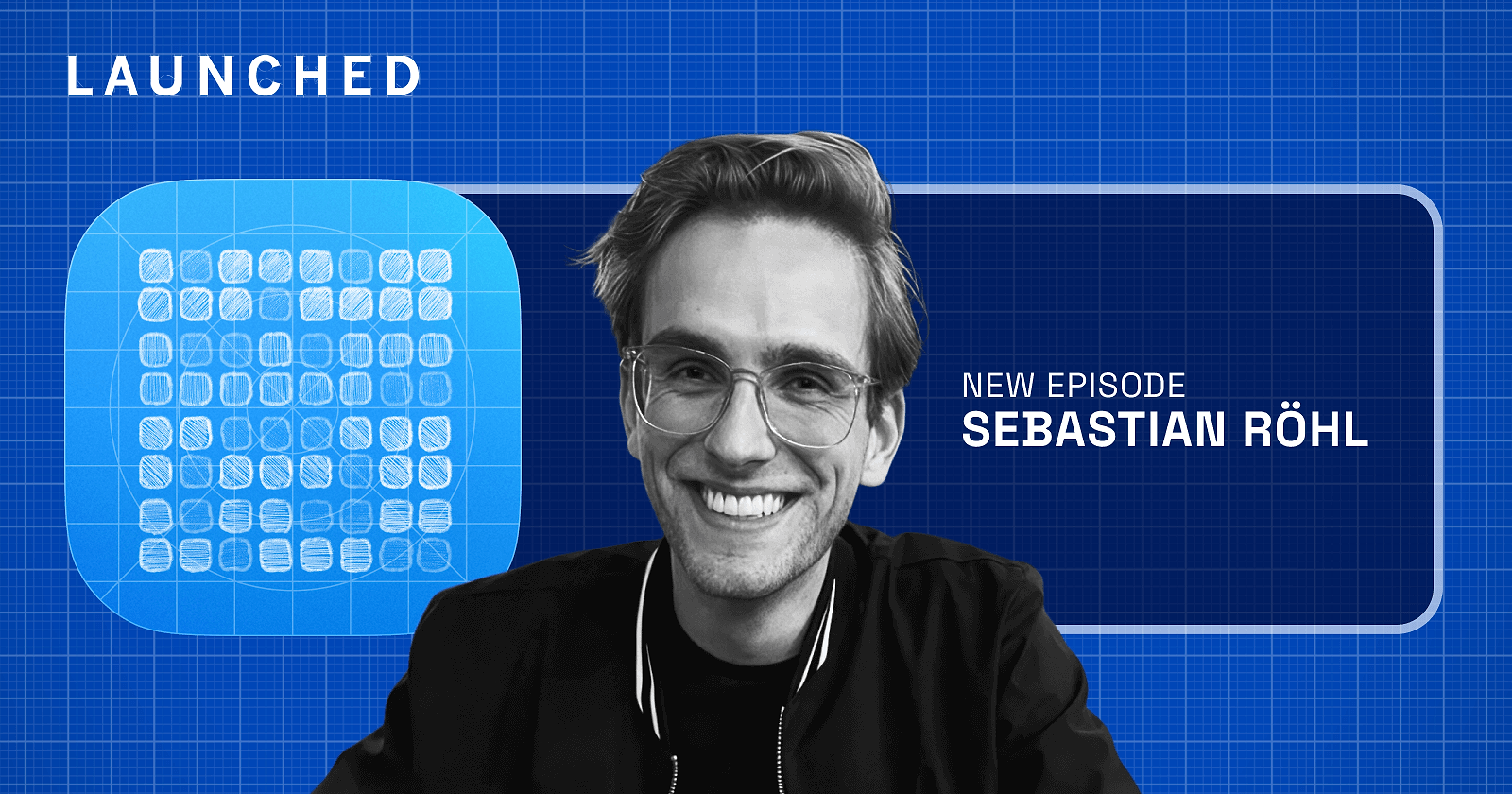

Sebastian Röhl didn’t stumble into success as an indie app developer. He shipped an app that went nowhere, burned out, started again, and only then saw momentum compound.
In the latest Sub Club episode, Sebastian—the indie developer behind HabitKit and FocusKit—walks through the slow, uncertain middle of app building: stalled growth, unclear signals, and the decision to keep going even when nothing looks like it’s working yet.
This isn’t a story about overnight success. It’s a story about persistence, timing, and doing enough of the basics well that growth eventually has somewhere to land.
From a safe job to a self-imposed deadline
After studying computer science and software engineering in Germany, Sebastian took a stable enterprise software job working with C#, .NET, and Angular. The work wasn’t exciting, but it gave him strong fundamentals and exposure to experienced engineers.
At the same time, he was quietly drawn to the idea of building his own business. After three years, he quit without a concrete plan and gave himself a clear constraint: 12 months to make something work.
As Sebastian explains in the episode, he didn’t leave with a polished business idea. He left knowing only that he wanted to build something for himself—and that mobile apps felt like the right medium.
The first app didn’t fail—but it didn’t work either
That first attempt was LiftBear, a workout tracker Sebastian built for his own use. He shipped quickly, skipped beta testing, and marketed it only by sharing progress publicly on Twitter.
The result was discouraging but instructive.
LiftBear attracted a small number of users and eventually settled at around $150 in monthly recurring revenue. It wasn’t dead—but it wasn’t growing, either. After six months of updates and incremental improvements, progress had stalled.
Sebastian describes this period as deeply demotivating. The app wasn’t clearly failing, but it wasn’t giving him any signal that doubling down would change the outcome.
HabitKit started with one visual that resonated immediately
HabitKit came from a much simpler idea: Sebastian wanted a habit tracker that visualized consistency using a GitHub-style contribution grid.
When he shared the first screenshot publicly, the response was immediate. Engagement spiked, new followers arrived, and for the first time, there was clear interest before launch.
That signal changed his energy entirely. He focused fully on HabitKit and released the first version after about two months of development.
The launch was modest by startup standards, but meaningful for an indie developer: roughly $150 in revenue on day one. More importantly, it showed that people understood the product instantly.
Building in public helped early—but wasn’t the long-term growth engine
Early on, building in public played a critical role. It helped HabitKit get its first users, early ratings, and initial momentum. It also gave Sebastian accountability and motivation during the quiet early months.
But the biggest growth moment didn’t come from social media.
Months after launch—after Sebastian had already returned to a four-day-a-week job—HabitKit suddenly began ranking for “habit tracker” in multiple App Store regions, including Germany and the UK. Shortly after, Google Play followed.
There was no viral post, no major metadata change, and no obvious trigger. Sebastian still isn’t sure why it happened. What was clear is that once HabitKit crossed a certain threshold, downloads and revenue accelerated quickly.
This was the moment when earlier work—product quality, reviews, consistency—finally paid off.
Going back to a job wasn’t the end of the story
When the original 12-month deadline expired, HabitKit still couldn’t support Sebastian full time. He returned to his previous company, working four days a week and reserving Fridays for his apps.
That fallback plan gave him stability—and time.
Six to seven months later, HabitKit’s growth was no longer ambiguous. With organic discovery compounding and revenue climbing steadily, Sebastian felt confident quitting again. This time, the decision was grounded in traction, not hope.
FocusKit was about motivation, not diversification
After years focused almost exclusively on HabitKit, Sebastian noticed something else stalling: his own motivation.
Updates became incremental. Public writing felt repetitive. To reintroduce novelty, he started FocusKit, a minimalist Pomodoro timer built natively with SwiftUI.
FocusKit wasn’t created to replace HabitKit or immediately match its revenue. It was a way to learn new technologies, lean into native iOS design, and regain creative momentum.
The launch was intentionally low-pressure. Early revenue has been modest, but the project serves a different purpose: keeping Sebastian engaged, curious, and shipping.
What Sebastian’s journey shows about indie app growth
Sebastian’s story isn’t built around clever hacks or aggressive growth tactics. It’s built around fundamentals:
- Shipping products he personally wants to use
- Sharing progress honestly, especially early on
- Iterating longer than feels comfortable
- Letting distribution compound after the product earns it
Growth felt sudden only in hindsight. In reality, it arrived after months of quiet, compounding work.
🎧 Listen to the full Sub Club episode to hear Sebastian unpack the slow parts, the setbacks, and the decisions that didn’t make sense at the time—but mattered in the end.