
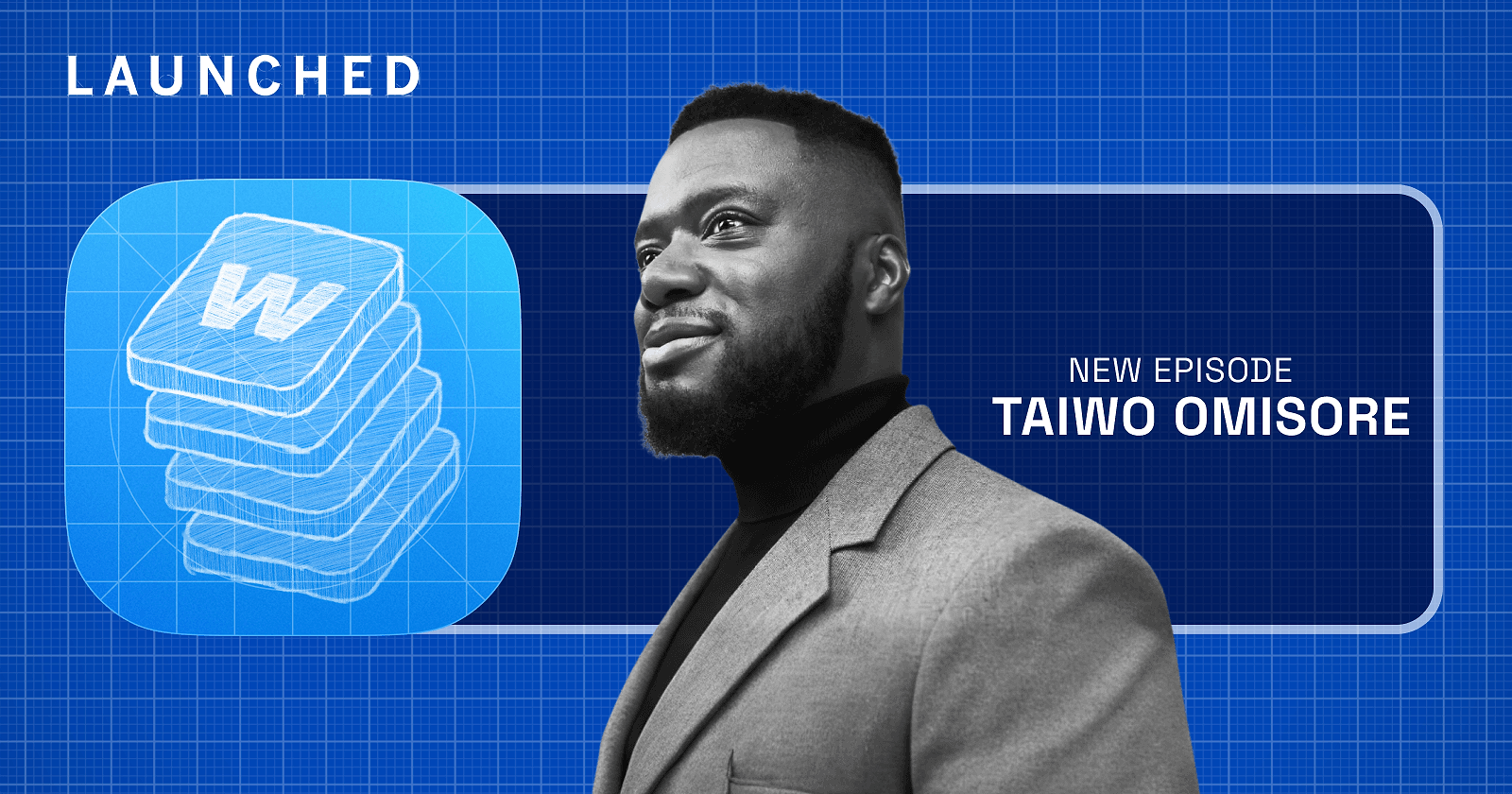

When Taiwo Omisore set out to make mobile games, he didn’t plan on building a business. He simply wanted to make something fun during his long commute. Over time, those experiments turned into a catalog of 15 quirky, joyful, and highly personal apps. One of them, a game designed to be played only once, changed his life.
This week on Launched, we talk with Taiwo about how a side hobby became a full-time indie business powered by constraints, shareability, and unexpected virality.
The app that turned everything around
In 2020, Taiwo released One Chance, a game you can only play once. No retries. No replays. One Chance consisted of 14 quick mini-games, a leaderboard, and that’s it. He shared it quietly on TestFlight and Reddit. Then it started spreading—first in Germany, then globally. Soon, it was featured on the App Store.
What surprised him most wasn’t the downloads but the behavior. People dug up extra devices just to try again. Friends and coworkers turned it into a competition. And the game’s single ad, shown only after gameplay, became a smart trade for attention.
Real users and measurable feedback
Taiwo’s apps are playful, often strange, and always rooted in real-world input. Early on, he handed his phone to strangers on trains for feedback. Later, he’d bring folding tables to public spaces and host multiplayer games live with passersby.
That same openness shaped everything from features to monetization. After One Chance took off, Taiwo experimented with subscriptions in apps like MultiWords and 10 Games. By focusing on simple mechanics, thoughtful UX, and low-friction monetization, he found a model that worked.
Building with care, sharing with joy
Many of Taiwo’s apps have no ads or in-app purchases. Some, like Who Am I?, even inspired physical art exhibitions. Others, like Of The Day, are updated daily with curated content and community submissions. He answers emails personally and celebrates being a one-person studio.
Social media became a way to connect, not just promote. On TikTok, he shares coding sessions, street interviews, and app concepts. One clip even prompted a journal entry by Harry Styles.
A developer-first approach
Today, Taiwo is a full-time indie. But his approach hasn’t changed. He builds fast, ships often, and keeps the focus on fun. His apps aren’t optimized for retention. In fact, some are designed to be deleted. And yet, they continue to find an audience, thanks to the care he puts in them and their contagious charm.
Conclusion
From single-play games to curated journals, this episode captures what’s possible when an indie dev leads with curiosity. Taiwo Omisore shows that with honesty, experimentation, and a little bit of joy, even the simplest ideas can turn into something lasting.