
AI apps earn more per payer than other subscription apps, but they churn faster, and retention varies a lot from one AI app to the next. Yet, our recent research found that AI apps in the top 30% for retention keep as many subscribers as traditional apps, or even more.
You'd think that only applies to obvious habit-building use cases, like utilities, fitness, or diet apps. At least that's what I assumed.
But guess what? It's not that straightforward.
I spoke with Patrick Stuart-Constant, Sociaaal's CEO, and Pablo Sánchez, its founding head of product. Their team is behind Celebs - Celebrity Look Alike, an app that tells you which celebrity you look like.
It's a classic novelty AI use case, the kind where many apps focus on monetizing fast. Sociaaal encourages repeat usage instead: it offers a free trial and lets users reach their first generation before they see any paywall.
The result? Celebs ranks in the 94th percentile for retention among the AI apps in our study. More than half of its weekly subscribers renew after the first week, compared with 37.7% for the median AI app on weekly plans. After a year, it keeps about four times as many weekly subscribers as that median app.
Why Celebs users keep coming back
I was curious about this. How does a celebrity lookalike app with millions of users get people to come back again and again?
Here are the most important bits the team highlighted during our chat:
- Putting the algorithm's quality above everything else. Sociaaal built a strong matching algorithm and prioritized its quality over any growth hack. Because the result is fast and accurate ("in one second you get someone that looks like you"), people keep using it. A week later, they're out with friends and do a few new generations. A month later, it happens again.
- Giving people ideas for what to try next. Sociaaal has tested guiding converted users on what to try next, like taking a photo with their grandma or with friends at school. According to Pablo, many people don't know what else to use the app for, and prompts like these can work well.
- Removing everything between the ad and the result. The team behind Celebs refused to add a long onboarding with email collection, and the tests backed them up. Now people get their first generation right away, then see the paywall offering the free trial.
Pablo sees the simplified experience as one of the big reasons Celebs retains so well:
"We simplified the funnel, and the core feature is super good. We really let the user go deeper and try the app before having any friction."
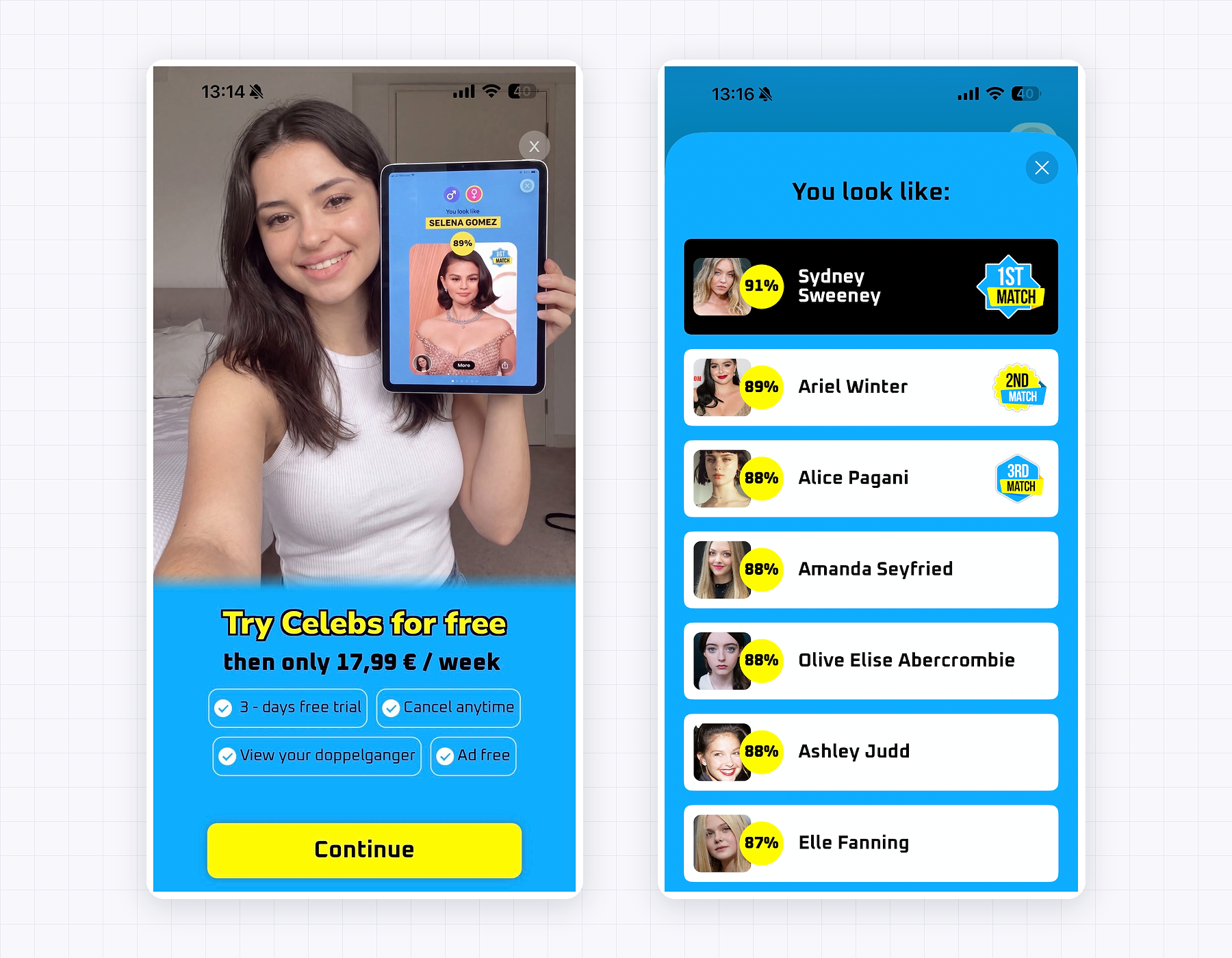
The app looks simple, but that took a lot of work.
"That simplicity is a result of years of testing with hundreds of tests, with millions of users going through these different flows."
How Sociaaal runs experiments
A big part of that work is iteration. The team tests continuously, knowing that most hypotheses won't win on the first attempt.
That's why many parts of the app are designed parametrically: instead of a fixed screen design, elements such as layout, imagery, wording, bullet points, CTAs, and trust elements are variables the team can change and test independently.
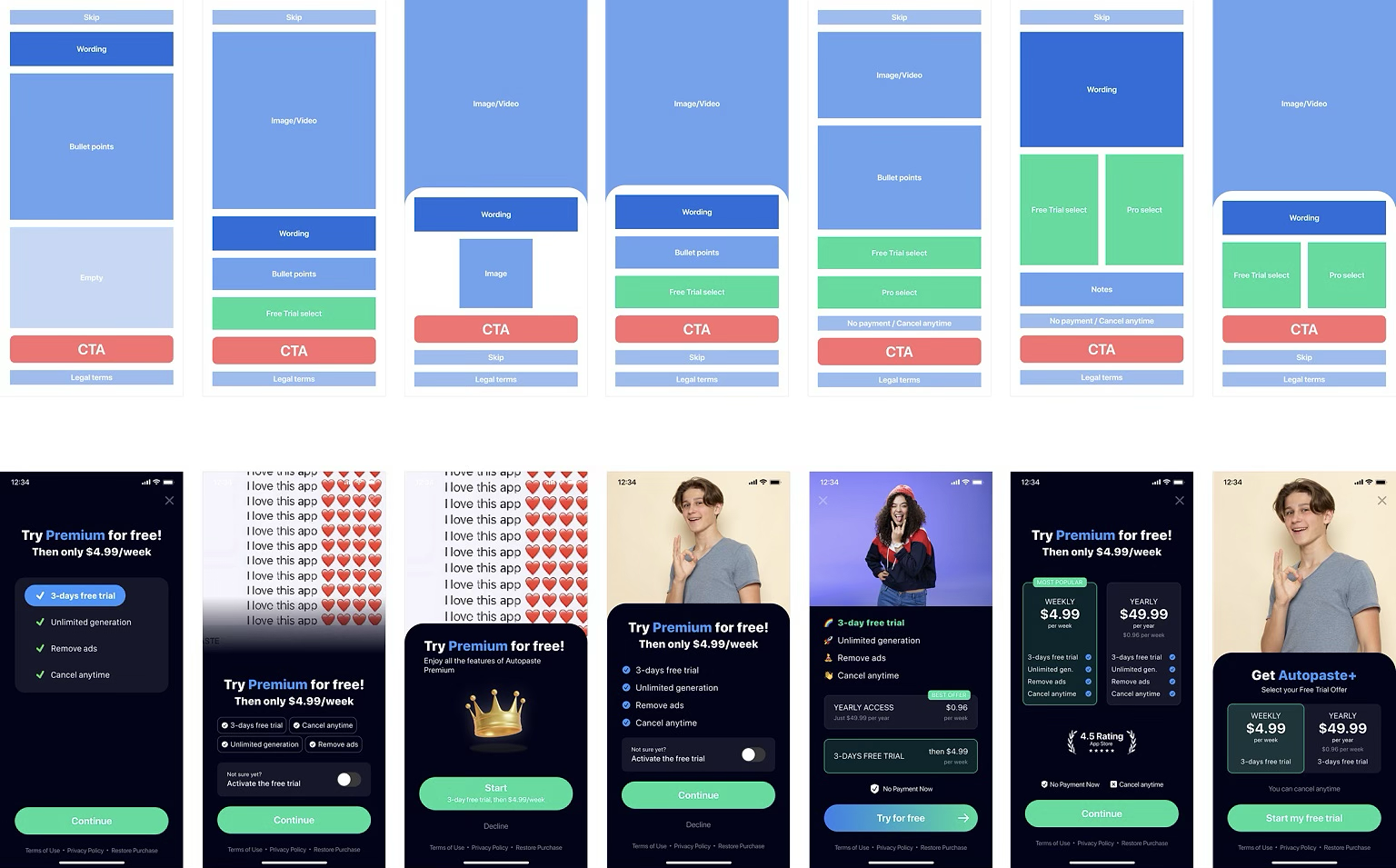
New hypotheses are first tested on smaller cohorts in secondary geographies, and only promising variants go up against the existing baseline. It's also partly a volume game: more well-defined hypotheses create more opportunities to find something that works.
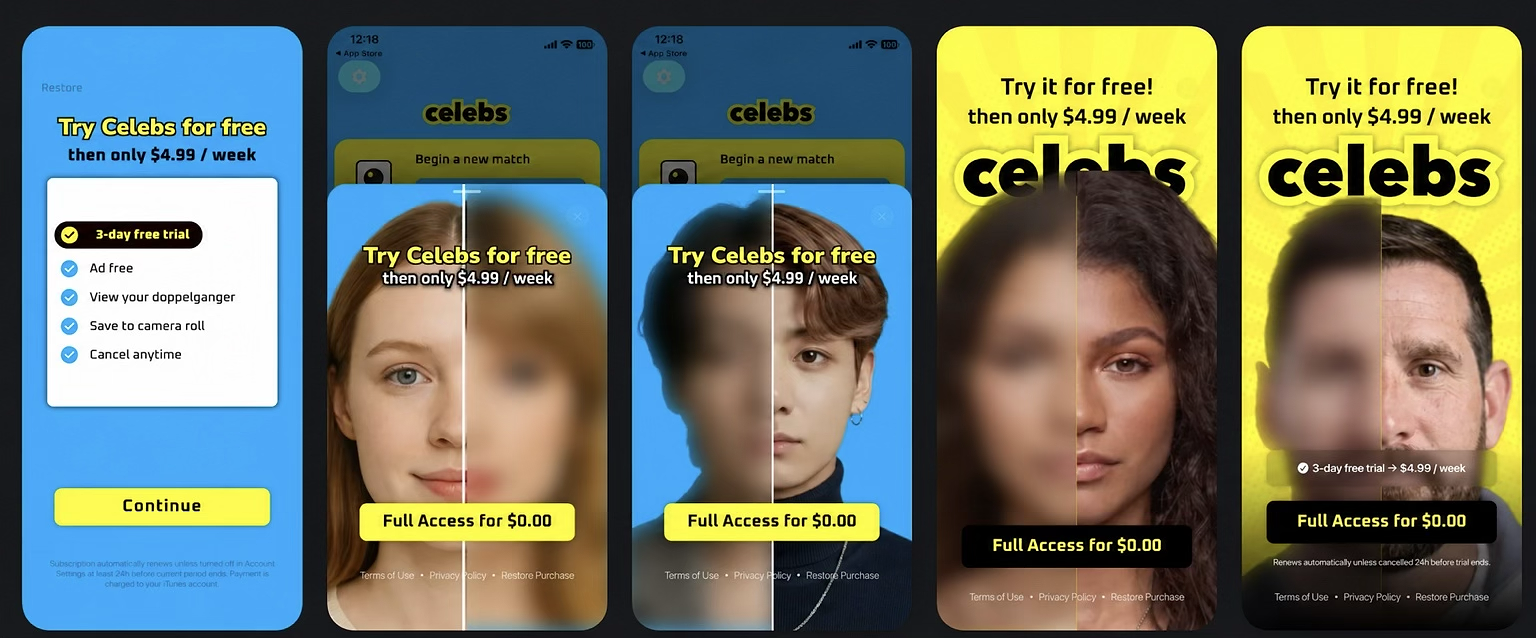
The first screen users see is a good example. It has gone through many transformations. For a long time, a white background with a squared CTA was the clear winner, and the team struggled to find anything that could beat it.
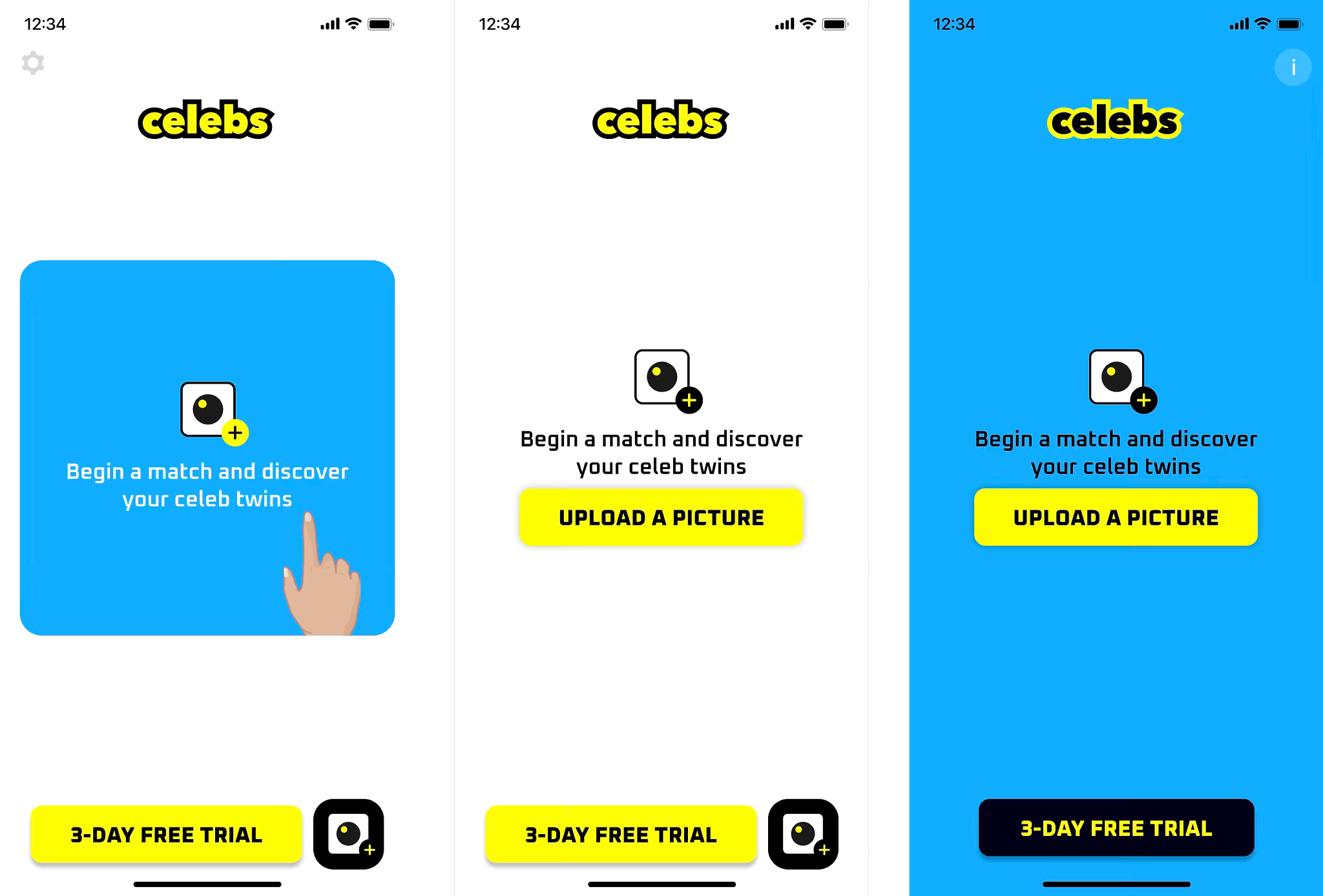
Later, as consumer trends shifted and the onboarding became more colorful, a blue background started showing stronger engagement in smaller test cohorts. Eventually, it produced up to a 10% lift in trial conversion.
The lesson for the team: a winning design is contextual and can stop winning as the rest of the product and user expectations change.
How to apply this to your AI app
Don't get me wrong. Not every AI app needs a free trial or has a use case that people come back to.
But most apps benefit from building for repeated use and testing until the setup works.
For Sociaaal, retention isn't a goal in itself. The studio is built around unit economics, so retention matters when it helps the studio earn more from users than it spends to acquire them.
So treat the ideas below as ideas to test, not steps to copy.
1. Make the core result worth repeating
Celebs users keep coming back because the main result is good enough to try again, and that took a lot of product improvements.
Sociaaal replaced the app's old matching algorithm with a new system that combines several algorithms. It matches people based on their facial features rather than their expressions, and compares them against Sociaaal's own library of celebrity photos.
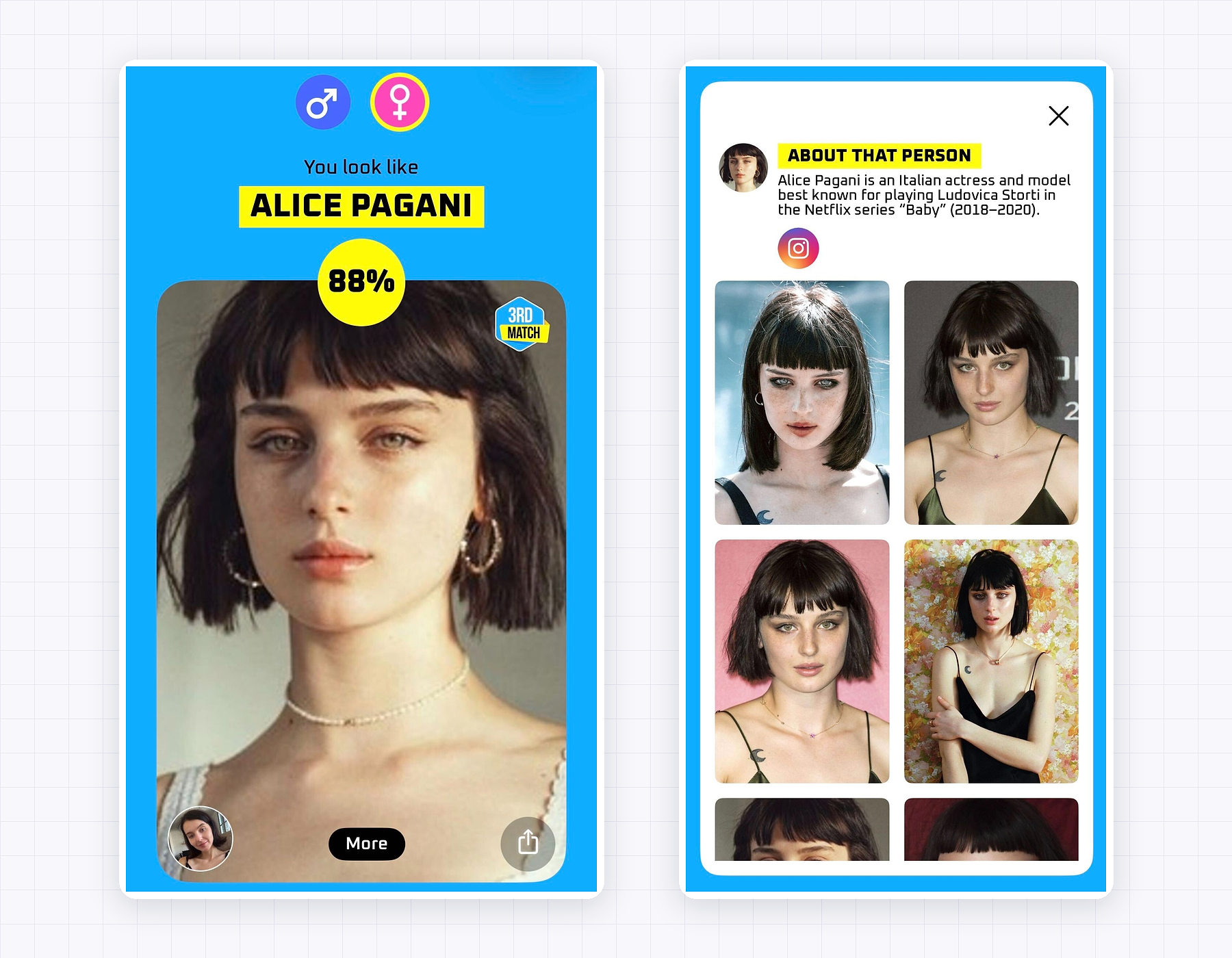
Getting there took more than one algorithm swap. The team tested several approaches with controlled cohorts, from asking users for images from multiple angles to matching the user's pose to a celebrity photo. Most were discarded.
Even when a feature looked more sophisticated, users didn't engage or convert better. The team picked the most promising direction and refined it for several months until it beat the previous baseline.
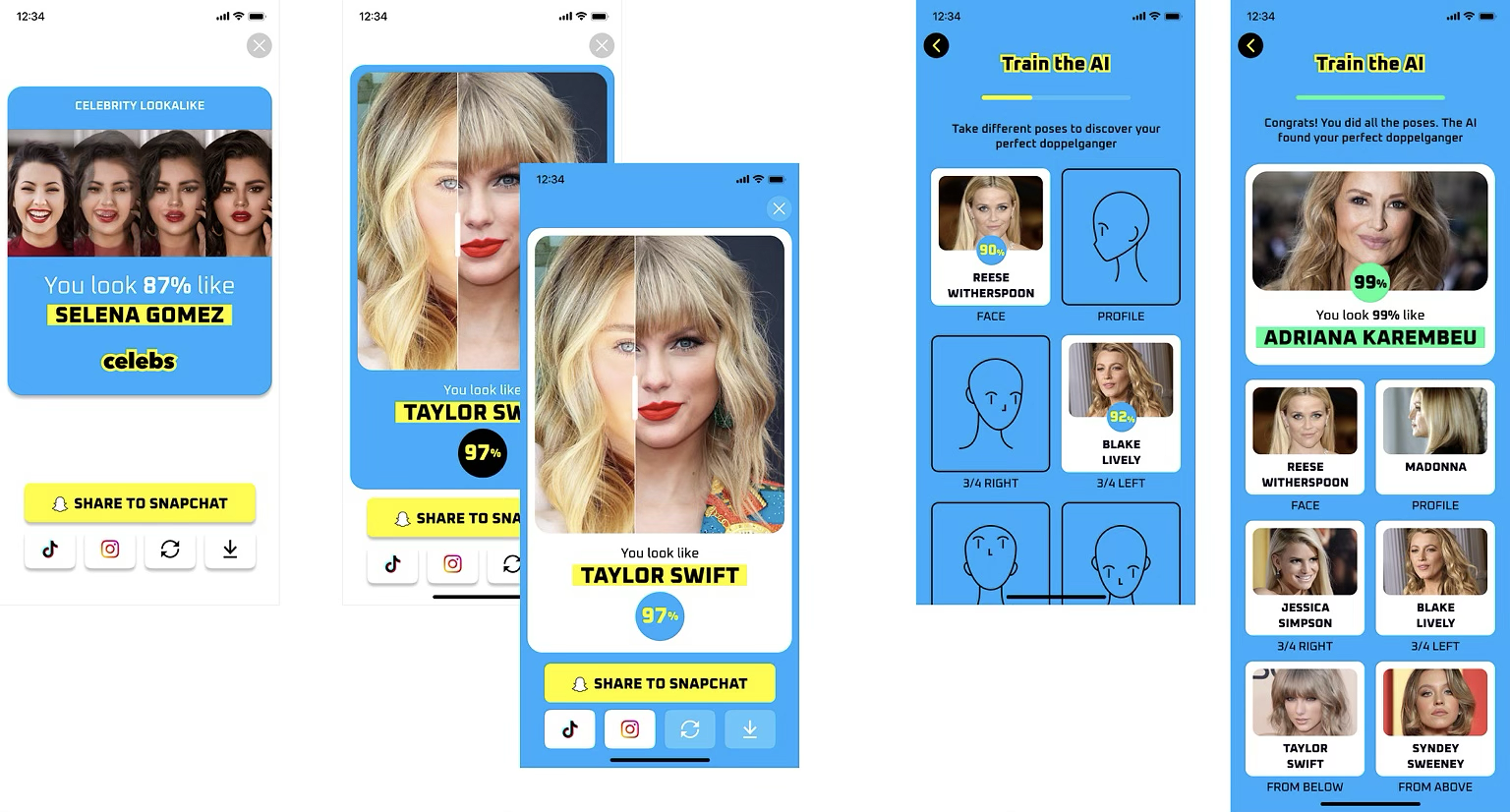
It paid off. With better matches, people kept generating matches with new photos and new people. Extra AI features, like transforming your photo, didn't move the needle as much.
Here's what that means for your own AI app:
- Treat output quality as a retention lever. If your app's value comes from one AI result, a generic model with a prompt on top is easy for competitors to copy and may not be good enough to try twice. Celebs' edge is its combined algorithms and its own photo library.
- Judge quality by what users do. A more sophisticated matching approach lost at Celebs whenever users didn't engage or convert better. Ratings help, but repeat behavior tells you more. Check how many users generate again in their first session or come back within a few days (and why), and compare cohorts before and after product improvements.
- Give a big change time to win. A major product change doesn't have to be an immediate winner to be valuable. Sociaaal's new matching only beat the baseline after months of refining. Sometimes the question is whether it gives the team something promising to keep improving.
- Resist the urge to add features for their own sake. When retention is low, it's tempting to keep building new features. But if the main result isn't good enough, more features won't make up for it. At Celebs, improving the main match did more for retention than extra AI features.
2. Get users from the ad to the aha moment as fast as possible
Once your core AI result is good enough that people want to use it again, getting them to it fast can pay off more than charging them on the first visit.
Yes, many AI apps do the opposite. They put users through a long onboarding, or hide the result behind a paywall. For an app people might use once, that looks like fast revenue.
But at Celebs, the path with the least friction won. Patrick described it as getting people from the ad to "the core experience and the aha moment" as quickly as possible, and said removing sign-up and email collection worked "much, much better."
Keep the generation itself fast, too. Celebs used to play fancy animations while it processed the match. They might impress someone the first time, Pablo said, "but when you generate seven times, it's like, why do you even want this animation?"
The team tested removing them and cutting the generation time from five seconds to 1.4, and both changes moved the needle.
3. Let the data pick your monetization
The free trial at Celebs is a good reminder to test your monetization instead of assuming what an AI app should (or shouldn’t) do.
I expected Celebs to charge before showing any result. Sociaaal tested that against a three-day free trial, and the trial won. Patrick sees the trial as the icebreaker.
"Before using our app, quite a lot of people would have doubts as to whether this app really tells you who your celebrity lookalike is. We show them who they look like, who their friends and their partner look like, and then they keep on using the app and do more and more generations."
That's how Sociaaal approaches everything. The team runs about 100 A/B tests a month and uses RevenueCat to read the results. Patrick describes it as "a philosophy of constantly testing and iterating and running as many A/B tests as you can in a very rigorous way."
A few habits make that volume useful:
- Re-run tests that lost. A result only holds for the version of the app it ran on. Patrick has seen failed tests win "a few years later" because "the rest of the app has changed so much."
- Pick an early signal for retention. Renewal data takes weeks to come in, which is slow when you run 100 tests a month. At Celebs, users who open the app three to five times in their first two or three days usually stick around, so the team uses early sessions as another key signal.
4. Personalize only after you've cracked the baseline
Personalization can add another layer of performance, but it comes with a cost: every personalized flow is one more variant to build and maintain, which slows a small team down. So Pablo’s advice is to get the default experience working first and only then personalize.
When it does work, the gains add up. At Celebs, after dozens of iterations, personalizing parts of the experience with user signals lifted conversion by around 15% in the segments where it was applied.
Geography is one of those signals. When testing how much of the doppelgänger to reveal before the trial, Sociaaal found a large blurred image won in some Asian markets, while a much smaller preview did better in the US.
The question becomes less “Which variant wins?” and more “Which variant wins for whom?”
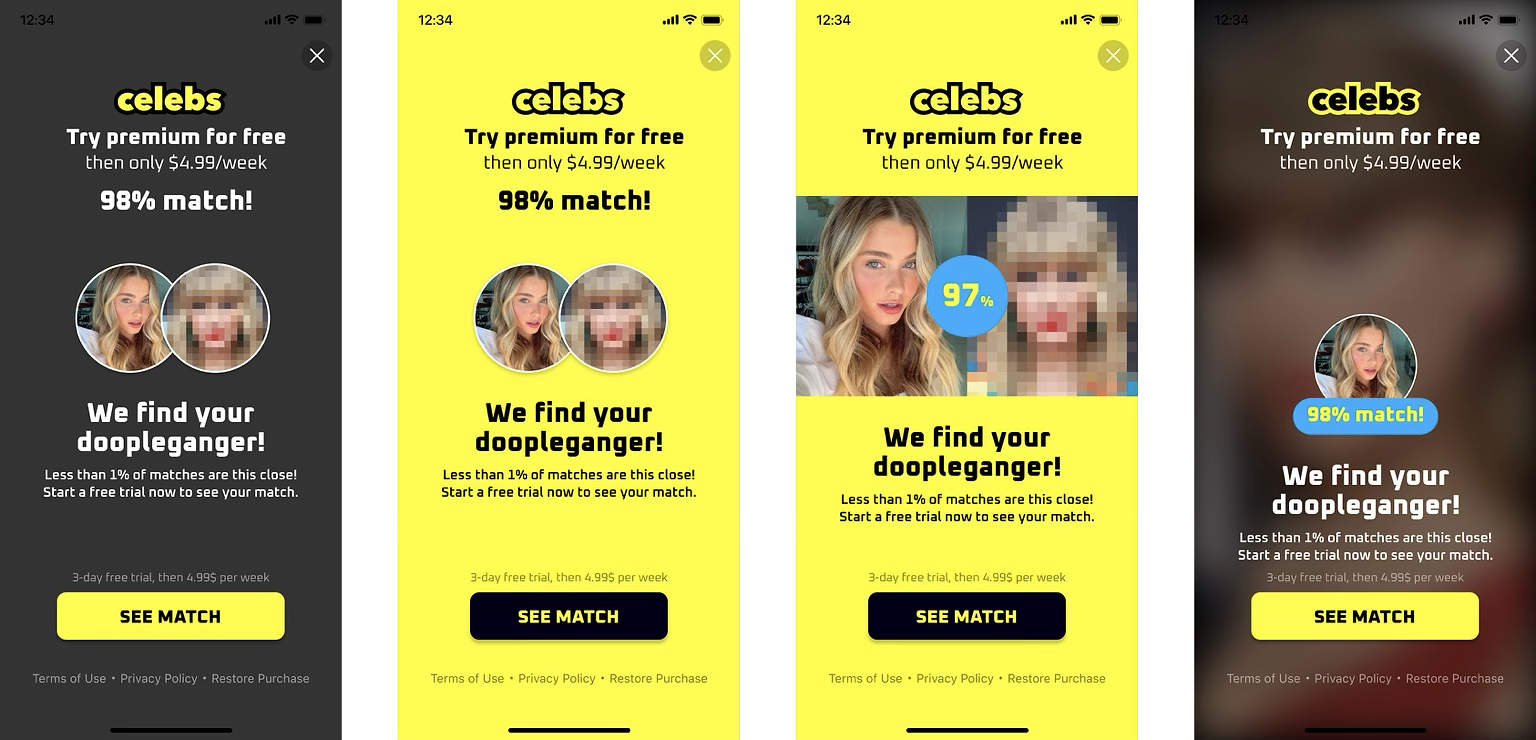
The team also works with more complex setups at scale, like systems that gradually send more users to whichever version performs best for each audience while a test is still running. But you need a lot of traffic, engineering work, and constant monitoring to make it work.
The trade-offs to test for yourself
The Celebs app keeps its users by making the core match good enough to repeat, getting people to it quickly, and testing everything around it, including a free trial most people would bet against.
Each of those choices has a cost, though. Dropping accounts and email collection shortened the path to the first match, but it also gave up the easiest way to bring users back. Celebs makes up for it with paid ads and retargeting.
Free usage costs money, too. Every free generation and every trial is compute you pay for, including for people who never subscribe. If your generations are expensive, you can cap trial generations or sell extra credits on top of the subscription. And a trial only pays off if enough people keep using the app after it ends. Celebs shows you can't always tell that from the use case alone.
There's no right answer to any of these trade-offs, only experiments that tell you what works for your app. After hundreds of them, Sociaaal keeps landing in the same place: the simpler version wins. Or, in Pablo's words, "simplicity pays."
Run your next test with RevenueCat Experiments
Sociaaal uses RevenueCat to run and track dozens of tests every month. Test your pricing, trial lengths, and paywall designs to learn what gets more people to stick around.