

Since subscription apps first started to gain in popularity, free trials have been a foundation for most user acquisition (UA) marketers, serving as the main proxy event to attract real long-term subscribers. But this tactic, like so many other elements of our industry, has been changed by AI and vibe-coding. It’s now harder than ever to run campaigns optimizing towards a free trial, largely due to the enormous competition and overall declining trial conversion rates.
As the State of Subscription Apps 2026 shows, there’s a growing trend of trials shortening to three days — despite data encouraging the opposite; showing that trials with 17+ days convert 70% better (42.5% paid conversion rate vs. 25.5%).
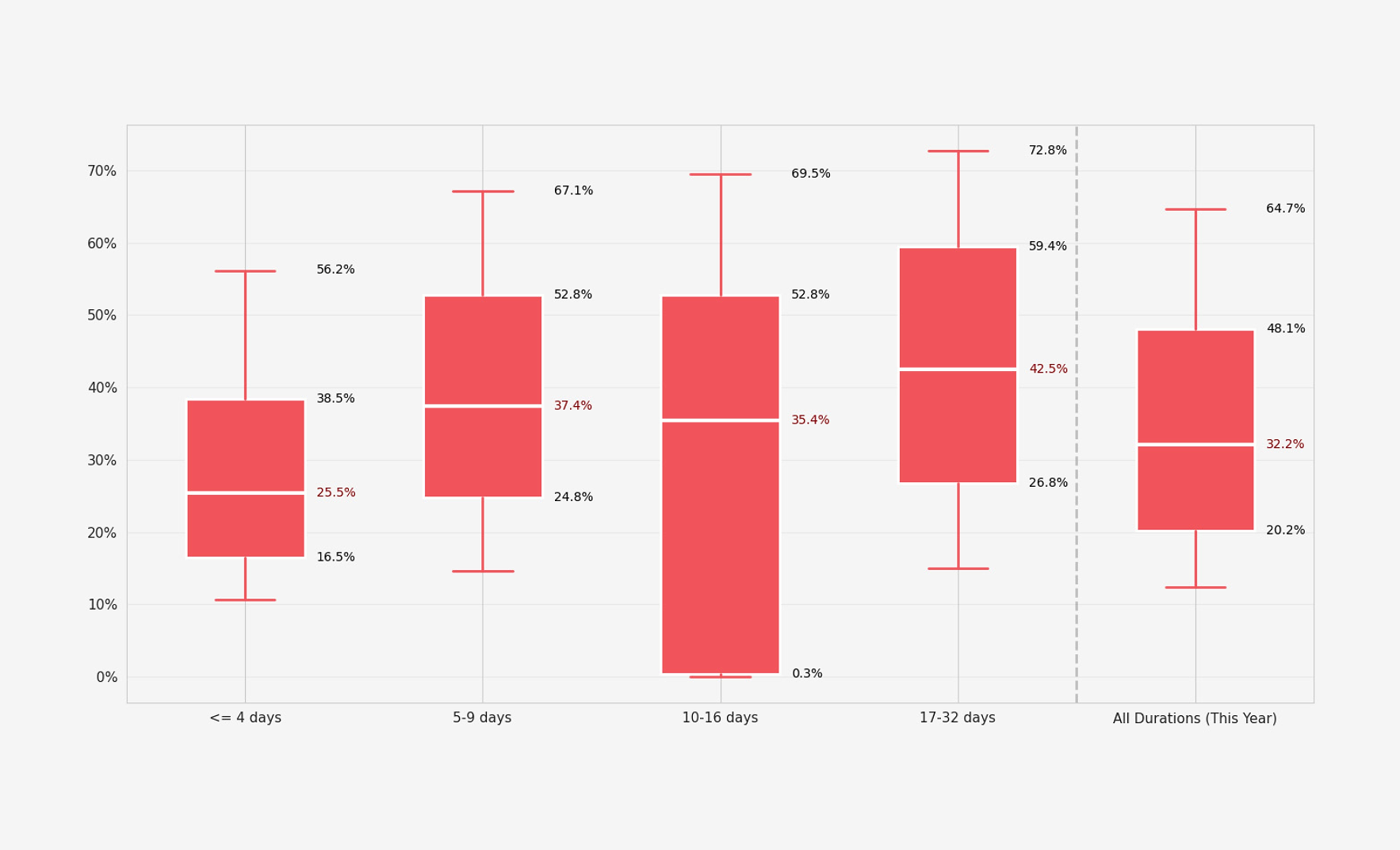
State of Subscription Apps 2026 — trial-to-paid, by trial duration
Even with this huge discrepancy, nearly half of all apps now use trials of four days or less, seeking immediate revenue and shorter payback periods that make publishers’ margins more affordable from the UA perspective.
This is not a coincidence. AI has drastically changed the whole market: by adding variable and rising costs to the use of its technology, AI has forced publishers and developers to look for higher average revenue per user (ARPU) in the shortest time possible, in order to can’t cover these costs and sustain the business. Otherwise, the apps become unmarketable themselves, making the product-market fit (PMF) process harder than ever.
If you also consider the popularity of how web-to-app campaigns can help you to nail signal engineering, we can easily draw the conclusion that free trials don’t make much sense anymore. But is that a fair blanket statement? I think it’s true, but that doesn’t mean free trials are over. We can still play with a more advanced version of this conversion event.
Before exploring what that looks like, let’s dive into the reasons why free trials became so popular on subscription apps.
Free trials: the purchase proxy event
The title speaks for itself: The free trial event has been the foundation of endless companies’ UA strategies for a simple reason — a free trial is the closest event to purchase. What’s more, the event can filter purchase intention, without sacrificing the volume that ad networks need to optimize performance efficiently.
When AI didn’t exist and the offer of apps was more limited, free trials were widely used as a technique to convince the user to convert, with publishers heavily relying on their products and UX to make the conversion effective. But that doesn’t apply anymore. Today, hard paywalls with direct subscriptions are becoming more present, with data showing they generate close to double the upfront revenue vs. freemium apps.
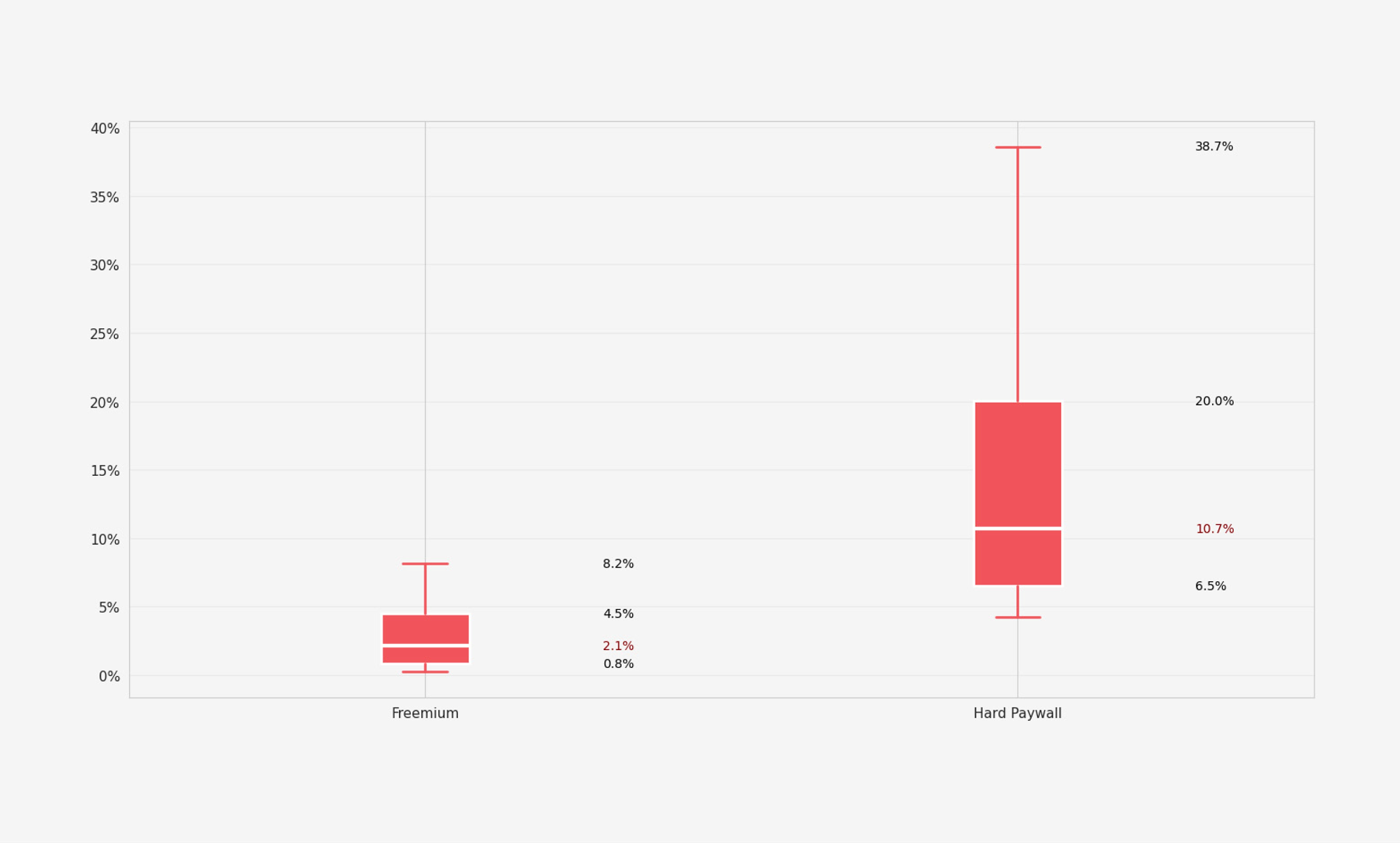
State of Subscription Apps 2026 — day 35 download-to-paid, freemium vs. hard paywall
This growing shift away from free trials is clearly visible when you compare 2026’s report vs. 2024. We can see how all categories have seen a 14% increase in the non-trial strategies (28% in 2024 in non-trial strategies vs. 32% in 2026) where free trials are non-existent.
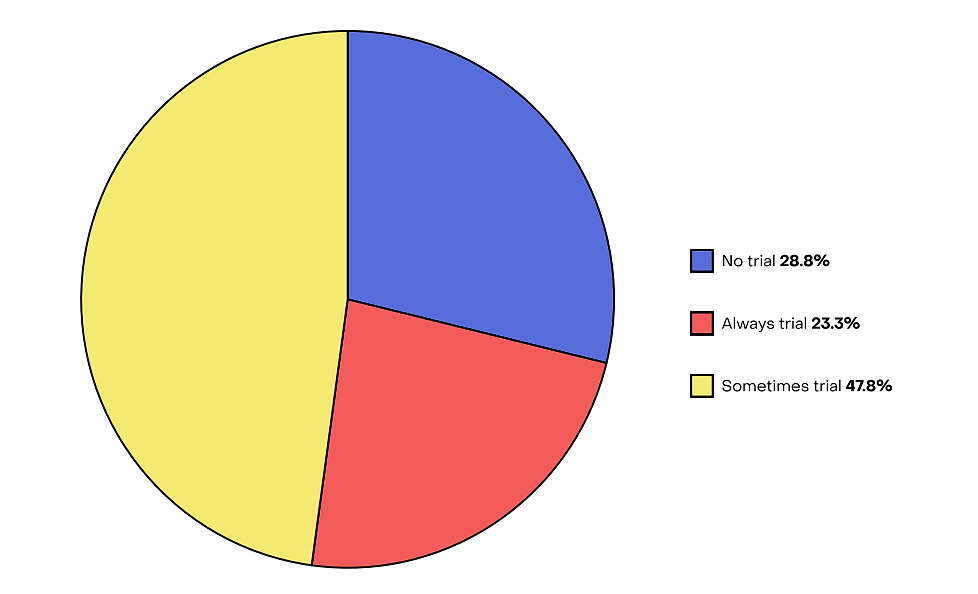
State of Subscription Apps 2024 — trial strategy
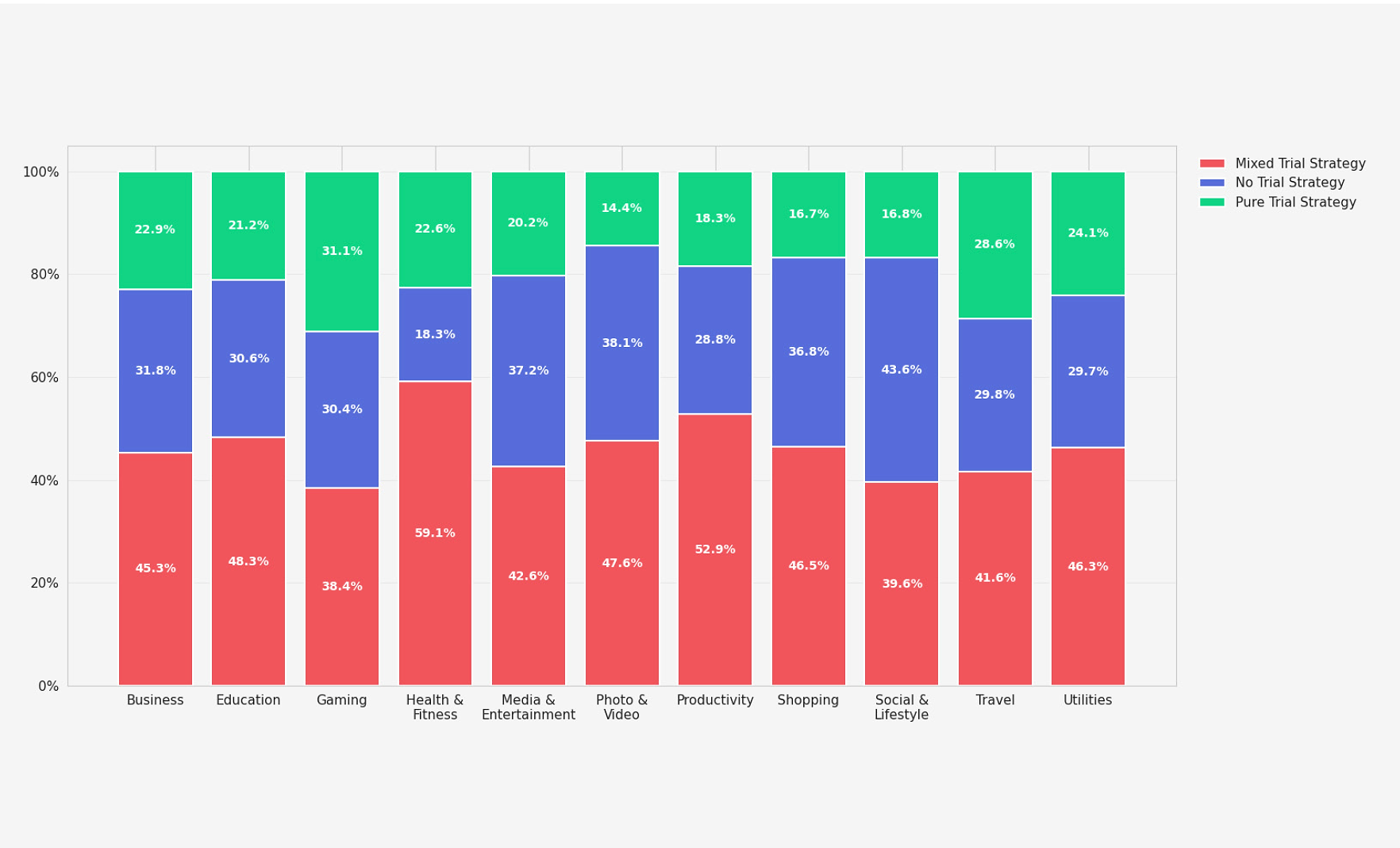
State of Subscription Apps 2026 — trial strategy, by category
With such a fast evolution, publishers need to adapt to the new reality since ChatGPT normalised paying $20/month for an AI chatbot. And the shortest path for that is playing with pricing, which explains this change in the overall trial strategy.
Web campaigns: a lever pushing free trial extinction
At this point, it’s no longer a new topic: web and web-to-app funnels are now the norm for the biggest publishers due to multiple reasons:
- The 30% fee you save due to Apple or Google’s commissions
- Higher flexibility and speed to run multiple A/B tests with the onboarding and pricing
- Higher accuracy on campaign attribution without relying on SKAN and its limitations
- Higher purchase intention in users
- More and new inventories where you have more control to filter purchase intention
- Retargeting is real for iOS users
Although it’s true that, at the moment, web onboarding doesn’t make too much sense for small publishers that are under the 15% commission — due to the additional complexities you have to handle (tax compliance, 3% fee to Stripe or similar, managing refunds internally, platforms to build onboarding, etc.) — the change in strategy of the biggest players has directly affected the trends in the market. Now, even small devs are pushing to copy these strategies.
With this current outlook, the question is no longer whether to move away from the classic free trial, it’s about what you replace it with, and when. The market has split:
- Hard paywalls with direct subscriptions: for apps with strong PMF and vitality
- A more sophisticated version of the free trial mechanic, that preserves the volume ad networks need while dramatically improving signal quality
The second option is what I like to work with — and in my opinion, it will be the future standard when it comes to signal engineering.
At App Growth Annual 2025, I did a workshop where I explained the immediate effect that paid trials (introductory offers) have in your activation metrics and UA performance. Today, I see more and more companies applying this strategy on their web campaigns, as these normally target users with real purchase intention easier than app campaigns.
Trial qualifier or paid trial events aren’t mutually-exclusive
As shown in my article on intro offers, introducing paid trials in your app or web campaigns can drastically change your numbers. But you have to pay close attention to monitoring the conversion rate after the paid trial — this strategy effectively harms your short-term lifetime value (LTV), compared to a hard paywall with a direct subscription.
The State of Subscription Apps report shows that ~30% of new subscribers now enter through intro offers (median).
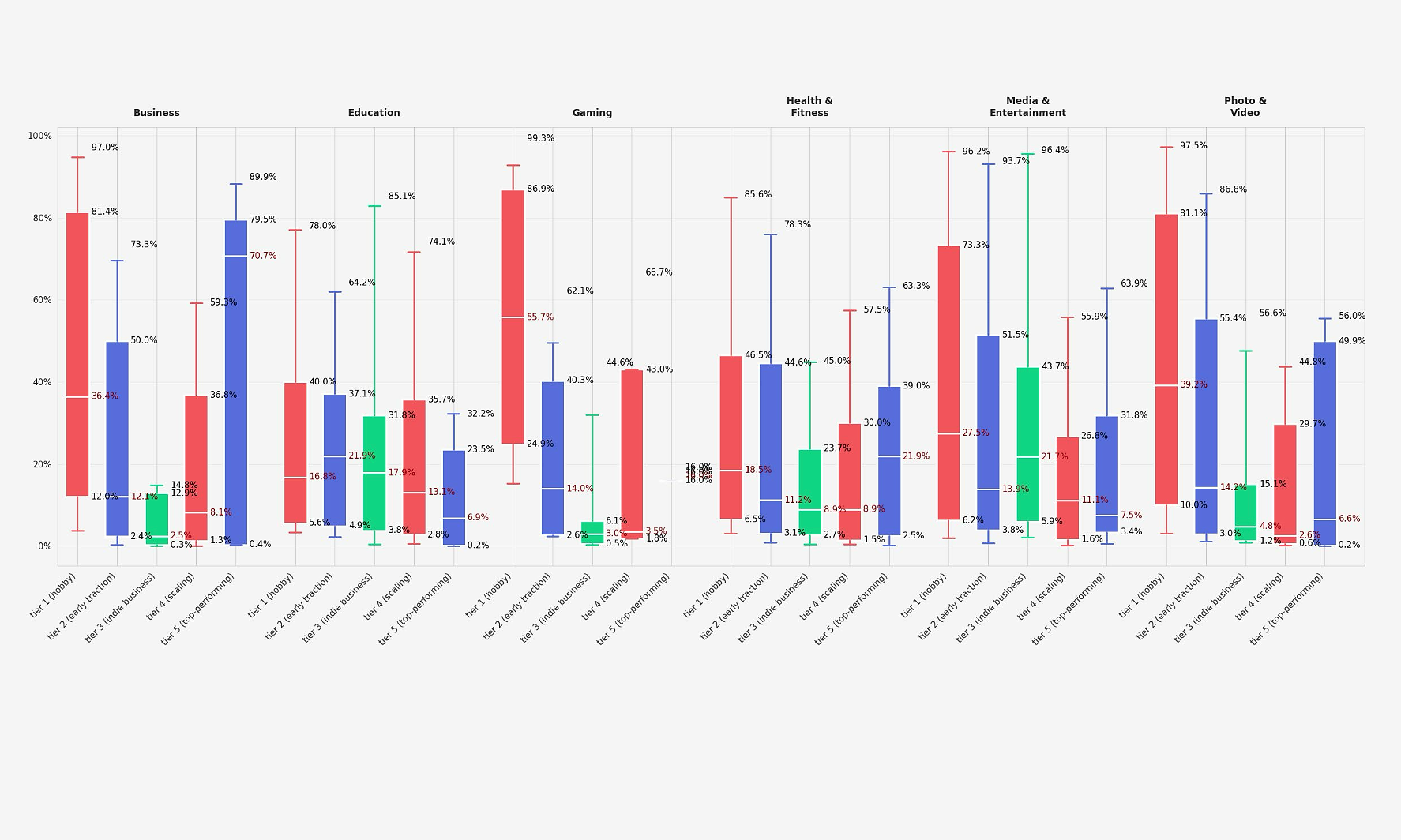
State of Subscription Apps 2026 — share of new payers acquired via an intro offer, by category and revenue tier
The $0.99 first month model doesn’t just improve conversion — it fundamentally changes what signal you’re feeding the algorithm. You’re no longer training the network on “users who clicked a free button”. You’re training it on users who handed over a credit card, which is a completely different behavioral profile. That’s a gamechanger if you’re able to target those users efficiently with a correct creative strategy in your paid campaigns.
This started to become more popular on web and web-to-app campaigns since you could use specific channels to filter purchase intent in the upper funnel part of the metric, just by launching channels with inventories with high control capabilities — unlike the automated app campaigns which are now the norm in all ad networks that offer app campaigns promotion.
For example, when launching Google Ads with a search campaign, you have the possibility of creating specific ad groups for each audience segment. Within these, you can target different purchase intent levels by just playing with the keywords. A good strategy would be using keywords with and without “free” in the term, to see what’s the performance towards that trial qualifier event.
Using this type of advanced targeting with a paid trial has become a really successful tool for many publishers that wanted to boost the algorithm with real paying signals on day 0, instead of proxy events whose median averages 30–35% vs. the real subscription (source: SOSA).
But for me, this isn’t going to be the norm in the near future. Trial qualifiers will take this role. And the most positive news is that you don’t have to do one or the other, you can keep paid trials for your web campaigns where you have more control over the intention of the users, while utilizing trial qualifiers for app campaigns.
Looking again at the State of Subscription Apps 2026, we see that nearly all trial starts happen on day 0 across categories. Users who don’t try immediately during the onboarding rarely try at all.
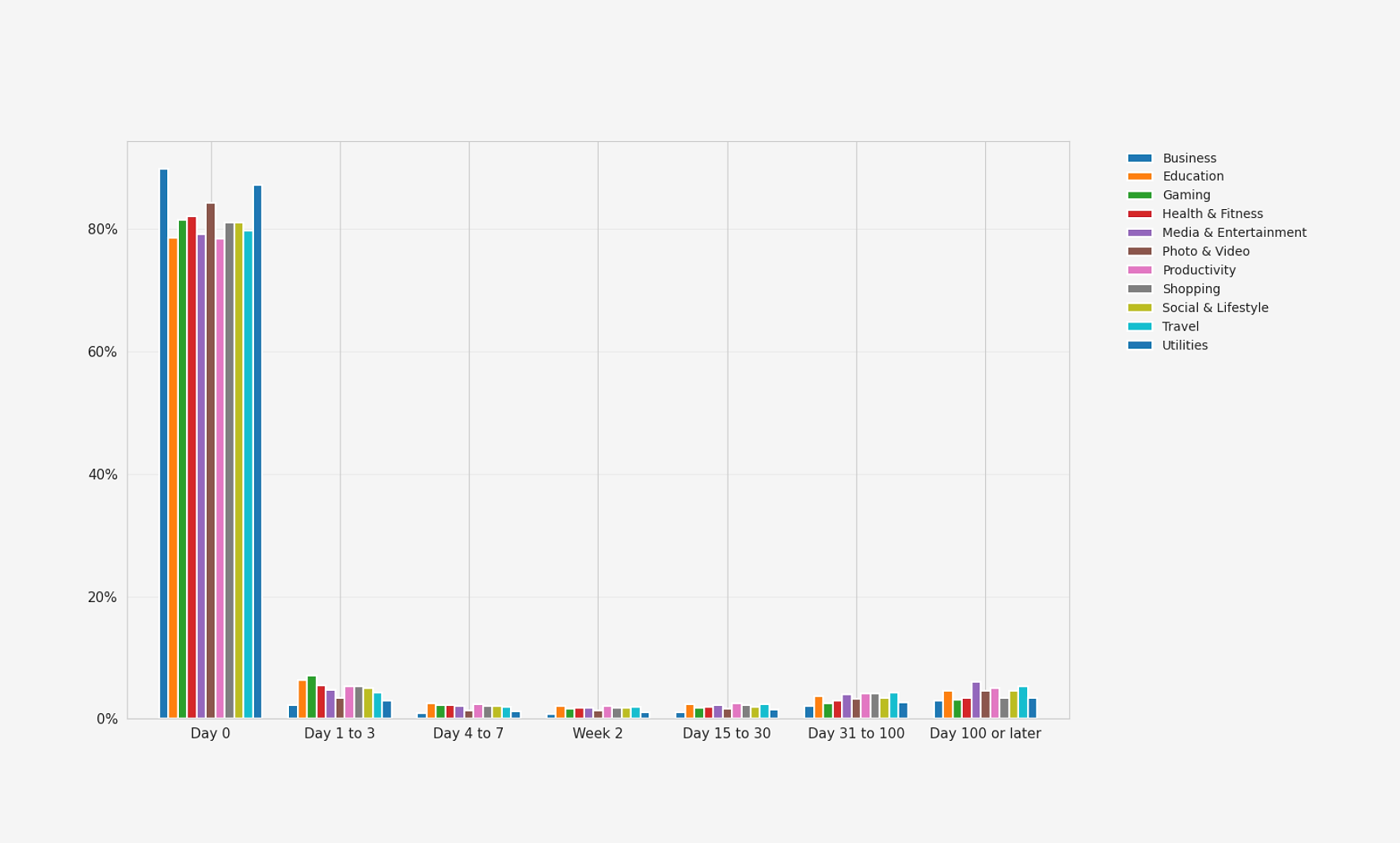
State of Subscription Apps 2026 — time to trial, by category
With this data, the main takeaway is clear: trial qualifier events are the best tool for advertisers right now. Here’s why:
- You still feed the algorithm with signals on day 0, but without forcing the user to use a credit card
- You still optimize towards an event that happens immediately before the purchase, but with a deeper intent than the classic trial
- And most importantly (in my opinion) you have full control to play with the signals that you send for this trial qualifier event, because you have access to the purchase behaviour of your users
So how do you get started implementing this in your campaigns?
The new free trial: how to set up an advanced free trial
Personalisation of the trial qualifier event will heavily depend on the app category, subscription tiers offered in the paywall, and the historical behaviour and data you can analyze from the classic trial start event. But as an initial setup, you can create the trial qualifier event based on the following conditions:
1. Time without cancelling the free trial
Most trial cancellations happened within the first two hours after starting the trial. The data shows cancellation is at its highest on day 0, closely followed by day 1.
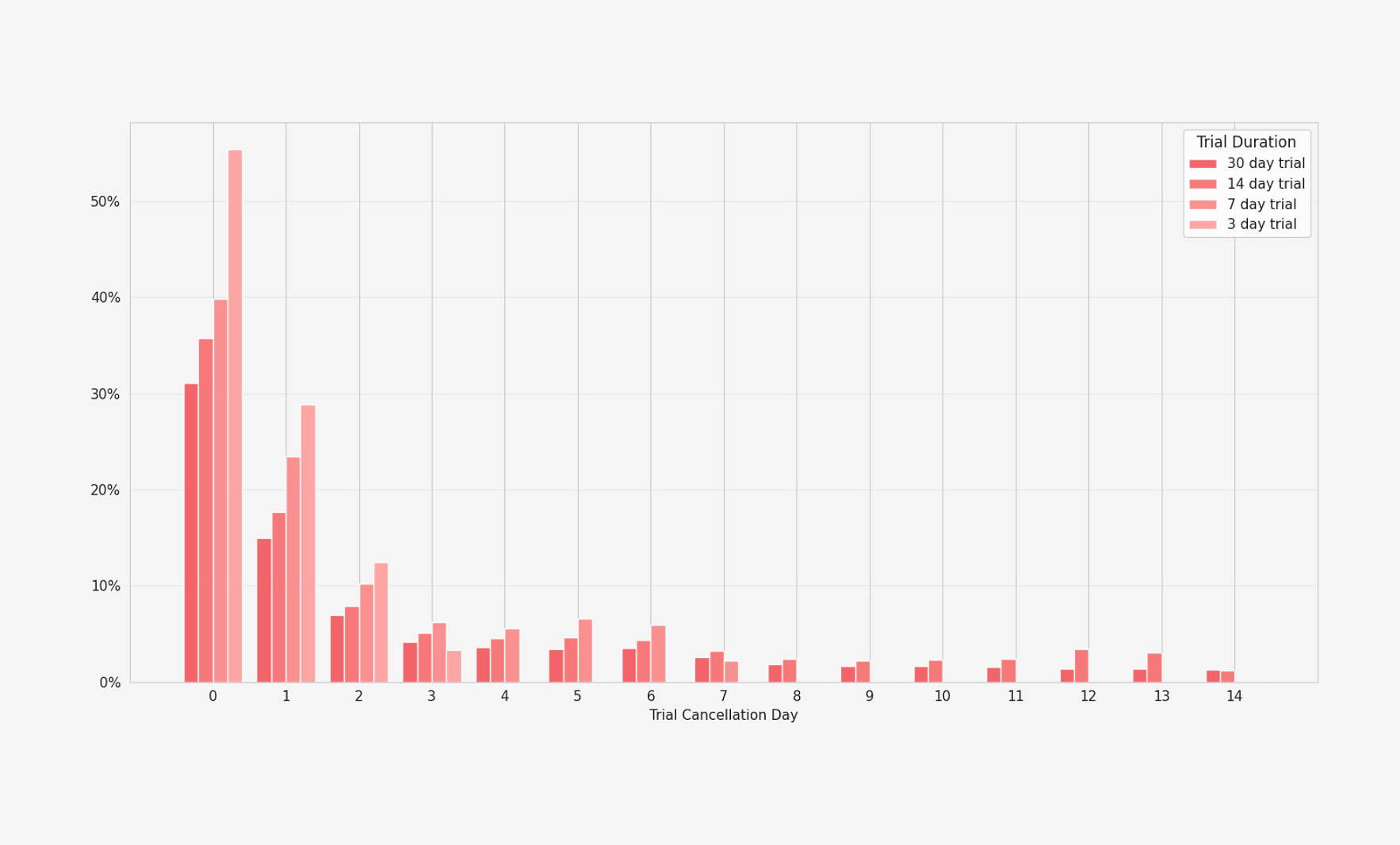
State of Subscription Apps — % of trial cancellations, by day and trial duration
These cancellations are users who just want to see what’s behind the paywall but they will never purchase. However, they will contaminate the signals you send to ad networks when working with the trial, making your overall performance worse — so these are the first users that need to be filtered out. In this case, you should analyze the historical data to see which time filter accommodates better to your app.
2. Time without cancelling the free trial + engagement
Some products have drastic differences in LTV, retention, and payback periods between users; specifically those who stick to the product and use it actively, versus those who just subscribe and forget about the app. So a smart way of nailing the trial qualifier is to add engagement signals [that happened in the first session] to the time without cancelling metric. This creates a more robust and reliable signal that you can send to the ad network to optimize your campaigns.
One word of warning is to avoid being very picky with the engagement points during this first session, otherwise you will sacrifice too much signal volume and your campaigns will struggle to optimize.
3. Time without cancelling the free trial + sending an additional signal the day after the trial started
This is similar to the first point, but with a deeper complexity, as you send two signals per user instead of just one. This strategy is based on sending the initial signal two hours after trial starts, and then another extra signal the day before the trial ends. For example, if you have a 3-day trial, you would send one initial signal two hours after the trial starts, and another signal if the user keeps the trial active on day 2. This helps with the volume of events, making the optimization of campaigns easier for ad networks. At the same time, it adds difficulty to calculate the real trial conversion rate and incrementality.
4. Automate trial qualifier mapping
If you want to go one step further, you can now use the new RevenueCat integration with Appstack, and automate mapping your trial qualifier events in just a couple of clicks. With this integration you’re able to send campaign users to specific paywalls made with RevenueCat, allowing you to fully customize the user experience, from when they watch an ad all the way to completing onboarding in your app. I think this is a unique feature in the market which will dramatically change the way paywalls are made and tested, since you can now feed these tests to users with deep purchase intent.
Ultimately, I suggest you take these initial ideas and start playing with the trial qualifier event, then compare the performance of these campaigns against your classic free trial campaigns. Once you find a winning path, you can start an ongoing process of filtering your signals until you reach the perfect balance between signal quality and quantity for the ad network.
Ready to revamp your free trial?
I know this article may sound somewhat dramatic, and of course there will be cases where you still get a better performance with classic free trials. However, according to what I see everyday working with different apps, we’re rapidly moving to the immediate pursuit of results (thanks to the increasing marginal costs attached to AI). So I believe in the near future we’ll have most apps refining their free trial signals in this way, allowing them to be more accurate with ad delivery — and overall maximizing the efficiency of every dollar invested in their UA.